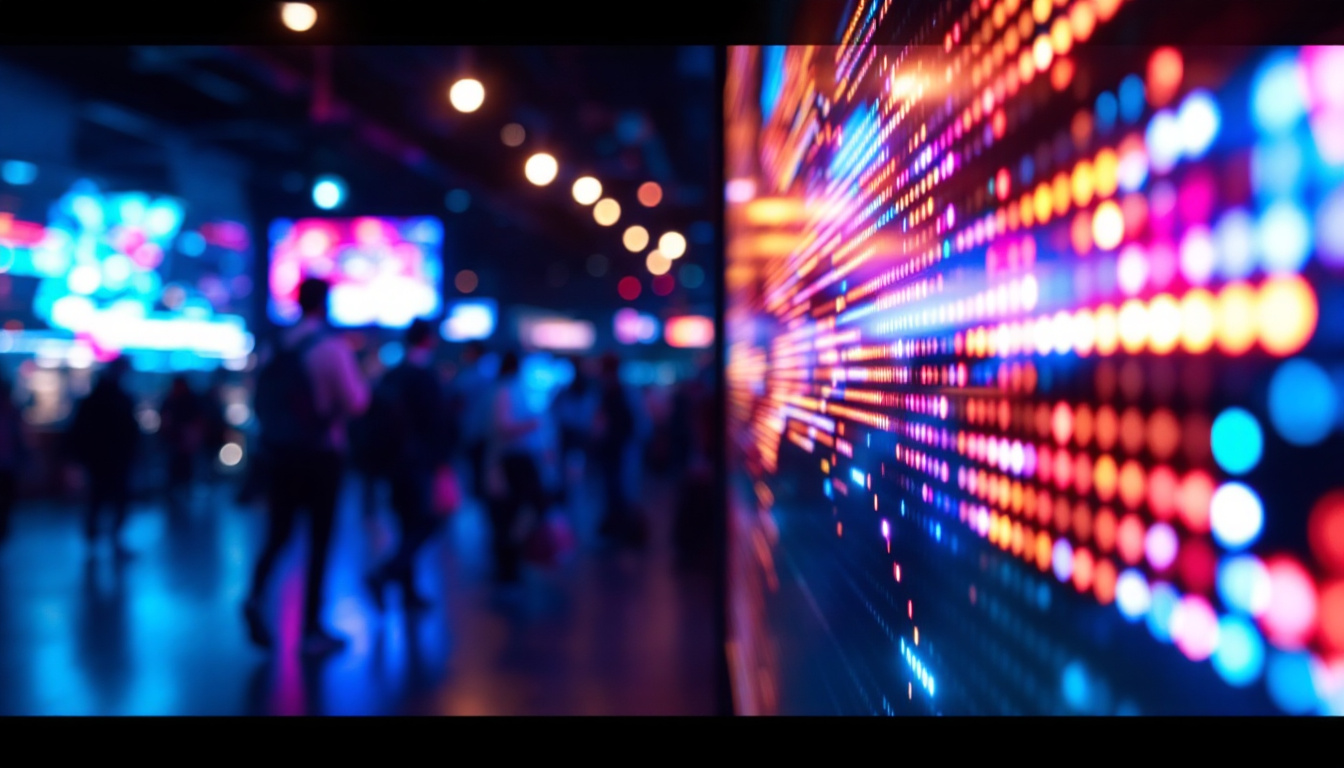
The rapid advancement of LED display technology has transformed the way we experience visual media, from massive outdoor advertising billboards to the ultra-high-definition screens in our homes. However, one visual artifact that continues to challenge designers, manufacturers, and users alike is the screen moiré effect. This subtle yet often distracting pattern can degrade image quality and impact user experience. Understanding the causes, implications, and solutions for the moiré effect in LED displays is essential for professionals in display technology, digital signage, and consumer electronics.
What Is the Screen Moiré Effect?
The screen moiré effect is a visual phenomenon characterized by the appearance of wavy, rippling, or repetitive patterns that are not present in the original image. These patterns arise when two or more grids or repetitive structures overlap and interfere with each other. In the context of LED displays, this interference typically occurs between the pixel grid of the screen and the pixel grid of the camera capturing the screen or between the subpixel arrangement and the displayed content.
While moiré patterns can sometimes be artistic or intentional in graphic design, in LED displays they are generally undesirable because they distort the intended image and reduce clarity. This effect can manifest as diagonal lines, checkerboard patterns, or concentric circles that distract viewers and reduce the perceived quality of the display.
How Moiré Patterns Form
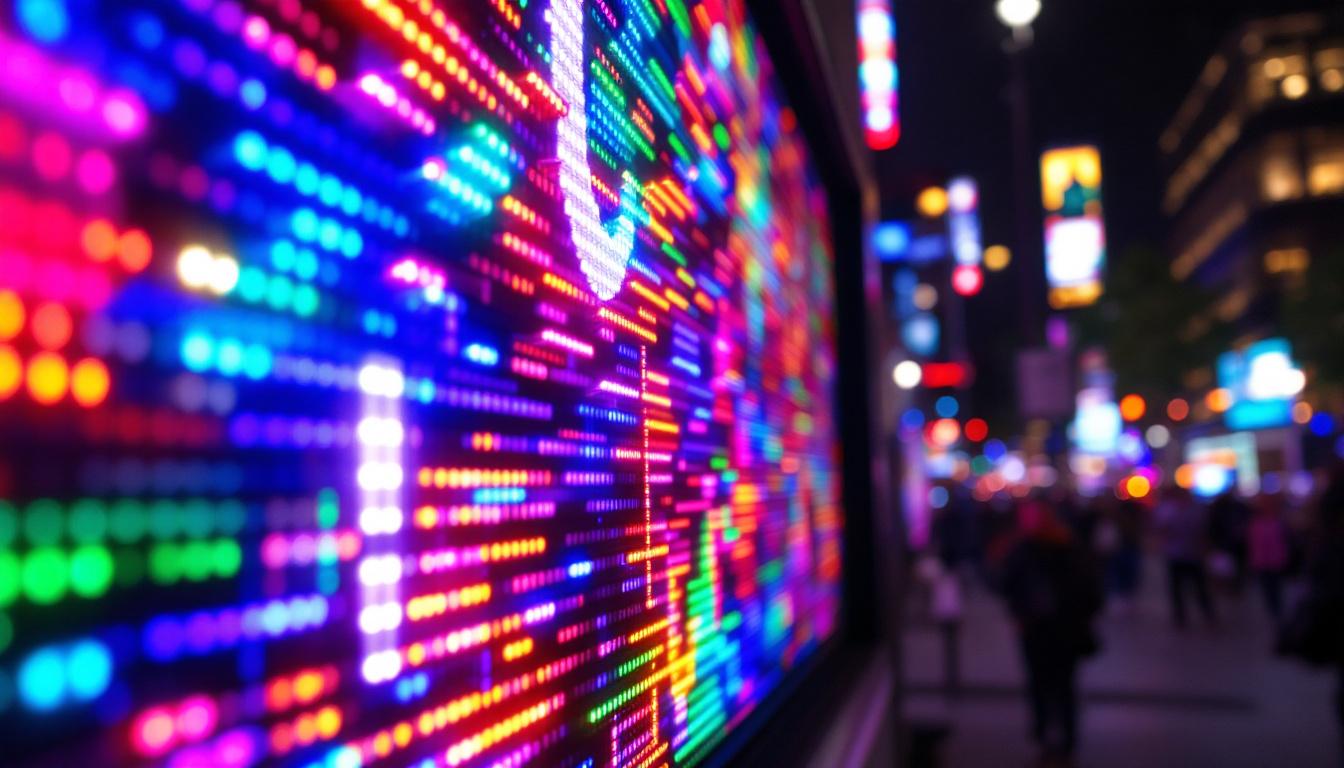
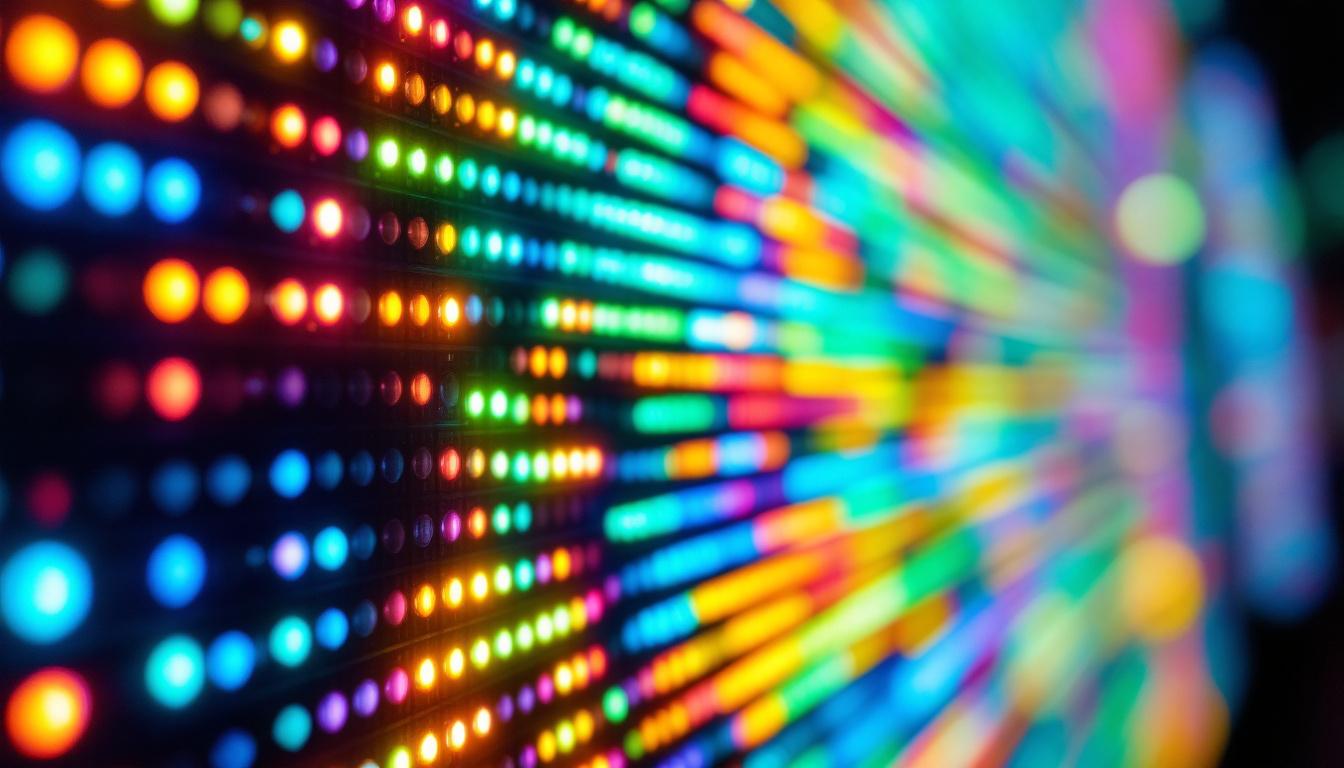
At its core, the moiré effect is an interference pattern created when two repetitive patterns overlap at certain angles or frequencies. For LED displays, the key repetitive pattern is the pixel matrix—an array of tiny light-emitting diodes arranged in rows and columns. When the resolution or pixel pitch of the LED display interacts with the resolution of a camera sensor or even the human eye’s perception, moiré patterns can emerge.
For example, if a camera is filming an LED screen, the camera’s sensor grid may not align perfectly with the LED pixel grid. This misalignment causes certain pixels to be sampled multiple times or missed entirely, generating the moiré pattern on the recorded image. Similarly, when viewing LED displays from certain distances or angles, the eye can perceive interference between the pixel structure and the image content.
Why Moiré Is a Concern for LED Displays
LED displays are widely used in environments where image clarity and fidelity are paramount, such as digital billboards, stadium screens, control rooms, and retail signage. The presence of moiré patterns can significantly undermine the effectiveness of these displays by:
- Reducing Image Quality: Moiré patterns introduce visual noise that obscures fine details, making text harder to read and images less sharp.
- Distracting Viewers: The repetitive patterns can draw unwanted attention, detracting from the intended message or content.
- Complicating Content Creation: Designers must account for potential moiré effects, which can limit creative freedom and increase production costs.
In professional settings, such as live event broadcasting or critical monitoring stations, these issues can have real-world consequences, including miscommunication or viewer dissatisfaction.
Impact on Different Types of LED Displays
The severity of moiré effects can vary depending on the type of LED display. For instance, fine-pitch LED displays, which have smaller pixel spacing and higher resolution, are less prone to moiré because their pixel structure is less perceptible to the naked eye. Conversely, large-pitch LED displays, often used in outdoor environments, are more susceptible due to their larger and more visible pixel grid.
Moreover, curved or flexible LED displays introduce additional geometric complexity, which can exacerbate moiré patterns if the pixel arrangement does not compensate for the curvature. Understanding these nuances helps manufacturers tailor their designs to minimize moiré in specific applications.
Technical Causes Behind the Moiré Effect in LED Displays
Several technical factors contribute to the formation of moiré patterns in LED displays. Understanding these helps engineers and designers develop effective mitigation strategies.
Pixel Pitch and Resolution Mismatch
Pixel pitch refers to the distance between the centers of adjacent pixels on an LED display. When the pixel pitch is large relative to the viewing distance or the resolution of the capturing device, the pixel structure becomes more visible, increasing the likelihood of moiré. Similarly, if the resolution of the content does not match the native resolution of the display, scaling artifacts can interact with the pixel grid to create moiré patterns.
Sampling Frequency and Aliasing
The moiré effect can be understood as a form of aliasing, a signal processing artifact that occurs when a signal is sampled below its Nyquist frequency. In LED displays, the “signal” is the image content, and the “sampling” is the pixel grid. If the image contains repetitive patterns at frequencies close to or higher than the pixel sampling rate, aliasing causes the creation of false patterns—moiré.
Subpixel Arrangement and Color Filtering
LED displays often use subpixels (red, green, and blue) arranged in specific patterns. Variations in these arrangements can influence how colors blend and how patterns are perceived. Certain subpixel layouts can exacerbate moiré effects, especially when combined with specific image content or viewing angles.
Viewing Distance and Angle
The perceived moiré pattern depends heavily on the viewer’s distance and angle relative to the LED screen. At close distances, individual pixels are more discernible, potentially making moiré more noticeable. At further distances, patterns may blend, reducing the effect. However, certain angles can cause the pixel grid to align with repetitive image features, intensifying moiré.
Real-World Examples and Case Studies
Understanding the moiré effect in real-world contexts highlights its practical implications and the importance of mitigation.
Outdoor Digital Billboards
Outdoor LED billboards often have pixel pitches ranging from 6mm to 20mm or more, making their pixel structure visible at typical viewing distances. Advertisers have reported moiré patterns appearing when displaying striped patterns, fine text, or certain logos, which can reduce brand impact. To combat this, billboard operators often avoid high-frequency patterns in their content and use higher resolution screens where budget permits.
Sports Stadium Displays
Large-scale LED screens in stadiums face unique challenges due to their size and viewing angles. In some cases, fans and broadcasters have noticed moiré patterns when filming the screens with high-definition cameras, particularly during replays or close-up shots of digital graphics. Manufacturers have addressed this by optimizing pixel pitch and incorporating anti-aliasing algorithms into the display processing units.
Medical and Control Room Monitors
In environments where precision is critical, such as medical imaging or air traffic control, moiré patterns can interfere with the accurate interpretation of data. Specialized LED displays with ultra-fine pixel pitch and advanced calibration are employed to minimize these effects, ensuring that operators receive clear and reliable visual information.
Strategies to Minimize or Eliminate Moiré in LED Displays
Addressing the moiré effect requires a combination of hardware design, content optimization, and software processing techniques.
Optimizing Pixel Pitch and Resolution
One of the most straightforward methods to reduce moiré is to use LED displays with finer pixel pitches. Smaller pixels reduce the visibility of the pixel grid and increase the display’s native resolution, which helps prevent aliasing of high-frequency content. However, this approach can increase manufacturing costs and power consumption, so it must be balanced against budget and application requirements.
Content Design Best Practices
Designers can avoid patterns and textures that are likely to cause moiré by limiting the use of high-frequency repetitive elements such as thin stripes or grids. Employing anti-aliasing techniques during content creation smooths edges and reduces abrupt changes in contrast that contribute to moiré. Additionally, content can be tested on actual LED displays to identify and adjust problematic areas before deployment.
Software-Based Anti-Moiré Processing
Modern LED display controllers often incorporate image processing algorithms designed to detect and suppress moiré patterns. These algorithms apply spatial filtering, blurring, or pixel shifting to disrupt repetitive interference patterns without significantly degrading image quality. Advances in machine learning have also enabled more adaptive and context-aware moiré reduction techniques.
Subpixel Rendering and Pixel Arrangement Innovations
Innovative subpixel arrangements, such as diamond or triangular layouts, can reduce the regularity of the pixel grid, thereby minimizing moiré formation. Subpixel rendering techniques that leverage the unique properties of these arrangements also improve perceived resolution and color accuracy, further mitigating moiré effects.
Viewing Environment Considerations
Adjusting the viewing distance, angle, and lighting conditions can help reduce the visibility of moiré patterns. For example, increasing ambient light or positioning viewers at optimal distances can make pixel grids less perceptible. In professional settings, ergonomic design of display placement takes these factors into account.
The Future of Moiré Reduction in LED Technology
As LED display technology continues to evolve, new approaches to moiré mitigation are emerging. The push toward microLED and miniLED displays promises even finer pixel pitches and higher resolutions, inherently reducing moiré visibility. Additionally, advancements in computational display technology, where image processing is integrated more deeply with hardware, enable more sophisticated real-time moiré suppression.
Research into novel materials and pixel structures also holds promise. For example, quantum dot LEDs (QLEDs) and organic LEDs (OLEDs) offer different pixel architectures that may influence moiré characteristics. Furthermore, augmented reality (AR) and virtual reality (VR) applications, which rely heavily on display quality, are driving innovation in anti-moiré techniques to ensure immersive user experiences.
Conclusion
The screen moiré effect remains a significant challenge in the realm of LED displays, impacting everything from outdoor advertising to critical monitoring systems. Understanding the technical causes behind moiré, recognizing its impact on different applications, and implementing a combination of design, hardware, and software strategies are essential for minimizing its effects.
As display technology advances, the industry is steadily moving toward solutions that offer clearer, sharper images free from distracting interference patterns. For professionals working with LED displays, staying informed about moiré and its mitigation techniques is crucial to delivering high-quality visual experiences that meet the demands of today’s diverse applications.
Explore Cutting-Edge Solutions with LumenMatrix
As you seek to overcome the challenges of the screen moiré effect and strive for impeccable image quality in your LED displays, LumenMatrix stands at the forefront of innovation. Our comprehensive range of LED display modules, from vibrant Indoor and Outdoor LED Wall Displays to dynamic Vehicle and Sports Displays, is designed to minimize moiré interference and maximize visual impact. Embrace the future of visual communication with LumenMatrix’s advanced solutions that promise to captivate your audience and amplify your message. Check out LumenMatrix LED Display Solutions today and experience the difference that cutting-edge technology can make.