The Mandalorian, the groundbreaking Star Wars series on Disney+, has captivated audiences worldwide with its cinematic visuals and immersive storytelling. One of the most talked-about aspects of the show is its revolutionary filming technique, which relies heavily on LED display technology rather than traditional green screens. This innovation has not only transformed the way The Mandalorian was filmed but also set a new standard for the future of television and film production.
In this article, we will explore where The Mandalorian was filmed, delve into the LED display technology that made its unique visual style possible, and explain why this approach is so significant for the industry. From the physical studio locations to the virtual environments created on massive LED walls, this comprehensive overview will shed light on the magic behind the scenes.
The Physical Filming Location: Manhattan Beach Studios
The primary filming location for The Mandalorian is Manhattan Beach Studios, located in California. This studio became the epicenter for the show’s production, housing the innovative StageCraft technology that blends practical sets with digital environments displayed on LED screens.
Manhattan Beach Studios is a state-of-the-art facility that was specially equipped to accommodate the massive LED volume stages. These stages are essentially large soundstages surrounded by high-resolution LED panels that display real-time rendered backgrounds. The studio’s infrastructure supports the complex hardware and software requirements needed to run this cutting-edge technology smoothly.
By choosing Manhattan Beach Studios, the production team ensured close proximity to Hollywood’s vast pool of talent and resources while also having the flexibility to customize the space for their unique needs. The controlled environment of the studio allowed for precise lighting, sound, and visual effects integration, which was crucial for maintaining the high production values of the series. Additionally, the studio’s location provides easy access to various outdoor shooting locations, allowing for seamless transitions between studio and on-location filming, which is essential for a series that traverses diverse landscapes and settings.
The Role of the LED Volume Stage
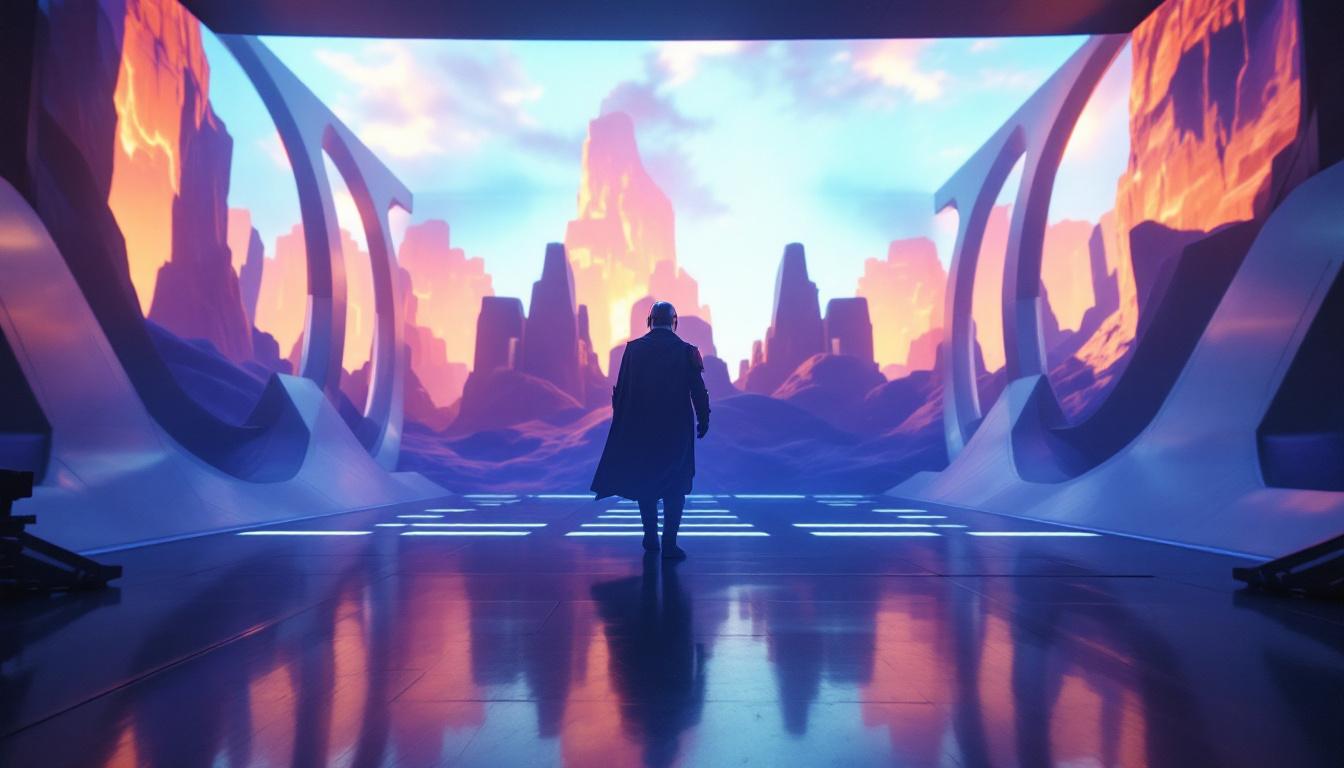
At the heart of the filming location is the LED volume stage, a revolutionary concept that replaces traditional green screens. This stage consists of hundreds of LED panels arranged in a semicircular or fully enclosed configuration, creating an immersive digital backdrop that reacts dynamically to camera movements.
The volume stage at Manhattan Beach Studios measures approximately 75 feet wide and 30 feet tall, with additional ceiling panels to allow for overhead visuals. This setup enables the creation of expansive, photorealistic environments that actors can interact with directly, enhancing performance authenticity and visual coherence. The technology allows for real-time adjustments to lighting and scenery, meaning that as the camera moves, the background shifts in perspective, providing a level of immersion that was previously unattainable. This adaptability not only streamlines the filming process but also significantly reduces the need for extensive post-production work, allowing the creative team to focus on storytelling and character development.
Furthermore, the LED volume stage has opened new avenues for creative storytelling. Directors and cinematographers can experiment with various lighting conditions and atmospheric effects on the fly, providing them with unprecedented creative control. This flexibility is particularly beneficial for a series like The Mandalorian, which often features a blend of different worlds and environments, from desolate deserts to bustling spaceports. The ability to instantly change the backdrop means that the production can maintain a consistent visual style while exploring a wide range of narratives, enhancing the overall viewing experience for audiences around the globe.
Understanding the LED Display Technology Behind The Mandalorian
The Mandalorian’s visual effects are powered by a technology known as StageCraft, developed by Industrial Light & Magic (ILM). Central to this system is the use of LED display walls that project real-time rendered digital environments, synchronized with the camera’s perspective to create an immersive experience for both actors and viewers.
How LED Displays Differ from Traditional Green Screens
Traditional green screen filming involves shooting actors against a solid green backdrop, which is later replaced with digital backgrounds during post-production. While effective, this method has limitations such as lighting inconsistencies, lack of real-time interaction, and the challenge of matching reflections and shadows.
In contrast, LED displays offer several advantages:
- Real-Time Backgrounds: The digital environments are rendered live and displayed on the LED walls, allowing actors to see and react to their surroundings naturally.
- Accurate Lighting: The LED panels emit light that matches the digital scene, creating realistic reflections and shadows on actors and props.
- Dynamic Camera Movement: The backgrounds shift perspective in real-time based on camera tracking, maintaining correct parallax and depth cues.
This technology significantly reduces the need for extensive post-production compositing and enhances the overall realism of the scenes.
The Technical Setup of the LED Walls
The LED walls used in The Mandalorian are composed of thousands of individual LED panels, each capable of displaying high-resolution images with precise color accuracy and brightness. These panels are arranged seamlessly to create a continuous, curved surface that envelops the set.
Behind the scenes, powerful computers run game engine software—primarily Unreal Engine by Epic Games—that generates the virtual environments. This software integrates camera tracking data to adjust the perspective of the background in real time, ensuring that the visuals align perfectly with the camera’s viewpoint.
The combination of high refresh rates, low latency, and high pixel density in the LED walls ensures smooth, flicker-free images that maintain immersion for both the cast and the audience.
Why The Mandalorian’s Filming Technique is a Game Changer
The use of LED display technology in The Mandalorian has had a profound impact on the entertainment industry, influencing how filmmakers approach visual storytelling and production logistics.
Enhanced Creative Control and Efficiency
By integrating digital backgrounds directly into the filming process, directors and cinematographers have greater creative control over the environment. They can adjust lighting, weather conditions, and time of day instantly without waiting for post-production.
This flexibility translates into faster shooting schedules and reduced costs. Scenes that would traditionally require location scouting, travel, and complex VFX workflows can now be accomplished within the controlled studio environment, streamlining production.
Improved Actor Performance and Immersion
Actors benefit from seeing their surroundings in real time, which helps them deliver more authentic performances. Instead of imagining the environment or reacting to a green screen, they interact with tangible visuals and lighting, fostering deeper engagement with the scene.
This immersive setup also aids directors in framing shots and guiding performances, as everyone involved can see the final composition during filming rather than relying solely on post-production previews.
Environmental and Logistical Advantages
Filming on location often involves logistical challenges such as weather unpredictability, travel expenses, and environmental impact. The LED volume stages reduce the need for on-location shoots, minimizing carbon footprints and simplifying logistics.
During the COVID-19 pandemic, this technology also proved invaluable by allowing productions to continue safely within controlled environments, adhering to health protocols without sacrificing visual quality.
Examples of Iconic Scenes Filmed Using LED Displays
The Mandalorian features numerous scenes that showcase the power of LED display technology. From alien landscapes to starship interiors, the seamless blend of physical sets and digital backgrounds creates a visually stunning experience.
The Desert Planet of Tatooine
One of the most memorable environments in The Mandalorian is the desert planet Tatooine, a location familiar to Star Wars fans. Instead of traveling to remote deserts, the production team recreated Tatooine’s iconic dunes and twin suns using the LED volume stage.
The LED walls displayed sweeping desert vistas with dynamic lighting that mimicked the harsh sunlight and shifting shadows. This setup allowed for precise control over the environment’s appearance and enabled multiple scenes to be shot efficiently within the studio.
The Razor Crest Ship Interior
The Razor Crest, the Mandalorian’s starship, features intricate interior sets combined with LED displays to extend views into space or other environments. The LED screens provided realistic window views that changed perspective with camera movement, enhancing the ship’s sense of motion and immersion.
This technique eliminated the need for green screens and post-production compositing for these shots, making the scenes more lifelike and engaging.
The Future of Filmmaking: LED Displays Beyond The Mandalorian
The success of The Mandalorian’s LED display technology has sparked widespread interest in the entertainment industry. Studios and filmmakers are increasingly adopting similar techniques to enhance production quality and efficiency.
Expansion of Virtual Production Studios
Following The Mandalorian, several major studios have invested in virtual production stages equipped with LED volumes. These facilities are being used for a variety of projects, from blockbuster films to television series, signaling a shift toward more immersive and flexible production methods.
Companies are also exploring innovations such as higher resolution panels, larger volumes, and integration with augmented reality (AR) and virtual reality (VR) tools to further expand creative possibilities.
Impact on Independent Filmmaking and Content Creation
As LED display technology becomes more accessible and affordable, independent filmmakers and content creators stand to benefit. Virtual production can lower barriers to entry by reducing location costs and enabling high-quality visual effects without massive budgets.
This democratization of advanced filming techniques could lead to a surge in innovative storytelling and diverse voices in the industry.
Conclusion
The Mandalorian’s filming location at Manhattan Beach Studios, combined with the revolutionary LED display technology, has redefined how immersive visual storytelling can be achieved. By replacing traditional green screens with dynamic LED volumes, the production team created a seamless blend of physical and digital worlds that elevates both performance and visual impact.
This approach not only enhanced the creative process and production efficiency but also set a new benchmark for the future of filmmaking. As LED display technology continues to evolve and gain adoption, it promises to transform the entertainment landscape, offering filmmakers unprecedented tools to bring their visions to life.
Understanding where and how The Mandalorian was filmed offers valuable insight into the cutting-edge innovations shaping today’s media productions. For fans, creators, and industry professionals alike, the story behind the scenes is as fascinating as the adventures unfolding on screen.
Discover the Future of LED Display Technology with LumenMatrix
As you’ve seen with The Mandalorian, LED display technology is revolutionizing the film and entertainment industry, offering unparalleled realism and creative possibilities. LumenMatrix stands at the forefront of this innovation, providing a wide array of LED display solutions that cater to various applications. Whether it’s for indoor or outdoor settings, vehicles, sports arenas, or custom installations, LumenMatrix is dedicated to enhancing your brand’s presence and creating immersive visual experiences. Embrace the future of visual storytelling and check out LumenMatrix LED Display Solutions to see how you can transform your next project.