Define LCD: LED Display Explained
In today’s digital world, screens are everywhere—from smartphones and televisions to digital billboards and smartwatches. Among the most common display technologies are LCD and LED displays, terms often used interchangeably but representing distinct technologies. Understanding what an LCD is, how LED displays work, and how they differ is essential for consumers, tech enthusiasts, and professionals alike. This article provides a comprehensive explanation of LCD and LED displays, their underlying technologies, applications, and the future of display innovations.
What is an LCD?
LCD stands for Liquid Crystal Display, a technology that has revolutionized the way images are presented on screens. Unlike older cathode ray tube (CRT) displays, LCDs use liquid crystals to modulate light and create images. These crystals do not emit light themselves; instead, they manipulate light passing through them to produce visible images.
At its core, an LCD panel consists of several layers: two polarized glass substrates, a layer of liquid crystals, and electrodes that control the orientation of the crystals. When an electric current is applied, the liquid crystals align in such a way that they either block or allow light to pass through. This modulation of light creates the pixels that form images on the screen.
One of the key advantages of LCD technology is its energy efficiency compared to older display types. LCDs consume less power because they rely on a backlight to illuminate the screen rather than generating light directly. This efficiency has made LCDs the preferred choice for a vast range of devices, from laptops and monitors to televisions and handheld gadgets. Additionally, the compact nature of LCD technology has allowed for thinner and lighter devices, paving the way for sleek designs that are both aesthetically pleasing and functional.
Furthermore, the versatility of LCDs extends beyond just consumer electronics. They are also utilized in various industries, including medical imaging, automotive displays, and even in the field of aviation for cockpit instruments. This widespread adoption highlights the reliability and adaptability of LCD technology across different applications, making it an integral part of modern life.
How LCDs Work
Liquid crystals are unique materials that have properties between those of liquids and solid crystals. When no electric current is applied, the crystals are twisted in a way that rotates the polarization of light passing through them. This rotation allows light to pass through polarizing filters, making the pixel appear bright.
When an electric current is applied, the crystals untwist, altering the polarization and blocking light from passing through. By controlling the voltage applied to each pixel, the display can control the amount of light passing through, creating different shades and colors. This precise control over light modulation is what allows for the vibrant images and smooth motion that users experience on LCD screens, whether they are watching a movie, playing a video game, or working on a design project.
Moreover, advancements in LCD technology have led to the development of features such as high dynamic range (HDR) and wide color gamut (WCG), which enhance the visual experience by providing deeper contrasts and more accurate color representation. These innovations have made LCDs not just a practical choice, but also a preferred option for professionals in creative fields who rely on accurate color reproduction for their work.
Types of LCD Panels
There are several types of LCD panels, each with unique characteristics affecting image quality, viewing angles, and response times. The most common types include:
- Twisted Nematic (TN): Known for fast response times and affordability, TN panels are widely used in gaming monitors but have limited viewing angles and color accuracy.
- In-Plane Switching (IPS): IPS panels offer better color reproduction and wider viewing angles, making them popular in smartphones, tablets, and professional monitors.
- Vertical Alignment (VA): VA panels provide deeper blacks and higher contrast ratios, often used in televisions and high-end monitors.
In addition to these common types, there are also variations such as Advanced High-Performance In-Plane Switching (AH-IPS) and Super Vertical Alignment (SVA), which aim to combine the strengths of different technologies to offer enhanced performance. These advancements are crucial for applications that demand high fidelity and responsiveness, such as graphic design, video editing, and gaming, where every detail counts. As technology continues to evolve, the landscape of LCD panels is likely to see further innovations that will enhance user experience and broaden the scope of applications even more.
Understanding LED Displays
LED stands for Light Emitting Diode, a semiconductor device that emits light when an electric current passes through it. LED displays use these diodes as the light source, which can be arranged in various configurations to create images. The term “LED display” can sometimes refer to two different technologies: LED-backlit LCDs and true LED displays such as OLED or microLED.
LED-Backlit LCDs
Most modern LCD screens use LED backlighting instead of the older cold cathode fluorescent lamps (CCFLs). In this configuration, the LCD panel itself remains the same, but the light source behind it is composed of LEDs. This change has several benefits:
- Improved Energy Efficiency: LEDs consume less power than CCFLs, extending battery life in portable devices.
- Better Brightness and Contrast: LED backlights can be dimmed or brightened more precisely, enhancing image quality.
- Thinner Displays: LEDs are smaller and more compact, allowing for slimmer device designs.
LED-backlit LCDs dominate the market for televisions, computer monitors, and mobile devices, often marketed simply as “LED TVs” or “LED monitors.” However, it’s important to note that the display technology is still fundamentally LCD, with LEDs serving as the light source.
True LED Displays: OLED and microLED
True LED displays, such as OLED (Organic Light Emitting Diode) and microLED, differ fundamentally from LCDs. In these displays, each pixel is made up of tiny LEDs that emit their own light, eliminating the need for a separate backlight.
OLED technology uses organic compounds that emit light when electrically stimulated. This allows for incredibly thin, flexible displays with excellent color accuracy, deep blacks, and wide viewing angles. OLEDs are widely used in premium smartphones, high-end televisions, and wearable devices.
microLED is an emerging technology that uses microscopic LEDs to create each pixel. It offers similar advantages to OLED but with higher brightness levels, longer lifespan, and no risk of burn-in. While still in development for consumer devices, microLED holds promise for future display innovations.
Comparing LCD and LED Displays
Given the terminology overlap, it’s common to confuse LCD and LED displays. Understanding their differences helps consumers make informed decisions when purchasing devices.
Backlighting vs. Emissive Displays
LCDs require a backlight to illuminate the screen, which historically used CCFLs and now predominantly LEDs. The liquid crystals act as shutters, controlling how much light passes through each pixel. In contrast, true LED displays like OLED and microLED are emissive, meaning each pixel produces its own light.
Image Quality
True LED displays generally offer superior image quality. OLEDs, for example, provide perfect blacks because pixels can be turned off completely, resulting in infinite contrast ratios. LCDs, even with LED backlighting, struggle to achieve true black due to light leakage from the backlight.
However, LCDs with advanced LED backlighting techniques, such as local dimming, can significantly improve contrast and brightness, narrowing the gap with OLEDs.
Durability and Lifespan
LCDs tend to have longer lifespans and are less susceptible to image retention or burn-in compared to OLEDs. OLED displays can suffer from burn-in if static images are displayed for prolonged periods. microLED technology aims to combine the benefits of OLED with improved durability.
Cost Considerations
LCD panels with LED backlighting are generally more affordable to produce, making them prevalent in budget and mid-range devices. OLED and microLED displays, due to their complex manufacturing processes, are often found in premium products with higher price points.
Applications of LCD and LED Displays
Both LCD and LED technologies have found widespread applications across various industries, each suited to different needs based on their strengths.
Consumer Electronics
LCDs with LED backlighting dominate the consumer electronics market. Televisions, computer monitors, laptops, tablets, and smartphones frequently use LED-backlit LCD panels due to their balance of image quality, energy efficiency, and cost.
High-end smartphones and televisions increasingly adopt OLED displays for their superior color accuracy and contrast. Devices like the latest flagship smartphones from major manufacturers showcase the advantages of OLED technology.
Digital Signage and Outdoor Displays
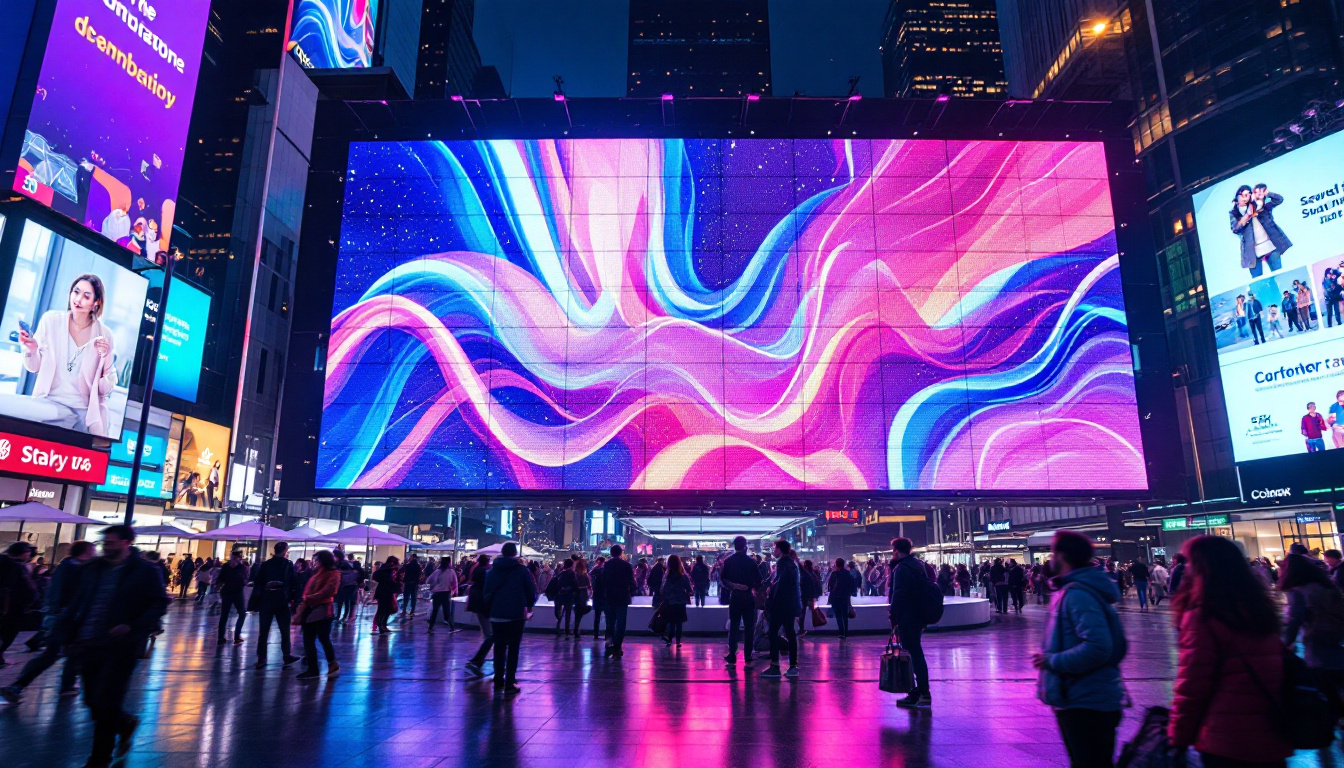
Large-scale LED displays are commonly used in digital signage, advertising billboards, and stadium screens. These true LED displays can achieve extremely high brightness levels, making them visible even in direct sunlight. Their modular design allows for massive screen sizes and flexible configurations.
Industrial and Medical Applications
In industrial environments, LCDs are favored for their reliability and clarity in control panels and instrumentation. Medical devices also utilize LCD technology for displaying critical information with high precision.
The Future of Display Technology
Display technology continues to evolve rapidly, driven by consumer demand for better image quality, thinner designs, and energy efficiency. Emerging technologies such as microLED and quantum dot displays promise to push the boundaries further.
Quantum Dot LCDs
Quantum dot technology enhances LCD displays by adding a layer of semiconductor nanocrystals that emit precise colors when illuminated by LEDs. This results in wider color gamuts and improved brightness, offering a middle ground between traditional LCDs and OLEDs.
Flexible and Transparent Displays
Advancements in OLED and microLED manufacturing have enabled flexible and transparent displays, opening new possibilities for wearable devices, automotive dashboards, and innovative user interfaces. These displays can bend, fold, or even be integrated into windows and glass surfaces.
Sustainability Considerations
As environmental concerns grow, manufacturers are focusing on reducing the ecological footprint of display production and operation. LED-backlit LCDs and OLEDs are more energy-efficient than older technologies, but ongoing research aims to develop even greener alternatives with recyclable materials and lower power consumption.
Conclusion
Understanding the distinctions between LCD and LED displays is crucial in navigating the diverse landscape of screen technologies. While LCD refers to the liquid crystal technology that modulates light, LED can refer either to the backlighting method used in LCDs or to emissive displays like OLED and microLED where each pixel emits its own light.
Each technology offers unique advantages and trade-offs in terms of image quality, cost, durability, and applications. As technology advances, innovations like quantum dots, microLED, and flexible displays promise to enhance visual experiences further, making screens more vibrant, efficient, and versatile than ever before.
For consumers and professionals alike, staying informed about these technologies ensures better choices when selecting devices and understanding the capabilities behind the screens that dominate modern life.
Discover Cutting-Edge LED Displays with LumenMatrix
As you consider the future of display technology for your personal or professional needs, LumenMatrix stands at the forefront of LED innovation. With a comprehensive range of solutions from Indoor and Outdoor LED Wall Displays to specialized options like Vehicle LED Displays and LED Sports Displays, LumenMatrix is committed to transforming your visual communication. Whether you’re looking to captivate audiences with a Floor LED Display, make a statement with a Custom LED Display, or streamline with an All-in-One LED Display, our mission is to provide you with displays that deliver unparalleled engagement and clarity. Check out LumenMatrix LED Display Solutions today and experience the pinnacle of vibrant, efficient, and versatile screen technology.