In the fast-paced world of sports, real-time information is king. Fans, commentators, and broadcasters alike rely on instant updates to keep up with scores, player stats, and game-changing moments. At the heart of this information revolution is the digital sports ticker—an LED display technology that has transformed how sports data is presented and consumed. This article delves into the technology behind digital sports tickers, their applications, and why they are indispensable in today’s sports environment.
Understanding the Basics of LED Displays
What is an LED Display?
LED, or Light Emitting Diode, displays are screens composed of tiny light sources that emit light when an electric current passes through them. Unlike traditional LCD or plasma screens, LEDs produce their own light, resulting in brighter images, better contrast, and energy efficiency. LED displays can be configured into various sizes and shapes, making them ideal for large-scale installations like sports arenas and stadiums.
LED technology has evolved significantly since its inception. Modern LED displays use surface-mount technology (SMT) LEDs, which are smaller, more reliable, and capable of displaying millions of colors. This advancement allows digital sports tickers to deliver crisp, vibrant visuals that are easily readable from a distance, even under direct sunlight.
Types of LED Displays Used in Sports Tickers
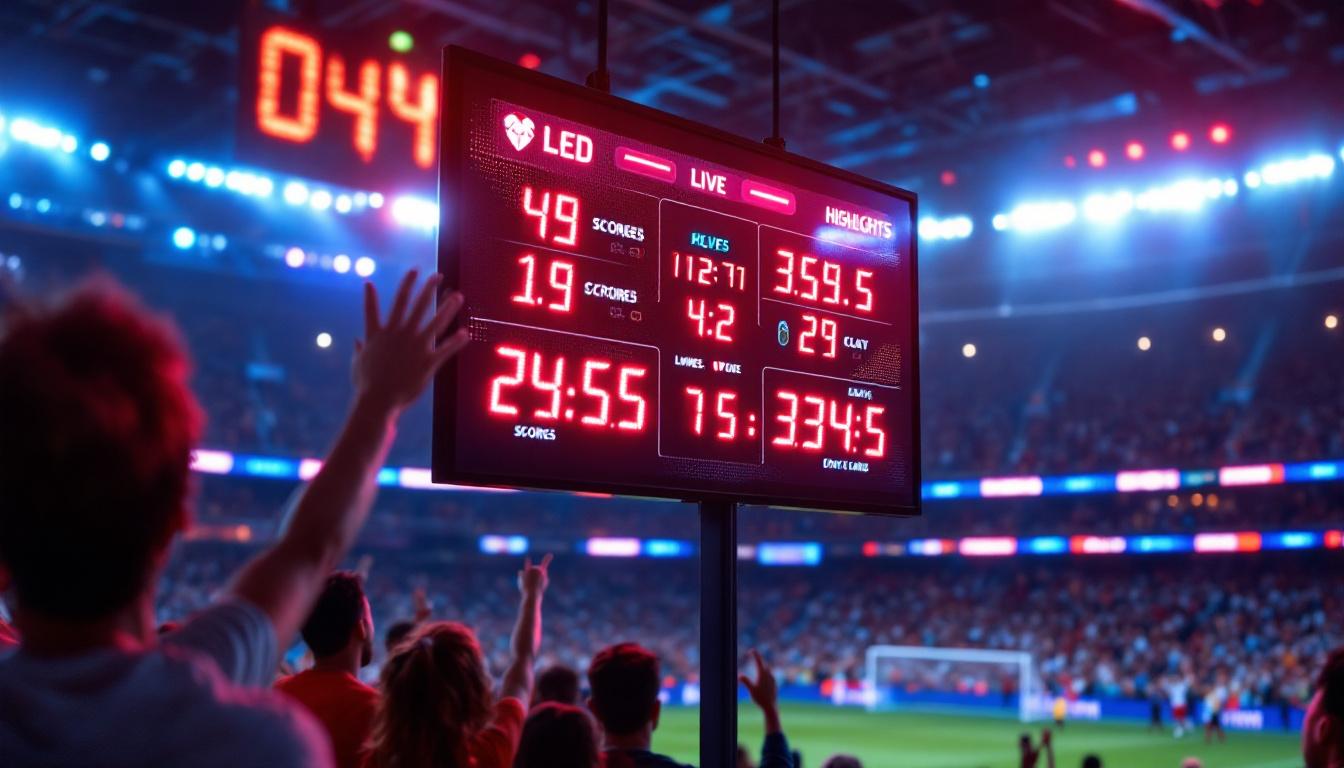
Sports tickers typically employ two main types of LED displays: single-color and full-color. Single-color LED tickers often use red LEDs due to their high visibility and low power consumption. These are common in older or more traditional scoreboards where only numeric or textual information is displayed.
Full-color LED displays, on the other hand, use red, green, and blue LEDs combined to produce a wide spectrum of colors. This allows for dynamic graphics, animations, and richer content presentation. Modern stadiums increasingly favor full-color tickers to enhance fan engagement and provide a more immersive experience.
The Role of Digital Sports Tickers in Modern Sports
Real-Time Score Updates and Statistics
One of the primary functions of digital sports tickers is to provide real-time updates on scores and game statistics. Whether it’s a basketball game, soccer match, or tennis tournament, fans want to know the latest scores, time remaining, fouls, and other critical data instantly. Digital tickers make this possible by connecting to live data feeds and updating the display in seconds.
For example, during the 2023 FIFA Women’s World Cup, stadiums across the globe utilized LED tickers to broadcast live scores and player stats. This immediacy not only keeps fans informed but also enhances the viewing experience for those attending in person or watching broadcasts.
Enhancing Fan Engagement and Experience
Beyond scores, digital sports tickers contribute to the overall fan experience by displaying interactive content such as player profiles, upcoming fixtures, and promotional messages. Many venues integrate social media feeds and fan polls on their LED tickers, encouraging audience participation and creating a more vibrant atmosphere.
In the NBA, for instance, arenas use LED tickers to show live Twitter feeds and fan reactions during games. This integration of social media with real-time sports data creates a dynamic environment that resonates with younger, tech-savvy audiences.
Supporting Broadcast and Media Production
Digital sports tickers are also invaluable tools for broadcasters and media production teams. They provide a constant stream of verified data that can be overlaid on live broadcasts, ensuring accuracy and consistency. This is particularly important during high-stakes events where every second counts, and misinformation can lead to viewer confusion.
Advanced LED tickers can be synchronized with broadcast graphics systems, allowing seamless transitions between on-screen data and in-stadium displays. This synchronization was notably effective during the 2022 Winter Olympics, where LED tickers across venues fed real-time stats to both in-person audiences and global television viewers.
Technical Components of Digital Sports Tickers
Hardware Architecture
A typical digital sports ticker consists of several key hardware components: the LED panel, control system, data input interface, and power supply. The LED panel is the visible part, made up of thousands of individual LEDs arranged in a matrix. The control system manages the data processing and display functions, often using specialized software to format and schedule content.
Data input interfaces connect the ticker to external data sources such as sports data providers, internal databases, or live feeds. These interfaces support various protocols including Ethernet, Wi-Fi, and serial connections. The power supply ensures stable and efficient operation, often incorporating backup systems to prevent outages during critical moments.
Software and Data Integration
Software plays a crucial role in managing the content displayed on digital sports tickers. Modern systems use content management platforms that allow operators to customize messages, schedule updates, and integrate multiple data streams. These platforms often include APIs (Application Programming Interfaces) to pull live data from official sports statistics providers like Sportradar or Stats Perform.
Data accuracy and latency are critical considerations. Sports tickers must process and display information with minimal delay to maintain credibility and usefulness. Advanced error-checking and synchronization algorithms are employed to ensure that displayed data matches live events precisely.
Display Resolution and Viewing Distance
The resolution of an LED sports ticker is determined by its pixel pitch—the distance between the centers of adjacent LEDs. Smaller pixel pitches yield higher resolution and sharper images but come at a higher cost. For sports tickers, the pixel pitch is chosen based on the typical viewing distance of the audience.
In large stadiums, where viewers may be hundreds of feet away, a pixel pitch of 10mm to 20mm is common, balancing clarity and cost. For closer viewing areas, such as press boxes or VIP lounges, finer pixel pitches of 4mm to 6mm provide detailed visuals. Understanding these technical nuances ensures that the ticker effectively communicates information to its intended audience.
Advantages of Using Digital Sports Tickers
Improved Visibility and Accessibility
LED sports tickers offer superior visibility compared to traditional scoreboards or printed signage. Their brightness and color contrast make them readable in various lighting conditions, including direct sunlight and nighttime events. This accessibility ensures that all spectators, regardless of their seating location, can stay informed throughout the game.
Additionally, digital tickers can support multiple languages and customizable fonts, catering to diverse audiences and enhancing inclusivity in international sports events.
Flexibility and Dynamic Content
Unlike static displays, digital sports tickers can change content on the fly. This flexibility allows event organizers to adapt messaging based on game progress, special announcements, or emergency information. For example, during halftime, a ticker might switch from live scores to highlight replays or sponsor advertisements.
This dynamic capability also opens revenue opportunities through targeted advertising and sponsorships, making digital tickers a valuable asset beyond mere information dissemination.
Cost Efficiency and Longevity
While the initial investment in digital LED tickers can be significant, their long-term benefits outweigh the costs. LEDs consume less power than traditional lighting, reducing operational expenses. Moreover, LEDs have a longer lifespan—often exceeding 100,000 hours—minimizing maintenance and replacement needs.
These factors contribute to the growing adoption of LED tickers in sports venues worldwide, from community arenas to professional stadiums.
Challenges and Considerations in Implementing Digital Sports Tickers
Installation and Infrastructure Requirements
Installing a digital sports ticker requires careful planning and infrastructure support. Factors such as mounting location, power supply, weather protection, and network connectivity must be addressed to ensure reliable operation. Outdoor tickers, in particular, need to be weatherproof and resistant to environmental conditions like rain, wind, and temperature fluctuations.
Additionally, integrating the ticker with existing stadium systems and broadcast equipment can be complex. Collaboration between technical teams, vendors, and venue management is essential to achieve seamless functionality.
Data Security and Integrity
As digital sports tickers rely on live data feeds, ensuring data security and integrity is paramount. Unauthorized access or data tampering could lead to misinformation, damaging the credibility of the event and potentially causing legal issues.
Implementing secure communication protocols, regular software updates, and robust authentication mechanisms helps protect the ticker system from cyber threats and operational disruptions.
Balancing Information Overload
While digital tickers can display a wealth of information, there is a risk of overwhelming spectators with too much data. Effective design and content management are necessary to prioritize critical updates and maintain readability. Using concise messages, appropriate font sizes, and clear color coding can help convey information efficiently without distracting or confusing the audience.
The Future of Digital Sports Tickers
Integration with Augmented Reality and AI
Emerging technologies like augmented reality (AR) and artificial intelligence (AI) are poised to revolutionize digital sports tickers. AR can overlay live statistics and player information directly onto fans’ mobile devices or smart glasses, complementing physical LED tickers. AI-driven analytics can provide predictive insights and personalized content, enhancing engagement.
For example, AI could analyze game data in real time to highlight key moments or suggest strategic plays, which can then be displayed on tickers or broadcast graphics.
Enhanced Interactivity and Fan Participation
Future sports tickers may incorporate interactive features allowing fans to vote on MVPs, participate in quizzes, or access exclusive content via QR codes displayed on the ticker. This interactivity fosters a deeper connection between fans and the sport, transforming passive viewing into an active experience.
Sustainability and Energy Efficiency
As environmental concerns grow, the sports industry is focusing on sustainability. Advances in LED technology continue to improve energy efficiency, and the use of solar power or other renewable energy sources to power digital tickers is gaining traction. Sustainable design not only reduces operational costs but also aligns with the values of eco-conscious fans and organizations.
Conclusion
Digital sports tickers powered by LED display technology have become an essential component of modern sports venues. Their ability to deliver real-time, dynamic, and visually appealing information enhances the fan experience, supports media production, and opens new avenues for engagement and revenue. While challenges exist in installation, data security, and content management, ongoing technological advancements promise even greater capabilities in the near future.
For sports organizations, broadcasters, and venue operators, investing in high-quality digital sports tickers is a strategic move that meets the demands of today’s fast-evolving sports landscape. As fans continue to seek instant access to data and immersive experiences, LED sports tickers will remain at the forefront of sports technology innovation.
Explore Cutting-Edge LED Display Solutions with LumenMatrix
Ready to elevate your sports venue with the latest in LED display technology? LumenMatrix is at the forefront of creating immersive visual experiences that captivate fans and enhance brand engagement. From dynamic digital sports tickers to versatile solutions like Indoor and Outdoor LED Wall Displays, Vehicle LED Displays, and more, LumenMatrix offers a wide range of innovative products designed to revolutionize visual communication. Check out LumenMatrix LED Display Solutions today and discover how our state-of-the-art displays can transform your space and bring your vision to life.