Choosing the right monitor can be a daunting task, especially with the plethora of display technologies available today. Among the most common terms encountered are LCD and LED monitors. While these terms are often used interchangeably, they represent different technologies and characteristics that can significantly impact your viewing experience. This article delves deep into the distinctions between LCD and LED monitors, explains what LED displays truly mean, and helps you make an informed decision when purchasing your next screen.
Understanding the Basics: What Are LCD and LED Monitors?
The Foundation: LCD Technology
LCD stands for Liquid Crystal Display. It is a flat-panel display technology that uses liquid crystals sandwiched between two layers of glass or plastic. These crystals do not emit light by themselves; instead, they manipulate light passing through them to produce images. To make the display visible, an external light source is required, which is where backlighting comes into play.
Since its commercial introduction in the late 20th century, LCD technology has revolutionized screens, replacing bulky cathode ray tube (CRT) monitors with thinner, lighter, and more energy-efficient displays. LCDs are widely used in everything from computer monitors and televisions to smartphones and digital watches.
LED Monitors: A Misnomer or an Evolution?
LED stands for Light Emitting Diode. When people refer to LED monitors, they are typically talking about LCD monitors that use LED backlighting instead of the older cold cathode fluorescent lamps (CCFLs). This distinction is crucial because the core display technology remains LCD, but the method of illumination differs.
In other words, an LED monitor is essentially an LCD monitor with LED backlights. This change in backlighting technology brings several improvements in terms of energy efficiency, brightness, color accuracy, and overall display quality.
Backlighting Technologies: CCFL vs LED
CCFL Backlighting: The Traditional Approach
Before LED backlighting became mainstream, LCD monitors relied on cold cathode fluorescent lamps (CCFLs) to illuminate the screen. CCFLs are fluorescent tubes that provide uniform light across the panel. While effective, CCFLs have several drawbacks:
- Energy Consumption: CCFLs consume more power compared to LEDs, making devices less energy-efficient.
- Thickness: The tubes require more space, resulting in thicker and heavier monitors.
- Color and Brightness Limitations: CCFLs offer less precise control over brightness and color accuracy.
- Warm-Up Time: CCFLs take a few seconds to reach full brightness after powering on.
LED Backlighting: Modern and Efficient
LED backlighting uses arrays of light-emitting diodes placed behind or along the edges of the LCD panel. This technology offers several advantages:
- Energy Efficiency: LEDs consume less power, reducing electricity costs and environmental impact.
- Slimmer Designs: LEDs are smaller and more flexible in placement, enabling ultra-thin monitors.
- Improved Brightness and Contrast: LED backlights can be dimmed or brightened more precisely, enhancing picture quality.
- Longer Lifespan: LEDs generally last longer than CCFLs, reducing maintenance and replacement costs.
- Instant On: LED backlights reach full brightness immediately without warm-up time.
Because of these benefits, LED-backlit LCD monitors have largely replaced CCFL-backlit models in the consumer market.
Types of LED Backlighting: Edge-Lit vs Full-Array
Edge-Lit LED Displays
Edge-lit LED monitors position the LED lights along the edges of the screen. Light is then diffused across the display using light guides and reflectors. This design allows manufacturers to create extremely thin and lightweight monitors, which is ideal for modern aesthetics and portability.
However, edge-lit displays sometimes struggle with uniform brightness and contrast, especially in darker scenes, because the light source is limited to the edges. This can lead to issues such as light bleeding or uneven illumination.
Full-Array LED Displays
Full-array LED monitors have LEDs distributed evenly behind the entire screen surface. This arrangement allows for more precise control of brightness zones, a feature known as local dimming. Local dimming enhances contrast by dimming LEDs in dark areas while keeping bright areas illuminated, resulting in deeper blacks and more vivid images.
Full-array LED displays tend to be thicker and more expensive than edge-lit models but offer superior picture quality, making them popular among professionals and enthusiasts who prioritize image fidelity.
Comparing LCD and LED Monitors: Key Factors to Consider
Image Quality and Color Accuracy
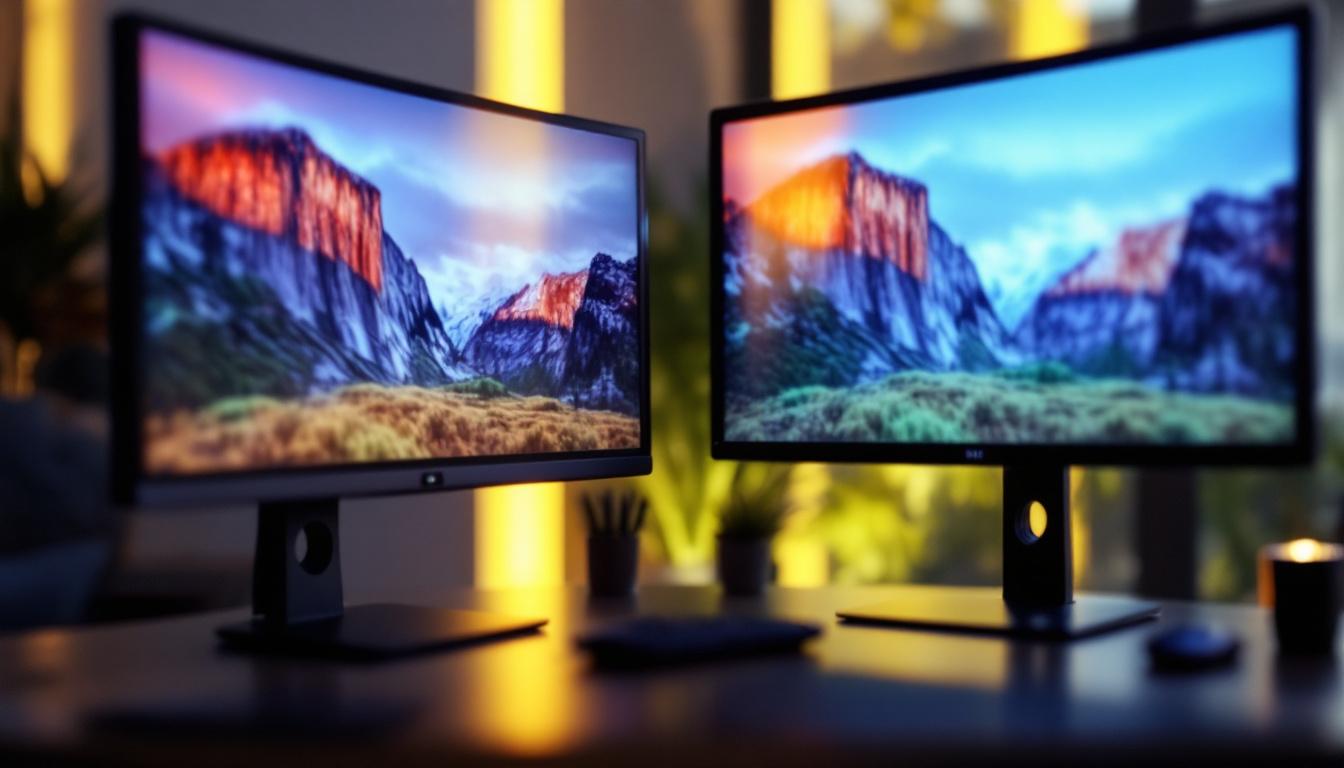
While both LCD and LED monitors use liquid crystal technology to form images, the type of backlighting significantly impacts image quality. LED-backlit monitors generally provide better color accuracy, higher brightness levels, and improved contrast ratios compared to CCFL-backlit LCDs.
For users involved in graphic design, video editing, or any color-critical work, LED monitors with full-array backlighting and local dimming can offer more precise color reproduction and deeper blacks, enhancing the overall visual experience.
Energy Efficiency and Environmental Impact
Energy consumption is an increasingly important consideration for both consumers and businesses. LED-backlit monitors consume approximately 30-50% less power than their CCFL counterparts, according to data from the U.S. Department of Energy. This efficiency not only lowers electricity bills but also reduces carbon footprints.
Additionally, LEDs do not contain mercury, a hazardous substance found in CCFLs, making LED monitors more environmentally friendly and easier to dispose of safely.
Durability and Lifespan
LED backlights typically have a longer lifespan, often exceeding 50,000 hours of use, compared to around 30,000 hours for CCFL backlights. This translates to fewer replacements and longer-lasting monitors, which is a significant advantage for both home users and businesses relying on stable, long-term display solutions.
Cost Considerations
Historically, LED monitors were more expensive than CCFL-backlit LCDs due to the newer technology and manufacturing processes. However, as LED technology has matured and become the industry standard, prices have dropped significantly.
Today, LED-backlit monitors are widely available across all price ranges, from budget-friendly models to high-end professional displays. When choosing a monitor, it’s essential to balance cost with desired features such as resolution, refresh rate, and color accuracy.
Thickness and Design
One of the most visible differences between CCFL and LED monitors is physical design. LED backlighting allows for much thinner and lighter monitors, which are more aesthetically pleasing and easier to fit into modern workspaces.
Edge-lit LED monitors can be as thin as a few millimeters, enabling sleek designs that complement minimalist setups. This is a significant factor for users who value both form and function.
Common Misconceptions About LCD and LED Monitors
“LED Monitors Are Completely Different From LCDs”
As mentioned earlier, LED monitors are a subset of LCD monitors, distinguished by their backlighting method. The display panel itself remains liquid crystal-based. Understanding this prevents confusion and helps consumers make better purchasing decisions.
“LED Monitors Always Have Better Picture Quality”
While LED backlighting generally improves image quality, not all LED monitors are created equal. Factors such as panel type (IPS, TN, VA), resolution, refresh rate, and local dimming capabilities play significant roles in overall performance.
For example, a high-quality CCFL-backlit IPS panel might outperform a low-end edge-lit LED monitor in color accuracy and viewing angles.
“OLED and LED Are the Same”
Organic Light Emitting Diode (OLED) technology is fundamentally different from LED-backlit LCDs. OLED pixels emit their own light, allowing for perfect blacks and exceptional contrast ratios without the need for backlighting. OLED monitors are gaining popularity but are typically more expensive and less common than LED-backlit LCDs.
Which Monitor Should You Choose? Use Cases and Recommendations
For General Use and Office Work
For everyday tasks such as browsing, word processing, and video streaming, an LED-backlit LCD monitor offers excellent value. Edge-lit LED monitors with IPS panels provide good color accuracy and wide viewing angles at affordable prices.
Energy efficiency and slim designs make these monitors ideal for home offices and corporate environments.
For Gamers
Gamers should prioritize monitors with fast response times, high refresh rates (120Hz or higher), and low input lag. Many gaming monitors use LED backlighting combined with TN or IPS panels to achieve these specifications.
Full-array LED monitors with local dimming can enhance visual immersion by delivering better contrast and deeper blacks in games with dark scenes.
For Creative Professionals
Graphic designers, photographers, and video editors require monitors with exceptional color accuracy and consistency. Full-array LED-backlit LCD monitors with IPS panels are the preferred choice, offering wide color gamut coverage (such as Adobe RGB or DCI-P3) and precise local dimming.
Calibration tools and support for HDR (High Dynamic Range) further improve the quality and fidelity of displayed content.
For Budget-Conscious Buyers
Budget buyers can find reliable LED-backlit LCD monitors at competitive prices. While some compromises in features or panel quality may be necessary, the energy savings and improved longevity of LED monitors make them a smart investment.
The Future of Display Technology
Display technology continues to evolve rapidly. While LED-backlit LCD monitors dominate the current market, emerging technologies like OLED, MicroLED, and Mini-LED promise even better image quality, energy efficiency, and design flexibility.
Mini-LED, for example, uses thousands of tiny LEDs for backlighting, enabling even more precise local dimming and improved HDR performance. This technology is beginning to appear in premium monitors and laptops, bridging the gap between traditional LED and OLED displays.
Understanding the strengths and limitations of LCD and LED monitors today provides a solid foundation for evaluating future technologies as they become mainstream.
Conclusion
In summary, the term “LED monitor” refers to an LCD monitor that uses LED backlighting instead of the older CCFL method. This seemingly small difference leads to significant improvements in energy efficiency, design, brightness, and image quality. Choosing between LCD and LED monitors essentially means choosing between older CCFL-backlit models and modern LED-backlit displays.
For most consumers and professionals, LED-backlit LCD monitors offer the best balance of performance, cost, and environmental benefits. When selecting a monitor, consider your specific needs—whether it’s gaming, professional work, or general use—and look beyond the terminology to features such as panel type, resolution, refresh rate, and local dimming capabilities.
As display technology advances, staying informed about these distinctions will help you make smarter purchases and enjoy a superior viewing experience.
Discover the Future of Display with LumenMatrix
Ready to experience the pinnacle of LED display technology? LumenMatrix is at the forefront of innovation, offering a wide range of LED display solutions tailored to meet your needs. From captivating Indoor LED Walls to dynamic Outdoor LED Displays, and from versatile Vehicle LED Displays to sleek LED Poster Displays, our products are designed to revolutionize visual communication and enhance your brand’s visibility. Elevate your space with our cutting-edge LED Sports Displays, interactive Floor LED Displays, or the customizable allure of our Custom LED Displays. Embrace the clarity and impact of LumenMatrix’s All-in-One LED Display and LED Transparent Display solutions. Don’t just take our word for it—see the difference for yourself. Check out LumenMatrix LED Display Solutions today and transform your visual experience.