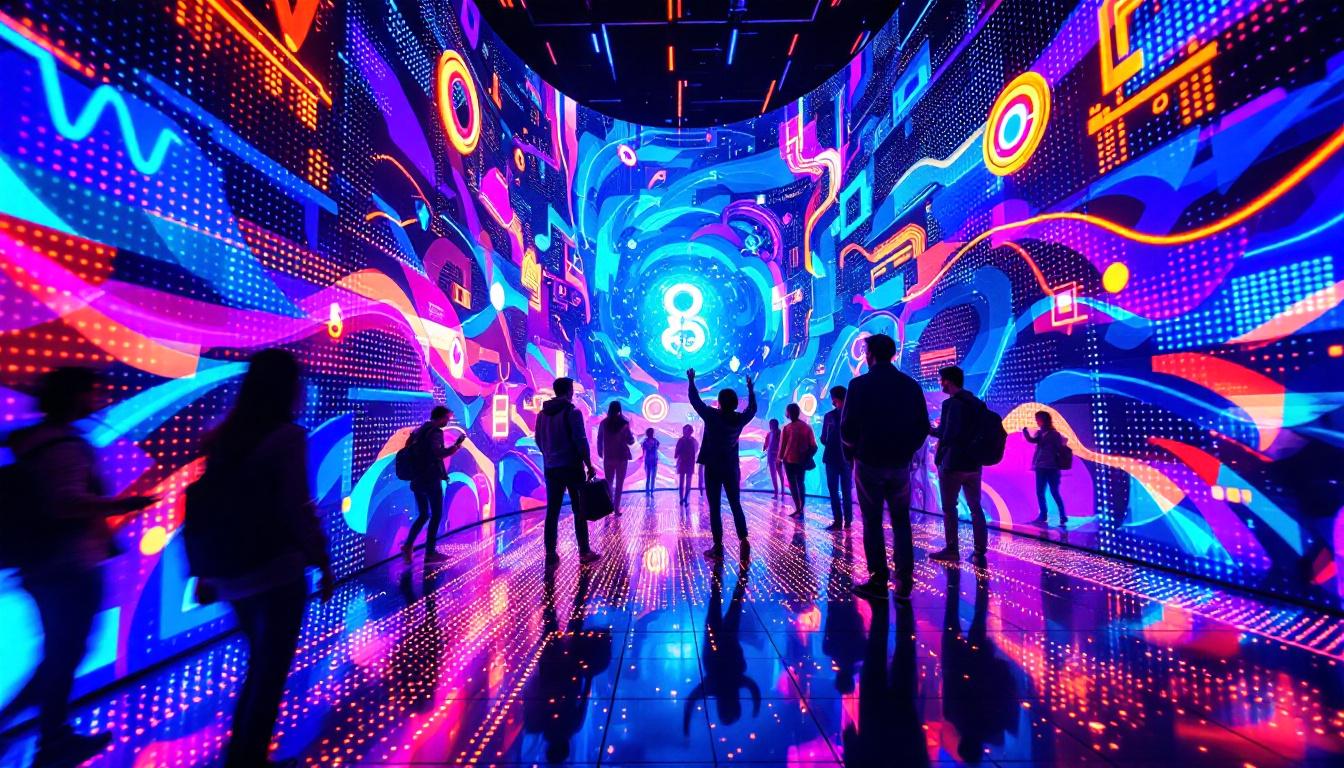
In the world of visual technology, LED displays have become a cornerstone for delivering vibrant, high-resolution images across various applications—from stadium screens to digital billboards, and from immersive event backdrops to retail signage. One of the critical technical components that ensure these displays project images correctly and seamlessly is the projection matrix. Understanding how projection matrices work and how to calculate them is essential for professionals working with LED displays, especially in complex setups involving multiple screens or projectors.
This article dives deep into the concept of projection matrices, their role in LED display technology, and how projection matrix calculators simplify the process of achieving perfect image alignment and distortion correction. Whether you are a visual technician, event producer, or digital signage specialist, this comprehensive guide will equip you with the knowledge to optimize LED display performance effectively.
Understanding Projection Matrices in LED Displays
What Is a Projection Matrix?
A projection matrix is a mathematical tool used in computer graphics and display technology to transform three-dimensional coordinates into two-dimensional coordinates on a screen. In the context of LED displays, it defines how an image or video content is mapped onto the physical surface of the display, accounting for factors like perspective, distortion, and alignment.
Simply put, the projection matrix controls how the virtual content is projected onto the LED panel so that the displayed image appears correctly from the viewer’s perspective. This is especially important when the LED display is not flat or when the content is projected at an angle, which can cause distortions if not properly corrected. The mathematics behind projection matrices involves linear algebra, where transformations are applied to points in 3D space to achieve the desired 2D representation on the screen. This includes operations such as scaling, rotating, and translating the images to fit the display’s dimensions and orientation.
In practical terms, the projection matrix is often represented as a 4×4 matrix in homogeneous coordinates, which allows for a more comprehensive representation of transformations. This matrix can be manipulated to adjust the field of view, aspect ratio, and near and far clipping planes, all of which are crucial for achieving a realistic and visually appealing output on LED displays. Understanding these mathematical foundations can significantly enhance the quality and effectiveness of visual presentations.
Why Projection Matrices Matter for LED Displays
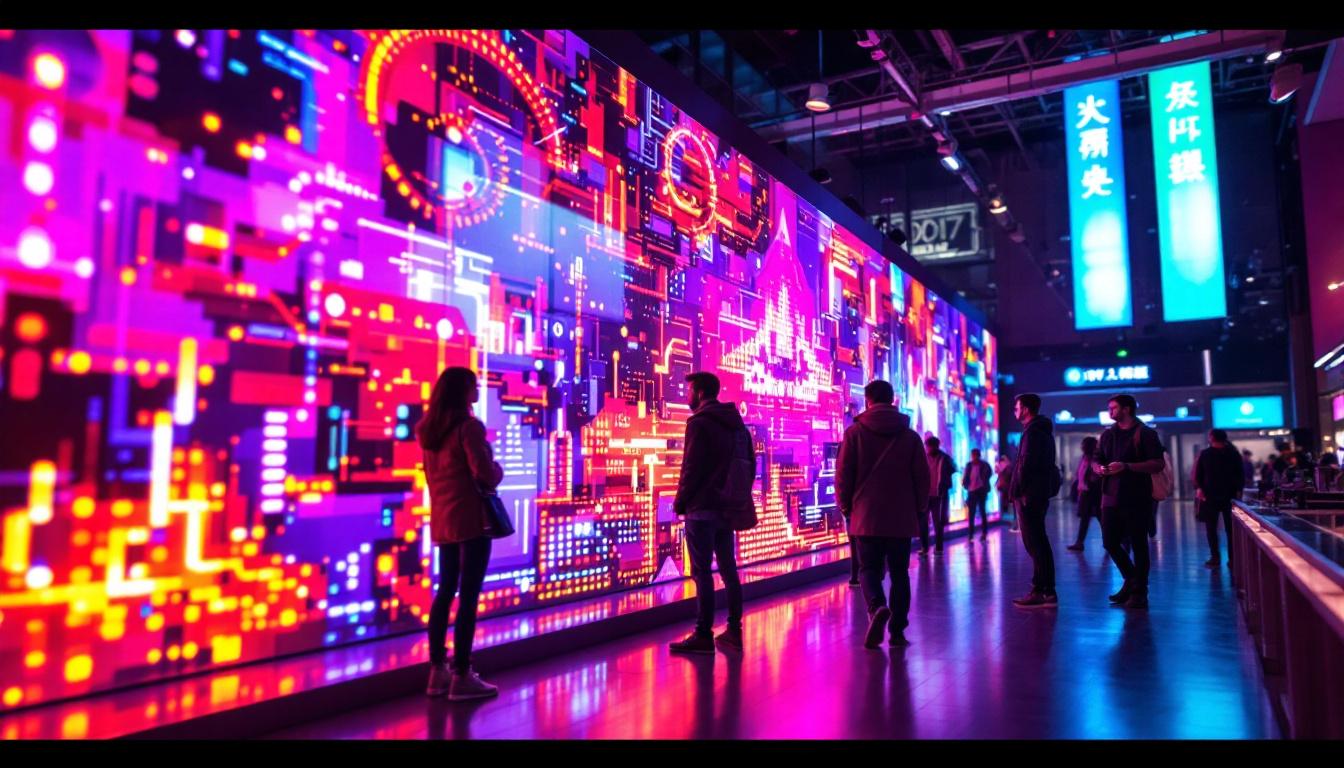
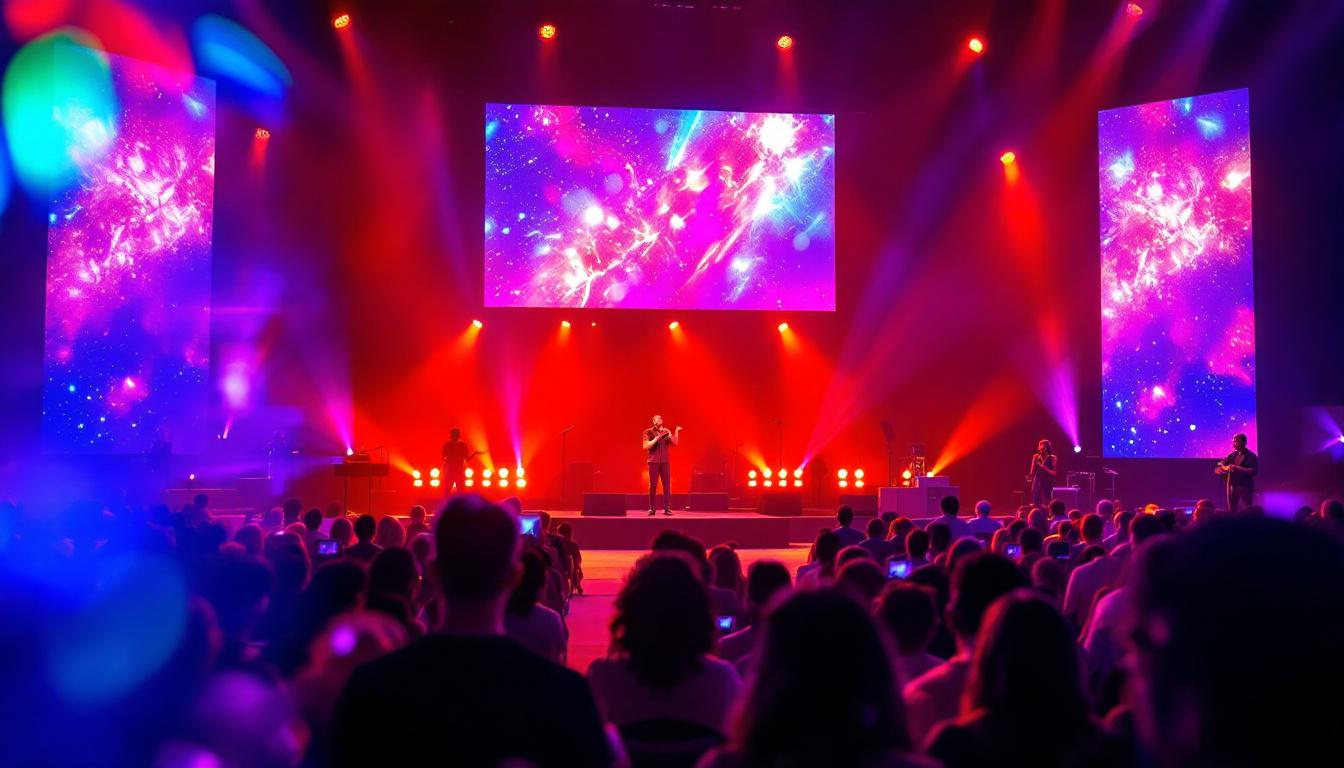
LED displays often serve as dynamic canvases in environments where perfect image alignment is crucial. For example, in large-scale events, LED walls may be curved or angled to fit the venue’s architecture. Without the correct projection matrix, images can appear warped, stretched, or misaligned, detracting from the viewer experience and reducing the impact of the visual content. The precision of the projection matrix becomes even more vital in applications such as concerts, sports events, or exhibitions, where the audience is spread across various angles and distances from the display.
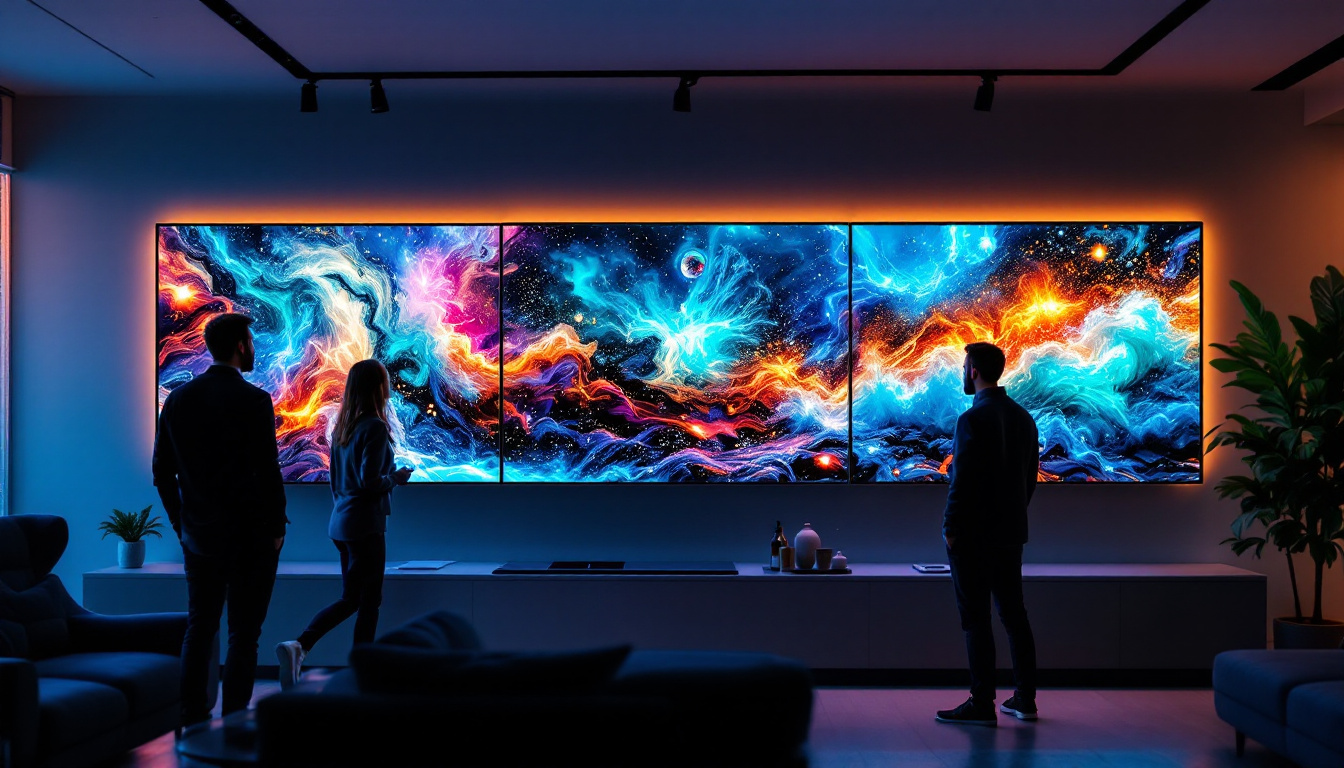
Moreover, when multiple LED panels are tiled together to create a larger display, each panel’s content must be precisely aligned to avoid visible seams or mismatches. Projection matrices help achieve this by enabling geometric corrections and blending, ensuring a seamless and immersive visual output. Advanced techniques such as edge blending and color calibration can be employed alongside projection matrices to enhance the overall visual coherence. This is particularly important in environments where high-definition visuals are essential, as any misalignment can lead to distracting artifacts that compromise the viewer’s engagement. Additionally, as technology evolves, the integration of real-time processing capabilities allows for dynamic adjustments to the projection matrices, accommodating changes in the display setup or content without compromising quality.
How Projection Matrix Calculators Work
The Role of Projection Matrix Calculators
Calculating the projection matrix manually requires a deep understanding of linear algebra and 3D geometry, which can be complex and time-consuming. Projection matrix calculators are specialized software tools designed to automate this process. They take input parameters such as screen dimensions, projector positions, viewing angles, and lens characteristics, then compute the necessary matrix to properly map the content onto the LED display.
Using these calculators, technicians can quickly generate projection matrices that correct for keystone distortion, perspective shifts, and other geometric anomalies. This automation not only saves time but also reduces errors, leading to more accurate and visually appealing results.
Input Parameters and Their Importance
To generate an accurate projection matrix, calculators require several key input parameters:
- Screen Size and Resolution: The physical dimensions and pixel density of the LED display determine how content should be scaled and mapped.
- Projector or Viewing Position: The location and angle of the projector or viewer relative to the screen affect how the image should be distorted to appear correct.
- Lens Characteristics: Lens focal length and distortion profiles influence how the projected image bends and stretches.
- Display Geometry: Curvature, tilt, or irregular shapes of the LED panels must be accounted for to avoid visual artifacts.
By accurately inputting these parameters, the calculator can produce a matrix that ensures the projected content looks natural and aligned from the intended viewing position.
Applications of Projection Matrices in LED Display Setups
Multi-Projector Blending and Warping
Large LED displays often require multiple projectors to cover the entire surface. In such cases, projection matrices are used to warp the images from each projector so that they blend seamlessly without visible edges or overlaps. This process, known as edge blending and geometric correction, relies heavily on accurate projection matrices.
Projection matrix calculators enable technicians to input the positions and angles of each projector and generate individual matrices that compensate for distortions. The result is a cohesive, high-resolution image that appears as if coming from a single source.
Curved and Irregular LED Displays
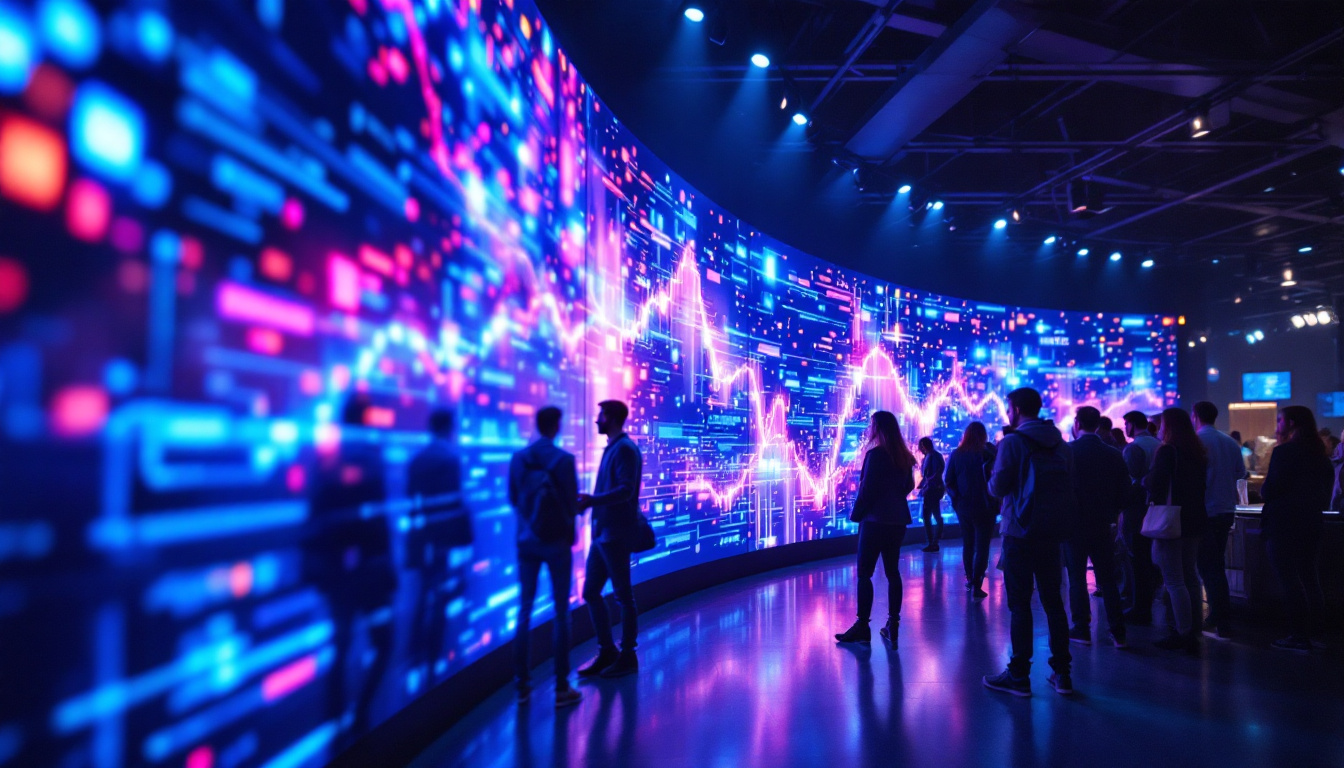
Curved LED walls and irregularly shaped displays are becoming increasingly popular in modern venues and exhibitions. These displays offer immersive and engaging experiences but introduce challenges in image projection. Standard flat projection matrices cannot handle the complex geometry of curved surfaces.
Projection matrix calculators designed for curved surfaces use advanced algorithms to map content accurately onto these shapes. By adjusting the projection matrix to the curvature, the displayed image maintains correct proportions and perspective, enhancing visual impact.
Interactive and Augmented Reality Installations
In interactive installations and augmented reality (AR) environments, LED displays often serve as dynamic backdrops that respond to user input or environmental changes. Projection matrices in these setups must be recalculated in real-time or near-real-time to adjust for shifting viewpoints or moving display elements.
Projection matrix calculators integrated with tracking systems and sensors enable adaptive image projection, ensuring that visuals remain aligned and immersive regardless of user movement or display configuration changes.
Step-by-Step Guide to Using a Projection Matrix Calculator
Step 1: Measure and Input Display Dimensions
Begin by accurately measuring the physical dimensions of the LED display, including height, width, and pixel pitch. Input these values into the calculator to define the target projection surface.
Step 2: Define Projector or Viewer Position
Specify the exact position and orientation of the projector or the intended viewer’s eye level relative to the display. This includes height, distance, and angle measurements. Precise input here is critical for accurate perspective correction.
Step 3: Enter Lens and Camera Parameters
Input the focal length, sensor size, and any known lens distortion coefficients if applicable. These parameters help the calculator model how the lens affects the projected image.
Step 4: Configure Display Geometry
If the LED display is curved or has an irregular shape, provide the curvature radius or geometric profile. Some calculators allow uploading 3D models or using presets for common shapes.
Step 5: Generate and Apply the Projection Matrix
Once all parameters are entered, run the calculation to generate the projection matrix. The output is typically a 4×4 matrix that can be imported into video processing software, media servers, or LED display controllers.
Apply the matrix to the content pipeline to correct the image projection. Verify the results visually and make fine adjustments if necessary.
Best Practices and Tips for Accurate Projection Matrix Calculation
Ensure Precise Measurements
Accurate input data is the foundation of a correct projection matrix. Use laser distance meters or calibrated tools to measure display dimensions and projector positions. Even small errors can lead to noticeable distortions.
Use Calibration Tools and Test Patterns
Employ calibration patterns such as grids or checkerboards during setup. These patterns help visually verify the alignment and distortion correction, making it easier to identify and correct issues.
Account for Environmental Factors
Consider ambient lighting, potential obstructions, and the viewing angle distribution in your setup. These factors influence how the projection matrix should be optimized to deliver the best visual experience.
Regularly Update Projection Matrices
For installations where the display or projector positions change frequently—such as touring events or temporary setups—recalculate the projection matrix each time to maintain image quality.
Future Trends in Projection Matrix Technology for LED Displays
Integration with AI and Machine Learning
Emerging technologies are beginning to leverage artificial intelligence to automate and optimize projection matrix calculations. AI-driven systems can analyze live video feeds and environmental data to dynamically adjust projection matrices, enhancing accuracy and reducing setup time.
Real-Time Adaptive Projection
Advancements in sensor technology and processing power are enabling real-time adaptive projection matrices that respond instantly to changes in viewer position or display configuration. This capability is particularly valuable for interactive installations and virtual reality environments.
Enhanced User Interfaces and Visualization Tools
Projection matrix calculators are evolving to include more intuitive user interfaces and 3D visualization tools. These improvements allow technicians to preview and tweak projection matrices in virtual environments before physical deployment, reducing trial-and-error during setup.
Conclusion
Projection matrices are fundamental to achieving high-quality, distortion-free images on LED displays, especially in complex or large-scale setups. Projection matrix calculators simplify the intricate mathematics behind image projection, enabling professionals to deliver visually stunning and perfectly aligned content with greater efficiency.
As LED display technology continues to advance and applications become more sophisticated, mastering projection matrix calculation will remain a vital skill for visual technicians and digital signage experts. By understanding the principles outlined in this article and leveraging modern tools, professionals can ensure their LED displays captivate audiences with flawless imagery every time.
Discover LumenMatrix LED Display Solutions
Ready to elevate your visual displays to the next level? LumenMatrix is at the forefront of LED display innovation, offering a wide range of solutions tailored to your needs. Whether you’re looking for Indoor LED Walls, Outdoor Displays, or specialized options like Vehicle and Sports Displays, our cutting-edge technology is designed to make your brand stand out. Experience the power of flawless, high-impact visuals with LumenMatrix. Check out LumenMatrix LED Display Solutions today and transform your visual communication.