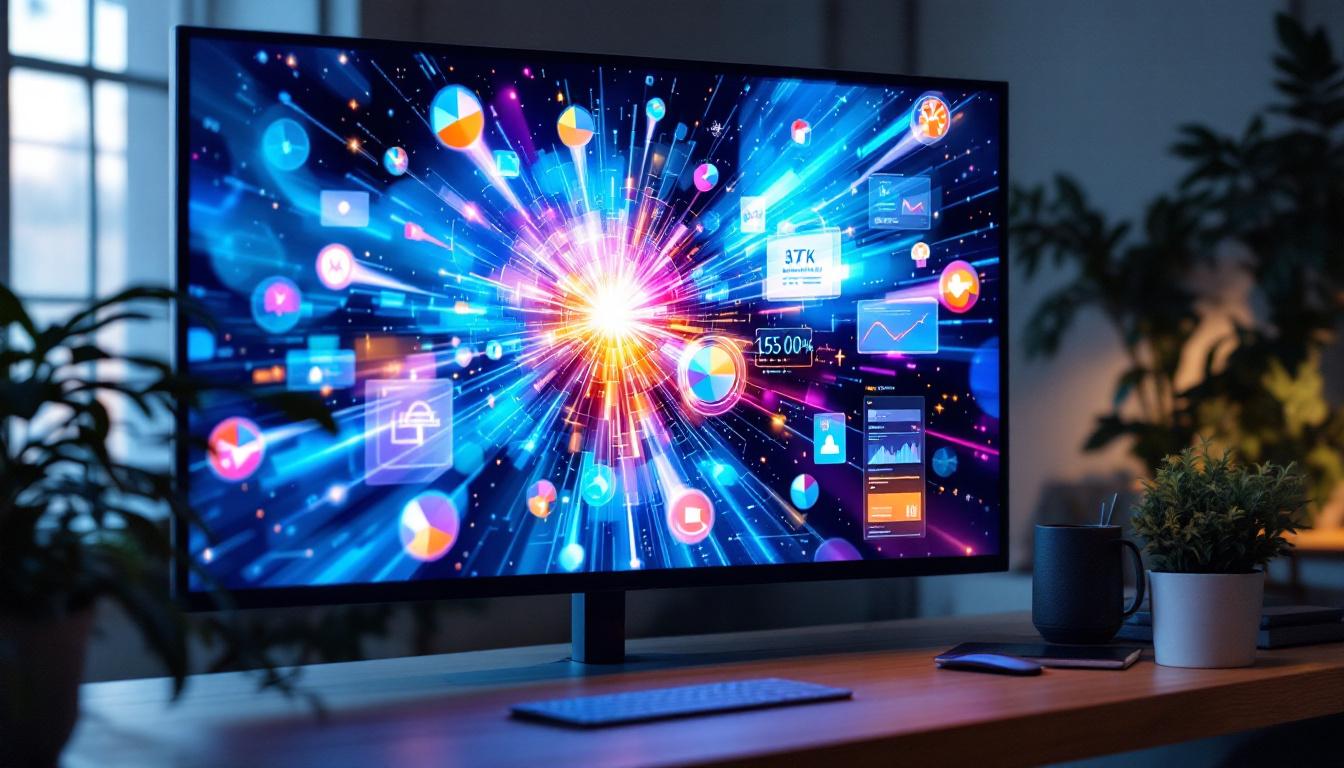
In today’s digital landscape, large touch monitors have become essential tools across various industries—from education and corporate environments to retail and healthcare. These interactive displays combine the intuitive nature of touchscreens with the vibrant visual quality of LED technology, creating dynamic user experiences that enhance collaboration, communication, and productivity. This article delves into the technology behind large touch monitors with LED displays, exploring their components, advantages, applications, and future trends.
Understanding LED Technology in Large Touch Monitors
What is an LED Display?
LED, or Light Emitting Diode, displays utilize tiny semiconductor devices that emit light when an electric current passes through them. Unlike traditional LCDs that rely on backlighting, LED displays use these diodes as the light source, enabling better brightness, contrast, and energy efficiency. In large touch monitors, LED technology is often integrated either as direct LED panels or as LED-backlit LCDs, both of which contribute to superior image quality. The advantages of LED displays extend beyond mere aesthetics; they also provide faster refresh rates and improved response times, making them ideal for interactive applications where real-time feedback is essential.
Types of LED Displays Used in Large Touch Monitors
There are primarily two types of LED displays found in large touch monitors:
- Direct LED (or OLED) Panels: Each pixel is an individual LED that emits its own light, offering exceptional contrast ratios and color accuracy. While OLEDs are more common in smaller devices, emerging technologies are making them viable for larger formats. These panels are particularly beneficial for environments where deep blacks and vibrant colors are crucial, such as in digital signage or high-end presentations.
- LED-Backlit LCD Panels: These use LEDs as a backlight behind an LCD matrix. This approach is more cost-effective and widely used in commercial large touch monitors, providing bright displays with good color reproduction. The versatility of LED-backlit LCDs allows for various configurations, including edge-lit and full-array backlighting, which can further enhance the viewing experience by improving uniformity and reducing glare.
Understanding these distinctions helps users select the right monitor based on their needs, balancing factors like image quality, price, and energy consumption. Additionally, the choice of LED technology can significantly impact the longevity and maintenance of the monitor. For instance, while OLED panels may offer superior visual performance, they can be more susceptible to burn-in, a phenomenon where static images can become permanently etched onto the screen. Conversely, LED-backlit LCDs tend to have a longer lifespan and are less prone to such issues, making them a practical choice for environments with varied content display.
Key Features of Large Touch Monitors with LED Displays
Touch Technology: Capacitive vs. Infrared
Large touch monitors employ different touch technologies, with capacitive and infrared (IR) being the most prevalent. Capacitive touchscreens detect touch through the electrical properties of the human body, providing high accuracy and multi-touch support. Infrared touchscreens use an array of IR sensors to detect touch points, allowing for larger screen sizes and stylus compatibility.
For large-format monitors, IR technology is often preferred due to its scalability and durability, especially in public or high-traffic environments. Capacitive touchscreens, meanwhile, excel in environments demanding high precision and responsiveness. In educational settings, for instance, capacitive screens can facilitate interactive learning experiences, enabling teachers and students to engage with content dynamically. Conversely, IR technology can be found in kiosks and information booths, where users can interact without the need for direct contact, reducing wear and tear on the screen surface.
Resolution and Screen Size
Resolution plays a critical role in the clarity and detail of images displayed on large touch monitors. Common resolutions include Full HD (1920×1080), 4K UHD (3840×2160), and even 8K in cutting-edge models. Higher resolution ensures sharper text and images, which is vital for applications like digital signage, design work, and interactive presentations.
Screen sizes for large touch monitors typically range from 32 inches to over 85 inches. Choosing the right size depends on the intended use, viewing distance, and environment. For example, conference rooms often utilize 55-75 inch displays to ensure visibility for all participants. In retail environments, larger screens can attract customers and enhance their shopping experience by displaying vibrant advertisements and interactive catalogs. Additionally, the aspect ratio can also influence the viewing experience; for instance, ultra-wide monitors can provide a more immersive experience for gaming or simulations, allowing for a broader field of view.
Brightness and Contrast Ratios
Brightness, measured in nits, and contrast ratio are crucial for visibility, especially in well-lit environments. LED displays generally offer brightness levels between 300 to 700 nits, with some commercial models exceeding 1000 nits for outdoor or brightly lit spaces.
High contrast ratios enhance the distinction between dark and light areas on the screen, improving readability and visual comfort. This is particularly important in applications like medical imaging or detailed design work where color accuracy and detail are paramount. Furthermore, the ability to adjust brightness settings can significantly impact user experience; for example, in dimly lit rooms, reducing brightness can prevent eye strain, while in bright environments, higher brightness ensures that content remains visible and engaging. This adaptability makes large touch monitors versatile tools for various settings, from corporate offices to creative studios and beyond.
Advantages of Using Large Touch Monitors with LED Displays
Enhanced Visual Experience
LED technology delivers vibrant colors, deep blacks, and sharp images, which significantly enhance the visual experience. This is critical in sectors such as retail, where eye-catching digital signage can influence customer behavior, or in education, where clear visuals aid comprehension and engagement.
Moreover, the touch functionality adds an interactive layer, allowing users to engage directly with content, fostering collaboration and active participation.
Energy Efficiency and Longevity
Compared to older display technologies like CCFL-backlit LCDs, LED displays consume less power and generate less heat. This translates to lower operational costs and a reduced environmental footprint. Many modern large touch monitors also incorporate energy-saving features such as automatic brightness adjustment based on ambient light.
LED displays are known for their durability and longer lifespan, often rated for 50,000 to 100,000 hours of use, making them a cost-effective investment over time.
Improved User Interaction and Accessibility
Large touch monitors facilitate intuitive interaction through multi-touch capabilities, gesture recognition, and compatibility with styluses or other input devices. This enhances accessibility for users with different needs, including those with limited mobility or visual impairments.
In corporate settings, these monitors enable dynamic presentations, real-time collaboration, and seamless integration with video conferencing tools, boosting productivity and engagement.
Applications Across Industries
Education and Training
Interactive large touch monitors have revolutionized classrooms and training centers. Teachers can deliver multimedia lessons, annotate content in real-time, and engage students with interactive quizzes. Studies show that interactive displays can increase student engagement by up to 30%, improving knowledge retention.
Training programs in corporate and technical fields benefit from hands-on simulations and collaborative problem-solving facilitated by these monitors.
Corporate and Business Environments
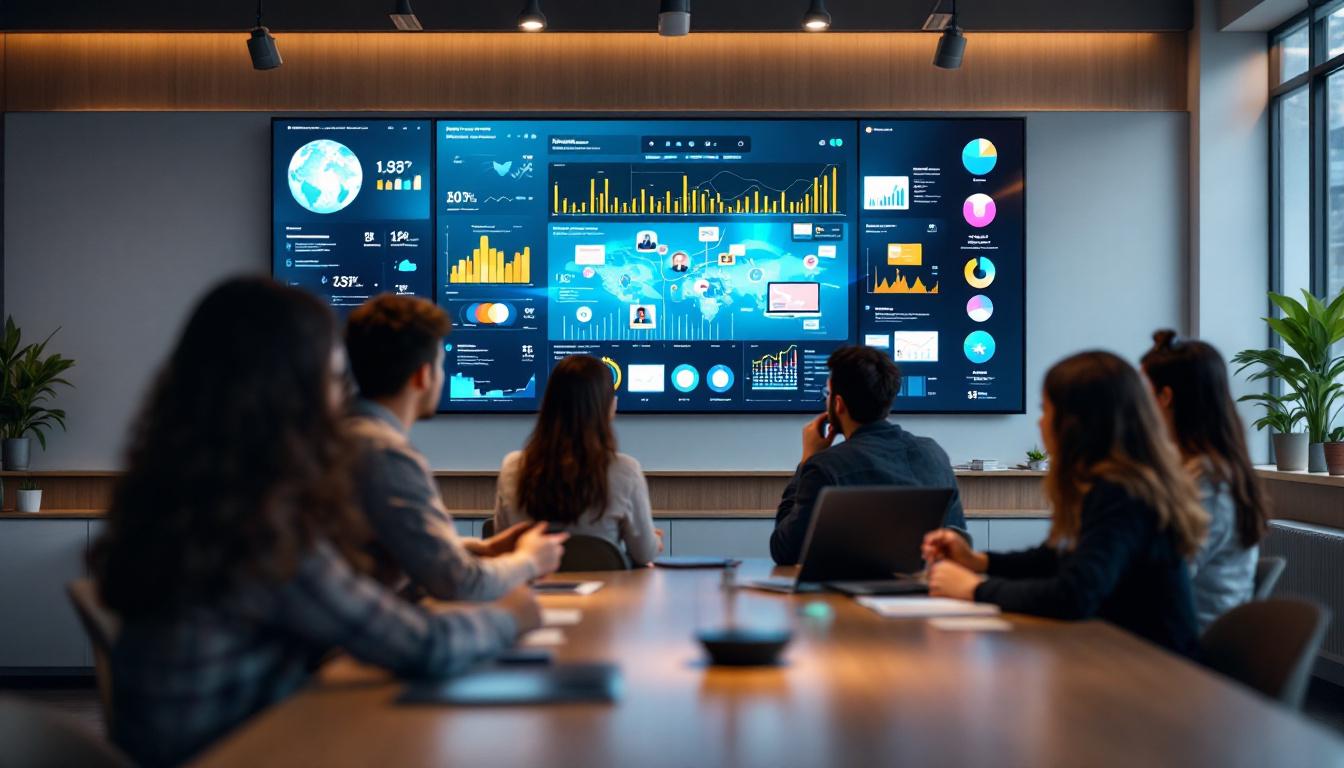
In offices and boardrooms, large touch monitors serve as hubs for presentations, brainstorming sessions, and video conferencing. Their ability to integrate with software platforms like Microsoft Teams, Zoom, and collaboration tools enhances workflow efficiency.
Companies adopting interactive LED displays report improved meeting effectiveness and faster decision-making processes, contributing to overall business agility.
Retail and Advertising
Retailers leverage large touch monitors with LED displays for digital signage, interactive kiosks, and product showcases. The vivid colors and responsive touch features attract customers and provide personalized shopping experiences.
According to industry reports, interactive digital signage can increase customer engagement by 50% and boost sales by up to 30% in some cases.
Healthcare
In healthcare, large touch monitors assist in diagnostics, patient education, and telemedicine. High-resolution LED displays allow for detailed visualization of medical images, while touch interaction enables efficient navigation through patient records and imaging software.
Interactive displays also improve communication between healthcare providers and patients, enhancing treatment outcomes.
Choosing the Right Large Touch Monitor with LED Display
Assessing Your Needs
Before purchasing, it is essential to evaluate the specific requirements of your environment. Consider factors such as screen size, resolution, touch technology, connectivity options, and budget. For example, a classroom may prioritize durability and ease of use, while a design studio might focus on color accuracy and resolution.
Connectivity and Integration
Modern large touch monitors offer a variety of connectivity options including HDMI, USB-C, DisplayPort, and wireless capabilities. Ensuring compatibility with existing devices and software ecosystems is crucial for seamless integration.
Some models also support built-in computers or Android operating systems, enabling standalone operation without external devices.
Maintenance and Support
Consider the availability of technical support, warranty terms, and ease of maintenance. LED displays generally require minimal upkeep, but touch components may need calibration or occasional servicing to maintain optimal performance.
Future Trends in Large Touch Monitors and LED Displays
Advancements in Display Technology
The future of large touch monitors is promising, with emerging technologies like MicroLED and Quantum Dot displays poised to deliver even higher brightness, better color accuracy, and longer lifespans. These innovations will further enhance visual quality while maintaining energy efficiency.
Enhanced Interactivity with AI and Gesture Control
Artificial intelligence integration is enabling smarter touch monitors that can recognize gestures, voice commands, and even facial expressions. This evolution will create more natural and immersive user experiences, expanding the applications of large touch displays in education, healthcare, and entertainment.
Increased Adoption of Hybrid and Remote Collaboration Tools
As remote and hybrid work models become the norm, large touch monitors will play a pivotal role in bridging physical and virtual collaboration. Features like real-time annotation, cloud connectivity, and multi-user interaction will continue to evolve, making these displays indispensable tools for modern workplaces.
Conclusion
Large touch monitors with LED displays represent a convergence of advanced display technology and interactive functionality, transforming how people communicate, collaborate, and consume information. Their superior image quality, energy efficiency, and versatile applications make them valuable assets across diverse sectors.
By understanding the underlying LED technology, key features, and industry-specific benefits, organizations and individuals can make informed decisions when selecting large touch monitors. As technology advances, these displays will continue to evolve, offering richer, more engaging experiences that meet the demands of an increasingly digital world.
Discover LumenMatrix’s Innovative LED Display Solutions
Ready to elevate your interactive experiences with the latest in LED display technology? Look no further than LumenMatrix, a pioneer in crafting visually stunning and technologically advanced LED display modules. Whether you’re seeking to boost brand visibility, engage audiences in outdoor settings, or create immersive environments with Indoor LED Walls, Outdoor LED Displays, or Custom LED solutions, LumenMatrix has you covered. Embrace the future of visual communication and captivate your audience with unparalleled clarity and impact. Check out LumenMatrix LED Display Solutions today and transform your digital storytelling.