In today’s fast-paced retail and food service environments, capturing customer attention quickly and effectively is crucial. Lighted menu boards, particularly those utilizing LED display technology, have become an essential tool for businesses aiming to enhance visibility, improve customer experience, and boost sales. This article delves into the world of LED lighted menu boards, explaining their technology, benefits, and practical applications to help business owners and marketers make informed decisions.
Understanding LED Technology in Lighted Menu Boards
What is an LED Display?
LED stands for Light Emitting Diode, a semiconductor device that emits light when an electric current passes through it. Unlike traditional incandescent bulbs, LEDs are energy-efficient, durable, and capable of producing bright, vibrant colors. In the context of menu boards, LED displays use arrays of these tiny diodes to illuminate text and images, creating clear and eye-catching visuals.
The technology behind LED displays has evolved significantly over the past decade. Modern LED menu boards often incorporate high-resolution panels that allow for dynamic content, including animations and video, which can be updated in real-time. This flexibility makes LED displays far superior to static or backlit printed menus. With the ability to showcase daily specials or promotions instantly, businesses can engage customers more effectively, adapting their offerings to meet changing demands and preferences.
Types of LED Displays Used in Menu Boards
There are several types of LED displays commonly used in lighted menu boards:
- Edge-Lit LED Panels: These panels use LEDs placed along the edges of a translucent panel to evenly distribute light across the menu surface. They are thin, lightweight, and provide uniform illumination.
- Backlit LED Displays: LEDs are positioned behind the menu graphics, shining light through translucent materials. This method is popular for printed menu boards to enhance readability in low-light environments.
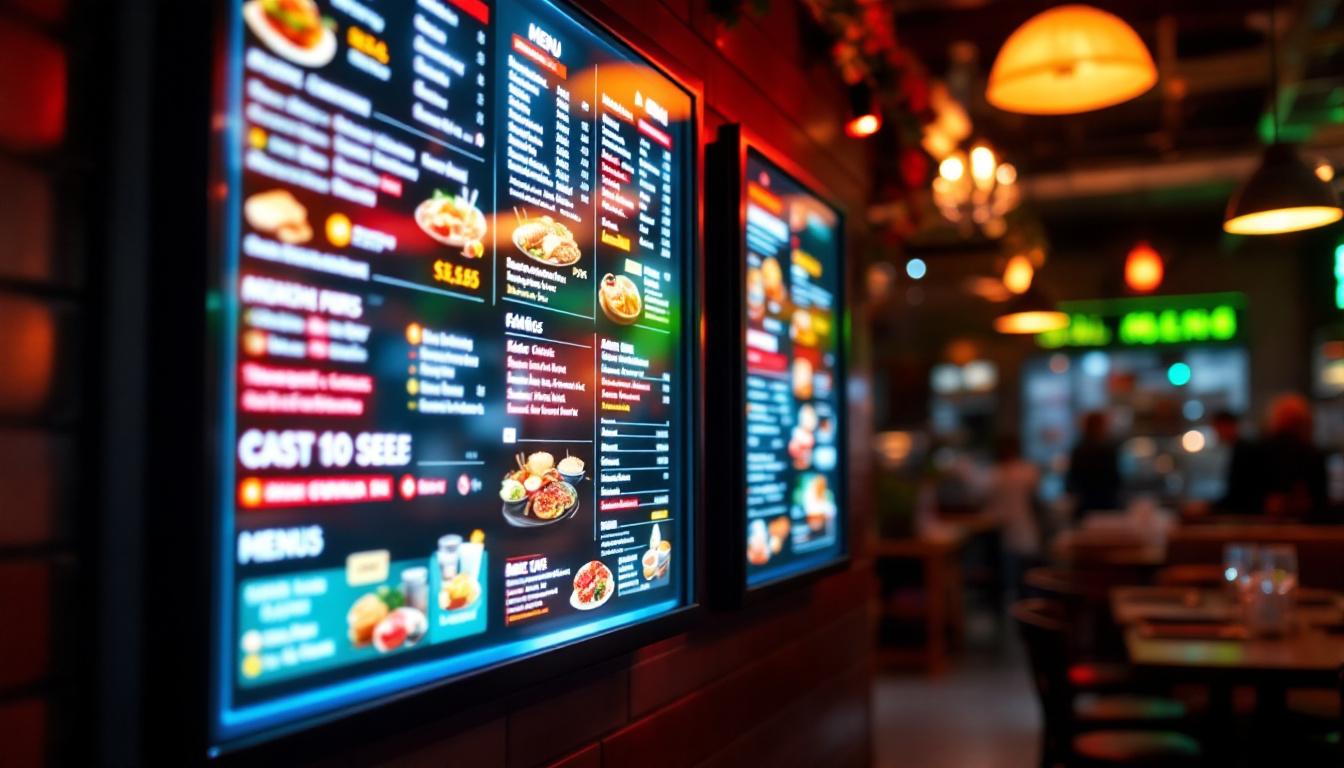
- Digital LED Screens: Full digital screens made up of RGB LEDs can display dynamic content, such as videos, animations, and changing menus. These are often used in quick-service restaurants and retail environments for maximum engagement.
Choosing the right type depends on the business’s needs, budget, and desired visual impact. For instance, edge-lit panels are ideal for establishments seeking a sleek, modern aesthetic, while backlit displays are perfect for those wanting to maintain a classic look with enhanced visibility. Digital LED screens, on the other hand, are excellent for businesses aiming to create an immersive customer experience, allowing them to showcase mouth-watering food visuals and promotional videos that capture attention and drive sales.
Additionally, the integration of LED technology into menu boards can also contribute to sustainability efforts. By consuming less energy compared to traditional lighting solutions, LED displays not only lower electricity costs but also reduce the carbon footprint of a business. Furthermore, their long lifespan means less frequent replacements, resulting in less waste and a more environmentally friendly operation. As consumers become increasingly conscious of sustainability, businesses that adopt such technologies may find themselves more appealing to eco-minded customers.
Benefits of Using LED Lighted Menu Boards
Enhanced Visibility and Readability
One of the primary advantages of LED lighted menu boards is their superior visibility. LEDs provide bright, consistent illumination that makes menu items easy to read from a distance, even in dim or brightly lit environments. This is particularly important in fast-food restaurants, cafes, and bars where customers make quick decisions.
Studies show that well-lit signage can increase customer engagement by up to 30%, directly influencing purchase behavior. The clarity and vibrancy of LED displays reduce eye strain and help customers quickly locate and understand menu options. Additionally, the ability to adjust brightness levels according to the ambient lighting conditions ensures that the menu remains legible at all times, enhancing the overall dining experience. This adaptability is crucial for establishments that operate during varying hours, as it maintains consistency in customer service and satisfaction.
Energy Efficiency and Longevity
Compared to traditional fluorescent or incandescent lighting, LEDs consume significantly less energy. According to the U.S. Department of Energy, LEDs use at least 75% less energy and last 25 times longer than incandescent lighting. This translates to lower operational costs and reduced maintenance for businesses, making LED menu boards a cost-effective investment over time.
Additionally, LEDs produce less heat, which contributes to a safer environment and reduces the risk of damage to menu materials. This energy efficiency not only benefits the bottom line but also aligns with growing consumer preferences for environmentally friendly practices. By adopting LED technology, businesses can promote their commitment to sustainability, appealing to eco-conscious customers who prioritize green initiatives when choosing where to dine.
Customization and Dynamic Content
Digital LED menu boards allow businesses to easily update content without the need for reprinting. This flexibility is invaluable for restaurants with frequently changing menus, daily specials, or promotional offers. Real-time updates can be made remotely, enabling quick responses to inventory changes or marketing campaigns.
Moreover, dynamic content such as animations, videos, and interactive elements can capture customer attention more effectively than static displays. This capability supports brand storytelling and enhances the overall customer experience. For instance, a café could showcase a video of its baristas crafting specialty drinks, enticing customers to try something new. The ability to feature seasonal items or limited-time offers with eye-catching animations can create a sense of urgency, encouraging customers to make impulse purchases that they might not have considered otherwise.
Improved Brand Image and Customer Experience
Modern, well-designed LED menu boards contribute to a professional and contemporary brand image. They signal to customers that a business is technologically savvy and customer-focused. This perception can increase customer trust and loyalty.
Furthermore, the ability to display high-quality images and videos allows businesses to showcase their products in the best light, enticing customers and encouraging upselling opportunities. The visual appeal of vibrant, high-resolution images can evoke cravings and enhance the overall dining experience. In addition, the interactive nature of some LED boards can engage customers in a way that static menus cannot, allowing them to explore nutritional information or ingredient sourcing, which can be particularly appealing to health-conscious diners. By integrating these elements, businesses not only elevate their brand image but also create a more immersive and enjoyable atmosphere for their patrons.
Applications of LED Lighted Menu Boards Across Industries
Quick-Service and Fast Casual Restaurants
Quick-service restaurants (QSRs) have been at the forefront of adopting LED lighted menu boards. The fast-paced nature of these establishments demands clear, quick communication of menu options. LED displays help reduce wait times by making menus easier to read and understand.
Many QSR chains have integrated digital LED boards to promote limited-time offers, combo meals, and nutritional information, improving both sales and customer satisfaction. For example, a leading burger chain reported a 12% increase in sales after switching to digital LED menu boards that featured dynamic promotions.
Cafes, Bars, and Nightclubs
In environments with low ambient lighting, such as cafes and bars, LED lighted menu boards enhance visibility without overwhelming the atmosphere. Edge-lit and backlit LED panels provide subtle yet effective illumination that complements the venue’s aesthetic.
Bars and nightclubs also benefit from digital LED displays that can be synchronized with music or events, creating immersive experiences that encourage longer stays and higher spending.
Retail and Convenience Stores
Retailers use LED menu boards to display pricing, product information, and promotions. Convenience stores, in particular, leverage LED displays near checkout counters to upsell snacks, beverages, and seasonal items.
Digital LED boards allow for quick changes to pricing or product availability, which is essential in fast-moving retail environments. The bright, clear displays also help reduce customer confusion and speed up transactions.
Healthcare and Educational Institutions
While not traditional menu boards, LED displays in hospitals, cafeterias, and educational institutions serve similar purposes. They communicate meal options, nutritional information, and daily specials to staff, students, and visitors.
The energy efficiency and low maintenance of LED boards make them ideal for these settings, where budgets are often tight but clear communication is essential.
Key Considerations When Choosing an LED Lighted Menu Board
Brightness and Color Accuracy
Brightness is a critical factor to ensure readability in various lighting conditions. LED menu boards typically offer adjustable brightness settings to optimize visibility indoors or outdoors. Color accuracy is equally important, especially when displaying images of food or branded content, as it affects customer perception and appetite appeal.
Resolution and Size
The resolution of an LED display determines the clarity and detail of the content. Higher resolution screens are necessary for displaying complex graphics or video content. The size of the menu board should be appropriate for the viewing distance and location, ensuring all customers can easily read the menu.
Durability and Maintenance
LED menu boards are generally durable, but factors such as environmental exposure and usage frequency affect longevity. For outdoor installations, weatherproof and vandal-resistant designs are essential. Additionally, easy access for maintenance and cleaning helps prolong the lifespan of the display.
Integration and Software Compatibility
For digital LED menu boards, compatibility with content management software is vital. Businesses should select systems that offer user-friendly interfaces, remote updating capabilities, and integration with point-of-sale (POS) systems for seamless operation.
Cost and Return on Investment
While LED menu boards may require a higher initial investment compared to traditional signage, the long-term savings in energy and maintenance, coupled with increased sales potential, often justify the cost. Businesses should evaluate their specific needs and budget to select the most cost-effective solution.
Future Trends in LED Lighted Menu Boards
Interactive and Touchscreen Displays
Emerging technologies are enabling interactive LED menu boards that allow customers to browse options, customize orders, and access nutritional information via touchscreens. This interactivity enhances customer engagement and streamlines ordering processes.
AI and Data-Driven Content Personalization
Artificial intelligence is beginning to play a role in menu board content management. AI-powered systems can analyze customer behavior and preferences to display personalized promotions and optimize menu layouts for maximum impact.
Integration with Mobile and Contactless Ordering
LED menu boards are increasingly integrated with mobile apps and contactless payment systems, providing a seamless ordering experience. QR codes displayed on LED boards allow customers to order directly from their smartphones, reducing wait times and improving order accuracy.
Conclusion
LED lighted menu boards represent a powerful combination of technology, design, and marketing strategy. Their ability to deliver bright, clear, and dynamic content enhances customer experience, supports brand image, and drives sales across various industries. By understanding the technology, benefits, and applications of LED displays, businesses can make informed choices that align with their operational goals and customer expectations.
As LED technology continues to advance, the future promises even more innovative and interactive menu board solutions that will further transform how businesses communicate with their customers.
Illuminate Your Business with LumenMatrix
Ready to elevate your brand and captivate your customers with the most advanced LED display technology? LumenMatrix is at the forefront of creating immersive visual experiences that bring your message to life. From Indoor and Outdoor LED Wall Displays to innovative solutions like Vehicle and Floor LED Displays, our range of products is designed to meet your unique needs. Discover how our LED display modules can transform your space and engage your audience. Check out LumenMatrix LED Display Solutions today and step into the future of visual communication.