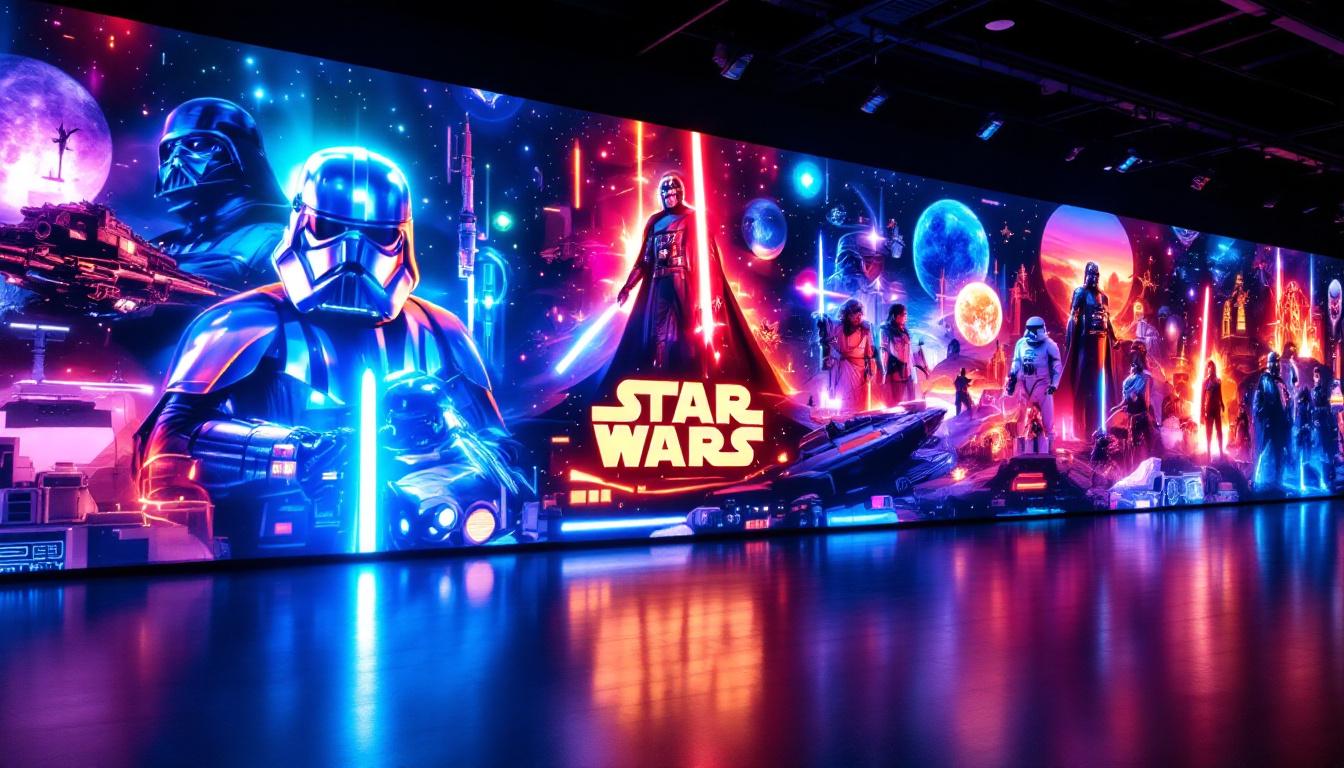
The Star Wars franchise has always been at the forefront of combining cutting-edge technology with immersive storytelling. One of the most revolutionary advancements in recent years is the introduction of the “Light Wall” — an innovative LED display technology that has transformed how filmmakers create visually stunning and realistic environments. This article delves into the technology behind the Star Wars Light Wall, exploring its design, functionality, and impact on modern filmmaking.
What Is the Star Wars Light Wall?
The Star Wars Light Wall is an advanced LED display system used primarily during the production of the latest Star Wars films and series, such as “The Mandalorian.” Unlike traditional green screens, which require extensive post-production work to insert backgrounds, the Light Wall projects high-resolution, dynamic digital environments in real time. This allows actors and filmmakers to interact with their surroundings more naturally, enhancing performance and visual authenticity.
Developed in collaboration with Industrial Light & Magic (ILM) and Epic Games, the Light Wall integrates Unreal Engine’s real-time rendering capabilities with a massive curved LED screen setup. This combination creates a seamless, immersive backdrop that can mimic everything from alien landscapes to starships and distant galaxies.
One of the most striking advantages of the Light Wall is its ability to provide realistic lighting that interacts with the actors and props on set. The LED screens emit light that can change dynamically based on the environment being displayed, casting shadows and highlights that match the digital scenery. This not only enhances the visual fidelity of the scenes but also allows for a more organic performance from the actors, who can react to their surroundings as if they were truly there. The technology has revolutionized the way filmmakers approach scene creation, allowing for a more collaborative and spontaneous atmosphere on set.
Moreover, the Light Wall’s versatility extends beyond just the Star Wars franchise. Its applications can be seen in various other projects across the film and television industry, where immersive environments are essential. The system has been adopted by numerous productions seeking to push the boundaries of visual storytelling. By reducing the need for extensive location shoots and complex set designs, the Light Wall not only saves time and resources but also opens up creative possibilities that were previously limited by practical effects and traditional filming methods.
How Does the LED Display Technology Work?
Structure and Setup of the Light Wall
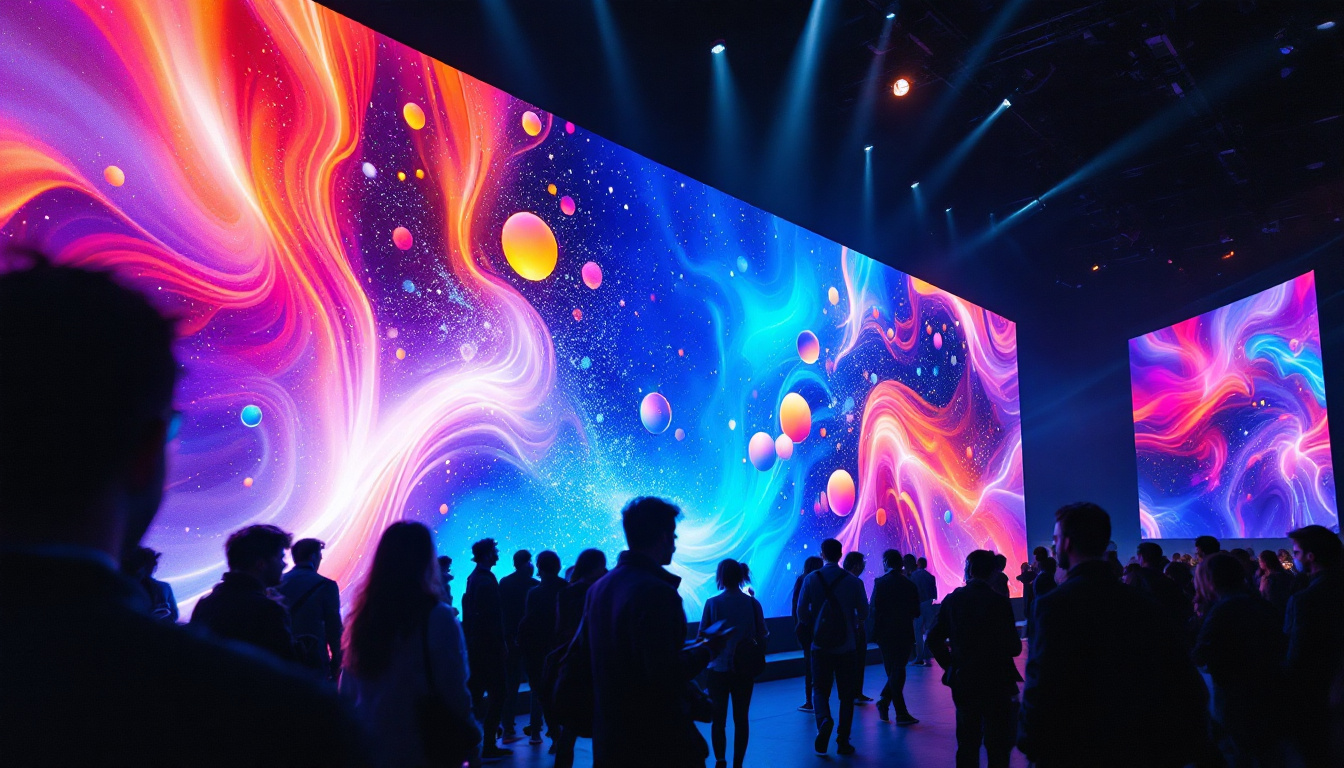
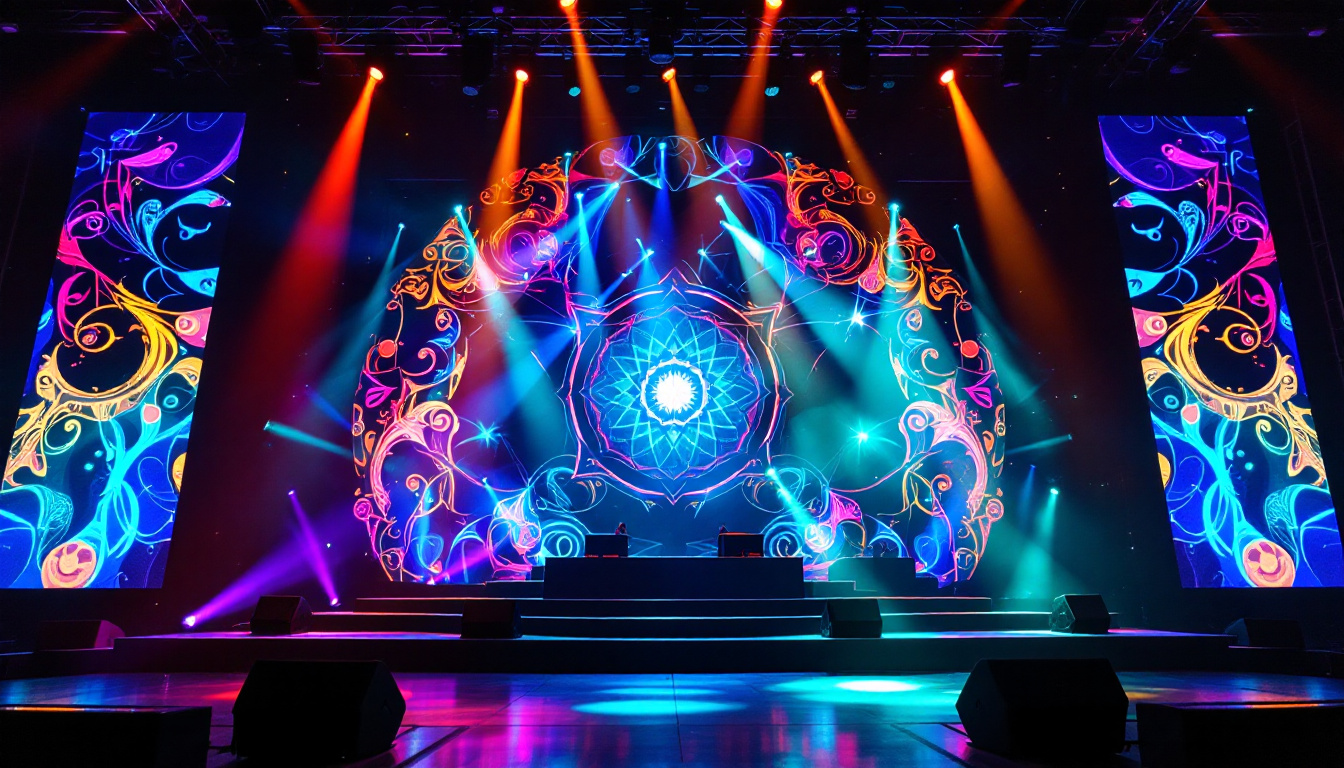
The Light Wall is essentially a large, curved array of LED panels that wrap around the filming stage. These panels are ultra-high-definition and capable of displaying photorealistic images with precise color accuracy and brightness. The curvature of the wall helps envelop the actors, providing a 270-degree or more field of view that mimics the natural environment. This immersive setup not only enhances the visual experience but also allows actors to interact with their surroundings in a more believable manner, as they can see and respond to the digital backdrop in real-time.
The LED panels are modular, allowing for flexible configurations depending on the scene requirements. Typically, the Light Wall spans up to 20 feet high and 75 feet wide, creating a vast canvas for digital environments. The floor can also be equipped with LED panels, enabling reflections and lighting effects that match the projected scene, further enhancing realism. This integration of floor and wall displays creates a seamless visual experience, allowing for dynamic lighting changes that can mimic the time of day or weather conditions, which is crucial for maintaining continuity in storytelling.
Real-Time Rendering with Unreal Engine
At the heart of the Light Wall’s capability is Unreal Engine, a powerful real-time rendering platform developed by Epic Games. Unreal Engine processes the digital environment and renders it instantly on the LED panels, adjusting perspectives dynamically based on the camera’s position and movement. This technique, known as “camera tracking,” ensures that the background shifts realistically as the camera moves, maintaining correct parallax and depth cues. The engine’s ability to handle complex graphics and physics in real-time allows filmmakers to create stunning visuals that were once only possible through extensive post-production work.
This real-time interaction between the camera and the LED display means that directors and cinematographers can see the final composite live on set, reducing guesswork and the need for extensive post-production visual effects work. It also allows for spontaneous creative decisions, as changes to the environment can be made instantly. Additionally, the integration of advanced lighting techniques within Unreal Engine enables the simulation of natural light sources, casting realistic shadows and highlights that interact with the physical elements on set. This level of detail not only elevates the visual quality of the production but also enhances the actors’ performances, as they can react to the changing light and environment in a way that feels authentic and engaging. The synergy between technology and artistry in this setup represents a significant leap forward in filmmaking, pushing the boundaries of what is possible in visual storytelling.
Advantages Over Traditional Green Screen Techniques
Enhanced Immersion for Actors
One of the most significant benefits of the Light Wall is how it improves the acting experience. Traditional green screens require actors to imagine their surroundings, often leading to performances that feel disconnected or less authentic. With the Light Wall, actors are immersed in a vivid, interactive environment that responds to their movements and the camera’s perspective.
This immersion helps performers deliver more genuine reactions and interactions, which translates into more compelling scenes. For example, in “The Mandalorian,” actors could see the alien landscapes or starship interiors around them, making their engagement with the scene more natural.
Improved Lighting and Visual Consistency
Green screen filming often struggles with lighting mismatches between the foreground and background elements. The Light Wall addresses this by emitting actual light onto the actors and set pieces, matching the color temperature and intensity of the digital environment. This creates natural reflections and shadows that blend seamlessly with the projected background.
As a result, the final footage requires less color correction and compositing, speeding up post-production and reducing costs. The lighting consistency also enhances the overall visual quality, making scenes feel more cohesive and believable.
Faster Production Timelines
By enabling live previews of the final scene, the Light Wall streamlines the filmmaking process. Directors can make immediate adjustments to the environment, camera angles, and lighting without waiting for post-production renders. This iterative workflow reduces the number of reshoots and accelerates decision-making on set.
Moreover, the ability to shoot complex visual effects scenes in a single location minimizes the need for multiple location shoots, saving time and budget. For large-scale productions like Star Wars, these efficiencies are invaluable.
Technical Challenges and Innovations
Managing High-Resolution Content
Displaying photorealistic environments on a massive LED wall requires handling enormous amounts of data. Each LED panel contains thousands of pixels, and the entire wall can have millions of pixels that need to be updated in real time. Achieving smooth, flicker-free visuals at 60 frames per second or higher demands powerful graphics processing hardware and optimized software pipelines.
ILM and their technology partners developed custom solutions to manage this data flow efficiently. These include high-speed data transmission protocols, advanced compression algorithms, and distributed rendering systems that split the workload across multiple GPUs.
Color Calibration and Brightness Control
Ensuring uniform color and brightness across all LED panels is critical to maintaining visual fidelity. Variations can cause distracting seams or inconsistencies that break the illusion of a continuous environment. The Light Wall incorporates sophisticated calibration tools that measure and adjust each panel’s output to achieve perfect harmony.
Additionally, the system adapts brightness dynamically based on ambient lighting conditions and scene requirements, preventing glare or washed-out images while preserving deep contrasts and vibrant colors.
Integration with Camera Tracking Systems
Accurate camera tracking is essential for the Light Wall to render backgrounds with correct perspective shifts. This involves using motion capture technology, infrared sensors, and specialized software to monitor the camera’s position and orientation in real time.
The tracking data feeds directly into Unreal Engine, which updates the displayed environment accordingly. This integration requires precise synchronization to avoid latency or mismatches that could disrupt the visual effect.
Impact on the Film Industry and Future Prospects
Revolutionizing Visual Effects Production
The Star Wars Light Wall represents a paradigm shift in how visual effects are created and integrated into live-action footage. By merging physical and digital elements on set, it reduces reliance on green screen compositing and enables more creative freedom for filmmakers.
Since its debut, this technology has inspired other productions across genres to adopt similar LED volume stages. Shows like “The Book of Boba Fett” and “Obi-Wan Kenobi” have utilized the Light Wall, and even non-Star Wars projects are exploring its potential.
Expanding Creative Possibilities
Beyond improving efficiency, the Light Wall opens new avenues for storytelling. Directors can craft fantastical worlds that respond dynamically to narrative needs, experiment with lighting effects that would be impossible or costly to achieve physically, and create immersive experiences for actors and audiences alike.
As LED and rendering technologies continue to evolve, future iterations of the Light Wall may offer even higher resolutions, wider color gamuts, and more interactive features, further blurring the line between reality and digital imagery.
Broader Applications Beyond Film
While the Light Wall is primarily associated with filmmaking, its underlying technology has potential applications in other fields. Virtual production stages can be used for live events, immersive theater, architectural visualization, and even training simulations.
For example, theme parks and museums could leverage LED volume stages to create dynamic, interactive exhibits. Similarly, the gaming industry might integrate real-time LED environments for live-streamed events or augmented reality experiences.
Conclusion
The Star Wars Light Wall is a groundbreaking LED display technology that has transformed the landscape of modern filmmaking. By combining high-resolution LED panels, real-time rendering with Unreal Engine, and precise camera tracking, it creates immersive, photorealistic environments that enhance both the creative process and the final visual experience.
This innovation not only elevates the quality and authenticity of Star Wars productions but also sets a new standard for the entire entertainment industry. As the technology matures, its influence will likely extend beyond cinema, shaping how digital and physical worlds merge in countless creative domains.
Discover the Future of LED Display Technology with LumenMatrix
As you’ve seen with the Star Wars Light Wall, the power of LED display technology to create immersive environments is unparalleled. LumenMatrix stands at the forefront of this innovation, offering a wide range of LED display solutions that bring stories and spaces to life. Whether you’re looking to captivate an audience, enhance your brand’s visibility, or create a dynamic visual experience, LumenMatrix has the state-of-the-art technology to make it happen. Check out LumenMatrix LED Display Solutions and join the revolution in visual communication.