Phone LCD Factory: LED Display Explained
In the fast-evolving world of mobile technology, the display remains one of the most critical components of a smartphone. The quality, durability, and efficiency of a phone’s screen can significantly influence user experience and device performance. Among the various display technologies, LED displays, particularly those used in phone LCDs, have become a cornerstone of modern smartphones. This article delves into the intricate world of phone LCD factories and provides a comprehensive explanation of LED display technology, its manufacturing process, and its impact on the mobile industry.
Understanding LED Displays in Phone LCDs
LED, or Light Emitting Diode, technology has revolutionized how displays work in electronic devices, including smartphones. Unlike traditional LCDs that rely solely on backlighting, LED displays use tiny diodes that emit light when an electric current passes through them. This fundamental difference offers several advantages in terms of brightness, energy efficiency, and color accuracy.
In smartphones, LED technology is often integrated with LCD panels to create what is commonly referred to as LED-backlit LCDs. These displays combine the liquid crystal technology of LCDs with LED backlighting to improve display performance. This hybrid approach has become the industry standard for many mid-range and high-end smartphones.
Types of LED Displays Used in Phones
There are primarily two types of LED displays used in smartphones: traditional LED-backlit LCDs and OLED (Organic LED) displays. While OLEDs are gaining popularity due to their superior contrast and flexibility, LED-backlit LCDs remain widely used because of their cost-effectiveness and reliable performance.
LED-backlit LCDs utilize an array of LEDs placed behind or along the edges of the LCD panel to provide uniform illumination. This method allows for thinner displays and improved brightness control. Edge-lit LED displays, for instance, position LEDs along the edges of the screen, using light guides to distribute light evenly across the display.
On the other hand, OLED technology, which stands for Organic Light Emitting Diode, operates quite differently. Each pixel in an OLED display emits its own light, allowing for deeper blacks and a wider color gamut. This self-emissive nature means that OLED screens can achieve true black levels by completely turning off individual pixels, which is a significant advantage over LED-backlit LCDs. Additionally, OLED displays are thinner and more flexible, paving the way for innovative designs like curved screens and foldable devices, which are becoming increasingly popular in the smartphone market.
Moreover, the advancements in LED technology have also led to the development of Mini-LED and Micro-LED displays. Mini-LED technology utilizes thousands of tiny LEDs for backlighting, resulting in improved contrast and brightness control compared to traditional LED-backlit LCDs. Micro-LED, on the other hand, represents a leap forward in display technology, as it combines the benefits of OLED and LED by using microscopic LEDs for each pixel, offering exceptional brightness and color accuracy without the drawbacks of burn-in associated with OLEDs. As these technologies continue to evolve, they promise to further enhance the visual experience on smartphones, making displays more vibrant and immersive than ever before.
The Manufacturing Process in a Phone LCD Factory
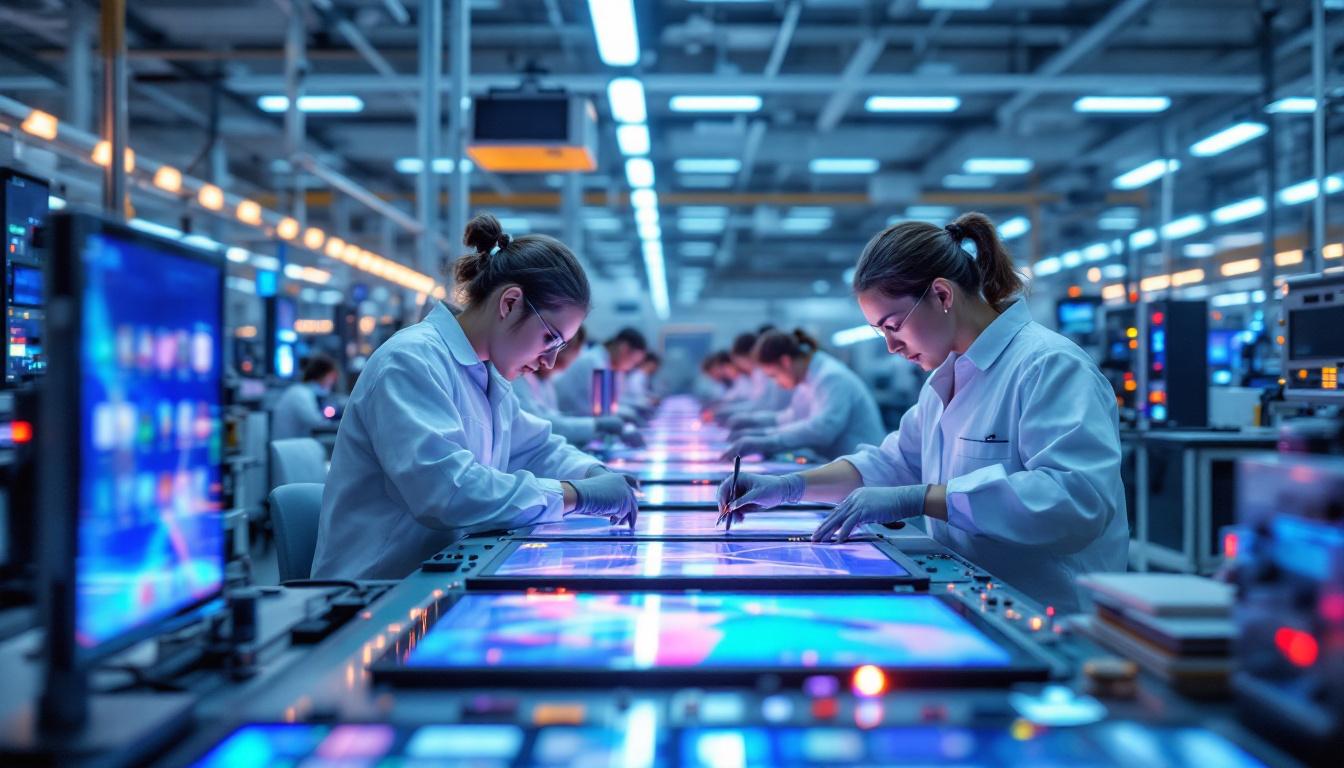
Creating a high-quality LED display for smartphones is a complex process that involves precision engineering, advanced materials, and stringent quality control. Phone LCD factories employ sophisticated manufacturing techniques to ensure each display meets the demanding standards of modern smartphones.
Step 1: Substrate Preparation
The process begins with preparing the glass or plastic substrate that forms the base of the LCD panel. This substrate must be perfectly flat and free of impurities to avoid defects in the display. In many factories, substrates undergo cleaning and coating processes to enhance their surface properties. Special attention is given to the coating materials, which can include anti-reflective and anti-fingerprint layers that improve the user experience by reducing glare and smudging. These coatings are applied in controlled environments to prevent contamination, ensuring that the substrates are ready for the next stages of production.
Step 2: Thin Film Transistor (TFT) Layer Deposition
The TFT layer is crucial for controlling the pixels on the LCD. Using photolithography and chemical vapor deposition techniques, manufacturers deposit thin layers of semiconductor materials onto the substrate. This layer acts as a switch for each pixel, controlling its brightness and color. The precision of this process is vital; even the slightest variation in thickness can lead to significant differences in performance. Advanced techniques, such as low-temperature polysilicon (LTPS) technology, are often employed to enhance the electrical characteristics of the TFTs, allowing for faster response times and improved energy efficiency.
Step 3: Liquid Crystal Layer Assembly
After the TFT layer is complete, the liquid crystal material is sandwiched between two glass substrates. The liquid crystals respond to electric fields generated by the TFT layer, modulating light to create images. This step requires precise control of the liquid crystal alignment to ensure uniform display quality. Factories often utilize advanced alignment techniques, such as rubbing or using alignment films, to achieve the desired molecular orientation of the liquid crystals. Additionally, the choice of liquid crystal material itself can affect the display’s performance, with manufacturers continually researching new compounds that offer better contrast ratios and viewing angles.
Step 4: LED Backlighting Integration
The LED backlighting system is then integrated. Depending on the design, LEDs are placed either behind the LCD panel (direct-lit) or along its edges (edge-lit). The factory uses light guides and diffusers to ensure even light distribution, which is essential for consistent brightness and color across the screen. Innovations in backlighting technology, such as the introduction of mini-LEDs and quantum dot enhancements, are increasingly being adopted to improve color accuracy and dynamic range. These advancements allow displays to achieve deeper blacks and more vibrant colors, significantly enhancing the overall viewing experience.
Step 5: Color Filter Application
Color filters are applied to the LCD to produce the full spectrum of colors. These filters are typically arranged in a red-green-blue (RGB) pattern, with each pixel containing sub-pixels for these colors. The precision of this step determines the display’s color accuracy and vibrancy. Advanced printing techniques, such as inkjet or photolithographic printing, are used to create these filters with high precision, ensuring that each sub-pixel is perfectly aligned and free from defects. The quality of the color filters directly influences how well the display can reproduce images and videos, making this step critical for achieving high-definition visuals.
Step 6: Assembly and Testing
Finally, the LCD panel is assembled with other components such as touch sensors and protective glass. Rigorous testing follows, including checks for dead pixels, brightness uniformity, color accuracy, and response time. Only displays that pass these stringent tests are shipped to smartphone manufacturers. In addition to visual inspections, automated testing systems are employed to conduct stress tests and evaluate the durability of the displays under various conditions, such as temperature fluctuations and humidity. This comprehensive testing process ensures that only the most reliable and high-performing displays reach consumers, contributing to the overall quality and reputation of the smartphones they are integrated into.
Key Advantages of LED-Backlit LCDs in Smartphones
LED-backlit LCDs offer several benefits that make them a popular choice for smartphone displays. Understanding these advantages helps explain why phone LCD factories continue to invest in this technology despite the rise of alternatives like OLED.
Energy Efficiency and Brightness
LED backlighting is more energy-efficient compared to older CCFL (Cold Cathode Fluorescent Lamp) backlights. This efficiency translates to longer battery life for smartphones, an essential factor for users. Additionally, LEDs can achieve higher brightness levels, improving screen visibility in outdoor and brightly lit environments.
Improved Color Accuracy and Contrast
While OLED displays generally offer better contrast ratios, LED-backlit LCDs have made significant strides in color accuracy and dynamic range. Advanced LED backlighting systems, such as local dimming, allow for better contrast by selectively dimming parts of the screen, enhancing the viewing experience.
Cost-Effectiveness and Scalability
Manufacturing LED-backlit LCDs is generally less expensive than producing OLED panels, especially at scale. Phone LCD factories benefit from mature production lines and established supply chains, which help keep costs down and meet high-volume demands.
Challenges and Innovations in LED Display Manufacturing
Despite their advantages, LED-backlit LCDs face challenges that manufacturers continuously strive to overcome. Innovations in materials science and manufacturing processes are driving improvements that enhance display quality and durability.
Addressing Uniformity and Viewing Angles
One common challenge with LED-backlit LCDs is achieving uniform brightness and color consistency across the entire screen. Edge-lit designs, while thinner, can suffer from uneven lighting. Manufacturers are developing advanced light guide plates and diffuser technologies to mitigate these issues.
Viewing angles are another area of focus. Traditional LCDs tend to lose color accuracy and contrast when viewed from sharp angles. New liquid crystal materials and panel structures have improved viewing angles significantly, closing the gap with OLED displays.
Durability and Environmental Considerations
Phone LCD factories are also prioritizing durability, especially as consumers demand longer-lasting devices. Innovations in protective coatings and flexible substrates help make displays more resistant to scratches, impacts, and environmental factors.
From an environmental perspective, LED displays are more energy-efficient, but the manufacturing process involves materials and chemicals that require responsible handling. Many factories are adopting greener production methods and recycling programs to reduce their environmental footprint.
The Future of LED Displays in Smartphones
The smartphone display market is dynamic, with continuous innovation shaping the future of LED technology. While OLED and emerging technologies like MicroLED are gaining ground, LED-backlit LCDs remain a vital part of the ecosystem due to their balance of performance and cost.
MicroLED: The Next Evolution
MicroLED technology represents a promising advancement, combining the self-emissive qualities of OLED with the longevity and brightness of traditional LEDs. MicroLED displays consist of microscopic LEDs that serve as individual pixels, offering exceptional brightness, contrast, and energy efficiency.
Although still in the early stages of commercialization, MicroLED displays have the potential to revolutionize smartphone screens. Phone LCD factories are beginning to explore integrating MicroLED technology into their production lines, signaling a possible shift in the near future.
Hybrid Displays and Enhanced User Experience
Manufacturers are also exploring hybrid display solutions that combine the strengths of different technologies. For example, integrating LED backlighting with advanced LCD panels that support high refresh rates and HDR (High Dynamic Range) content can significantly enhance the user experience.
As consumer demand for immersive visual experiences grows, phone LCD factories are investing in research and development to deliver displays that support gaming, streaming, and augmented reality applications with greater fidelity and responsiveness.
Conclusion
LED display technology remains a foundational element in the production of smartphone LCDs, balancing performance, cost, and energy efficiency. Phone LCD factories play a crucial role in advancing this technology through meticulous manufacturing processes and continuous innovation. While new display technologies are emerging, LED-backlit LCDs continue to offer a reliable and high-quality solution for millions of smartphone users worldwide.
Understanding the complexities behind LED displays not only highlights the engineering marvels inside everyday devices but also underscores the importance of ongoing advancements in display technology. As the smartphone industry evolves, LED displays are poised to remain a key player, adapting and improving to meet the demands of the future.
Discover the Future of LED Displays with LumenMatrix
As you’ve seen, LED technology is integral to the evolution of smartphone displays, offering a blend of performance, affordability, and energy efficiency. LumenMatrix stands at the forefront of this innovation, providing a vast array of LED display modules designed to elevate visual communication to new heights. Whether you’re interested in Indoor LED Wall Displays, Outdoor LED Wall Displays, or specialized solutions like Vehicle LED Displays and LED Sports Displays, LumenMatrix has the technology to transform your brand’s presence. Experience the difference with our LED Poster Displays, Floor LED Displays, Custom LED Displays, All-in-One LED Displays, and LED Transparent Displays. Check out LumenMatrix LED Display Solutions today and join the revolution in visual storytelling.