When working with measurements, especially in fields like construction, design, or technology, understanding unit conversions is essential. One common question that arises is, “How many feet is 136 inches?” While this might seem straightforward, the context of LED displays adds layers of complexity worth exploring. This article delves into the conversion of inches to feet, the relevance of these measurements in LED display technology, and why precise dimensions matter in this industry.
Understanding the Basics: Inches to Feet Conversion
Before diving into the specifics of LED displays, it’s important to clarify the fundamental conversion between inches and feet. Inches and feet are both units of length commonly used in the United States and other countries that follow the imperial system.
One foot is equal to 12 inches. Therefore, to convert inches to feet, the formula is:
Feet = Inches ÷ 12
Applying this formula to 136 inches:
136 inches ÷ 12 = 11.3333 feet
This means 136 inches is equivalent to approximately 11 feet and 4 inches (since 0.3333 feet × 12 inches = 4 inches).
Why Precise Measurement Matters
While the conversion is simple mathematically, precision is crucial in practical applications. For example, in construction or interior design, even a fraction of an inch can impact the fit and finish of a project. Similarly, in LED display installations, accurate measurements ensure that displays fit perfectly within designated spaces and function optimally.
Moreover, precise measurements can significantly affect the aesthetics and functionality of a space. When installing fixtures, furniture, or technology like LED displays, the overall design can be compromised if items are not scaled correctly. For instance, an LED display that is too large for a wall can overwhelm the space, while one that is too small may not provide the desired impact or visibility. Therefore, understanding how to convert measurements accurately is essential for achieving a harmonious balance in any design project.
In addition to practical applications, the conversion between inches and feet also plays a vital role in various industries, including manufacturing and engineering. For instance, engineers often work with blueprints and schematics that require precise scaling. Miscalculations can lead to costly errors in production or assembly, emphasizing the importance of mastering these basic conversions. By ensuring that all measurements are accurate, professionals can avoid delays and additional expenses, ultimately leading to a more efficient workflow.
The Role of Measurements in LED Displays
LED displays have become ubiquitous in advertising, entertainment, and public information systems. From giant billboards to indoor digital signage, understanding the size and scale of these displays is vital for designers, installers, and clients alike.
Dimensions and Pixel Pitch
When discussing LED displays, dimensions are often given in feet or meters, but the concept of pixel pitch—the distance between the centers of two adjacent pixels—is equally important. Pixel pitch is usually measured in millimeters and determines the display’s resolution and viewing distance.
For instance, a large outdoor LED billboard might have a pixel pitch of 10mm or more, meaning the pixels are spaced 10 millimeters apart. This affects how close a viewer can be before the image appears pixelated. A smaller pixel pitch, such as 2mm, allows for a higher resolution and is ideal for indoor environments where viewers are typically closer to the screen, such as in shopping malls or conference centers. Understanding these nuances helps in selecting the right display for the intended audience and environment.
Relating Inches and Feet to LED Display Size
Knowing that 136 inches equals approximately 11.33 feet helps when planning or ordering LED displays. For example, a display that is 136 inches wide will span just over 11 feet, which is useful for visualizing its physical presence in a space.
Manufacturers often list display dimensions in inches or feet, so understanding these conversions ensures that clients and installers communicate effectively and avoid costly mistakes. Additionally, it’s essential to consider the aspect ratio of the display, as this will affect how content is formatted and presented. A standard 16:9 aspect ratio is common for video content, while other ratios may be more suitable for specific applications, such as narrow vertical displays for wayfinding in buildings. By grasping both the size and aspect ratio, stakeholders can better plan the layout and design of their installations to maximize visual impact and engagement.
Common Applications of 136-Inch LED Displays
LED displays around 136 inches in size are common in various settings. Understanding the typical use cases helps contextualize why this measurement is significant.
Retail and Commercial Signage
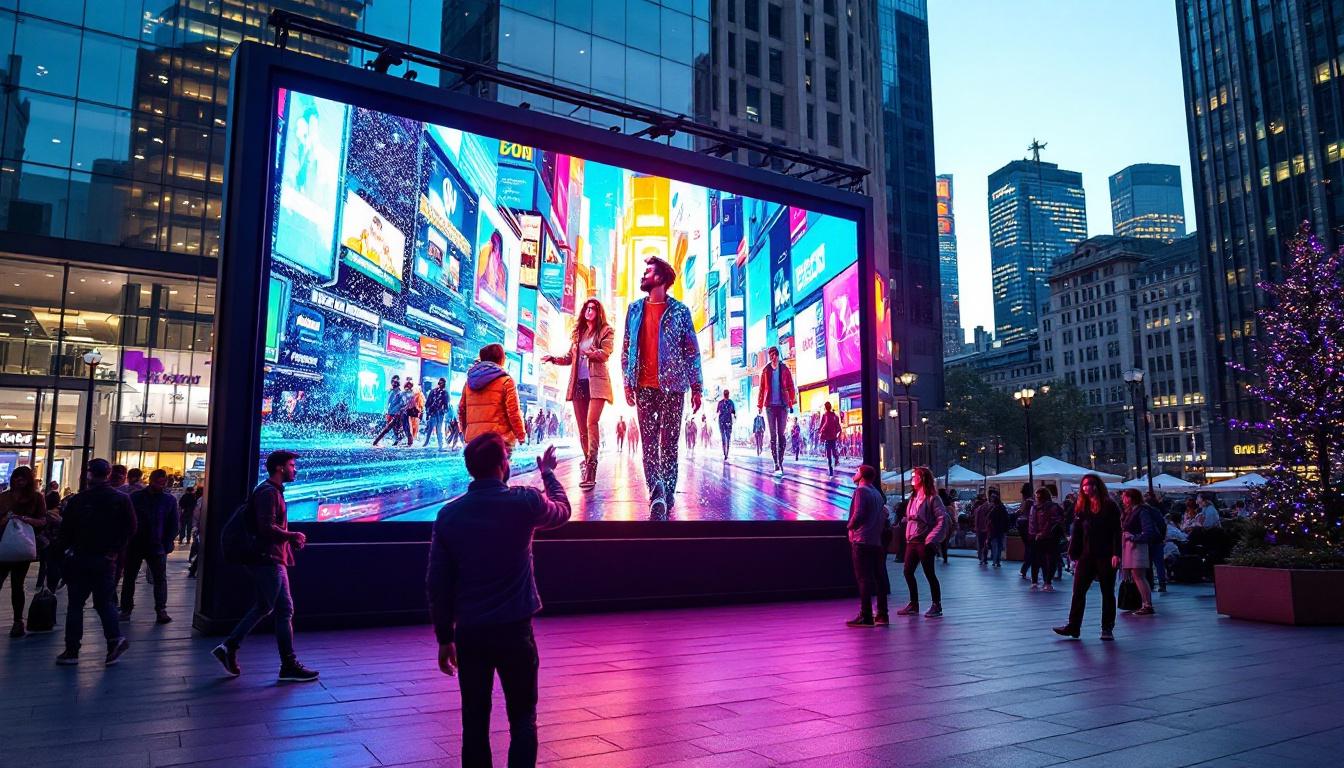
In retail environments, LED displays measuring approximately 11 feet wide are ideal for storefronts or in-store promotions. These displays are large enough to attract attention but manageable enough to fit within standard commercial spaces.
For example, a 136-inch LED screen can showcase dynamic advertisements, product launches, or interactive content, enhancing customer engagement and driving sales. Retailers can utilize these displays to create immersive shopping experiences, featuring high-definition visuals that highlight product features or seasonal promotions. Additionally, the ability to update content in real-time allows businesses to respond quickly to market trends or customer preferences, ensuring that their messaging remains relevant and impactful.
Conference Rooms and Corporate Presentations
Corporate settings often utilize LED displays for presentations and video conferencing. A 136-inch screen provides a large, clear display that can be easily viewed by attendees in medium to large conference rooms.
In this context, understanding the size in feet helps facility managers ensure the display fits the room’s dimensions and sightlines, optimizing the viewing experience. Furthermore, these screens can facilitate collaborative work by allowing multiple users to share their screens simultaneously, making brainstorming sessions more productive. The high resolution of a 136-inch display also ensures that intricate graphs, charts, and data points are visible to all participants, fostering a more inclusive environment where everyone can contribute to discussions effectively.
Entertainment Venues and Events
Concerts, theaters, and event spaces frequently use large LED displays for visuals and information. A 136-inch display offers a balance between size and portability, making it suitable for both permanent installations and temporary setups.
Event planners and AV professionals benefit from knowing exact dimensions to coordinate stage design and audience sightlines effectively. These displays can be used to enhance the overall atmosphere of an event, providing vibrant backdrops or displaying live feeds of performances. Additionally, the versatility of a 136-inch LED screen allows for creative uses, such as interactive audience participation through polls or social media integration, making events more engaging and memorable. The ability to customize content for different events also means that venues can cater to diverse audiences, maximizing their appeal and potential revenue streams.
Factors Influencing LED Display Size Choices
Choosing the right size for an LED display involves more than just converting inches to feet. Several factors influence the decision, and understanding these can lead to better outcomes.
Viewing Distance and Resolution
The optimal size of an LED display depends heavily on how far viewers will be from the screen. Larger displays with higher resolution are necessary for longer viewing distances to maintain image clarity.
For example, a 136-inch display might be perfect for a viewing distance of 10 to 20 feet, but if the audience is farther away, a larger screen or a display with a different pixel pitch might be required.
Installation Space Constraints
Physical space limitations often dictate the maximum size of an LED display. Knowing that 136 inches equals just over 11 feet helps planners measure walls, ceilings, or freestanding structures to ensure the display fits without obstructing other elements.
Additionally, weight and mounting requirements must be considered, especially for large panels.
Budget Considerations
LED displays are an investment, and size directly impacts cost. Larger displays require more LED modules, power, and structural support, increasing the overall expense.
Understanding the exact dimensions in feet and inches helps buyers balance their budget with their visual and functional needs.
How to Measure and Verify LED Display Dimensions
Accurate measurement and verification of LED display size are critical steps in the installation process. Here are best practices to ensure precision.
Using Tape Measures and Laser Tools
Traditional tape measures are effective for measuring display dimensions, especially for smaller screens. For larger displays, laser distance meters provide quick and accurate readings, reducing human error.
Measure both width and height, and if the display is curved or irregularly shaped, take multiple measurements at different points.
Consulting Manufacturer Specifications
Always cross-check physical measurements with manufacturer specifications. These documents provide detailed dimensions, including bezel sizes and mounting requirements, which are essential for planning.
If discrepancies arise, contact the manufacturer or supplier to clarify before proceeding with installation.
Accounting for Installation Tolerances
Allow for slight tolerances during installation to accommodate mounting hardware, ventilation, and cable management. These factors can add to the overall space needed beyond the display’s physical dimensions.
Conclusion: The Importance of Understanding 136 Inches in Feet for LED Displays
Converting 136 inches to feet—approximately 11.33 feet—is a straightforward mathematical process but holds significant practical importance in the LED display industry. Whether planning a retail sign, a corporate presentation screen, or an event display, knowing the exact size helps ensure the display fits the space, meets viewing requirements, and aligns with budget constraints.
Beyond simple conversions, understanding the relationship between physical dimensions, pixel pitch, and viewing distance empowers professionals to make informed decisions. Accurate measurements and clear communication between manufacturers, installers, and clients ultimately lead to successful LED display projects that deliver impactful visual experiences.
Discover the Perfect LED Display Solution with LumenMatrix
Ready to transform your space with a LED display that fits your exact needs? LumenMatrix offers a wide array of innovative LED display solutions, from vibrant Indoor LED Walls to dynamic Outdoor LED Displays, and even specialized options like Vehicle LED Displays and LED Sports Displays. Our commitment to revolutionizing visual communication means we provide the technology to make your brand stand out and your message resonate. Don’t settle for anything less than the best in clarity and engagement. Check out LumenMatrix LED Display Solutions today and elevate your visual experience.