In the evolving world of printing technology, colour LED printers have emerged as a compelling alternative to traditional laser printers. Their unique use of LED displays in the printing process offers advantages in speed, quality, and reliability. This article delves into the technology behind colour LED printers, explaining how LED displays function within these devices and why they are becoming increasingly popular in both home and professional settings.
Understanding Colour LED Printers: The Basics
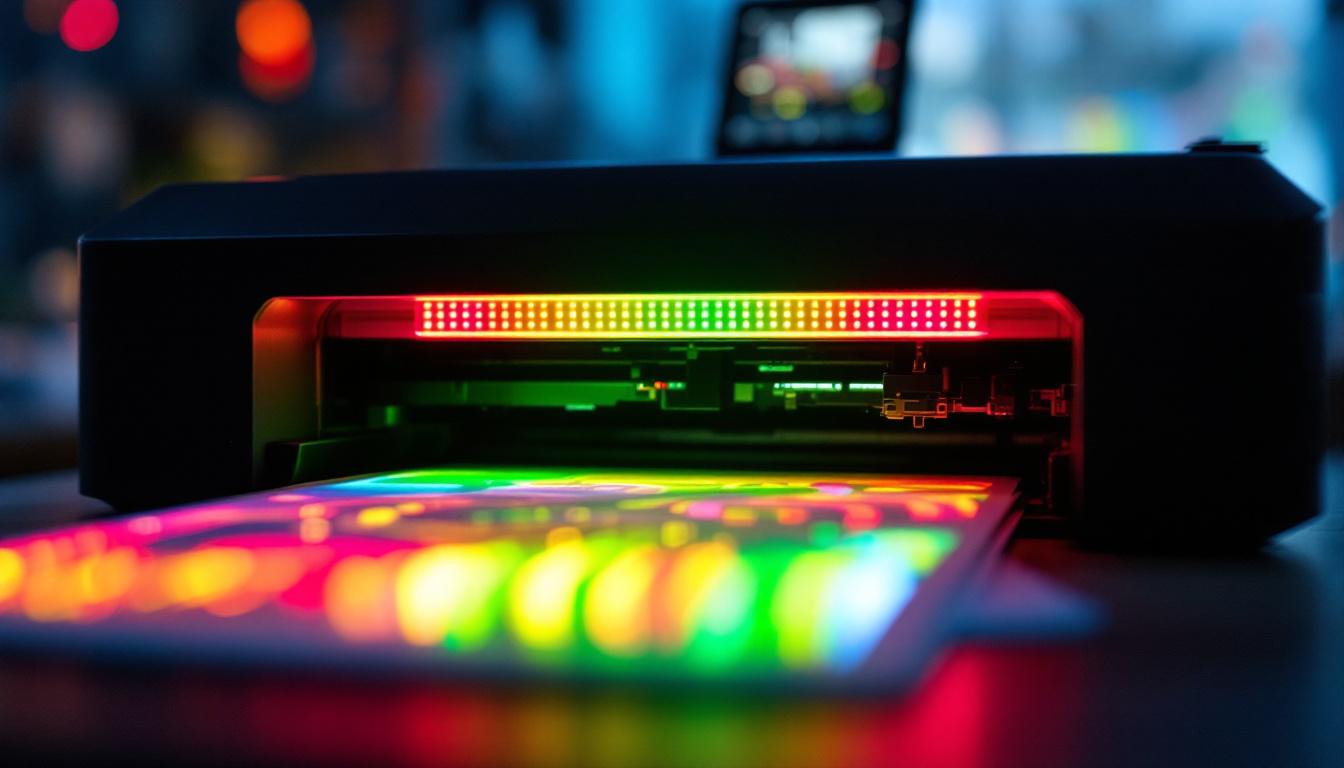
Colour LED printers operate on a principle similar to laser printers but replace the laser beam with an array of light-emitting diodes (LEDs). These LEDs work collectively to expose the photoconductor drum, creating an image that is then transferred onto paper using toner.
Unlike laser printers, which use a single laser beam that scans across the drum, LED printers utilize a fixed array of LEDs that illuminate the drum line by line. This fundamental difference influences the printer’s design, speed, and print quality.
How LED Technology Works in Printers
The LED array in a colour LED printer consists of thousands of tiny diodes arranged in a line across the width of the page. Each diode corresponds to a pixel in the printed image. When a print job is initiated, the printer’s controller activates specific LEDs to expose the drum according to the image data.
This exposure process creates an electrostatic image on the drum, which attracts toner particles. The toner is then transferred to paper and fused using heat to produce the final print. Because the LEDs are stationary, the printer can achieve high precision and consistent output without the mechanical complexity of moving laser components.
Advantages of LED Displays in Colour Printers
LED technology in printers offers several distinct benefits over traditional laser systems. These advantages make colour LED printers an attractive choice for various applications, from office environments to graphic design studios.
Speed and Efficiency
One of the most significant advantages of LED printers is their speed. Since the LED array covers the entire page width, the printer can expose the drum in a single pass without the need for scanning a laser beam across the drum. This design reduces the time it takes to print each page, especially for complex colour documents.
Additionally, LED printers have fewer moving parts, which reduces the likelihood of mechanical failures and maintenance requirements. This reliability translates into less downtime and higher productivity.
High Print Quality and Colour Accuracy
Colour LED printers are capable of producing sharp text and vibrant images. The precise control of individual LEDs allows for accurate placement of toner particles, resulting in crisp lines and smooth gradients. This is particularly important for printing detailed graphics, marketing materials, and photographs.
Moreover, many modern colour LED printers incorporate advanced colour management systems to ensure that the colours printed closely match the original digital files. This capability is essential for businesses where brand colour consistency is critical.
Compact and Energy-Efficient Design
Because LED arrays are compact and do not require the complex optics and moving mirrors of laser printers, colour LED printers can be designed to be smaller and lighter. This makes them ideal for offices with limited space or for mobile printing solutions.
LED technology also tends to consume less power during operation compared to laser printers, contributing to lower energy costs and a smaller environmental footprint.
Key Components of Colour LED Printers
To fully appreciate how colour LED printers function, it is helpful to understand their main components and how they interact during the printing process.
LED Array
The heart of the colour LED printer is the LED array. This line of thousands of LEDs spans the width of the page and is responsible for exposing the photoconductor drum. Each LED can be turned on or off independently, allowing for precise image formation.
In colour printers, the LED array works in conjunction with separate toner cartridges for cyan, magenta, yellow, and black (CMYK). The printer exposes the drum multiple times—once for each colour—to build the final image.
Photoconductor Drum
The photoconductor drum is a cylindrical component coated with a photosensitive material. When exposed to light from the LED array, the drum’s surface changes its electrical charge in specific areas, creating an electrostatic image that attracts toner particles.
The drum rotates through the printer, passing by the toner cartridges and then transferring the toner to the paper. The quality and condition of the drum significantly affect print clarity and consistency.
Toner Cartridges and Fusing Unit
Toner cartridges contain finely ground pigment particles in powder form. The electrostatic image on the drum attracts toner particles in the pattern of the desired print. After the toner is transferred to the paper, the fusing unit uses heat and pressure to permanently bond the toner to the paper fibers.
Colour LED printers typically have four separate toner cartridges for CMYK colours. The printer layers these colours in precise registration to produce a wide spectrum of hues.
Comparing Colour LED Printers to Laser and Inkjet Printers
Choosing the right printer technology depends on specific needs such as print volume, quality, speed, and budget. Understanding how colour LED printers compare to laser and inkjet printers helps in making an informed decision.
Colour LED vs. Laser Printers
While both technologies use toner and photoconductor drums, the main difference lies in the light source. Laser printers use a single laser beam that scans across the drum, whereas LED printers use a fixed array of LEDs.
LED printers generally have fewer moving parts, which can lead to improved reliability and lower maintenance costs. They also tend to be faster for colour printing because the entire page is exposed simultaneously. However, laser printers often have a more established market presence and a wider range of models available.
Colour LED vs. Inkjet Printers
Inkjet printers use liquid ink sprayed through tiny nozzles onto paper. They excel at producing high-quality photo prints and can handle a variety of paper types and sizes. However, inkjet printers are typically slower and have higher per-page costs due to ink consumption.
Colour LED printers offer faster printing speeds and lower running costs, making them better suited for high-volume office environments. They also produce durable prints that are resistant to smudging and water damage, which is advantageous for business documents and marketing materials.
Applications and Use Cases for Colour LED Printers
Colour LED printers are versatile and can be found in a variety of settings, from small businesses to large enterprises. Their combination of speed, quality, and reliability makes them well-suited for a range of printing needs.
Office Environments
In corporate offices, the demand for fast, reliable colour printing is high. Colour LED printers meet this demand by providing quick turnaround times for reports, presentations, and marketing collateral. Their compact design also helps conserve valuable office space.
Many models include network connectivity and advanced security features, enabling seamless integration into modern IT infrastructures.
Graphic Design and Marketing
For graphic designers and marketing professionals, colour accuracy and print quality are paramount. Colour LED printers deliver sharp images and vibrant colours, making them suitable for producing proofs, brochures, and other promotional materials in-house.
While they may not fully replace high-end photo printers for photographic prints, their performance is more than adequate for most business applications.
Educational Institutions
Schools and universities benefit from colour LED printers due to their affordability and ease of use. They can handle diverse printing tasks, from colourful handouts to detailed charts and diagrams, supporting effective teaching and learning.
Maintenance and Longevity of Colour LED Printers
Maintaining a colour LED printer properly ensures consistent print quality and extends the device’s lifespan. Understanding common maintenance tasks and potential issues helps users keep their printers in optimal condition.
Routine Maintenance Tasks
Regular replacement of toner cartridges and photoconductor drums is essential. Many printers provide alerts when supplies are low or when components need servicing. Cleaning the printer’s internal parts, such as the LED array and paper path, can prevent jams and maintain image quality.
Firmware updates from manufacturers often include performance improvements and bug fixes, so keeping the printer’s software current is also important.
Common Issues and Troubleshooting
Some typical problems include streaks or spots on prints, which may indicate a dirty drum or toner cartridge issues. Paper jams can occur if the paper is not loaded correctly or if the printer’s rollers are worn.
Because LED printers have fewer moving parts, mechanical failures are less common than in laser printers. However, when issues arise, consulting the user manual or professional service is recommended to avoid damage.
The Future of Colour LED Printing Technology
As printing technology advances, colour LED printers continue to evolve with improvements in LED array resolution, colour management, and energy efficiency. Innovations such as higher-density LED arrays enable even finer image detail, approaching photographic quality.
Integration with cloud services and mobile printing capabilities is becoming standard, enhancing user convenience. Additionally, ongoing research into environmentally friendly materials and energy-saving technologies aligns with global sustainability goals.
Given these trends, colour LED printers are poised to remain a competitive and versatile option for diverse printing needs in the years to come.
Conclusion
Colour LED printers represent a sophisticated blend of speed, quality, and reliability, leveraging LED display technology to deliver outstanding print results. Their advantages over traditional laser and inkjet printers make them a practical choice for businesses and individuals seeking efficient colour printing solutions.
Understanding how LED displays function within these printers provides valuable insight into their operation and benefits. As technology progresses, colour LED printers will continue to adapt, offering enhanced performance and greater environmental sustainability.
For anyone considering a new colour printer, exploring LED-based models is a worthwhile step toward meeting modern printing demands with confidence and efficiency.
Discover LumenMatrix’s Advanced LED Display Solutions
Ready to experience the future of printing and visual communication? LumenMatrix, a pioneer in LED display technology, offers a diverse range of LED display modules designed to bring your brand to life. From captivating Indoor LED Walls to dynamic Vehicle LED Displays, our solutions are tailored to elevate your message with unparalleled clarity and impact. Embrace the innovation that drives efficiency and quality in colour printing with LumenMatrix. Check out LumenMatrix LED Display Solutions today and transform the way you connect with your audience.