In the realm of digital signage and display technology, understanding measurements and specifications is crucial for making informed decisions. One common point of confusion involves the conversion and interpretation of dimensions, such as “105 mm inches,” especially when discussing LED displays. This article aims to clarify these measurements, explain their relevance in LED display technology, and explore how they impact performance and application.
Understanding the Measurement: What Does 105 mm Inches Mean?
At first glance, the phrase “105 mm inches” might seem contradictory because millimeters (mm) and inches are distinct units of length. Millimeters are part of the metric system, while inches belong to the imperial system. To clarify, 105 mm is a measurement in millimeters, which can be converted into inches for easier understanding in regions where imperial units are standard.
To convert millimeters to inches, the standard formula is:
inches = millimeters ÷ 25.4
Applying this to 105 mm:
105 mm ÷ 25.4 ≈ 4.13 inches
Therefore, 105 mm is approximately 4.13 inches. This conversion is essential in LED display specifications where dimensions might be listed in either unit depending on the manufacturer or region.
Why Unit Conversion Matters in LED Displays
LED displays are often specified by physical dimensions such as pixel pitch, screen size, or module size. These measurements directly influence the display’s resolution, viewing distance, and installation feasibility. For example, a pixel pitch of 105 mm would indicate very large pixels, suitable for long-distance viewing such as stadium screens or billboards.
Understanding these units and their conversions ensures that designers, engineers, and buyers can accurately compare products and select the right display for their needs. Furthermore, in the world of digital signage, where clarity and visibility are paramount, knowing the precise dimensions can greatly affect the effectiveness of the advertising message. A display that is too small may not be seen from a distance, while one that is too large may overwhelm the viewer, leading to an ineffective communication of the intended message.
In addition, the choice of measurement units can also impact the manufacturing process and supply chain logistics. Different countries have varying standards and preferences for measurement systems. For instance, a manufacturer based in the United States may primarily use inches, while a European manufacturer might default to millimeters. This discrepancy can lead to potential misunderstandings or errors in production if conversions are not handled carefully. Thus, a solid grasp of both metric and imperial systems is invaluable for professionals in the industry, ensuring that they can navigate global markets with ease.
LED Display Basics: Key Terms and Measurements
Before delving deeper into the significance of 105 mm in LED displays, it’s important to understand some fundamental concepts and measurements commonly used in the industry.
Pixel Pitch
Pixel pitch refers to the distance from the center of one LED pixel to the center of the adjacent pixel, usually measured in millimeters. It is one of the most critical specifications because it determines the display’s resolution and optimal viewing distance.
A smaller pixel pitch means higher pixel density, resulting in sharper images and closer optimal viewing distances. Conversely, a larger pixel pitch, such as 105 mm, indicates fewer pixels per unit area, suited for viewing from far away. This makes larger pixel pitches ideal for applications such as billboards or large outdoor displays, where the audience is typically at a significant distance from the screen. Understanding pixel pitch is essential for selecting the right display for specific environments, as it directly influences the viewer’s experience.
Screen Size and Resolution
Screen size is the physical dimension of the display, typically measured diagonally in inches or millimeters. Resolution refers to the total number of pixels on the screen, usually expressed as width × height.
For large LED displays, especially those used outdoors or in arenas, the resolution may be lower than that of smaller indoor screens, but the physical size compensates for this by enabling visibility over long distances. For instance, a massive outdoor screen with a resolution of 1920 × 1080 pixels may still deliver an impressive visual experience despite its lower pixel density, as viewers are positioned far enough away to appreciate the overall image rather than individual pixels. This balance between screen size and resolution is crucial in designing displays that effectively communicate messages to large crowds.
Brightness and Contrast
Brightness, measured in nits (candelas per square meter), is vital for LED displays to be visible under various lighting conditions, including direct sunlight. Contrast ratio, the difference between the brightest white and the darkest black the display can produce, also affects image quality.
Displays with larger pixel pitches like 105 mm often have very high brightness levels to ensure visibility from hundreds of meters away. For example, a display intended for a sports stadium may need to reach brightness levels of over 5000 nits to combat the effects of natural sunlight. Additionally, advancements in LED technology have enabled manufacturers to improve contrast ratios, allowing for deeper blacks and more vibrant colors, which enhances the overall viewing experience. This is particularly important in environments where the display is subjected to varying light conditions, as maintaining image quality can significantly impact audience engagement and message retention.
Applications of LED Displays with 105 mm Pixel Pitch
LED displays with a pixel pitch of approximately 105 mm are specialized products designed for specific use cases. Their large pixel size makes them unsuitable for close-range viewing but ideal for large-scale, long-distance applications.
Outdoor Billboards and Advertising
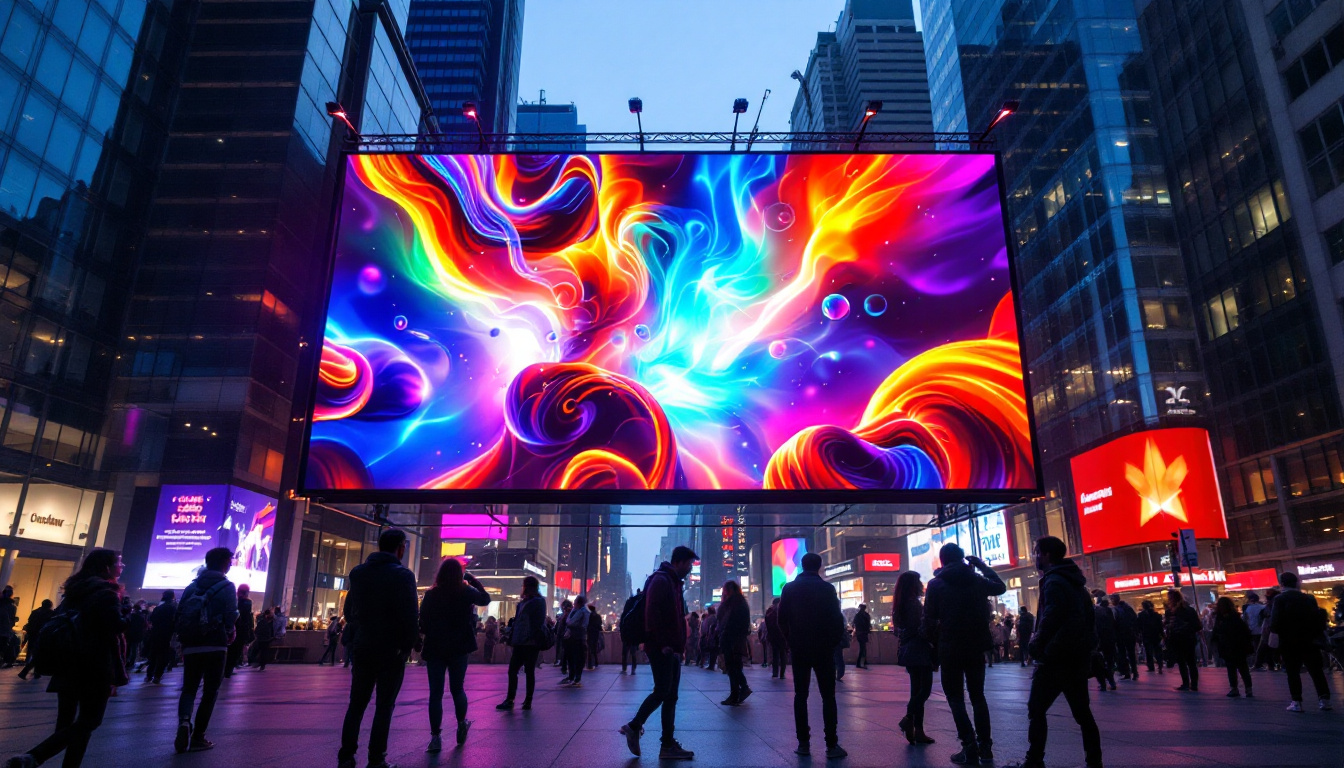
One of the most common applications for LED displays with a 105 mm pixel pitch is outdoor advertising billboards. These massive screens are installed along highways, cityscapes, and stadiums, where viewers are often hundreds of feet away.
The large pixel pitch reduces the number of LEDs needed, lowering costs and power consumption while maintaining sufficient image clarity at long distances. For example, a billboard measuring 10 meters wide with a 105 mm pixel pitch would have a resolution of roughly 95 pixels across, which is adequate for displaying simple graphics, text, and video content visible to passing traffic.
Sports Arenas and Event Displays
In stadiums and large event venues, LED displays with large pixel pitches are used for scoreboards, advertising panels, and information boards. The size and brightness ensure that spectators seated far from the screen can still clearly see the content.
For instance, a 105 mm pitch LED scoreboard can be seen clearly from the upper tiers of a stadium, providing essential game information and enhancing the spectator experience.
Industrial and Transportation Signage
LED displays with large pixel pitches are also employed in industrial settings and transportation hubs. Examples include highway message boards, railway station information displays, and airport signage. These applications require high visibility over long distances rather than fine detail.
Technical Considerations When Choosing a 105 mm Pixel Pitch LED Display
Selecting an LED display with a 105 mm pixel pitch involves balancing several technical factors to ensure the display meets the intended purpose efficiently.
Viewing Distance
The optimal viewing distance for a 105 mm pixel pitch display is generally around 100 meters or more. At closer distances, the pixels become visibly large, resulting in a blocky or pixelated image. Therefore, understanding the installation environment and typical viewer distance is critical.
Resolution vs. Size Trade-Off
Because pixel pitch directly affects resolution, a display with a 105 mm pitch will have lower resolution compared to one with a smaller pitch of, say, 3 mm. However, increasing the physical size of the display compensates for this by providing a larger overall image area.
For example, a 20-meter-wide display with a 105 mm pitch will have fewer pixels than a smaller display with a 3 mm pitch, but the image will still be clear from a distance due to the large size.
Power Consumption and Maintenance
LED displays with larger pixels generally consume less power per unit area than high-density displays because they have fewer LEDs. This can result in cost savings over time, especially for large installations.
Maintenance considerations also differ; larger pixels mean fewer components that can fail, but replacement modules tend to be bigger and potentially more expensive.
Future Trends in LED Display Technology
While 105 mm pixel pitch displays currently serve niche markets, the LED display industry is rapidly evolving with innovations that may influence future applications and specifications.
Higher Resolution at Larger Sizes
Advances in LED manufacturing and miniaturization continue to push pixel pitches smaller without sacrificing brightness or durability. This trend allows for larger displays with higher resolution, even in outdoor environments.
However, for extremely large-scale applications such as stadiums and billboards, large pixel pitches like 105 mm will remain relevant due to cost-effectiveness and visibility requirements.
Integration of Smart Technologies
Modern LED displays increasingly incorporate smart features such as remote monitoring, adaptive brightness control, and content management systems. These technologies improve operational efficiency and user experience.
For large pixel pitch displays, integrating sensors that adjust brightness based on ambient light can enhance visibility and reduce power consumption.
Environmental Sustainability
Energy efficiency and sustainable materials are becoming priorities in LED display manufacturing. Displays with larger pixel pitches can contribute to sustainability goals by consuming less power and requiring fewer materials per square meter.
Conclusion
The term “105 mm inches” essentially refers to a dimension of 105 millimeters, which converts to approximately 4.13 inches. In the context of LED displays, a pixel pitch of 105 mm denotes a large pixel size suited for long-distance viewing applications such as outdoor billboards, stadium screens, and transportation signage.
Understanding the implications of pixel pitch, viewing distance, resolution, and brightness is vital for selecting the right LED display for any given environment. While smaller pixel pitches dominate indoor and close-range displays, large pixel pitch LEDs like 105 mm continue to play an essential role in large-scale, outdoor digital signage.
As LED technology advances, the balance between resolution, size, cost, and power consumption will continue to shape the future of digital displays, ensuring that both large and small pixel pitch displays remain relevant in their respective applications.
Explore Cutting-Edge LED Displays with LumenMatrix
Ready to elevate your visual communication with high-impact LED displays? LumenMatrix is at the forefront of LED display innovation, offering a wide range of solutions tailored to your needs. From captivating Indoor LED Wall Displays to dynamic Outdoor LED Wall Displays, and specialized options like Vehicle LED Displays and LED Sports Displays, we have the technology to bring your vision to life. Embrace the future of digital signage with LumenMatrix and create experiences that resonate with your audience. Check out LumenMatrix LED Display Solutions today and see the difference that advanced LED technology can make.