Curved TV Screens: LED Display Explained
In the evolving world of television technology, curved TV screens have carved out a niche that intrigues both tech enthusiasts and everyday consumers. While flat-screen TVs have dominated the market for years, curved displays offer a different viewing experience that promises enhanced immersion and aesthetic appeal. This article explores the technology behind curved LED TV screens, their advantages and disadvantages, and whether they are the right choice for your home entertainment setup.
Understanding Curved TV Screens
What Are Curved TV Screens?
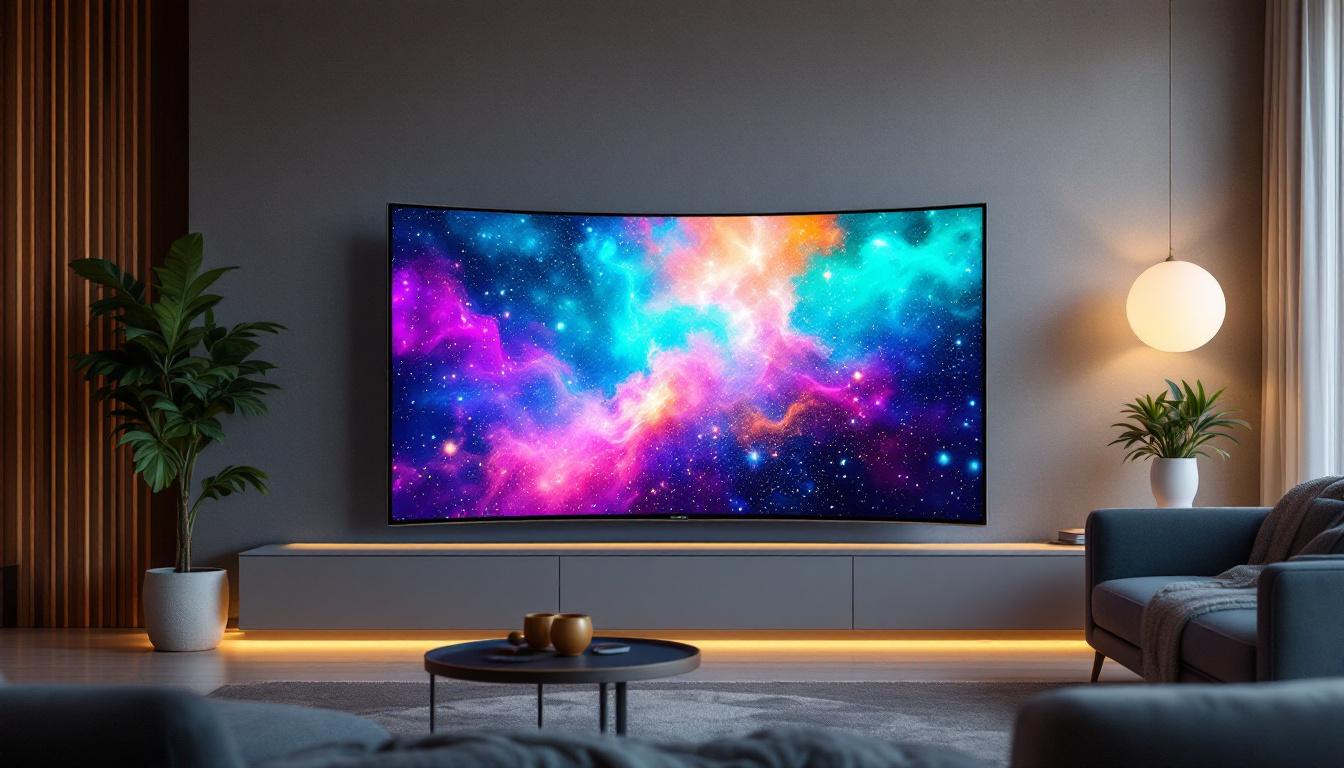
Curved TV screens are television displays that feature a slight inward curve along the horizontal axis. This curvature is designed to mimic the natural shape of the human eye, aiming to provide a more immersive and comfortable viewing experience. Unlike traditional flat screens, curved TVs wrap the image slightly around the viewer, potentially enhancing depth perception and reducing distortion at the edges of the screen.
The curvature is typically measured in radius units (e.g., 1800R or 3000R), where a smaller number indicates a more pronounced curve. For example, a 1800R curve means that if the screen’s curve were extended into a full circle, it would have a radius of 1800 millimeters (1.8 meters). This measurement helps manufacturers tailor the curvature to optimize viewing angles and distances.
The Role of LED Technology in Curved Screens
Most curved TVs on the market today use LED (Light Emitting Diode) technology for their displays. LED TVs are essentially LCD (Liquid Crystal Display) panels that use LEDs as a backlight source instead of traditional fluorescent bulbs. This approach allows for thinner panels, better energy efficiency, and improved brightness and contrast.
In curved LED TVs, the LED backlighting is carefully engineered to accommodate the screen’s bend without compromising uniformity or brightness. Advances in LED technology, such as full-array local dimming and quantum dot enhancements, have further improved picture quality on curved screens, making them competitive with flat counterparts.
Advantages of Curved LED TV Screens
Enhanced Immersive Viewing Experience
One of the primary benefits touted by manufacturers of curved TVs is the enhanced immersive experience. The curvature can create a subtle wrap-around effect, drawing the viewer’s eyes toward the center of the screen and making the image feel more three-dimensional. This effect is particularly noticeable on larger screens, typically those 55 inches and above.
For gamers and movie enthusiasts, this can translate into a more engaging experience, as the screen’s shape reduces peripheral distractions and helps maintain focus on the content. In fact, some studies suggest that curved screens can reduce eye strain by aligning more naturally with the eye’s field of view, although individual experiences may vary.
Improved Viewing Angles and Reduced Glare
Curved TVs can offer better viewing angles for viewers seated directly in front of the screen. The curvature helps to direct light from the screen toward the viewer, which can reduce reflections and glare from ambient lighting sources. This is especially beneficial in brightly lit rooms where glare can be a persistent issue.
However, it’s important to note that the optimal viewing experience is usually limited to a central seating position. Viewers sitting off to the side may experience some distortion or color shifts, which is less common with flat screens.
Stylish and Modern Aesthetics
Beyond technical benefits, curved TVs often appeal to consumers because of their sleek and futuristic design. The curved form factor can add a sense of sophistication to a living room or home theater setup. For interior designers and tech-savvy homeowners, the curved screen serves as a statement piece that blends technology with modern aesthetics.
Potential Drawbacks of Curved LED TV Screens
Limited Viewing Angles for Multiple Viewers
While curved TVs enhance the viewing experience for a single viewer or small group seated directly in front of the screen, they can pose challenges in wider seating arrangements. People sitting at wider angles may notice image distortion, color shifts, or a less immersive experience compared to flat screens.
This limitation makes curved TVs less ideal for large families or social settings where multiple people watch from different parts of the room. In such cases, flat TVs tend to provide more consistent picture quality across various viewing positions.
Higher Cost and Installation Considerations
Curved LED TVs generally come at a premium price compared to their flat counterparts. The manufacturing process for curved panels is more complex, and the specialized design can increase costs. Additionally, mounting a curved TV on a wall can be more challenging, as the curvature requires specific brackets or stands to ensure stability and proper alignment.
Consumers should also consider room layout and viewing distance when opting for a curved TV. The immersive benefits are most noticeable when sitting at an optimal distance, usually about 1.5 to 2.5 times the screen’s diagonal size. Rooms that do not accommodate these distances may not fully benefit from the curved design.
Potential for Reflections and Distortions
Although curved screens can reduce glare from certain angles, they may also create new reflection issues depending on the room’s lighting and layout. The curved surface can act like a mirror, reflecting light sources or objects in the environment more prominently than flat screens. This effect can be distracting if the TV is placed opposite windows or bright lamps.
Moreover, some users report that curved screens can cause slight image distortions, especially on smaller screen sizes or when viewing content with straight lines and geometric patterns. These distortions are subtle but worth considering for users who prioritize picture accuracy.
Technological Innovations in Curved LED Displays
Quantum Dot and OLED Integration
Recent advancements in display technology have seen the integration of quantum dot technology with curved LED TVs. Quantum dots are semiconductor nanocrystals that enhance color accuracy and brightness by emitting precise wavelengths of light. This results in richer colors and improved HDR (High Dynamic Range) performance, which is particularly beneficial for curved screens aiming to deliver vibrant and immersive visuals.
While OLED (Organic Light Emitting Diode) technology is more commonly associated with flat-panel displays, some manufacturers have experimented with curved OLED TVs. OLEDs offer superior contrast ratios and deeper blacks since each pixel emits its own light. However, OLED curved TVs remain niche due to higher production costs and technical challenges in bending organic materials without compromising longevity.
Advanced Backlighting Techniques
To address uniformity challenges on curved surfaces, manufacturers have developed advanced backlighting systems such as full-array local dimming (FALD). This technology divides the backlight into zones that can be independently dimmed or brightened, enhancing contrast and reducing halo effects around bright objects on dark backgrounds.
Additionally, mini-LED technology is gaining traction in curved TVs. Mini-LEDs are smaller than traditional LEDs, allowing for more precise control of backlighting and improved picture quality. This technology helps maintain consistent brightness and color accuracy across the curved screen, even in challenging viewing environments.
Choosing the Right Curved LED TV for Your Needs
Screen Size and Viewing Distance
When considering a curved LED TV, screen size and viewing distance are critical factors. Curved screens are most effective on larger displays, typically 55 inches or greater, where the curvature can create a noticeable immersive effect. Smaller curved TVs may not provide significant benefits over flat models and could even introduce unwanted distortions.
The ideal viewing distance for a curved TV is generally between 1.5 and 2.5 times the screen’s diagonal size. For example, a 65-inch curved TV is best viewed from about 8 to 13 feet away. Sitting too close or too far can diminish the immersive advantages and affect picture quality.
Room Layout and Seating Arrangement
Curved TVs perform best in rooms where viewers sit directly in front of the screen. If your living room or home theater has a wide seating arrangement or multiple viewing angles, a flat screen may offer a more consistent experience for all viewers. Consider the typical number of viewers and their seating positions before making a purchase.
Lighting conditions also matter. To minimize reflections and glare on a curved screen, place the TV away from direct sunlight and bright light sources. Using blackout curtains or controlled lighting can enhance the viewing experience.
Budget and Feature Prioritization
Curved LED TVs tend to be priced higher than flat models with similar specifications. When budgeting, weigh the benefits of curvature against other features such as resolution (4K or 8K), HDR support, refresh rates, and smart TV capabilities.
For users prioritizing immersive gaming or cinematic experiences, investing in a high-quality curved TV with advanced backlighting and color technologies may be worthwhile. Conversely, if budget constraints or multi-viewer scenarios dominate, a flat LED TV might be the more practical choice.
Conclusion: Are Curved LED TVs Worth It?
Curved LED TV screens represent a fascinating blend of design innovation and display technology. They offer unique advantages in immersion, viewing comfort, and aesthetics, especially for large-screen setups and dedicated viewing environments. However, their benefits come with trade-offs, including higher costs, limited optimal viewing angles, and potential reflection issues.
For individuals seeking a cinematic or gaming experience with a focus on a single primary viewing position, curved LED TVs can deliver a compelling upgrade. In contrast, households with diverse seating arrangements or those prioritizing cost-effectiveness may find flat-screen TVs better suited to their needs.
Ultimately, the decision to invest in a curved LED TV should consider personal viewing habits, room configuration, and budget. As display technology continues to evolve, curved screens may become more versatile and accessible, further shaping the future of home entertainment.
Discover the Future of Home Entertainment with LumenMatrix
Ready to elevate your viewing experience with the latest in curved LED TV technology? LumenMatrix is at the forefront of creating immersive visual displays that transform any space into a dynamic environment. Whether you’re looking for an Indoor LED Wall Display for your home theater, an Outdoor LED Wall Display for your business, or any of our other innovative solutions, we have you covered. Embrace the future of visual engagement and check out LumenMatrix LED Display Solutions today to find the perfect addition to your home entertainment setup.