In today’s digital world, display technology is everywhere—from smartphones and televisions to digital billboards and wearable devices. Among the many types of display technologies, LCD and LED displays stand out as the most prevalent. However, the terminology can sometimes be confusing, especially when terms like “LCD” and “LED” are used interchangeably. This article aims to clarify what LCD and LED displays are, how they work, their differences, and why understanding these technologies matters when choosing a display device.
Understanding LCD Technology
What is an LCD?
LCD stands for Liquid Crystal Display. It is a flat-panel display technology that uses the light-modulating properties of liquid crystals combined with polarizers to produce images. Unlike traditional cathode-ray tube (CRT) screens, LCDs are thin, lightweight, and energy-efficient, making them ideal for a wide range of applications. These displays are commonly found in televisions, computer monitors, smartphones, and various portable devices, showcasing their versatility and adaptability in modern technology.
Liquid crystals themselves do not emit light directly; instead, they manipulate light passing through them. When an electric current is applied, the crystals align in a way that either blocks or allows light to pass through, creating the images we see on the screen. This unique property allows for high-resolution displays with sharp images and vibrant colors, which have become the standard in today’s visual technology.
How Does an LCD Work?
At the core of an LCD is a layer of liquid crystals sandwiched between two polarized panels. Behind this layer, there is a light source that provides illumination. Originally, this backlight was provided by cold cathode fluorescent lamps (CCFLs), which emitted a uniform light across the screen. However, advancements in technology have led to the adoption of LED backlighting, which not only enhances brightness and contrast but also improves energy efficiency and allows for thinner display designs.
The liquid crystals act as shutters, opening or closing to let light through specific pixels. By controlling the orientation of these crystals via electrical signals, the display can produce different colors and shades. Color filters are used to create red, green, and blue subpixels, which combine to form the full spectrum of colors. This meticulous arrangement of pixels is what enables LCDs to deliver stunning visuals, making them suitable for everything from gaming to graphic design. Furthermore, the development of technologies such as In-Plane Switching (IPS) and Twisted Nematic (TN) has improved viewing angles and color accuracy, catering to the diverse needs of consumers and professionals alike.
Introducing LED Displays
What Does LED Mean in Displays?
LED stands for Light Emitting Diode. When it comes to displays, LED refers to the type of backlighting used rather than the display technology itself. Modern LCD screens commonly use LED backlights instead of CCFLs, which is why you often see the term “LED TV” or “LED monitor.”
In essence, an LED display is still an LCD screen but with LED backlighting. This distinction is important because it affects the display’s brightness, energy efficiency, and color accuracy. LED technology has revolutionized the way we experience visual media, providing sharper images and more vibrant colors compared to traditional display technologies. With the growing demand for high-definition content, LED displays have become the standard in both consumer electronics and professional applications, offering viewers an immersive experience that was previously unattainable.
Types of LED Backlighting
There are two primary methods of LED backlighting used in LCD displays:
- Edge-Lit LED: LEDs are placed around the edges of the screen, and light is spread across the display using light guides. This design allows for thinner screens but can sometimes lead to uneven brightness or color inconsistencies. Edge-lit displays are particularly popular in ultra-slim televisions and monitors, making them a favored choice for those looking to save space while still enjoying a high-quality viewing experience.
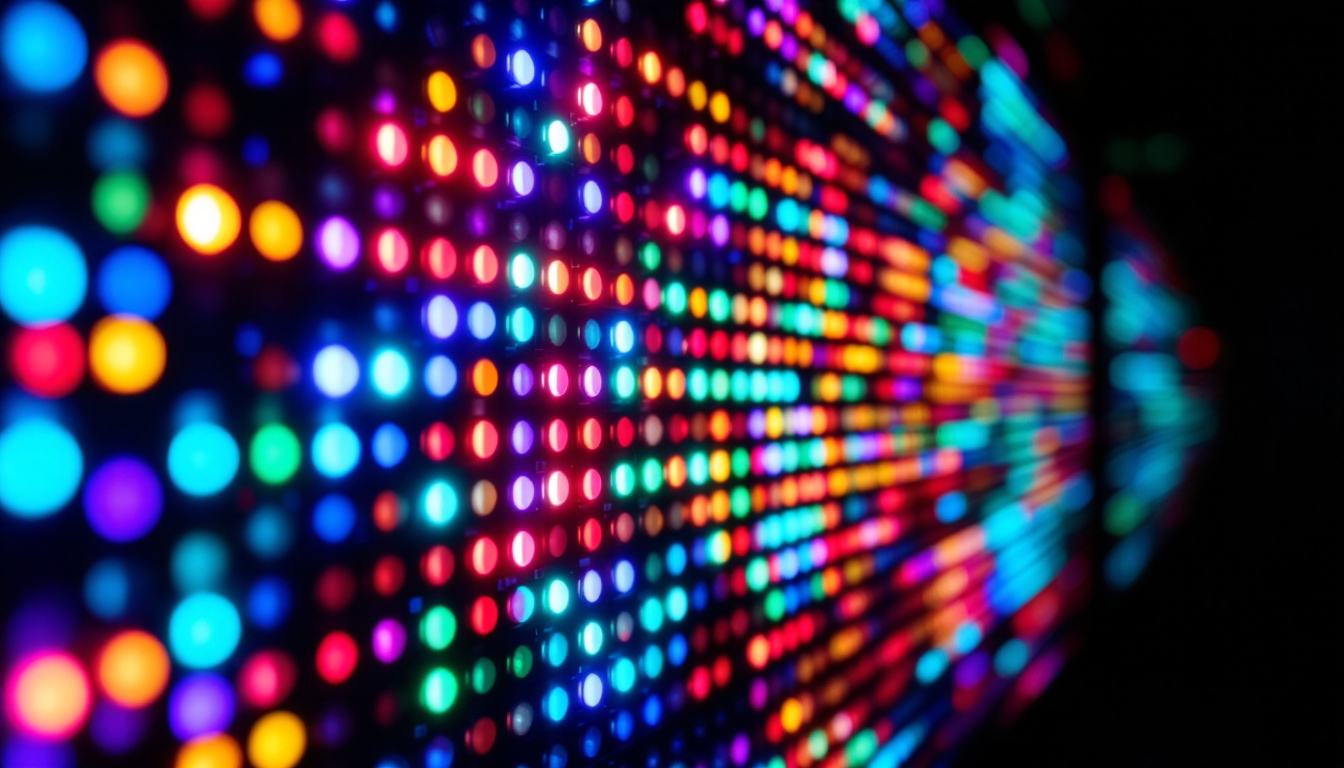
- Full-Array LED: LEDs are placed directly behind the entire screen in a grid pattern. This allows for more precise control of brightness and contrast, especially when combined with local dimming technology, where individual zones can be dimmed or brightened independently. Full-array LED displays are often preferred for applications requiring high dynamic range (HDR), as they can produce deeper blacks and brighter whites, enhancing the overall picture quality significantly.
Furthermore, advancements in LED technology have led to the development of Mini-LED and Micro-LED displays. Mini-LED utilizes smaller diodes to create more zones for local dimming, resulting in even better contrast and color accuracy. On the other hand, Micro-LED technology represents a significant leap forward, as it consists of tiny self-emitting pixels that eliminate the need for backlighting altogether. This not only enhances the display’s efficiency but also allows for unprecedented levels of brightness and color fidelity, paving the way for the next generation of visual experiences.
Differences Between LCD and LED Displays
Backlighting Technology
The fundamental difference lies in the backlighting. Traditional LCDs use CCFL backlights, while LED displays use LEDs for backlighting. LEDs are more energy-efficient, have a longer lifespan, and allow for thinner and lighter designs.
Additionally, LED backlighting can provide better brightness and contrast ratios. Full-array LED backlighting with local dimming, for example, can produce deeper blacks and more vibrant colors compared to CCFL-backlit LCDs.
Image Quality and Color Accuracy
LED-backlit LCDs generally offer improved image quality. The ability to control LED zones individually enhances contrast and reduces light bleed, which is a common issue in older LCD designs. This results in sharper images and better color reproduction.
However, it’s important to note that the quality of the panel itself (such as IPS, VA, or TN) also significantly affects image quality. LED backlighting enhances the panel’s performance but does not replace the panel technology.
Energy Efficiency and Environmental Impact
LED backlighting consumes less power than CCFLs, making LED displays more energy-efficient. This is a critical factor for manufacturers aiming to meet stringent energy regulations and for consumers looking to reduce electricity costs.
Moreover, LEDs do not contain mercury, unlike CCFLs, which makes LED-backlit displays more environmentally friendly and easier to recycle.
True LED Displays: Beyond LCD Technology
What Are OLED and MicroLED Displays?
While most “LED” displays on the market are actually LCDs with LED backlighting, there are true LED display technologies that do not rely on liquid crystals. Two notable examples are OLED (Organic Light Emitting Diode) and MicroLED displays.
OLED displays use organic compounds that emit light when an electric current passes through them. This means each pixel emits its own light, eliminating the need for a backlight. This results in superior contrast ratios, perfect blacks, and wide viewing angles.
MicroLED is a newer technology that uses microscopic LEDs to form each pixel. Like OLED, MicroLED pixels emit their own light, but they use inorganic materials, which can offer longer lifespans and higher brightness levels without burn-in issues.
Advantages of True LED Displays
Because each pixel in OLED and MicroLED displays emits its own light, these technologies offer several advantages:
- Infinite Contrast Ratio: Pixels can be turned off completely to produce true blacks.
- Wide Viewing Angles: Colors and brightness remain consistent even when viewed from sharp angles.
- Faster Response Times: Ideal for gaming and fast-moving video content.
- Thinner and More Flexible Screens: OLEDs can be made flexible, enabling foldable and curved displays.
Current Market Trends
OLED technology has become mainstream in premium smartphones, high-end televisions, and some monitors. MicroLED is still emerging but shows promise for future large-scale displays and commercial applications.
Despite their advantages, true LED displays tend to be more expensive to manufacture than traditional LED-backlit LCDs, which keeps them at the higher end of the market for now.
Choosing the Right Display: What Consumers Should Know
Consider Your Usage Needs
When selecting a display, understanding the differences between LCD, LED-backlit LCD, and true LED technologies can help tailor your choice to your needs.
For everyday use such as office work, web browsing, and casual media consumption, LED-backlit LCDs offer excellent performance at a reasonable price. They provide bright, clear images and are energy-efficient.
If you are a gamer, video editor, or home theater enthusiast, investing in an OLED or high-end LED-backlit LCD with full-array local dimming may significantly enhance your experience due to better color accuracy, contrast, and response times.
Budget and Longevity
Budget constraints often dictate the choice of display. LED-backlit LCDs dominate the market because they balance cost and performance effectively. They also tend to have longer lifespans without the risk of burn-in, which can affect OLED displays if static images are displayed for extended periods.
Energy Consumption and Environmental Impact
Energy efficiency is increasingly important for both environmental reasons and electricity costs. LED-backlit LCDs consume less power than older CCFL-backlit LCDs and CRTs. OLED displays can be more power-efficient when displaying darker images but may consume more power with bright, white backgrounds.
Consumers concerned with sustainability should also consider the environmental impact of manufacturing and disposing of displays. LED-backlit LCDs are generally easier to recycle and contain fewer hazardous materials than older technologies.
The Future of Display Technology
Innovations on the Horizon
Display technology continues to evolve rapidly. MicroLED and OLED advancements promise even better picture quality, flexibility, and energy efficiency. Researchers are also exploring quantum dot displays, which use semiconductor nanocrystals to enhance color accuracy and brightness.
Flexible, transparent, and even rollable displays are becoming more feasible, opening new possibilities for device design and user interaction.
Impact on Consumers and Industries
As display technology improves, industries such as entertainment, gaming, healthcare, and automotive are poised to benefit from more immersive and interactive visual experiences. For consumers, this means access to higher-quality displays across a broader range of devices at increasingly affordable prices.
Understanding the fundamentals of LCD and LED technologies empowers consumers to make informed decisions, ensuring they select the right display for their needs and budget.
Conclusion
In summary, the term “LED display” often refers to an LCD panel illuminated by LED backlighting, which has largely replaced older CCFL backlights due to its superior efficiency, brightness, and environmental benefits. True LED displays, such as OLED and MicroLED, represent the next generation of display technology, offering unparalleled image quality and design flexibility.
Whether choosing a television, monitor, or smartphone, knowing the distinctions between these technologies helps consumers navigate the market and select devices that best suit their requirements. As display technology continues to advance, staying informed will remain key to enjoying the best visual experiences available.
Explore Cutting-Edge LED Displays with LumenMatrix
As you consider the vast landscape of display technologies for your next purchase, don’t miss the opportunity to experience the future with LumenMatrix. Our commitment to innovation in LED display modules means we offer a wide array of solutions, from Indoor and Outdoor LED Wall Displays to specialized options like Vehicle, Sports, and Floor LED Displays. Whether you’re looking to captivate an audience, enhance brand visibility, or create immersive visual experiences, LumenMatrix has the state-of-the-art technology to bring your vision to life. Check out LumenMatrix LED Display Solutions today and see how we’re revolutionizing visual communication.