In today’s digital age, the screen is the window through which we experience entertainment, work, and communication. Whether it’s a television in the living room or a monitor on a desk, the quality and technology of the display can significantly impact user experience. Among the various display technologies available, LED displays have become the dominant choice for TVs and monitors worldwide. But what exactly is an LED display, and why has it become so popular? This article dives deep into the technology behind LED screens, exploring how they work, their advantages and disadvantages, and what consumers should consider when choosing an LED display.
Understanding LED Display Technology
What Does LED Stand For?
LED stands for Light Emitting Diode. It is a semiconductor device that emits light when an electric current passes through it. Unlike traditional incandescent bulbs, LEDs are highly energy-efficient and have a longer lifespan. This efficiency not only reduces electricity bills but also contributes to a lower carbon footprint, making LEDs an environmentally friendly choice.
In the context of TVs and monitors, LED refers to the backlighting technology used in liquid crystal displays (LCDs). It’s important to note that LED TVs are essentially LCD TVs that use LEDs for backlighting instead of older cold cathode fluorescent lamps (CCFLs). The transition to LED technology has revolutionized the television industry, allowing for thinner designs and improved picture quality, which has become a standard expectation among consumers.
How Does an LED Display Work?
At the core of an LED display is the LCD panel, which controls the image by manipulating light. The LCD itself does not emit light; it relies on a backlight to illuminate the pixels. In LED displays, this backlight is provided by an array of LEDs placed either behind the screen (direct LED) or along the edges (edge-lit LED). The arrangement of these LEDs plays a crucial role in the overall performance of the display, influencing factors such as brightness, color accuracy, and viewing angles.
The LCD panel contains millions of tiny pixels made up of liquid crystals that twist and align to either block or allow light to pass through colored filters, creating the images we see. The LEDs shine light through these pixels, and by controlling the amount of light each pixel allows through, the display produces a full-color image. This intricate process enables the display to produce vivid colors and deep blacks, enhancing the viewing experience, especially in high-definition content.
Types of LED Backlighting
There are primarily two types of LED backlighting used in TVs and monitors:
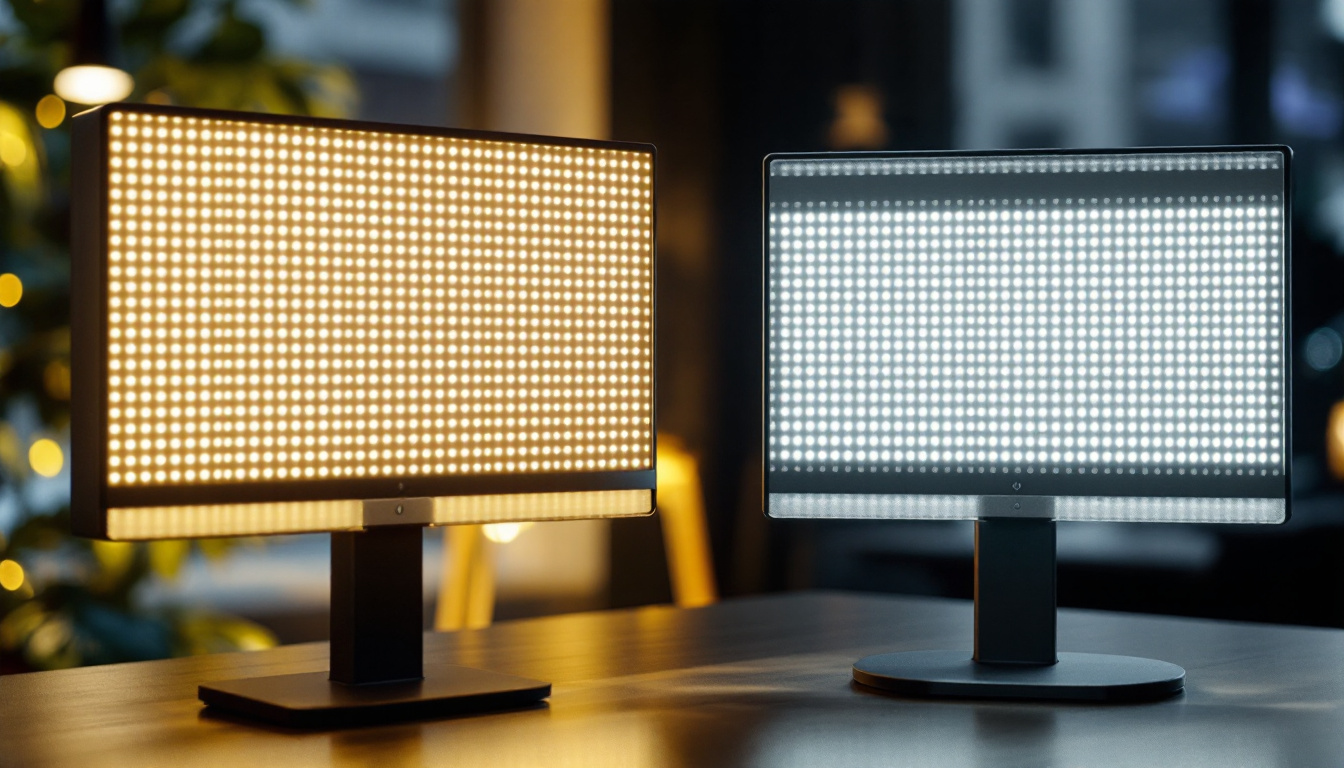
- Edge-lit LED: LEDs are placed along the edges of the screen, and light is distributed across the panel using light guides. This design allows for thinner displays but can sometimes result in uneven brightness or less precise local dimming. Edge-lit displays are often more affordable and are commonly found in budget models, making them accessible to a wider audience.
- Direct-lit or Full-array LED: LEDs are arranged in a grid directly behind the LCD panel. This allows for better control of brightness and contrast through local dimming zones, enhancing picture quality. Full-array LED displays are favored by enthusiasts for their superior performance, especially in dark scenes where precise control over backlighting can significantly improve the viewing experience.
Some high-end models use Mini-LED technology, which involves thousands of tiny LEDs for even more precise lighting control, improving contrast and HDR performance. This technology allows for finer adjustments to brightness levels, resulting in a more dynamic range of colors and deeper blacks. Mini-LED displays are becoming increasingly popular in premium televisions, as they offer a compelling alternative to OLED technology, providing similar levels of contrast while avoiding some of the drawbacks associated with OLED, such as burn-in issues.
Advantages of LED Displays Over Other Technologies
Energy Efficiency and Longevity
One of the biggest advantages of LED displays is their energy efficiency. Compared to older CCFL-backlit LCDs and plasma displays, LEDs consume significantly less power. This not only reduces electricity bills but also contributes to a smaller environmental footprint. In fact, studies have shown that switching to LED technology can reduce energy consumption by up to 80%, making it an appealing choice for both consumers and businesses looking to cut costs and promote sustainability.
Additionally, LEDs have a longer lifespan, often rated at 50,000 hours or more, meaning the backlight will last many years without degradation. This longevity makes LED TVs and monitors a cost-effective investment over time. With less frequent replacements required, users can enjoy a more hassle-free experience, while manufacturers benefit from reduced waste and lower production costs associated with fewer replacements in the market.
Improved Picture Quality
LED backlighting allows for brighter screens with better contrast ratios compared to CCFL backlighting. Full-array LED displays with local dimming can produce deeper blacks by dimming or turning off LEDs in dark areas of the screen, enhancing the dynamic range. This capability is particularly beneficial for viewing content in varying lighting conditions, as it ensures that images remain vibrant and clear, regardless of ambient light.
Moreover, LED displays can support higher resolutions, including 4K and 8K, and advanced features such as High Dynamic Range (HDR), which delivers more vivid colors and greater detail in shadows and highlights. The combination of these technologies results in a viewing experience that is not only more immersive but also more enjoyable for activities like gaming, movie watching, and graphic design, where color accuracy and detail are paramount.
Design Flexibility
Because LEDs are small and can be arranged in various configurations, manufacturers can produce ultra-thin and lightweight TVs and monitors. Edge-lit LED designs enable incredibly slim profiles that fit well into modern home and office environments. This sleek aesthetic appeals to consumers who prioritize style and space efficiency, allowing for seamless integration into any décor.
This flexibility also allows for curved screens, ultra-wide monitors, and even transparent or flexible displays, expanding the possibilities for innovative product designs. For instance, curved displays can enhance the viewing experience by providing a more immersive field of vision, while flexible screens open up new avenues for creative applications in advertising and design. As technology advances, the potential for LED displays continues to grow, promising exciting developments in how we interact with visual media.
Comparing LED Displays to Other Screen Technologies
LED vs. OLED
Organic Light Emitting Diode (OLED) displays differ fundamentally from LED LCDs. OLED pixels emit their own light, allowing for perfect blacks and infinite contrast ratios because individual pixels can be turned off completely.
While OLEDs offer superior picture quality, especially in dark scenes, they tend to be more expensive and have a risk of burn-in with static images. LED LCDs, particularly those with full-array local dimming, offer a more affordable alternative with excellent brightness and durability.
LED vs. QLED
QLED, or Quantum Dot LED, is a marketing term used by some manufacturers to describe LED LCD TVs enhanced with quantum dot technology. Quantum dots are tiny semiconductor particles that improve color accuracy and brightness.
QLED displays still rely on LED backlighting but can produce a wider color gamut and higher peak brightness, making them particularly good for HDR content.
LED vs. Plasma and Other Technologies
Plasma displays, once popular for their excellent color reproduction and viewing angles, have largely been phased out. They consume more power and generate more heat than LED displays.
LED displays have become the standard due to their efficiency, brightness, and versatility, making them the preferred choice for most consumers and professionals.
Key Features to Consider When Choosing an LED TV or Monitor
Resolution and Screen Size
Resolution determines the sharpness of the image. Common resolutions include Full HD (1920×1080), 4K UHD (3840×2160), and 8K UHD (7680×4320). For most users, 4K is the sweet spot offering excellent detail without the high cost of 8K.
Screen size should be chosen based on viewing distance and intended use. Larger screens are ideal for living rooms, while smaller or medium-sized monitors suit desks and workspaces.
Refresh Rate and Response Time
For gamers and fast-paced content, refresh rate and response time are crucial. A higher refresh rate (120Hz or more) results in smoother motion, while a lower response time reduces motion blur.
Standard TVs often have 60Hz refresh rates, but gaming monitors can go up to 240Hz or higher.
HDR Support
High Dynamic Range enhances the contrast and color range, making images more lifelike. Look for displays that support HDR10, Dolby Vision, or HDR10+ for the best experience.
Connectivity and Smart Features
Modern LED TVs often come with smart platforms, allowing access to streaming services, apps, and voice assistants. Monitors may feature USB-C, DisplayPort, and HDMI ports for versatile connectivity.
Future Trends in LED Display Technology
Mini-LED and Micro-LED Innovations
Mini-LED technology is gaining traction as a bridge between traditional LED LCDs and OLEDs. By using thousands of tiny LEDs, these displays achieve better local dimming and contrast.
Micro-LED, which uses microscopic LEDs as individual pixels, promises the ultimate combination of brightness, contrast, and durability. Although still expensive, Micro-LED displays are expected to become more mainstream in the next few years.
Advancements in Color Accuracy and Refresh Rates
Manufacturers continue to push the boundaries of color reproduction with wider color gamuts and improved calibration techniques. Higher refresh rates and variable refresh rate technologies are becoming standard, especially for gaming and professional monitors.
Environmental Sustainability
With growing awareness of environmental impact, LED display manufacturers are focusing on eco-friendly materials, energy-efficient designs, and recycling programs to reduce electronic waste.
Conclusion
LED display technology has revolutionized the way we view digital content, offering a compelling combination of energy efficiency, picture quality, and design flexibility. Understanding the nuances of LED backlighting, as well as how it compares to other technologies like OLED and QLED, empowers consumers to make informed decisions tailored to their needs.
Whether upgrading a home entertainment system or selecting a professional monitor, considering factors such as resolution, refresh rate, HDR support, and connectivity will ensure the best viewing experience. As LED technology continues to evolve with innovations like Mini-LED and Micro-LED, the future of screen displays looks brighter than ever.
Discover the Future of LED Displays with LumenMatrix
Ready to experience the pinnacle of LED display technology? LumenMatrix invites you to explore our comprehensive range of innovative LED solutions, from the immersive Indoor LED Wall Display to the dynamic Outdoor LED Wall Display, and beyond. Our commitment to excellence ensures that whether you’re looking to enhance brand visibility or create a mesmerizing visual experience, our LED display modules are designed to meet your needs. Elevate your visual communication and captivate your audience with clarity and impact. Check out LumenMatrix LED Display Solutions today and join the revolution in digital signage.