Hand planers are essential tools in woodworking and carpentry, prized for their ability to shape, smooth, and finish wood surfaces with precision and control. While the term “hand planer” might evoke images of traditional woodworking, modern hand planers have evolved significantly, incorporating advanced features and even digital enhancements such as LED displays. This article delves deep into the uses of hand planers, the benefits of their LED display features, and why they remain indispensable for professionals and hobbyists alike.
Understanding the Basics: What Is a Hand Planer?
A hand planer is a tool designed to remove thin layers of wood from a surface, allowing craftsmen to achieve a smooth, level, and uniform finish. Traditionally, hand planers were manual tools requiring physical effort, but today’s electric hand planers combine power and precision, making the task faster and more efficient.
Electric hand planers typically consist of a motor-driven rotating blade housed in a base plate. The tool is guided over the wood surface, shaving off material to reduce thickness, create flat surfaces, or chamfer edges. The depth of cut can be adjusted to control how much wood is removed with each pass. This versatility allows woodworkers to tackle a variety of projects, from fine woodworking to rough carpentry, with ease and accuracy.
Moreover, many modern electric hand planers come equipped with features such as dust collection systems, which help maintain a clean workspace by minimizing debris. Some models also include adjustable speed settings, enabling users to tailor the tool’s performance based on the type of wood and the desired finish. This adaptability is particularly beneficial for woodworkers who frequently switch between different materials or project requirements.
Types of Hand Planers
Hand planers come in various forms, including manual block planes, electric hand planers, and specialized models like jointer planers. Manual block planes are ideal for small, detailed work, while electric hand planers are suited for larger, more demanding tasks. Jointer planers, often stationary, are used for flattening and squaring boards before assembly. These specialized tools are essential in the woodworking process, ensuring that pieces fit together seamlessly and enhancing the overall quality of the finished product.
In addition to these common types, there are also specialty hand planers designed for specific applications. For instance, rabbet planes are used to create grooves or recesses along the edge of a board, while shoulder planes are perfect for trimming and fitting joints. Each type of hand planer serves a unique purpose, and understanding their differences can significantly enhance a woodworker’s toolkit. Whether you’re a hobbyist or a professional, selecting the right hand planer for your project can make a substantial difference in both the efficiency and quality of your work.
Primary Uses of a Hand Planer
Smoothing and Flattening Wood Surfaces
One of the most common uses of a hand planer is to smooth rough lumber. Woodworkers often start with rough-sawn boards that have uneven surfaces and inconsistent thickness. A hand planer removes high spots and surface imperfections, creating a flat and even surface ready for finishing.
Compared to sanders, planers remove material more quickly and leave a cleaner, more precise surface. This is particularly important when preparing wood for joinery or cabinetry, where tight-fitting joints and smooth finishes are essential.
Thickness Adjustment and Resizing
Hand planers allow users to adjust the thickness of a board with great accuracy. Whether resizing a piece of wood to fit a specific dimension or ensuring uniform thickness across multiple boards, a hand planer is invaluable. This function is crucial in furniture making, flooring installation, and other applications where precise measurements are necessary.
Edge Chamfering and Beveling
Edges of wooden boards often require chamfering or beveling to remove sharp corners or to create decorative profiles. Hand planers can be adjusted to create these angled cuts, enhancing both the safety and aesthetics of the finished product. This is especially useful in stair building, cabinetry, and trim work.
Removing Paint or Old Finishes
In restoration projects, hand planers can be used to strip old paint or finishes from wood surfaces. This method is faster and less dusty than sanding, and it preserves the wood’s integrity by removing only the surface layers.
The Role of LED Displays in Modern Hand Planers
Why LED Displays Matter
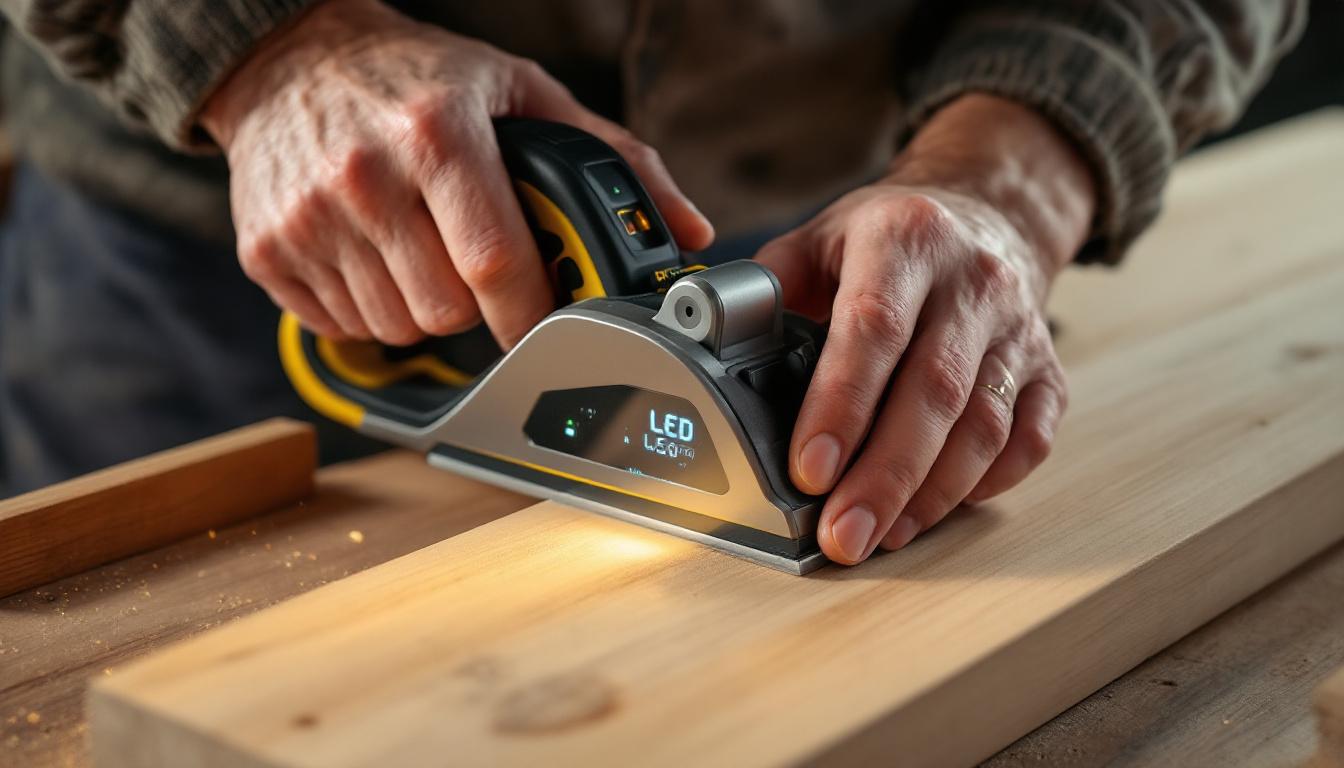
Modern electric hand planers increasingly feature LED displays, which provide users with real-time information about the tool’s settings and performance. This innovation enhances precision, safety, and ease of use, especially for professionals who demand consistent results.
The LED display typically shows critical data such as the depth of cut, battery life (in cordless models), and speed settings. This immediate feedback allows users to make quick adjustments without stopping work or guessing, reducing errors and improving efficiency.
Improved Depth Control
Accurate depth control is vital when planing wood. Too deep a cut can damage the workpiece or cause the planer to jam, while too shallow a cut wastes time. LED displays provide precise numerical readouts of the depth setting, often with increments as small as 0.1 mm. This level of control is particularly beneficial for fine woodworking and cabinetry.
Battery and Power Management
For cordless hand planers, the LED display often includes a battery indicator. This feature helps users monitor remaining power and plan work sessions accordingly, avoiding unexpected shutdowns mid-task. Some advanced models also display estimated runtime or charge status, enhancing workflow management.
Speed and Performance Monitoring
Variable speed control is another feature supported by LED displays. Certain hand planers allow users to adjust blade speed based on the type of wood or the desired finish. The LED display shows the current speed setting, enabling users to optimize performance for different materials, from soft pine to dense hardwoods.
Benefits of Using a Hand Planer with an LED Display
Enhanced Precision and Consistency
The primary advantage of an LED display is the improved precision it offers. Woodworkers can set and maintain exact cutting depths, ensuring consistent results across multiple passes or workpieces. This precision is essential for professional-grade projects where tolerances are tight.
Increased Efficiency and Reduced Waste
By providing real-time data, LED displays help users avoid over-cutting or under-cutting, reducing material waste. This efficiency translates to cost savings, especially when working with expensive hardwoods or custom materials.
User-Friendly Operation
LED displays make hand planers more accessible to beginners and hobbyists. Clear visual feedback simplifies the learning curve, enabling users to achieve professional results without extensive experience. This democratization of tool use encourages more people to engage in woodworking and DIY projects.
Safety Improvements
Some LED-equipped hand planers include warnings or alerts on the display, such as blade overheating or motor overload. These indicators help prevent accidents and extend the tool’s lifespan by prompting timely maintenance or adjustments.
Choosing the Right Hand Planer with LED Features
Consider the Type of Projects
When selecting a hand planer, consider the nature of your projects. For large-scale or professional work, invest in a model with advanced LED features such as precise depth readouts, variable speed control, and battery management. For occasional or hobby use, simpler models with basic LED indicators may suffice.
Power Source: Corded vs. Cordless
Cordless hand planers offer portability and convenience, especially on job sites without easy access to power. However, they rely on battery life, making LED battery indicators crucial. Corded models provide consistent power but limit mobility. The LED display can still enhance usability by showing depth and speed settings.
Blade Quality and Replacement
The quality of the blade affects the finish and ease of planing. Look for hand planers with high-quality, easily replaceable blades. Some models use carbide blades for longer life and sharper cuts. LED displays don’t directly impact blade quality but can indicate when performance issues arise, signaling the need for blade maintenance or replacement.
Ergonomics and Weight
Comfort is key during extended use. Choose a hand planer that feels balanced and easy to handle. While LED displays add some complexity, modern designs integrate them without compromising ergonomics. Reading the display should be straightforward without requiring awkward hand positions.
Practical Tips for Using a Hand Planer Effectively
Preparation and Setup
Before planing, inspect the wood for nails, screws, or other debris that could damage the blade. Set the depth of cut conservatively at first, gradually increasing as needed. Use the LED display to monitor and fine-tune settings.
Proper Technique
Hold the planer firmly with both hands and move it steadily along the grain of the wood. Avoid forcing the tool; let the blade do the work. Multiple light passes yield better results than one deep cut. Use the LED display to ensure consistent depth across passes.
Maintenance and Safety
Regularly check and sharpen or replace blades to maintain cutting efficiency. Keep the LED display clean and free from dust to ensure visibility. Always wear safety glasses and hearing protection when operating the planer.
Conclusion: The Future of Hand Planers with LED Technology
Hand planers remain fundamental tools in woodworking, combining tradition with modern innovation. The integration of LED displays marks a significant advancement, enhancing precision, efficiency, and user experience. Whether crafting fine furniture or renovating a home, a hand planer with an LED display empowers users to achieve professional-quality results with confidence and ease.
As technology continues to evolve, expect further enhancements such as connectivity features, smart sensors, and automated adjustments, making hand planers even more versatile and user-friendly. For anyone serious about woodworking, understanding the capabilities and advantages of LED-equipped hand planers is essential to selecting the right tool for the job.
Discover the Future of Woodworking with LumenMatrix LED Displays
As you embrace the precision and efficiency of hand planers with LED technology in your woodworking projects, why not extend that innovation to your visual displays? LumenMatrix, a leader in LED display technology, offers a wide range of solutions that can transform your workspace and showcase your craftsmanship. From Indoor and Outdoor LED Wall Displays to Custom and All-in-One LED solutions, LumenMatrix is committed to enhancing your brand’s visibility and creating immersive visual experiences. Check out LumenMatrix LED Display Solutions today and revolutionize the way you communicate and captivate your audience.