When evaluating LED displays, whether for televisions, computer monitors, or digital signage, one specification consistently draws attention: the contrast ratio. But what does contrast ratio really mean, and why is it so important? Understanding this key metric can help consumers and professionals alike make informed decisions when selecting a display device that meets their needs for image quality, color accuracy, and viewing comfort.
This article delves into the meaning of contrast ratio, how it affects LED display performance, the different types of contrast ratios manufacturers report, and practical considerations for interpreting these numbers in real-world scenarios.
What Is Contrast Ratio?
Contrast ratio is a measure of the difference between the brightest white and the darkest black a display can produce. More formally, it is the ratio of luminance between the brightest white and the darkest black that a screen can display at the same time.
For example, a contrast ratio of 1000:1 means the brightest white is 1000 times brighter than the darkest black. This ratio helps indicate how well a display can reproduce details in both very bright and very dark areas of an image simultaneously. A display with a high contrast ratio can reveal subtle nuances in shadows and highlights, making it particularly beneficial for watching films or playing video games where visual detail is crucial.
Moreover, the contrast ratio can also affect color accuracy. Displays with higher contrast ratios tend to have a more vibrant color palette, as the distinction between colors becomes more pronounced against the backdrop of deep blacks and bright whites. This is especially important in applications like graphic design or digital art, where color fidelity is paramount.
Why Contrast Ratio Matters
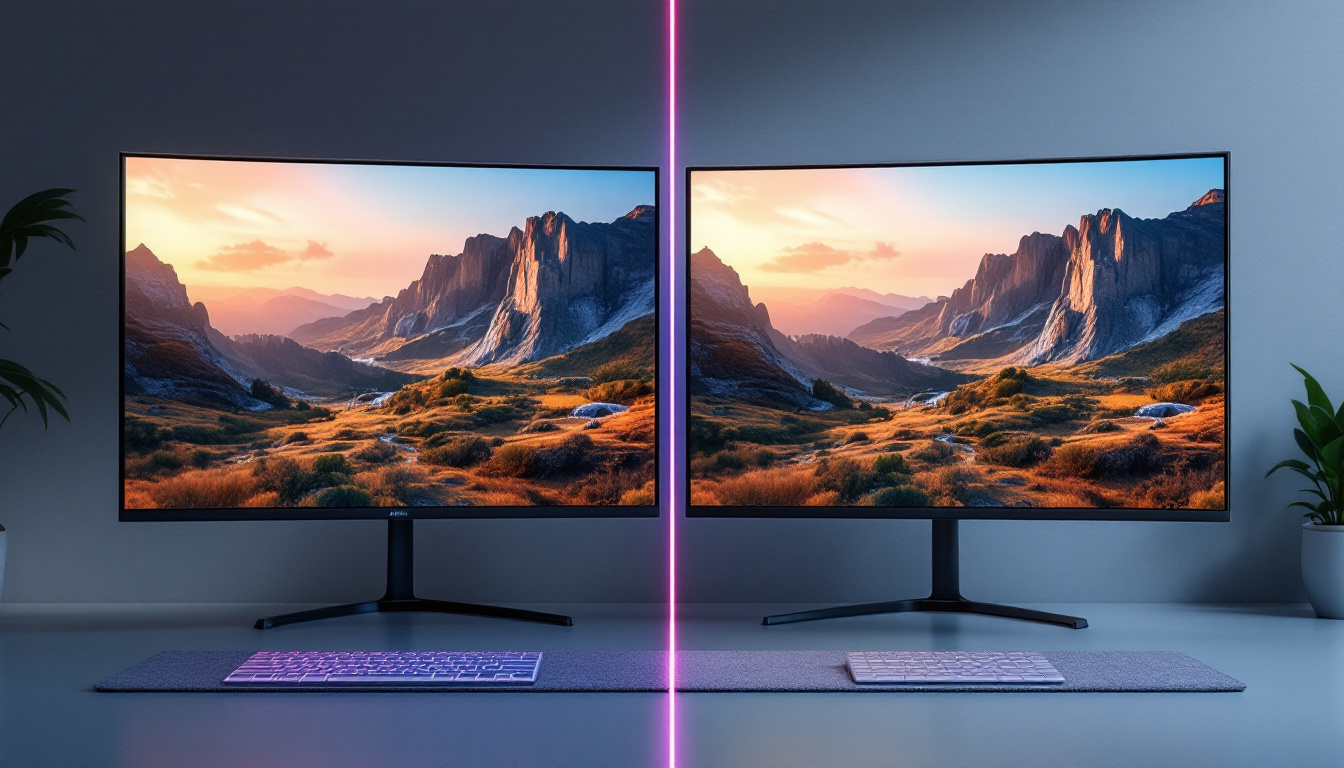
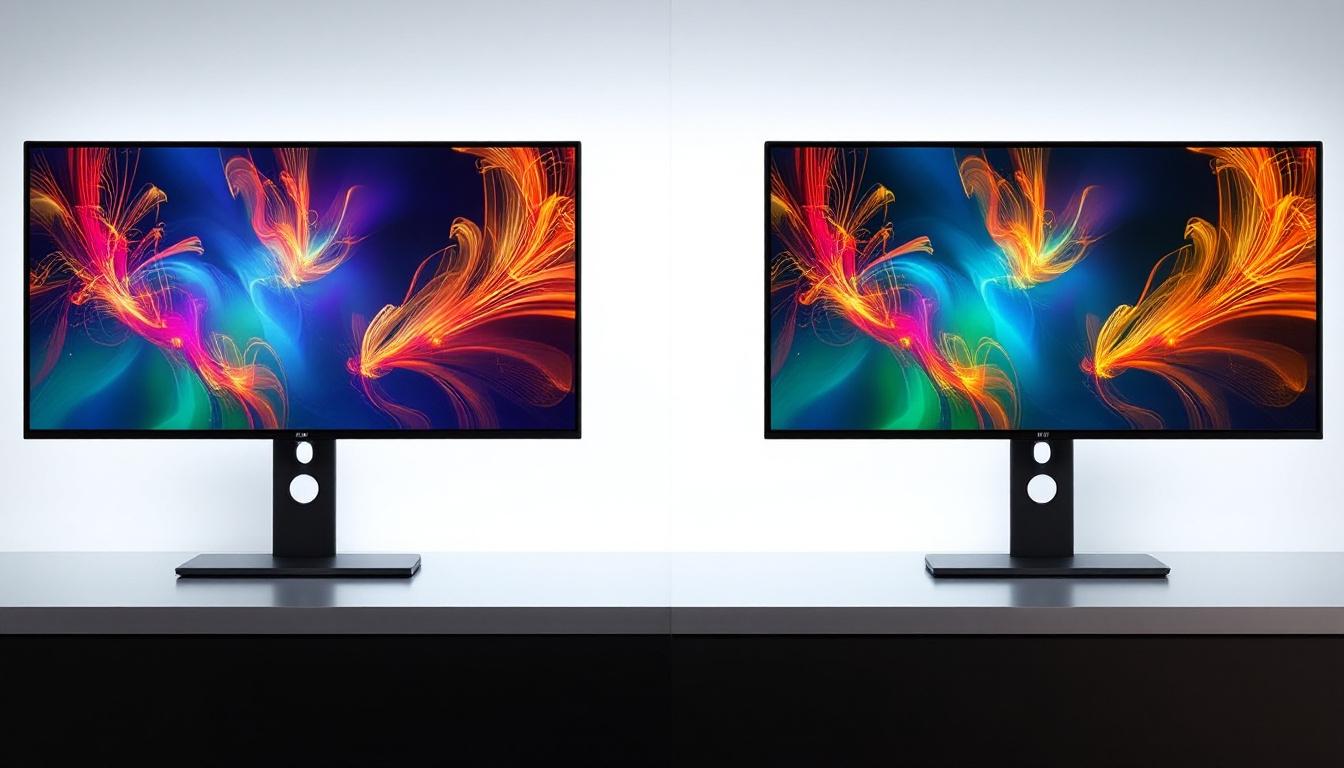
Contrast ratio directly impacts the perceived image quality. A higher contrast ratio generally means that the display can show deeper blacks and brighter whites, resulting in more vivid, lifelike images. This is especially important for content with high dynamic range, such as movies, video games, and professional photo or video editing.
Low contrast ratios can cause images to appear washed out or dull, with shadows and highlights losing detail. This can reduce viewing comfort and overall enjoyment, particularly in darker environments. For instance, in a dimly lit room, a display with a low contrast ratio may struggle to show the depth of a night scene in a film, leading to a flat and uninspiring viewing experience. Conversely, a high contrast ratio can enhance the emotional impact of such scenes, drawing viewers deeper into the narrative.
Additionally, the importance of contrast ratio extends beyond entertainment; it plays a significant role in accessibility. For individuals with visual impairments, displays with higher contrast ratios can make text and images easier to distinguish, thereby improving readability and overall usability. This is particularly relevant in web design and software development, where ensuring that content is accessible to all users is a critical consideration.
How Contrast Ratio Is Measured
Contrast ratio is typically measured by displaying a full white screen and a full black screen separately and comparing their luminance values. However, because this method does not account for simultaneous display of bright and dark areas, it is often referred to as the “static” or “native” contrast ratio.
Some manufacturers also measure “dynamic” contrast ratio, which involves adjusting the backlight or brightness dynamically depending on the content to achieve higher contrast levels. This can result in very high contrast ratio numbers, but these figures may not accurately reflect everyday viewing conditions. In practice, dynamic contrast ratios can lead to misleading specifications, as they often rely on ideal conditions that may not occur during regular use.
Furthermore, the technology behind the display can influence how contrast ratio is perceived. For instance, OLED screens are known for their ability to achieve true blacks by turning off individual pixels, resulting in an infinite contrast ratio. In contrast, traditional LCD screens may struggle to produce deep blacks due to backlight bleed, affecting the overall contrast experience. Understanding these nuances can help consumers make informed choices when selecting a display that meets their specific needs and preferences.
Types of Contrast Ratios in LED Displays
Understanding the different types of contrast ratios reported by manufacturers helps in making an informed choice. The main categories include native contrast ratio, dynamic contrast ratio, and ANSI contrast ratio.
Native Contrast Ratio
Native contrast ratio, also called static contrast ratio, is the inherent contrast capability of the display panel without any software or hardware adjustments. It reflects the difference in luminance between the brightest white and darkest black the panel can produce simultaneously.
For LED displays, native contrast ratios typically range from 1000:1 to 3000:1, depending on the technology used. OLED displays, which are often compared to LED displays, can achieve much higher native contrast ratios because each pixel emits its own light and can be turned off completely to produce true blacks.
Dynamic Contrast Ratio
Dynamic contrast ratio involves the display adjusting its backlight intensity in real-time based on the content being shown. By dimming the backlight in dark scenes and increasing it in bright scenes, the display can simulate a higher contrast ratio.
Manufacturers often advertise dynamic contrast ratios in the millions to one (e.g., 1,000,000:1). While this sounds impressive, these figures can be misleading because the contrast is not achieved simultaneously across the screen but rather through temporal adjustments.
Dynamic contrast can improve perceived image quality in some scenarios, but it may also cause visible fluctuations in brightness that can distract viewers.
ANSI Contrast Ratio
ANSI contrast ratio is measured using a checkerboard pattern of alternating black and white squares, simulating more realistic viewing conditions where bright and dark areas coexist. This method provides a more accurate representation of how the display performs in everyday use.
ANSI contrast ratios are typically lower than native contrast ratios because the measurement accounts for light leakage and reflections that occur when bright and dark areas are adjacent.
How LED Technology Affects Contrast Ratio
LED displays use light-emitting diodes as a backlight source behind an LCD panel. The contrast ratio achievable depends heavily on the LCD panel’s ability to block light and the quality of the backlight system.
Backlight and Local Dimming
One of the main challenges in LED displays is preventing light from the backlight from leaking through dark areas of the screen, which reduces black levels and contrast ratio. To address this, many LED displays incorporate local dimming technology.
Local dimming divides the backlight into zones that can be dimmed or brightened independently. This allows the display to produce deeper blacks in dark areas without dimming the entire screen, thereby increasing the effective contrast ratio.
However, the effectiveness of local dimming depends on the number of dimming zones. Displays with more zones can achieve better contrast and fewer blooming artifacts (where bright areas bleed into dark areas).
Edge-Lit vs. Full-Array LED
LED backlighting can be implemented in two main ways: edge-lit and full-array. Edge-lit LED displays position LEDs along the edges of the screen and use light guides to distribute light evenly. Full-array LED displays have LEDs spread uniformly behind the entire screen.
Full-array LED displays generally offer superior contrast ratios because they support more precise local dimming. Edge-lit displays, while thinner and often more affordable, tend to have lower contrast due to less effective dimming control.
Contrast Ratio in Practical Use: What Consumers Should Know
While contrast ratio is an important specification, it is not the only factor determining display quality. Consumers should consider contrast ratio alongside other attributes such as color accuracy, brightness, resolution, and viewing angles.
Real-World Viewing Conditions
Ambient lighting significantly affects perceived contrast. In bright rooms, reflections and glare can wash out the image, making high contrast ratios less noticeable. Conversely, in dark rooms, a high contrast ratio can dramatically improve image depth and immersion.
Therefore, when choosing an LED display, consider the typical lighting environment. For example, a display with a lower contrast ratio but anti-reflective coating might perform better in a bright office than a display with a very high contrast ratio but glossy screen.
Content Type and Usage
The importance of contrast ratio also depends on the content and usage. For cinematic content and gaming, where dark scenes and high dynamic range are common, a higher contrast ratio enhances the viewing experience.
For general office work or browsing, contrast ratio is less critical, and factors like eye comfort and color accuracy may take precedence.
Beware of Inflated Manufacturer Claims
Dynamic contrast ratios advertised by manufacturers can be misleading. It is advisable to look for independent reviews and measurements that report native or ANSI contrast ratios for a more realistic assessment.
Additionally, user reviews and hands-on experience can reveal how a display performs in everyday use beyond the numbers on paper.
Advancements and Trends in LED Display Contrast
Display technology continues to evolve, with ongoing improvements aimed at enhancing contrast ratios and overall image quality.
Mini-LED and Micro-LED Technologies
Mini-LED backlighting uses thousands of tiny LEDs to create more precise local dimming zones, significantly improving contrast ratios compared to traditional full-array LED displays. This technology is increasingly common in premium TVs and monitors.
Micro-LED technology, still emerging, involves self-emissive LEDs similar to OLED but with higher brightness and longevity. Micro-LED displays promise exceptional contrast ratios and color performance without the burn-in issues associated with OLED.
HDR and Contrast Ratio
High Dynamic Range (HDR) content requires displays capable of reproducing a wide range of luminance levels. Displays with higher contrast ratios can better showcase HDR content, delivering more realistic and immersive visuals.
HDR standards such as HDR10 and Dolby Vision specify minimum brightness and contrast requirements, pushing manufacturers to improve display capabilities.
Summary: Making Sense of Contrast Ratio in LED Displays
Contrast ratio is a fundamental metric that indicates the ability of an LED display to reproduce the difference between bright and dark areas. Higher contrast ratios generally translate to richer, more detailed images and better viewing experiences.
Understanding the distinctions between native, dynamic, and ANSI contrast ratios helps consumers interpret manufacturer specifications accurately. Additionally, knowing how LED backlighting and local dimming affect contrast can guide informed purchasing decisions.
Ultimately, contrast ratio should be considered alongside other display features and the intended usage environment. By doing so, consumers can select LED displays that deliver optimal performance, whether for entertainment, professional work, or everyday use.
Discover the Ultimate LED Display Experience with LumenMatrix
Ready to elevate your visual experience with a display that boasts superior contrast ratios and unparalleled image quality? Look no further than LumenMatrix, a pioneer in LED display technology. Our extensive range of solutions, from Indoor and Outdoor LED Wall Displays to innovative LED Transparent Displays, is designed to captivate your audience and amplify your message. Whether you’re looking to enhance brand visibility or create immersive environments, our LED displays are tailored to meet your needs. Check out LumenMatrix LED Display Solutions today and transform the way you communicate visually.