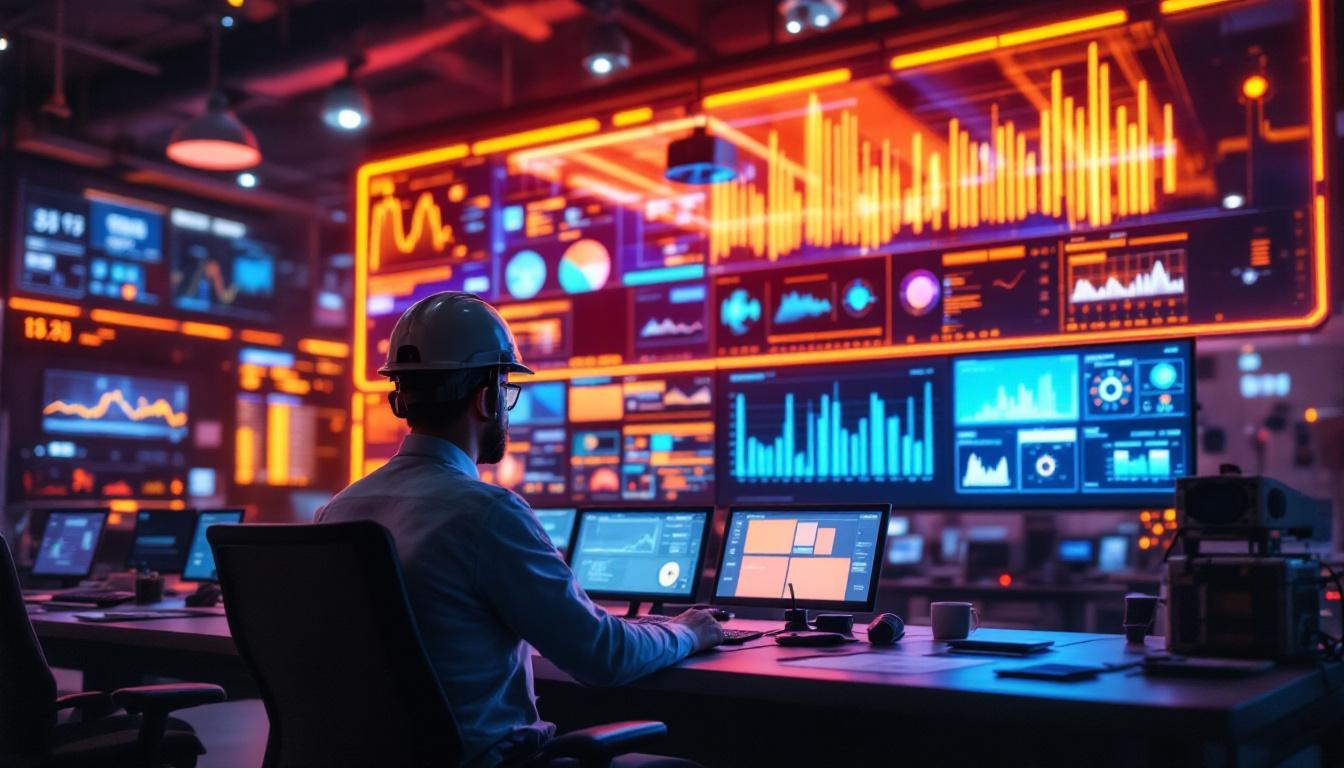
In the modern industrial landscape, control rooms serve as the nerve centers for monitoring, managing, and optimizing complex processes. At the heart of these environments lies the critical technology of LED displays, which provide operators with real-time visual data essential for decision-making. This article explores the role of LED displays in industrial control rooms, detailing their technology, advantages, and practical applications, while highlighting why they have become indispensable tools in industrial automation and safety management.
The Role of LED Displays in Industrial Control Rooms
Industrial control rooms are designed to provide operators with comprehensive situational awareness. These rooms consolidate data from various sensors, machinery, and control systems into centralized visual formats. LED displays are the primary medium for presenting this information clearly and reliably.
Unlike traditional monitors or projection systems, LED displays offer superior brightness, contrast, and durability, making them ideal for the demanding environments of industrial facilities. Whether monitoring manufacturing lines, power plants, or transportation systems, LED displays enable operators to quickly interpret data, identify anomalies, and respond to emergencies.
Why Visual Clarity Matters
In industrial settings, seconds can make the difference between smooth operations and costly downtime or safety incidents. LED displays provide high-resolution, vivid images that enhance the readability of complex data sets such as process flow diagrams, alarm statuses, and performance metrics. This clarity reduces operator fatigue and errors, improving overall operational efficiency.
Moreover, the ability to customize the content displayed on LED screens allows for tailored visualizations that can adapt to the specific needs of various industries. For instance, in a chemical processing plant, operators can monitor real-time chemical compositions and temperature readings, while in a transportation control room, they can visualize traffic patterns and vehicle locations. This flexibility not only enhances situational awareness but also empowers operators to make informed decisions based on the most relevant data available.
Centralized Data Visualization
Modern control rooms often integrate data from multiple sources, including SCADA (Supervisory Control and Data Acquisition) systems, PLCs (Programmable Logic Controllers), and IoT devices. LED video walls and large-format displays allow the aggregation of these data streams into a unified visual interface. This centralized visualization is critical for coordinated decision-making and helps maintain situational awareness across different operational areas.
Additionally, the scalability of LED displays means that as operations grow or change, the visual systems can be easily expanded or reconfigured. This adaptability is vital in industries where technology and processes are continually evolving. Furthermore, the integration of advanced analytics and AI-driven insights into these displays can provide predictive maintenance alerts and operational forecasts, further enhancing the decision-making capabilities of operators. By leveraging these technologies, facilities can not only react to current conditions but also anticipate future challenges, ensuring smoother and more efficient operations overall.
Understanding LED Display Technology
LED (Light Emitting Diode) technology has evolved significantly over the past decade, bringing enhanced performance and versatility to industrial applications. Understanding the core components and types of LED displays helps clarify why they are preferred in control room environments.
Types of LED Displays Used in Control Rooms
There are two main categories of LED displays commonly used in industrial control rooms: direct-view LED video walls and LED-backlit LCD monitors.
- Direct-View LED Video Walls: These consist of modular LED panels that can be assembled into large, seamless video walls. They offer exceptional brightness (often exceeding 1,000 nits), wide viewing angles, and high durability. Their scalability allows control rooms to customize display sizes to fit specific operational needs.
- LED-Backlit LCD Monitors: These are traditional LCD screens that use LED backlighting instead of fluorescent lamps. While not as bright as direct-view LED walls, they provide excellent color accuracy and are commonly used for individual operator stations within the control room.
Key Technical Features
Several technical attributes make LED displays particularly suited for industrial control environments:
- High Brightness and Contrast: Industrial control rooms often face challenging lighting conditions. LED displays maintain visibility even in brightly lit rooms, ensuring critical information is always clear.
- Wide Viewing Angles: Operators may view displays from different positions. LED technology ensures consistent image quality across a broad range of angles.
- Durability and Longevity: Industrial environments can be harsh, with dust, vibrations, and temperature fluctuations. LED displays are built to withstand these conditions, often featuring IP-rated enclosures for dust and moisture resistance.
- Energy Efficiency: LEDs consume less power compared to older display technologies, which is beneficial for facilities aiming to reduce operational costs and environmental impact.
Advantages of LED Displays in Industrial Control Rooms
Implementing LED displays in control rooms offers multiple operational and strategic benefits. These advantages contribute to improved safety, productivity, and overall system reliability.
Enhanced Situational Awareness
LED video walls can display multiple data streams simultaneously, including live video feeds, alarm notifications, and process analytics. This multi-source visualization allows operators to maintain a comprehensive view of plant operations, reducing the likelihood of oversight and enabling faster reaction times.
Improved Safety and Compliance
Industrial sectors such as oil and gas, chemical manufacturing, and power generation are heavily regulated. LED displays help maintain compliance by clearly presenting safety-critical information such as emergency shutdown statuses, hazardous condition alerts, and evacuation procedures. The high visibility of LED displays ensures that vital warnings are not missed.
Scalability and Customization
Control room requirements evolve over time due to process changes, expansions, or technological upgrades. LED video walls offer modular designs that can be expanded or reconfigured without replacing the entire system. This flexibility allows organizations to adapt their control room infrastructure cost-effectively.
Reduced Maintenance and Downtime
LED displays generally have longer lifespans and lower failure rates compared to older technologies. Their robust design minimizes maintenance needs and reduces unplanned downtime, which is critical for continuous industrial operations.
Applications of LED Displays in Industrial Control Rooms
LED displays are utilized across a wide range of industrial sectors, each with unique requirements and challenges. Understanding these applications highlights the versatility and importance of LED technology in industrial control environments.
Manufacturing and Process Industries
In manufacturing plants, LED video walls display production line statuses, quality control data, and equipment health metrics. Operators can monitor throughput, detect bottlenecks, and coordinate maintenance activities in real time. For example, automotive assembly plants use LED displays to track robotic operations and ensure synchronization across multiple stations.
Energy and Utilities
Power generation facilities and utility control centers rely on LED displays to visualize grid performance, load balancing, and outage management. Real-time data on voltage, frequency, and power flows are critical for maintaining grid stability. LED displays also support remote monitoring of renewable energy sources such as wind farms and solar arrays.
Transportation and Infrastructure
Control rooms for railways, airports, and traffic management systems use LED displays to monitor vehicle movements, signal statuses, and security feeds. The ability to integrate multiple data sources into a single visual interface enhances coordination and safety across complex transportation networks.
Oil and Gas Industry
In oil refineries and offshore platforms, LED displays provide continuous monitoring of pressure, temperature, and flow rates. Given the hazardous nature of these environments, the reliability and clarity of LED displays are essential for preventing accidents and ensuring regulatory compliance.
Design Considerations for Industrial LED Display Systems
Choosing and implementing LED displays in industrial control rooms requires careful planning and design to maximize their effectiveness and longevity.
Screen Size and Resolution
The size of the LED display should correspond to the control room layout and the distance from which operators will view the screens. Higher resolution is necessary for detailed data visualization, but it must be balanced against cost and technical feasibility. For instance, a 4K resolution LED video wall may be ideal for large control rooms requiring detailed schematics.
Environmental Factors
Industrial environments can expose displays to dust, moisture, temperature extremes, and electromagnetic interference. Selecting LED displays with appropriate IP ratings and ruggedized enclosures is critical. Additionally, cooling systems and vibration dampening may be necessary to protect sensitive electronics.
Integration with Control Systems
LED displays must seamlessly integrate with existing SCADA, DCS (Distributed Control Systems), and IoT platforms. Compatibility with various communication protocols and software is essential to ensure real-time data feeds and interactive control capabilities.
Ergonomics and Operator Comfort
Control room design should consider the ergonomic placement of LED displays to reduce operator strain. Adjustable mounting systems, anti-glare coatings, and ambient lighting controls contribute to a comfortable and productive working environment.
Future Trends in Industrial LED Display Technology
The evolution of LED technology continues to shape the future of industrial control rooms, driven by advancements in display capabilities and integration with digital systems.
Higher Pixel Density and Mini-LEDs
Emerging mini-LED and micro-LED technologies promise even higher resolution and better contrast ratios, enabling more detailed and dynamic visualizations. This is particularly valuable for complex data analytics and augmented reality applications within control rooms.
Interactive and Touch-Enabled Displays
Touchscreen LED displays are becoming more prevalent, allowing operators to interact directly with data visualizations. This interactivity can streamline workflows, enabling quicker adjustments and more intuitive control.
AI-Driven Visualization and Analytics
Integration of artificial intelligence with LED display systems is enhancing predictive maintenance and anomaly detection. AI-powered dashboards can highlight critical trends and suggest corrective actions, displayed prominently on LED video walls for immediate operator attention.
Energy Efficiency and Sustainability
As industries prioritize sustainability, LED display manufacturers are focusing on reducing power consumption and using environmentally friendly materials. This aligns with broader corporate social responsibility goals and reduces operational costs.
Conclusion
LED displays have become a cornerstone of industrial control rooms, offering unparalleled clarity, durability, and flexibility for visualizing complex operational data. Their ability to enhance situational awareness, improve safety, and support scalable control room designs makes them indispensable in today’s industrial environments.
As technology advances, LED displays will continue to evolve, integrating new features such as higher resolutions, interactivity, and AI-driven analytics. For industries aiming to optimize their control room operations, investing in modern LED display solutions is a strategic decision that delivers both immediate and long-term benefits.
Explore Cutting-Edge LED Display Solutions with LumenMatrix
Ready to elevate your industrial control room with the latest in LED display technology? Discover LumenMatrix’s comprehensive suite of innovative solutions, designed to bring unparalleled clarity and engagement to your operations. From Indoor and Outdoor LED Wall Displays to specialized options like Vehicle, Sports, and Floor LED Displays, LumenMatrix tailors to every unique need. Embrace the future of visual communication with our Custom, All-in-One, and Transparent LED Displays. Check out LumenMatrix LED Display Solutions today and transform your control room into a hub of efficiency and precision.