In an era where precision timing and visibility are paramount, large outdoor digital clocks have become indispensable fixtures in public spaces, transportation hubs, sports arenas, and commercial environments. Their defining feature—the LED display—combines technological innovation with practical design to deliver clear, reliable timekeeping visible from great distances and under varying weather conditions. This article delves into the intricacies of large outdoor digital clocks, focusing on the LED display technology that powers them, their applications, and considerations for selecting the right clock for outdoor use.
Understanding LED Technology in Outdoor Digital Clocks
At the heart of every large outdoor digital clock is the LED (Light Emitting Diode) display. Unlike traditional analog clocks, LED displays use a matrix of tiny light sources to form numerals and symbols. This technology offers distinct advantages that make it ideal for outdoor environments.
What Makes LED Displays Suitable for Outdoor Use?
LEDs are exceptionally bright and energy-efficient, which ensures that the clock remains visible even in direct sunlight. Their brightness can be adjusted automatically or manually to suit changing ambient light conditions, preventing glare at night and ensuring clarity during the day. Additionally, LEDs have a long lifespan, often exceeding 50,000 hours, reducing maintenance needs and operational costs.
Another critical feature is their robustness. Outdoor LED displays are designed to withstand extreme weather conditions, including rain, snow, and high winds, thanks to protective enclosures and waterproofing standards such as IP65 or higher. This durability ensures uninterrupted performance in virtually any climate. Furthermore, the materials used in these displays are often UV-resistant, preventing degradation and discoloration from prolonged sun exposure, which is essential for maintaining visibility and aesthetics over time.
Types of LED Displays Used in Large Outdoor Clocks
Large outdoor digital clocks typically employ one of two LED display types: seven-segment displays or dot matrix displays.
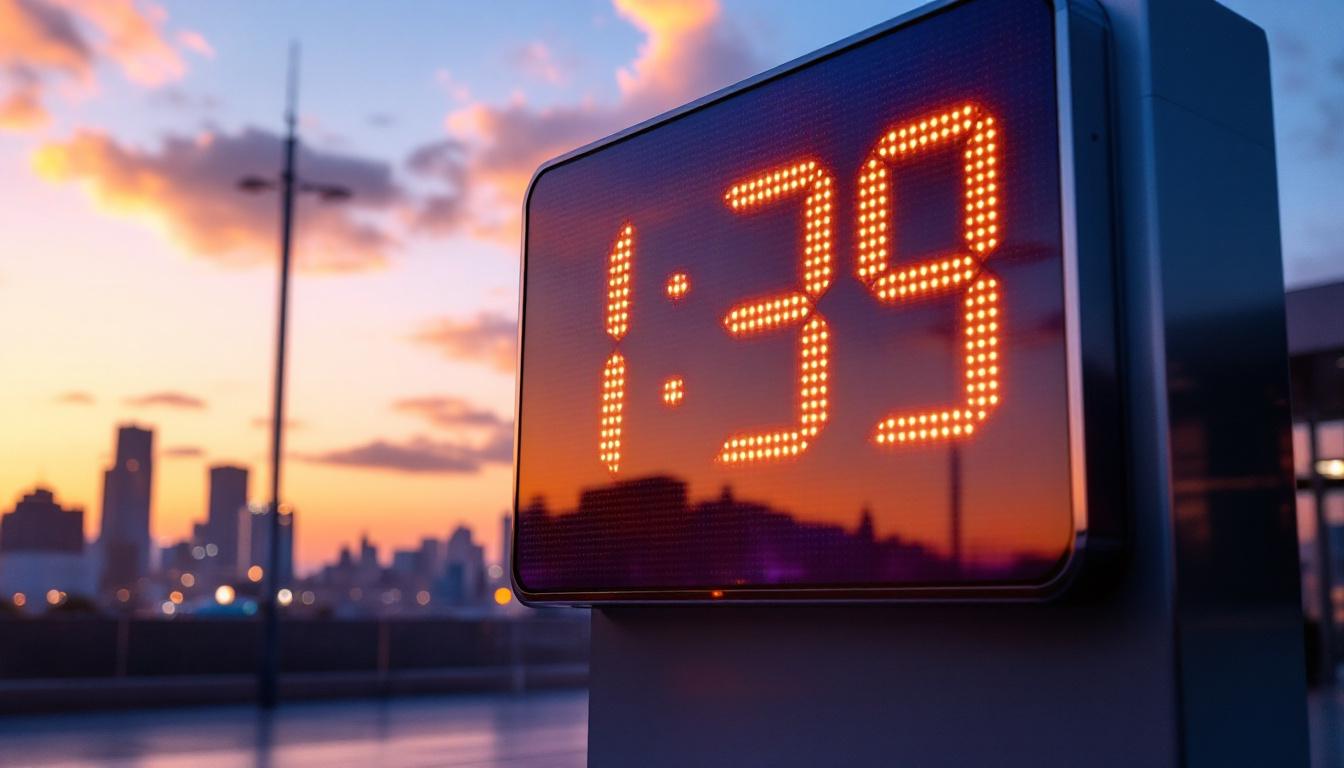
- Seven-Segment Displays: These are composed of seven individual LED bars arranged to form numbers. They are straightforward, energy-efficient, and highly legible, making them a popular choice for time-only displays. Their simplicity allows for quick recognition, which is crucial in busy urban environments where people may only glance at the clock.
- Dot Matrix Displays: These consist of a grid of LEDs that can form numbers, letters, and symbols. They offer greater flexibility, allowing for additional information such as date, temperature, or custom messages alongside the time. This versatility can be particularly beneficial for businesses or public spaces that wish to convey real-time information to passersby.
Choosing between these depends on the intended use and the amount of information to be displayed. For instance, a transportation hub may opt for a dot matrix display to provide travelers with up-to-date schedules and alerts, while a park might choose a seven-segment display for its straightforward timekeeping functionality. The decision also involves considerations of visibility from various distances and angles, ensuring that the information is accessible to all who need it.
Moreover, advancements in LED technology have led to the development of smart outdoor clocks that can integrate with mobile applications or IoT systems. These clocks can sync with atomic time signals, ensuring unparalleled accuracy, and can even be programmed to display special messages for events or holidays. This level of interactivity not only enhances user engagement but also allows for more dynamic communication in public spaces, making outdoor digital clocks not just timekeepers but also vital information hubs in our increasingly connected world.
Applications of Large Outdoor Digital Clocks
Large outdoor digital clocks serve a variety of purposes across multiple sectors. Their clear visibility and reliability make them essential tools for timekeeping and communication in public and private spaces.
Transportation and Public Infrastructure
In airports, train stations, and bus terminals, accurate and easily readable time displays are critical for passenger coordination and operational efficiency. Large LED clocks provide travelers with real-time updates, helping to minimize confusion and delays. For example, major international airports often feature multiple large LED clocks synchronized to atomic time standards, ensuring consistency across all displays. These timepieces not only assist in managing the flow of passengers but also enhance safety by ensuring that travelers are aware of their departure and arrival times. Moreover, many transportation hubs are now integrating these clocks with digital signage systems to provide additional information, such as gate changes or boarding announcements, creating a seamless experience for travelers.
Sports Venues and Event Spaces
Sports arenas and outdoor event venues rely heavily on large digital clocks for game timing, countdowns, and event scheduling. The precision and visibility of LED displays allow athletes, officials, and spectators to keep track of time effortlessly. Many stadiums integrate these clocks with scoreboards and other display systems to enhance the overall spectator experience. In addition to standard timekeeping, these clocks can be programmed to display special messages or advertisements during breaks in the action, making them a versatile tool for engagement. Furthermore, some venues have begun to incorporate interactive features, allowing fans to participate in countdowns or contests, thereby increasing the excitement and involvement of the audience.
Commercial and Urban Environments
In urban centers and commercial districts, large outdoor digital clocks serve both functional and aesthetic roles. They act as landmarks, contribute to city branding, and provide practical timekeeping for pedestrians and commuters. Additionally, some clocks incorporate environmental sensors to display temperature or air quality data, adding value for the community. These multifunctional displays can also serve as platforms for public service announcements or community events, fostering a sense of connection among residents. As cities increasingly focus on smart technology, many outdoor digital clocks are being integrated into wider urban management systems, allowing for real-time data collection and analysis that can inform city planning and improve public services.
Key Features and Specifications to Consider
Selecting the right large outdoor digital clock involves evaluating several technical and practical factors to ensure optimal performance and longevity.
Display Size and Visibility Range
The size of the LED display directly affects its visibility distance. For instance, a 12-inch digit height is generally visible up to 100 feet, while larger digits can be seen from several hundred feet away. Understanding the typical viewing distance in the intended location is essential for choosing the appropriate display size.
Brightness and Contrast Control
Outdoor clocks must maintain readability under varying lighting conditions. High brightness levels, often exceeding 5,000 nits, ensure visibility in bright sunlight. Many models feature ambient light sensors that automatically adjust brightness to prevent glare during nighttime or low-light conditions.
Power Supply and Energy Efficiency
Energy consumption is a critical consideration, especially for clocks operating continuously. LED technology is inherently energy-efficient, but additional features like solar power integration or low-power standby modes can further reduce operational costs. Backup power options, such as battery systems, ensure uninterrupted operation during power outages.
Weatherproofing and Durability
Outdoor clocks must resist environmental challenges. Look for displays with robust enclosures rated at least IP65, which guarantees protection against dust and water jets. Materials like aluminum or stainless steel are preferred for housings due to their corrosion resistance and strength.
Synchronization and Time Accuracy
Accurate timekeeping is vital. Many large outdoor digital clocks synchronize via GPS signals, Network Time Protocol (NTP), or radio time signals to maintain precision. This synchronization ensures all clocks in a network display the exact same time, which is crucial for coordinated operations.
Installation and Maintenance Considerations
Proper installation and ongoing maintenance are key to maximizing the lifespan and functionality of large outdoor digital clocks.
Mounting Options and Site Preparation
Outdoor digital clocks can be mounted on walls, poles, or freestanding structures. The choice depends on site constraints and visibility requirements. Structural integrity is paramount; mounting brackets and supports must withstand wind loads and other environmental forces. Additionally, site preparation may involve electrical wiring, network connectivity, and ensuring clear sightlines.
Routine Maintenance and Troubleshooting
While LED displays are low-maintenance, periodic inspections help identify issues such as LED failures, power supply degradation, or enclosure damage. Cleaning the display surface to remove dirt and debris maintains optimal brightness and clarity. Many modern clocks include remote monitoring capabilities, allowing operators to detect and address faults promptly.
Future Trends in Large Outdoor Digital Clock Technology
Advancements in LED technology and smart systems are shaping the future of large outdoor digital clocks, enhancing their functionality and integration capabilities.
Integration with Smart City Infrastructure
As cities become smarter, outdoor clocks are evolving beyond simple time displays. Integration with IoT (Internet of Things) networks enables clocks to provide real-time data on traffic, weather, and public alerts. This connectivity transforms clocks into multifunctional communication hubs within urban ecosystems.
Enhanced Energy Solutions
Solar-powered LED clocks with energy storage systems are gaining traction, promoting sustainability and reducing reliance on grid power. Advances in low-power electronics further extend operational life and reduce environmental impact.
Customization and Interactive Displays
Future outdoor clocks may feature customizable displays capable of showing dynamic content such as advertisements, social media feeds, or emergency notifications. Touchscreen interfaces or mobile app integration could allow users to interact with the clock or access additional information.
Conclusion
Large outdoor digital clocks with LED displays represent a fusion of technology, design, and functionality tailored to meet the demands of diverse environments. Their brightness, durability, and precision make them indispensable tools for public timekeeping and communication. Understanding the underlying LED technology, applications, and key specifications enables informed decisions when selecting and deploying these clocks. As technology advances, these clocks will continue to evolve, offering enhanced features and integration that benefit communities and organizations alike.
Discover LumenMatrix’s Advanced LED Display Solutions
Ready to elevate your public space with the latest in LED display technology? LumenMatrix is at the forefront of innovation, offering a wide range of LED display solutions that promise not only to meet but exceed your expectations. From vibrant outdoor digital clocks to dynamic signage displays, our products are designed to deliver superior visibility, durability, and precision. Experience the transformative power of our LED display modules and join the revolution in visual communication. Check out LumenMatrix LED Display Solutions today and make a lasting impression in your community or organization.