In the rapidly evolving world of display technology, understanding the nuances between different standards is essential for professionals and enthusiasts alike. DisplayPort (DP) versions 1.2 and 1.4 are two prevalent interfaces that have shaped the way LED displays deliver high-resolution content. This article delves deep into the differences between DisplayPort 1.2 and 1.4, focusing on their impact on LED display performance, compatibility, and future-proofing.
Understanding DisplayPort: An Overview
DisplayPort is a digital display interface developed by the Video Electronics Standards Association (VESA). It serves as a crucial link between a video source, such as a computer or media player, and a display device like an LED monitor or video wall. Since its inception, DisplayPort has undergone several revisions, each enhancing bandwidth, resolution support, and feature sets.
DisplayPort’s popularity stems from its ability to transmit high-definition video and audio over a single cable, its support for multiple monitors via daisy-chaining, and its adaptability with various display technologies, including LED, OLED, and LCD panels.
Why DisplayPort Matters for LED Displays
LED displays, especially large-scale video walls and professional-grade monitors, demand high bandwidth and precise color accuracy. DisplayPort’s evolving standards have directly influenced the capabilities of LED displays, enabling higher resolutions, faster refresh rates, and richer color depths. Understanding the differences between DP 1.2 and DP 1.4 is essential for selecting the right hardware and ensuring optimal performance.
One of the standout features of DisplayPort is its support for High Dynamic Range (HDR) content, which allows for a wider range of colors and contrast ratios, making images appear more lifelike. This is particularly beneficial for creative professionals who rely on accurate color representation in fields such as graphic design, video editing, and photography. Moreover, with the introduction of Display Stream Compression (DSC) in the latest versions, users can enjoy 8K resolutions at high refresh rates without compromising on quality, making it a game-changer for high-end gaming and immersive experiences.
Additionally, DisplayPort’s versatility extends beyond just video quality. It also includes support for Adaptive Sync technologies, such as AMD’s FreeSync and NVIDIA’s G-Sync, which help eliminate screen tearing and stuttering during fast-paced gaming sessions. This feature has made DisplayPort the preferred choice for gamers and enthusiasts who demand the best visual performance from their setups. As technology continues to advance, DisplayPort is likely to remain at the forefront of display connectivity, adapting to meet the ever-growing demands of modern visual experiences.
Technical Specifications: DisplayPort 1.2 vs 1.4
At the core of the comparison between DP 1.2 and DP 1.4 lies their technical specifications, which dictate the performance parameters of connected LED displays.
Bandwidth and Data Rate
DisplayPort 1.2, introduced in 2010, offers a maximum link bandwidth of 21.6 Gbps, with an effective data rate of 17.28 Gbps after accounting for encoding overhead. This bandwidth supports resolutions up to 4K (3840×2160) at 60Hz with 8-bit color depth.
DisplayPort 1.4, released in 2016, maintains the same maximum link bandwidth of 21.6 Gbps but introduces Display Stream Compression (DSC) 1.2, which allows for visually lossless compression. This enables DP 1.4 to support higher resolutions and refresh rates, such as 8K (7680×4320) at 60Hz or 4K at 120Hz, with 10-bit or higher color depth. The implementation of DSC is particularly noteworthy as it allows for the transmission of high-resolution content without the need for additional bandwidth, making it a game-changer for users who demand the highest quality visuals for gaming, professional video editing, and graphic design.
Color Depth and HDR Support
DP 1.2 supports up to 10-bit color depth but lacks native support for High Dynamic Range (HDR) content, which is increasingly important for delivering vibrant and lifelike images on LED displays.
In contrast, DP 1.4 introduces HDR10 metadata transport and enhanced color spaces, enabling LED displays to reproduce a broader range of colors and improved contrast ratios. This makes DP 1.4 particularly suitable for professional applications requiring high color fidelity, such as digital signage, broadcast, and immersive environments. The ability to handle HDR content not only enhances the viewing experience for consumers but also allows content creators to deliver their work with the intended visual impact, capturing the nuances of light and shadow that are critical in high-quality media production.
Multi-Stream Transport (MST)
Both DP 1.2 and 1.4 support Multi-Stream Transport, allowing multiple independent displays to be driven from a single DisplayPort output. However, DP 1.4 improves MST efficiency and compatibility, facilitating more complex video wall configurations and multi-monitor setups with LED panels. This enhancement is particularly beneficial in environments such as control rooms, trading floors, and gaming setups, where multiple screens are essential for monitoring and interaction. The ability to daisy-chain several displays without compromising performance or image quality allows users to create expansive visual workspaces that can significantly boost productivity and engagement.
Additionally, the advancements in MST with DP 1.4 also include support for higher resolutions across multiple displays. This means that users can achieve 4K resolution on multiple screens simultaneously, a feature that is increasingly sought after in both corporate and creative industries. As the demand for high-resolution content continues to grow, the ability to seamlessly integrate multiple displays into a single output stream becomes a critical factor in choosing the right display technology for any application.
Impact on LED Display Performance
The choice between DP 1.2 and DP 1.4 has tangible effects on the performance and capabilities of LED displays, especially in professional and commercial environments.
Resolution and Refresh Rate Capabilities
DP 1.2 can comfortably handle 4K resolution at 60Hz, which suffices for many standard LED displays. However, as LED technology advances and demands for ultra-high-definition content grow, DP 1.4’s support for 8K resolution and higher refresh rates becomes a significant advantage.
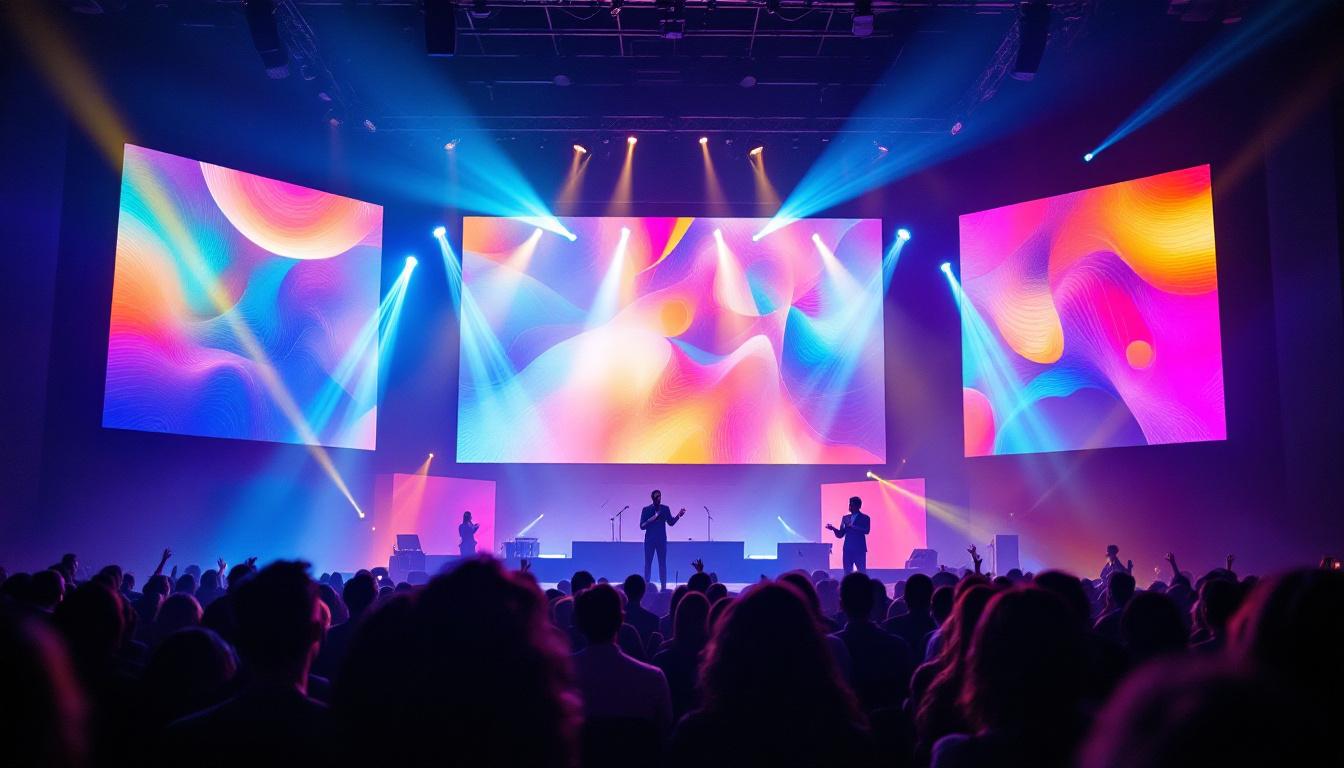
For example, in large-scale LED video walls used in stadiums or concert venues, the ability to display 8K content at smooth frame rates enhances viewer experience and future-proofs the installation.
Color Accuracy and HDR Implementation
LED displays benefit greatly from DP 1.4’s HDR support, which enables richer colors and deeper blacks. This is crucial for applications such as digital advertising, where vivid imagery attracts attention, or in control rooms where accurate color representation can impact decision-making.
DP 1.2’s lack of native HDR support means that LED displays connected via this standard may not fully exploit the potential of HDR content, resulting in less dynamic visuals.
Latency and Signal Integrity
While both DP 1.2 and 1.4 offer low latency transmission suitable for real-time applications, DP 1.4’s improved error correction and signal integrity features help maintain consistent performance over longer cable runs, which is common in large LED installations.
Compatibility and Practical Considerations
Choosing between DP 1.2 and DP 1.4 also involves evaluating device compatibility, cost implications, and installation requirements.
Hardware Compatibility
Many existing LED displays and graphics cards support DP 1.2, making it a widely compatible and cost-effective choice. However, newer devices increasingly adopt DP 1.4 to leverage its advanced features.
When integrating LED displays into a system, it is important to ensure that both the source device and the display support the same DP version to avoid bottlenecks or feature limitations.
Cable and Connector Considerations
Both DP 1.2 and 1.4 use the same physical connectors and cables, but to fully utilize DP 1.4’s capabilities, high-quality cables rated for the required bandwidth and length are recommended.
Using substandard cables can lead to signal degradation, reducing the effective resolution or refresh rate achievable on LED displays.
Cost and Future-Proofing
DP 1.4-enabled devices and infrastructure tend to be more expensive due to their advanced capabilities. However, investing in DP 1.4 can offer long-term benefits by supporting emerging display standards and content formats.
For organizations planning large LED installations or upgrades, considering DP 1.4 compatibility ensures readiness for future content demands and technology advancements.
Real-World Applications and Case Studies
Examining practical deployments helps illustrate the significance of choosing between DP 1.2 and DP 1.4 for LED displays.
Digital Signage in Retail Environments
Retailers increasingly use large LED displays to create immersive shopping experiences. Stores equipped with DP 1.4-capable displays can showcase HDR content with vibrant colors, attracting customers more effectively than older DP 1.2 setups.
Moreover, the ability to run multiple high-resolution displays from a single output using MST simplifies installation and reduces hardware costs.
Broadcast and Live Event Production
In live event production, LED video walls display real-time footage and graphics. DP 1.4’s support for higher resolutions and refresh rates ensures smooth, crisp visuals that enhance audience engagement.
For example, major sports arenas and concert venues have adopted DP 1.4 technology to deliver 8K content and HDR visuals, providing a cutting-edge experience.
Control Rooms and Command Centers
Control rooms rely on accurate, high-resolution displays to monitor critical information. DP 1.4’s improved color accuracy and multi-stream capabilities enable complex video wall configurations that enhance situational awareness.
Organizations upgrading from DP 1.2 to 1.4 report better image clarity and reduced eye strain for operators, contributing to improved performance.
Conclusion: Which DisplayPort Version is Right for Your LED Display?
Choosing between DisplayPort 1.2 and 1.4 depends on the specific requirements of the LED display application. DP 1.2 remains a solid choice for standard 4K content at 60Hz and basic multi-monitor setups, offering broad compatibility and cost-effectiveness.
However, for applications demanding ultra-high resolutions, higher refresh rates, HDR support, and advanced color accuracy, DP 1.4 is the superior option. Its support for Display Stream Compression and enhanced features future-proofs LED display installations, making it ideal for professional, commercial, and large-scale deployments.
Ultimately, understanding the technical differences and practical implications of DP 1.2 and DP 1.4 empowers decision-makers to select the most appropriate interface, ensuring optimal performance and longevity of their LED display systems.
Explore Advanced LED Display Solutions with LumenMatrix
Ready to elevate your visual experience with the latest in LED display technology? LumenMatrix offers a comprehensive range of cutting-edge LED display solutions tailored to meet your needs. Whether you’re looking for Indoor LED Walls, Outdoor Displays, or specialized options like Vehicle and Sports Displays, LumenMatrix has you covered. Embrace the future of visual communication and captivate your audience with unparalleled clarity and impact. Check out LumenMatrix LED Display Solutions today and transform your space with dynamic, state-of-the-art digital signage.