What Type Of Screens Does The MSG Sphere Use: LED Display Explained
The MSG Sphere in Las Vegas represents a groundbreaking leap in immersive entertainment technology. At the heart of this revolutionary venue lies an extraordinary display system that transforms the audience’s visual experience. But what type of screens does the MSG Sphere use, and how do they contribute to its stunning effects? This article delves into the LED display technology powering the MSG Sphere, exploring its design, capabilities, and the innovations that set it apart from traditional screens.
The MSG Sphere: A New Era in Visual Entertainment
The MSG Sphere, developed by Madison Square Garden Entertainment Corp., is not just another concert or event venue. It is designed to envelop audiences in a 360-degree sensory experience, combining sound, visuals, and architecture to create a fully immersive environment. Central to this experience is the Sphere’s massive LED display system, which covers both the interior and exterior surfaces of the structure.
Unlike conventional screens that are flat and limited in size, the MSG Sphere’s display technology wraps around the curved surfaces of the venue, providing seamless, high-resolution visuals that can be viewed from virtually any angle. This innovation allows for dynamic content presentation that transforms the venue’s interior into a living canvas, enhancing concerts, sporting events, corporate gatherings, and more.
In addition to its groundbreaking visual capabilities, the MSG Sphere is equipped with an advanced audio system that utilizes spatial sound technology. This system ensures that every seat in the house offers an unparalleled auditory experience, making it feel as if the music or sound effects are coming from all directions. This level of sound design is particularly important for live performances, where the quality of audio can significantly impact the audience’s emotional connection to the event. The Sphere’s acoustics are meticulously engineered to complement the visual displays, creating a harmonious blend that captivates the senses.
The MSG Sphere is also poised to become a hub for innovative content creation, attracting artists and creators eager to push the boundaries of traditional entertainment. With its state-of-the-art facilities, the venue will host not only concerts but also film screenings, immersive art installations, and even virtual reality experiences. This versatility opens up a world of possibilities for storytelling and engagement, allowing audiences to interact with the content in ways they have never experienced before. As the Sphere prepares to welcome its first guests, the excitement surrounding its potential is palpable, promising to redefine how we think about live entertainment in the modern age.
Understanding LED Display Technology
What Is an LED Display?
LED stands for Light Emitting Diode, a semiconductor device that emits light when an electric current passes through it. LED displays are composed of thousands to millions of these tiny diodes arranged in a grid to form images and videos. Due to their brightness, energy efficiency, and longevity, LED displays have become the preferred choice for large-scale screens in stadiums, billboards, and entertainment venues.
LED displays can be categorized into two main types: direct view LED (DVLED) and LED-backlit LCD. The MSG Sphere uses direct view LED technology, where each pixel is an individual LED or cluster of LEDs, allowing for vibrant colors and high contrast ratios that are visible even in bright environments.
Why LED Displays Are Ideal for the MSG Sphere
The unique demands of the MSG Sphere require a display technology that can handle a massive scale, curved surfaces, and high visual fidelity. LED displays meet these needs for several reasons:
- Flexibility: LED panels can be manufactured in various shapes and sizes, allowing them to conform to the Sphere’s spherical geometry.
- Brightness: LEDs provide exceptional brightness levels, essential for visibility in a venue with ambient lighting and daylight exposure.
- Durability: LED modules are robust and can withstand environmental factors, ensuring longevity and minimal maintenance.
- Color Accuracy and Contrast: The ability to produce deep blacks and vibrant colors enhances the immersive visual experience.
The MSG Sphere’s LED Display System: Technical Breakdown
Exterior LED Screen
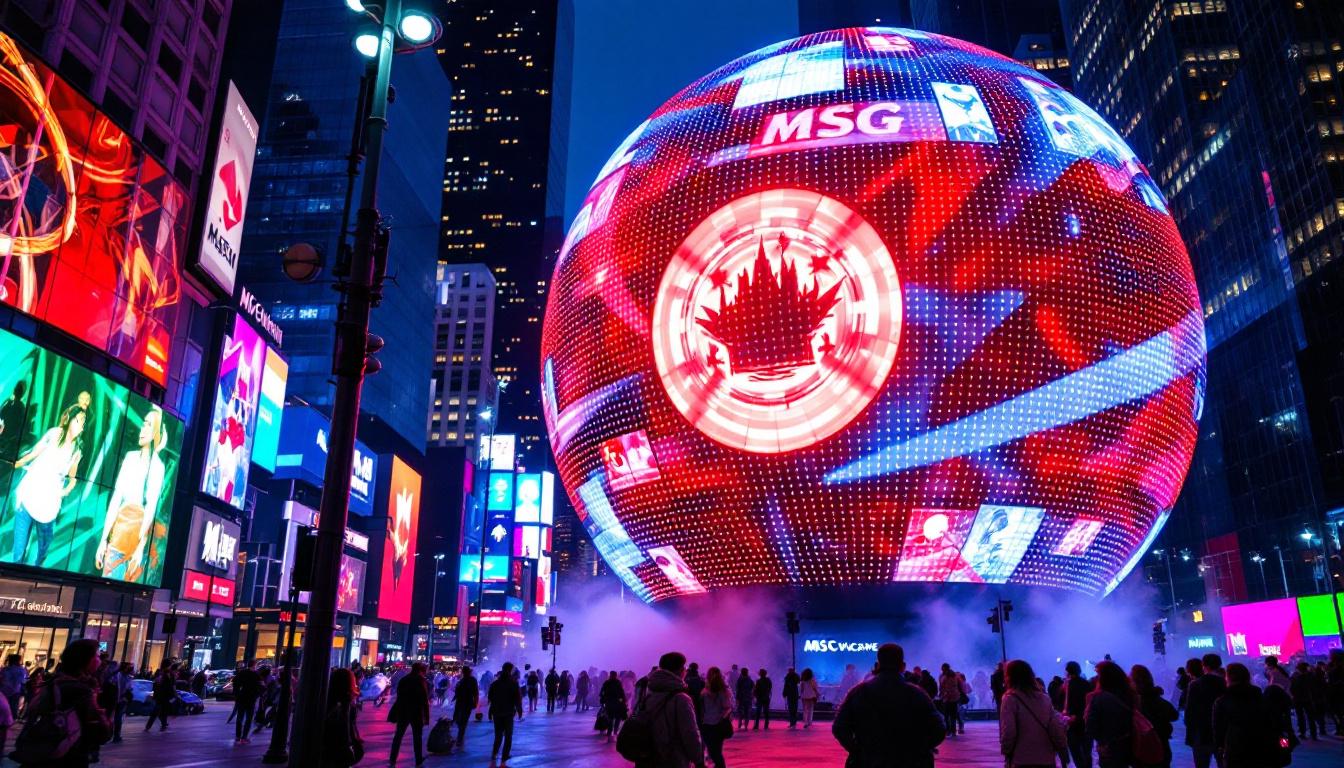
The MSG Sphere’s exterior is covered with an LED display that spans approximately 580,000 square feet, making it one of the largest LED screens in the world. This massive surface transforms the building’s exterior into a dynamic, programmable display capable of showcasing high-definition video, animations, and interactive content.
The exterior LED system is designed to be visible from miles away, turning the Sphere into a landmark of visual spectacle on the Las Vegas Strip. The panels use high-density LED clusters with a pixel pitch optimized for long-distance viewing, balancing resolution and size to create clear and vibrant images.
Interior LED Screen
Inside the MSG Sphere, the LED display technology takes immersion to another level. The interior dome features a wraparound LED screen that covers the ceiling and walls, creating a 16K resolution environment — a resolution far beyond typical 4K or 8K displays. This ultra-high resolution allows for incredibly detailed and lifelike visuals that surround the audience.
The interior LED panels are curved and seamlessly integrated to maintain a continuous image without visible seams or distortions. This design is critical for maintaining the illusion of being inside a different world, whether it’s a starry night sky, an underwater scene, or a futuristic cityscape.
Pixel Pitch and Resolution
Pixel pitch refers to the distance between the centers of two adjacent pixels on an LED display. A smaller pixel pitch means higher pixel density and sharper image quality. The MSG Sphere employs different pixel pitches for its interior and exterior displays to optimize viewing experiences based on distance and application.
For the interior, the pixel pitch is extremely fine, enabling the 16K resolution that supports detailed imagery even up close. The exterior uses a larger pixel pitch suitable for viewing from afar, ensuring images remain clear without requiring excessive pixel density that would increase costs and complexity.
Innovations Behind the MSG Sphere’s LED Displays
Curved LED Panel Technology
One of the most challenging aspects of the MSG Sphere’s LED system is its spherical shape. Traditional LED panels are flat, so creating a curved, continuous display requires specially engineered panels that can bend or be assembled in a way that follows the dome’s curvature.
Manufacturers developed flexible LED modules and custom mounting systems to achieve this effect. These innovations allow the panels to maintain consistent brightness and color uniformity across the curved surfaces, preventing distortion or pixel misalignment.
High Dynamic Range (HDR) and Color Calibration
The MSG Sphere’s LED displays support High Dynamic Range (HDR) content, which enhances the contrast between the darkest and brightest parts of an image. This capability is crucial for delivering vivid, realistic visuals that captivate audiences.
To maintain color accuracy across the vast number of LED modules, the system incorporates advanced color calibration techniques. Automated calibration ensures that each LED cluster matches the desired color output, creating a seamless and consistent image throughout the Sphere.
Integration with Advanced Audio and Control Systems
The visual experience of the MSG Sphere is complemented by its sophisticated audio system, which is synchronized with the LED displays. This integration allows for multisensory storytelling where sound and visuals interact dynamically.
Control systems manage the LED content in real-time, enabling live event producers to adapt visuals instantly based on the performance or audience interaction. This flexibility is a significant advancement over traditional static or pre-programmed displays.
Comparing the MSG Sphere’s LED Screens to Other Large-Scale Displays
While large LED screens are common in stadiums and arenas, the MSG Sphere’s displays stand out due to their scale, resolution, and curvature. For example, the LED screen at the AT&T Stadium in Texas covers about 11,520 square feet, which is dwarfed by the MSG Sphere’s exterior screen.
Moreover, the Sphere’s interior 16K resolution is unprecedented in live event venues, surpassing the typical 4K or 8K displays found elsewhere. The combination of immersive 360-degree visuals and synchronized audio creates an experience that is more akin to a digital planetarium than a conventional event space.
Challenges and Future Prospects of LED Technology in Venues Like the MSG Sphere
Technical and Maintenance Challenges
Deploying and maintaining such vast LED systems is complex. The sheer number of LEDs and associated electronics requires rigorous quality control, regular maintenance, and sophisticated cooling solutions to prevent overheating.
Additionally, ensuring uniform brightness and color consistency over time is an ongoing challenge, especially as individual LEDs age or malfunction. The MSG Sphere employs predictive maintenance and remote monitoring to address these issues proactively.
Environmental and Energy Considerations
LED technology is more energy-efficient than older display technologies, but the scale of the MSG Sphere’s displays means significant power consumption. Efforts to optimize energy use include using high-efficiency LEDs, smart brightness controls that adjust based on ambient light, and integrating renewable energy sources where possible.
Future Innovations
The MSG Sphere’s LED system sets a new benchmark, but the technology continues to evolve. Emerging trends include microLED displays, which offer even higher resolution and energy efficiency, and flexible OLED panels that could enable even more versatile shapes and thinner screens.
As LED technology advances, future venues may incorporate even more immersive and interactive visual environments, pushing the boundaries of live entertainment.
Conclusion: The MSG Sphere’s LED Displays as a Vision of the Future
The MSG Sphere’s use of cutting-edge LED display technology redefines what is possible in immersive entertainment. By combining massive scale, high resolution, and innovative curved panel design, the Sphere creates a visual environment that captivates and transports audiences like never before.
Understanding the types of LED screens used, their technical specifications, and the innovations behind them highlights the complexity and ingenuity involved in this project. As LED technology continues to advance, venues like the MSG Sphere will lead the way in delivering unforgettable experiences that blend technology, art, and storytelling.
For anyone interested in the future of live events, digital displays, or immersive media, the MSG Sphere offers a fascinating glimpse into the possibilities of LED display technology.
Explore the Future of LED Technology with LumenMatrix
As the MSG Sphere in Las Vegas sets a new standard for immersive visual experiences, LumenMatrix stands at the forefront of these technological advancements. With a commitment to innovation and quality, LumenMatrix offers a wide range of LED display solutions that bring your vision to life. From captivating Indoor and Outdoor LED Wall Displays to dynamic Vehicle and Sports LED Displays, each product is designed to revolutionize visual communication and engagement. Discover how LumenMatrix can elevate your brand’s presence and create unforgettable experiences for your audience. Check out LumenMatrix LED Display Solutions today and be part of the visual revolution.