Understanding the dimensions of LED displays is crucial for designers, engineers, and consumers alike. Whether you’re selecting a display for a new device, upgrading an existing screen, or simply curious about how size measurements translate, knowing how to convert inches to millimeters and grasping the implications for LED technology can be invaluable. This article delves into the conversion of 1.6 inches to millimeters and explores the characteristics and applications of LED displays in this size range.
Converting Inches to Millimeters: The Basics
Inches and millimeters are two common units of length measurement used worldwide, with inches being prevalent primarily in the United States and millimeters favored in most other countries, especially in engineering and manufacturing contexts. Accurate conversion between these units is essential when dealing with technical specifications.
One inch is exactly equal to 25.4 millimeters. This precise conversion factor allows for straightforward calculations:
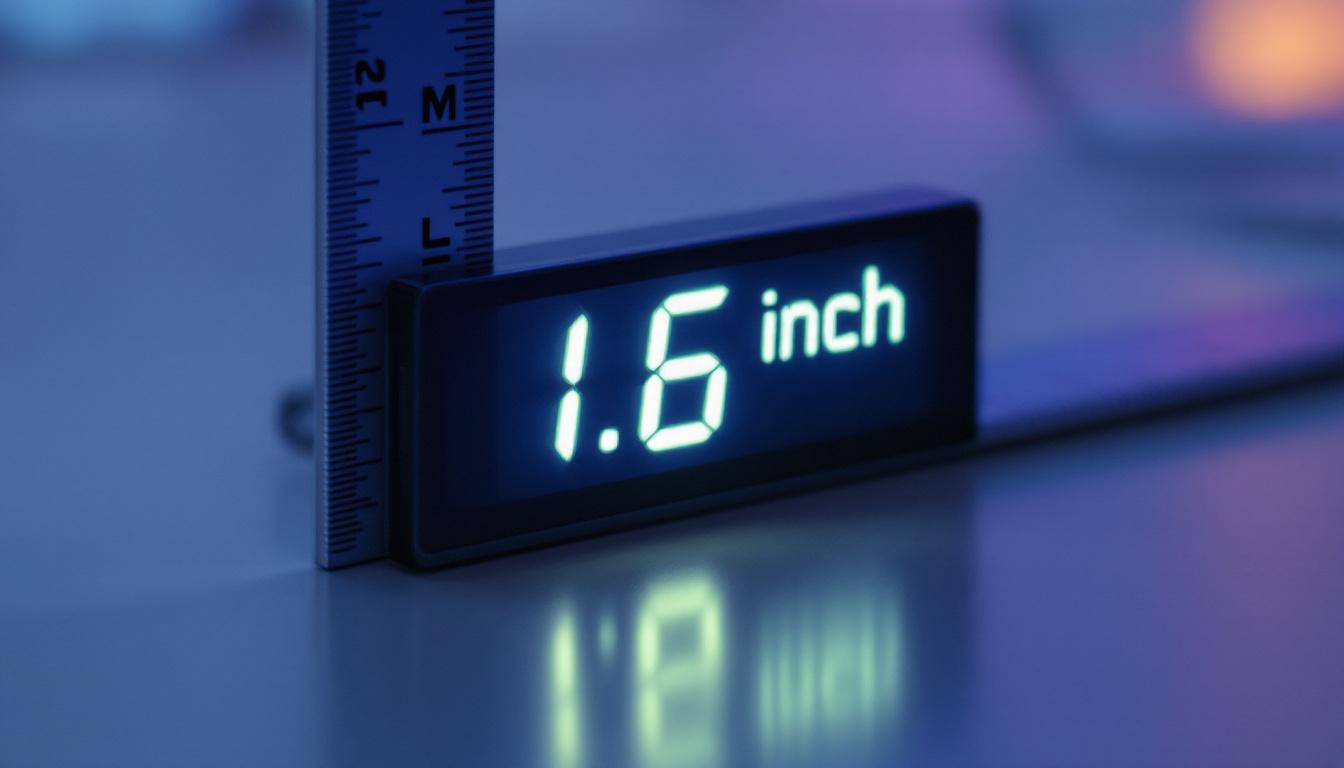
1.6 inches × 25.4 mm/inch = 40.64 mm
Thus, a 1.6-inch measurement corresponds to 40.64 millimeters. This conversion is particularly relevant when specifying the diagonal size of LED displays, as screen sizes are typically measured diagonally in inches.
Why Use Millimeters in Display Specifications?
Millimeters provide a more granular and precise measurement scale, which is beneficial when designing and manufacturing electronic components. For example, in LED display modules, where pixel pitch and component spacing are critical, millimeter measurements allow for exacting standards. This precision ensures compatibility with other hardware elements and helps maintain consistent quality across production batches.
Moreover, using millimeters can significantly enhance the design process. Designers and engineers often work with intricate layouts that require meticulous attention to detail. When components are specified in millimeters, it becomes easier to visualize the overall dimensions and fit of the assembly. This is especially true in industries such as automotive and aerospace, where even the smallest discrepancies can lead to performance issues or safety concerns. Additionally, as global markets continue to integrate, the ability to communicate specifications in millimeters can facilitate smoother collaboration between international teams, reducing the potential for errors during the manufacturing process.
Furthermore, the trend towards metrication in various sectors has made millimeters the preferred choice in many technical fields. With the increasing adoption of metric units in science and technology, engineers and designers are often required to convert measurements from imperial to metric systems. Familiarity with millimeters not only streamlines this process but also aligns with international standards, making it easier to source materials and components from suppliers around the world. This shift towards a unified measurement system underscores the importance of understanding and accurately converting between inches and millimeters in today’s globalized economy.
Understanding LED Display Sizes and Their Implications
LED displays come in a variety of sizes, each suited to different applications. A 1.6-inch LED display is relatively small but can be found in numerous devices, from wearable technology to compact instrumentation panels.
Typical Applications of 1.6-Inch LED Displays
Small LED displays around 1.6 inches are commonly used in:
- Wearable Devices: Fitness trackers, smartwatches, and health monitors often feature displays in this size range. The compact size balances readability with the need for a lightweight, unobtrusive form factor.
- Industrial Equipment: Control panels and handheld diagnostic tools utilize small LED screens to convey essential information clearly without adding bulk.
- Consumer Electronics: Devices like digital cameras, portable media players, and small remote controls may incorporate 1.6-inch LED displays for status updates and menu navigation.
The choice of a 1.6-inch display often reflects a compromise between visibility and device size constraints. The integration of such displays into compact devices allows manufacturers to create sleek, modern designs that appeal to consumers who prioritize portability and convenience. Furthermore, as technology advances, the trend towards miniaturization continues, making these small displays even more critical in the design of next-generation devices.
Pixel Density and Resolution Considerations
While the physical size of the display is important, the resolution and pixel density (measured in pixels per inch, or PPI) define the clarity and sharpness of the image. A 1.6-inch LED display with a high pixel density can render crisp text and detailed graphics, which is especially important in applications requiring precise visual feedback.
For instance, a 1.6-inch display with a resolution of 240×240 pixels results in approximately 176 PPI, which is sufficient for most wearable and small device applications. Higher resolutions increase manufacturing complexity and cost but can significantly enhance user experience. In the context of health monitoring devices, for example, a higher pixel density can improve the readability of vital statistics, ensuring that users can quickly and accurately interpret their data. Additionally, as augmented reality (AR) and virtual reality (VR) technologies evolve, the demand for displays with higher resolutions is likely to grow, pushing the boundaries of what can be achieved in such compact formats.
Technical Characteristics of LED Displays at 1.6 Inches
LED displays at this size typically incorporate specific technologies and design features tailored to their compact dimensions.
Types of LED Displays Used
There are several types of LED displays, including:
- Segmented LED Displays: These are often used for numeric or alphanumeric readouts, such as in digital watches or measurement instruments. They are simple, energy-efficient, and easy to read.
- Dot Matrix LED Displays: These use a grid of LEDs to form characters or simple graphics. They offer more flexibility than segmented displays but are less common in very small sizes due to resolution limitations.
- OLED Displays: Although technically different from traditional LEDs, OLEDs (Organic Light Emitting Diodes) are sometimes grouped under LED displays. They offer high contrast and wide viewing angles, making them popular in small screen applications like smartwatches.
For a 1.6-inch screen, OLED technology is increasingly favored due to its superior image quality and thinner profile. The ability of OLEDs to produce deep blacks and vibrant colors enhances the visual experience, which is particularly important in applications where display clarity is crucial, such as in fitness trackers and health monitoring devices. Furthermore, the flexibility of OLED technology allows for innovative designs that can conform to various shapes, providing manufacturers with the opportunity to create unique and aesthetically pleasing products.
Power Consumption and Efficiency
Small LED displays are designed to be energy-efficient, which is critical for battery-powered devices. The power consumption depends on factors such as brightness, color depth, and refresh rate. Advances in LED technology have led to displays that consume minimal power while maintaining high visibility, even in bright environments.
For example, a 1.6-inch OLED display can operate at power levels as low as a few milliwatts, extending the battery life of wearable devices significantly compared to older display technologies. This efficiency is particularly advantageous in the context of the Internet of Things (IoT), where devices are often expected to run for extended periods without frequent recharging. Moreover, the integration of smart power management systems in these displays can further optimize energy usage by adjusting brightness based on ambient light conditions, thereby enhancing user experience while conserving battery life.
Choosing the Right 1.6-Inch LED Display for Your Project
Selecting the appropriate LED display involves considering several factors beyond just size. The intended application, environmental conditions, and user interaction all influence the choice.
Brightness and Visibility
Brightness is a key parameter, especially for displays used outdoors or in brightly lit environments. LED displays generally offer excellent brightness levels, with some models reaching over 1000 nits, ensuring readability in direct sunlight. For indoor or low-light use, lower brightness levels suffice and help conserve power.
Durability and Environmental Resistance
Depending on the use case, displays may need to withstand harsh conditions such as moisture, dust, temperature extremes, or mechanical shocks. Many 1.6-inch LED displays are available with ruggedized housings or conformal coatings to enhance durability.
Interface and Compatibility
Integration with the host system requires compatible interfaces, such as SPI, I2C, or parallel connections. Additionally, software support for driving the display, including available libraries and driver ICs, is essential for smooth implementation.
Future Trends in Small LED Display Technology
The landscape of LED display technology continues to evolve rapidly, with several trends shaping the future of small displays like the 1.6-inch category.
MicroLED and MiniLED Innovations
MicroLED technology, which uses microscopic LEDs as individual pixels, promises even higher brightness, better color accuracy, and improved energy efficiency compared to traditional LEDs and OLEDs. Although still emerging, MicroLED displays are expected to become more common in small devices within the next few years.
MiniLED backlighting, which uses thousands of tiny LEDs to illuminate LCD panels, offers enhanced contrast and brightness control. This technology is also influencing small display designs, improving image quality without significantly increasing power consumption.
Flexible and Transparent Displays
Advances in materials science have enabled the development of flexible and transparent LED displays. These innovations open new possibilities for wearable devices, curved screens, and heads-up displays, where a 1.6-inch size might be integrated into unconventional form factors.
Conclusion
Converting 1.6 inches to millimeters reveals a precise measurement of 40.64 mm, a size that is common in many compact LED display applications. Understanding this conversion is fundamental for accurate design and specification in electronics manufacturing.
LED displays at this size offer a balance between readability and compactness, making them ideal for wearables, industrial tools, and consumer electronics. Advances in display technology continue to enhance the capabilities of these small screens, improving resolution, brightness, power efficiency, and durability.
For anyone involved in selecting or designing LED displays, appreciating the nuances of size, technology, and application requirements is essential. The 1.6-inch LED display exemplifies how precision in measurement and innovation in technology come together to create versatile, high-performance visual interfaces.
Explore Cutting-Edge LED Display Solutions with LumenMatrix
Ready to elevate your project with the latest in LED display technology? LumenMatrix offers a comprehensive range of LED display modules designed to bring your vision to life. From captivating Indoor and Outdoor LED Wall Displays to dynamic Vehicle and Sports LED Displays, our solutions are crafted to enhance brand visibility and create immersive visual experiences. Discover the possibilities with our innovative Floor, Custom, All-in-One, and Transparent LED Displays. Experience the future of visual communication and make a lasting impact. Check out LumenMatrix LED Display Solutions today and see your message shine like never before.