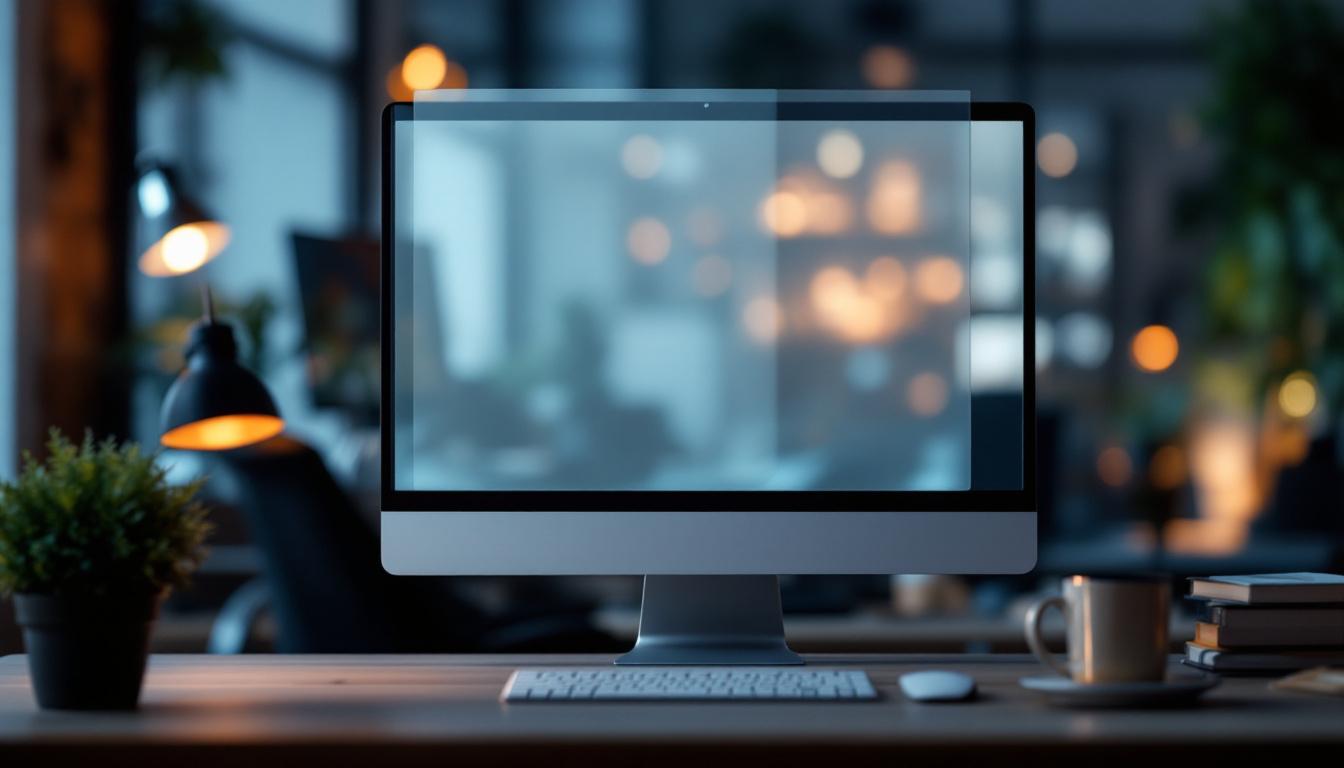
In an era where data privacy and screen security have become paramount, the use of privacy screen protectors for PC monitors is gaining significant traction. Particularly for LED displays, these protectors offer a practical solution to safeguard sensitive information from prying eyes. This article delves into the intricacies of privacy screen protectors designed for LED monitors, exploring their technology, benefits, and considerations for users who prioritize confidentiality in both professional and personal settings.
Understanding LED Displays and Their Vulnerabilities
What Is an LED Display?
LED (Light Emitting Diode) displays are a popular type of screen technology used in modern PC monitors. Unlike traditional LCDs that rely on fluorescent backlighting, LED monitors use light-emitting diodes to illuminate the screen, resulting in brighter images, better contrast, and improved energy efficiency. These advantages have made LED displays the standard for most consumer and professional-grade monitors. The technology has evolved significantly, allowing for thinner designs and more vibrant colors, which enhances user experience across various applications, from gaming to graphic design.
However, while LED screens provide superior visual quality, their design also creates certain privacy vulnerabilities. The wide viewing angles and high brightness that make them visually appealing can also allow onlookers to see the content displayed from side angles, potentially exposing sensitive data. This characteristic is particularly concerning in environments where multiple people are present, such as open-plan offices or crowded public transport, where prying eyes can easily catch a glimpse of confidential information.
Privacy Risks Associated with LED Monitors
In workplaces, public spaces, or even home environments, the risk of shoulder surfing—where someone nearby views your screen without permission—is a growing concern. According to a 2023 survey by Cybersecurity Ventures, over 60% of data breaches in office environments are linked to physical security lapses, including unauthorized screen viewing. This statistic highlights the urgent need for individuals and organizations to be proactive in safeguarding their digital information against visual threats.
For professionals handling confidential information such as financial data, client records, or proprietary research, the threat of visual hacking is real. Even casual exposure of personal emails or passwords can lead to significant privacy violations. Given these risks, enhancing screen privacy without compromising display quality is essential. Solutions such as privacy filters, which narrow the viewing angle of the screen, can help mitigate these vulnerabilities by ensuring that only the intended viewer can see the content displayed. Additionally, incorporating workspace design strategies, such as positioning screens away from common walkways or using barriers, can further protect sensitive information from prying eyes. As technology continues to advance, it is crucial to remain vigilant and adopt best practices to maintain privacy in an increasingly interconnected world.
How Privacy Screen Protectors Work on LED Monitors
The Technology Behind Privacy Filters
Privacy screen protectors, also known as privacy filters, are thin layers of optical film applied directly to the monitor’s surface. These filters use micro-louver technology—tiny vertical blinds embedded within the film—that restrict the viewing angle of the display. When looking directly at the screen, the image remains clear and vibrant. However, from side angles (usually beyond 30 degrees), the screen darkens or becomes completely black, preventing others from seeing the content.
This directional light control is particularly effective on LED displays due to their inherent brightness and contrast. The privacy filter complements these characteristics by maintaining image clarity for the user while obscuring visibility for onlookers. This technology is not only beneficial in office settings where sensitive information is often displayed, but it also serves a crucial role in public environments, such as cafes or airports, where individuals may be working on confidential documents or accessing private accounts. By providing a shield against prying eyes, these filters help to enhance user confidence and security in their digital interactions.
Types of Privacy Screen Protectors for LED Monitors
Privacy filters come in various forms tailored to different monitor sizes and user needs. The two main types are:
- Adhesive Privacy Filters: These attach permanently or semi-permanently to the monitor screen. They offer a snug fit and are less likely to shift but may leave residue upon removal.
- Removable Privacy Filters: These are designed to clip onto the monitor or adhere magnetically, allowing users to remove or reposition them as needed. They provide flexibility but may be less secure.
Choosing the right type depends on the user’s environment and preference for permanence versus convenience. For instance, professionals who frequently travel for work might prefer removable filters for their adaptability, allowing them to easily switch between different workspaces. On the other hand, individuals who primarily work in a fixed office setting may opt for adhesive filters to ensure a consistent and reliable level of privacy. Additionally, some privacy filters also come with anti-glare properties, which can further enhance the viewing experience by reducing reflections from overhead lights or windows, making them a versatile choice for various lighting conditions.
Benefits of Using Privacy Screen Protectors on LED Monitors
Enhanced Data Security and Confidentiality
The primary benefit of privacy screen protectors is the protection of sensitive information from unintended viewers. In industries such as healthcare, finance, legal services, and government, maintaining confidentiality is not just a best practice but often a regulatory requirement.
By limiting screen visibility to only the person directly in front of the monitor, privacy filters reduce the risk of data leaks caused by visual hacking. This layer of security complements digital encryption and physical access controls, creating a more comprehensive defense strategy.
Reduction of Glare and Eye Strain
Many privacy screen protectors also feature anti-glare coatings that minimize reflections from ambient light sources. This can improve viewing comfort, especially in brightly lit office environments or near windows.
Reducing glare not only enhances screen visibility but also helps decrease eye strain during prolonged computer use. Given that LED monitors are often used for extended periods, this benefit contributes to overall user well-being.
Preservation of Screen Quality and Touch Sensitivity
High-quality privacy filters are designed to maintain the original resolution and color accuracy of LED displays. Users can expect minimal impact on brightness and sharpness when viewing the screen head-on. Additionally, for touch-enabled LED monitors, many privacy protectors preserve touch sensitivity, ensuring seamless interaction.
Considerations When Choosing a Privacy Screen Protector for LED Monitors
Screen Size and Aspect Ratio Compatibility
Privacy filters must match the exact dimensions and aspect ratio of the monitor to be effective. Using a filter that is too small or too large can leave gaps that compromise privacy or cause visual distortion. Most manufacturers provide filters tailored to common screen sizes, but custom options are available for unique displays.
Viewing Angle and Privacy Level
Different privacy filters offer varying degrees of viewing angle restriction. Some limit visibility to 30 degrees, while others narrow it further to 20 degrees or less. Users should consider their environment—such as open-plan offices versus private cubicles—to select a filter that balances privacy with usability.
Installation and Maintenance
Ease of installation is another factor. Adhesive filters require careful application to avoid bubbles and alignment issues, while clip-on or magnetic filters are simpler to attach but may be less stable. Regular cleaning with appropriate materials is essential to maintain clarity and effectiveness.
Cost and Durability
Privacy screen protectors vary widely in price, influenced by size, brand, and additional features like anti-glare or blue light filtering. Investing in a durable, high-quality filter can provide long-term value by protecting both privacy and screen integrity.
Practical Applications and Use Cases
Corporate and Financial Environments
In sectors where sensitive financial data is routinely handled, privacy screen protectors are indispensable. Banks, accounting firms, and trading floors often implement these filters to prevent accidental disclosure of confidential information during client meetings or in shared workspaces.
Healthcare and Legal Professions
Medical professionals use electronic health records (EHR) systems on LED monitors, making patient privacy a critical concern. Similarly, lawyers and paralegals manage confidential case files that require protection from unauthorized viewing. Privacy filters help these professionals comply with regulations such as HIPAA and GDPR.
Remote Work and Public Spaces
With the rise of remote work and mobile computing, many users access sensitive information from cafes, co-working spaces, or public transport. Privacy screen protectors enable secure use of laptops and portable LED monitors in these environments, reducing the risk of data exposure in crowded or unsecured locations.
Emerging Trends and Future Developments
Integration with Blue Light Filtering and Anti-Glare Technologies
Modern privacy screen protectors increasingly incorporate multiple functionalities. Combining privacy filters with blue light reduction helps protect users from eye fatigue and potential sleep disturbances caused by prolonged exposure to LED screen emissions.
Anti-glare coatings continue to evolve, enhancing screen visibility without compromising privacy. These multi-functional filters are becoming the norm, providing comprehensive eye and data protection in a single product.
Advancements in Smart Privacy Screens
Innovations in smart glass and electronic privacy screens are on the horizon. These technologies allow users to toggle privacy modes on and off via software controls, offering dynamic privacy solutions without physical filters. While currently more common in high-end commercial settings, such smart privacy solutions may become accessible for consumer LED monitors in the near future.
Conclusion: Balancing Privacy and Performance on LED Monitors
Privacy screen protectors for PC monitors with LED displays offer an effective and practical means to secure sensitive information against visual hacking. By leveraging micro-louver technology, these filters maintain screen clarity for the user while obscuring side views, addressing a critical vulnerability inherent in modern LED screens.
Choosing the right privacy filter involves considering factors such as screen size, desired privacy level, installation preferences, and additional features like anti-glare or blue light filtering. As remote work and data security concerns continue to rise, privacy screen protectors are becoming essential tools for professionals and everyday users alike.
Ultimately, investing in a high-quality privacy screen protector not only safeguards confidential information but also enhances viewing comfort and preserves the performance of LED monitors, striking a balance between privacy and productivity.
Discover LumenMatrix’s Advanced LED Display Solutions
As you consider the importance of balancing privacy and performance for your LED monitors, LumenMatrix invites you to explore our innovative LED display solutions. Our commitment to revolutionizing visual communication is evident in our diverse range of products, from Indoor and Outdoor LED Wall Displays to specialized options like Vehicle and Sports LED Displays. Enhance your brand’s visibility and create immersive visual experiences with our state-of-the-art technology. Check out LumenMatrix LED Display Solutions today and empower your business to communicate with impact and clarity.