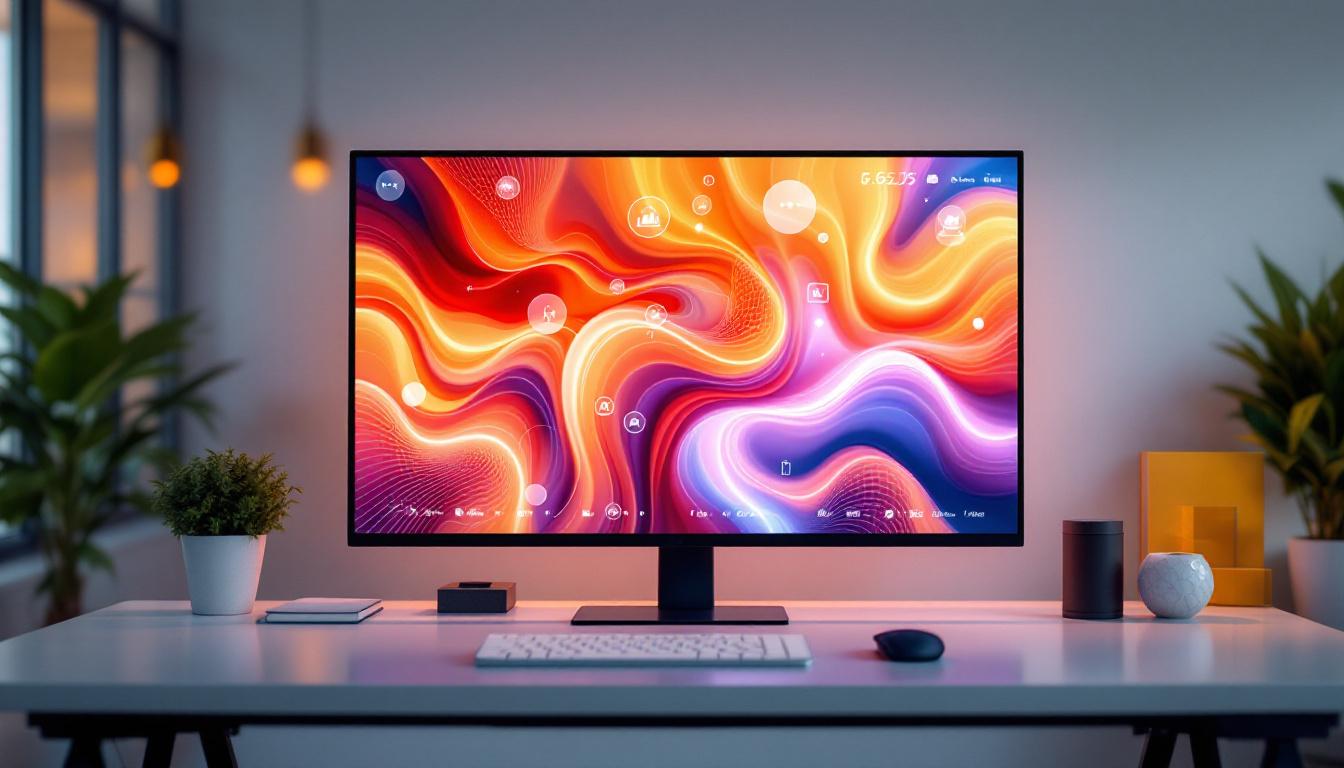
In today’s fast-paced digital world, large-format touch screen monitors have become essential tools across various industries. Whether it’s for interactive presentations, collaborative workspaces, digital signage, or educational environments, the demand for expansive, responsive displays is growing rapidly. Among these, the 65 inch touch screen monitor stands out as a versatile and powerful solution, combining size, clarity, and interactivity.
This article delves into the technical and practical aspects of 65 inch LED touch screen monitors. It explains the technology behind LED displays, explores the benefits of touch screen integration, and highlights key considerations when selecting a monitor of this size. By the end, readers will have a comprehensive understanding of why these monitors are becoming indispensable in modern professional and commercial settings.
Understanding LED Display Technology
What is an LED Display?
LED, or Light Emitting Diode, displays are a type of flat panel display technology that uses diodes to emit light and create images. Unlike traditional LCDs that rely on fluorescent backlighting, LED displays use tiny light-emitting diodes as their light source. This fundamental difference results in several advantages, including better brightness, improved color accuracy, and enhanced energy efficiency.
In the context of a 65 inch monitor, LED technology ensures that the large screen maintains uniform brightness and vivid color reproduction across the entire display area. This is crucial for applications that require detailed visuals, such as graphic design, video conferencing, and interactive presentations.
Types of LED Backlighting
There are two primary types of LED backlighting used in large monitors: edge-lit and direct-lit (or full-array). Edge-lit LED displays position LEDs along the edges of the screen, using light guides to distribute illumination. This allows for thinner and lighter monitors but can sometimes result in uneven brightness.
Direct-lit LED displays place LEDs directly behind the screen in a grid pattern, providing more uniform lighting and better contrast ratios. Many high-end 65 inch touch screen monitors use full-array backlighting with local dimming, which enhances black levels and overall picture quality—important for environments where image clarity is paramount.
The Advantages of a 65 Inch Touch Screen Monitor
Immersive Viewing Experience
The sheer size of a 65 inch monitor offers an immersive viewing experience that smaller screens cannot match. This makes it ideal for collaborative workspaces, where multiple users need to view and interact with content simultaneously. For example, in conference rooms, a 65 inch touch screen can display detailed spreadsheets, architectural plans, or multimedia presentations clearly to everyone in the room.
Moreover, the large screen real estate allows for multitasking and split-screen functionality, enabling users to work with multiple applications side-by-side without sacrificing readability or detail.
Enhanced Interactivity with Touch Screen Integration
Touch screen technology transforms a passive display into an interactive tool. Capacitive touchscreens, which are common in high-quality 65 inch monitors, detect the electrical properties of a user’s finger, allowing for precise input. This enables intuitive gestures such as pinch-to-zoom, swipe, and multi-touch commands.
Interactive touch screens are particularly valuable in educational settings, retail environments, and public kiosks. They facilitate engagement, improve user experience, and streamline workflows by allowing users to manipulate content directly on the screen. For example, teachers can annotate lessons in real-time, while sales associates can showcase product catalogs interactively.
Improved Collaboration and Productivity
In corporate environments, 65 inch touch screen monitors serve as digital whiteboards and collaborative hubs. Teams can brainstorm ideas, annotate documents, and share content seamlessly. Many models support multi-user input, allowing several people to interact with the screen simultaneously, which fosters dynamic teamwork and accelerates decision-making processes.
Additionally, integration with video conferencing software and wireless screen sharing technologies enhances remote collaboration, making these monitors indispensable in hybrid work models that have become prevalent post-pandemic.
Key Features to Consider When Choosing a 65 Inch Touch Screen Monitor
Resolution and Image Quality
Resolution is a critical factor in determining the clarity and sharpness of the display. Most 65 inch touch screen monitors offer at least 4K Ultra HD resolution (3840 x 2160 pixels), which provides crisp images and detailed visuals even at close viewing distances. Higher resolution is especially important for professional applications such as graphic design, video editing, and medical imaging.
Besides resolution, consider the monitor’s color accuracy, brightness (measured in nits), and contrast ratio. A high brightness level, typically above 400 nits, ensures visibility in well-lit rooms, while a high contrast ratio enhances the depth and richness of images.
Touch Technology and Responsiveness
The type of touch technology used affects the responsiveness and accuracy of the monitor. Capacitive touchscreens are the most common and offer smooth, precise interaction similar to smartphones and tablets. Some models also feature infrared (IR) touch technology, which uses an array of sensors to detect touch points without requiring direct contact with the screen surface. IR touchscreens are durable and work well with gloves or styluses, making them suitable for industrial or healthcare settings.
Latency, or the delay between touch input and screen response, should be minimal to provide a natural user experience. Look for monitors with low latency and high touch point support (often 10 or more simultaneous touch points) for enhanced functionality.
Connectivity and Compatibility
A 65 inch touch screen monitor should offer a variety of connectivity options to accommodate different devices and setups. Common ports include HDMI, DisplayPort, USB-C, and USB-A. USB-C ports are increasingly important as they support video, audio, and power delivery through a single cable, simplifying cable management.
Wireless connectivity features such as Bluetooth and Wi-Fi enable seamless content sharing and device pairing. Compatibility with popular operating systems like Windows, macOS, and Android ensures that the monitor integrates smoothly into existing workflows.
Durability and Build Quality
Given the size and cost of a 65 inch touch screen monitor, durability is a key consideration. Look for models with robust frames and tempered glass to protect against scratches and impacts. Anti-glare coatings improve visibility in bright environments and reduce eye strain during prolonged use.
Some monitors are designed specifically for heavy public use, with features like vandal-resistant glass and sealed edges to prevent dust and moisture ingress. These are ideal for kiosks, retail stores, and outdoor installations.
Applications of 65 Inch Touch Screen Monitors
Corporate and Educational Environments
In corporate settings, these monitors are often used in meeting rooms and training centers. Their large size and interactive capabilities facilitate presentations, video conferencing, and collaborative work sessions. Many companies invest in 65 inch touch screens to modernize their meeting spaces and improve communication efficiency.
Educational institutions benefit from the engaging nature of touch screen displays. Teachers can create interactive lessons, students can participate actively, and classrooms can support hybrid learning models with integrated video and collaboration tools.
Retail and Hospitality
Retailers use 65 inch touch screen monitors as digital signage, product catalogs, and self-service kiosks. These displays attract customers with dynamic content and allow shoppers to explore products interactively, enhancing the shopping experience.
In hospitality, touch screens serve as information hubs in lobbies, restaurants, and conference centers. Guests can check in, browse services, or access event information quickly and intuitively.
Healthcare and Industrial Use
Healthcare providers utilize large touch screen monitors for patient education, medical imaging review, and telemedicine consultations. The clarity and interactivity of the display improve communication between doctors and patients, as well as among medical teams.
In industrial environments, these monitors support control systems, data visualization, and operational dashboards. Ruggedized models withstand harsh conditions while providing reliable touch input for critical tasks.
Future Trends and Innovations in Large Touch Screen Displays
Advancements in Display Technology
The future of 65 inch touch screen monitors is closely tied to ongoing advancements in display technologies. OLED (Organic LED) and MicroLED displays promise even better contrast ratios, faster response times, and thinner form factors compared to traditional LED panels. Although currently more expensive, these technologies are expected to become more accessible in the coming years.
Additionally, improvements in resolution and color gamut will continue to enhance visual fidelity, making these monitors suitable for increasingly demanding applications.
Integration of AI and Smart Features
Artificial intelligence is beginning to play a role in touch screen monitors, enabling features such as gesture recognition, voice control, and adaptive display settings. These smart capabilities improve user interaction and accessibility, tailoring the experience to individual preferences and contexts.
For example, AI-powered software can automatically adjust brightness and color temperature based on ambient lighting or user activity, reducing eye strain and enhancing comfort during extended use.
Enhanced Connectivity and Collaboration Tools
As remote and hybrid work models become the norm, 65 inch touch screen monitors are evolving to support seamless connectivity and collaboration. Integration with cloud services, wireless casting, and unified communication platforms ensures that users can share and interact with content effortlessly, regardless of location.
Future monitors may also incorporate augmented reality (AR) and virtual reality (VR) features, further expanding their utility in training, design, and immersive presentations.
Conclusion
The 65 inch touch screen monitor represents a powerful convergence of size, image quality, and interactivity. Leveraging LED display technology, these monitors deliver bright, vibrant visuals with responsive touch capabilities that enhance collaboration, engagement, and productivity across diverse environments.
When selecting a 65 inch touch screen monitor, it is essential to consider factors such as resolution, touch technology, connectivity, and durability to ensure the device meets specific needs. As technology continues to advance, these large-format interactive displays will become even more integral to the way businesses, educators, and service providers communicate and operate.
Investing in a high-quality 65 inch touch screen monitor is not just about acquiring a display; it’s about embracing a versatile platform that transforms interaction and information sharing in the digital age.
Discover LumenMatrix’s Advanced LED Display Solutions
Ready to elevate your professional or commercial space with a cutting-edge 65 inch touch screen monitor? Explore LumenMatrix’s comprehensive range of LED display solutions, designed to captivate and engage. From dynamic indoor and outdoor displays to specialized options like vehicle and sports displays, LumenMatrix is at the forefront of visual innovation. Experience the transformative power of our LED technology and let us help you communicate your message with unparalleled clarity and impact. Check out LumenMatrix LED Display Solutions today and step into the future of digital signage.