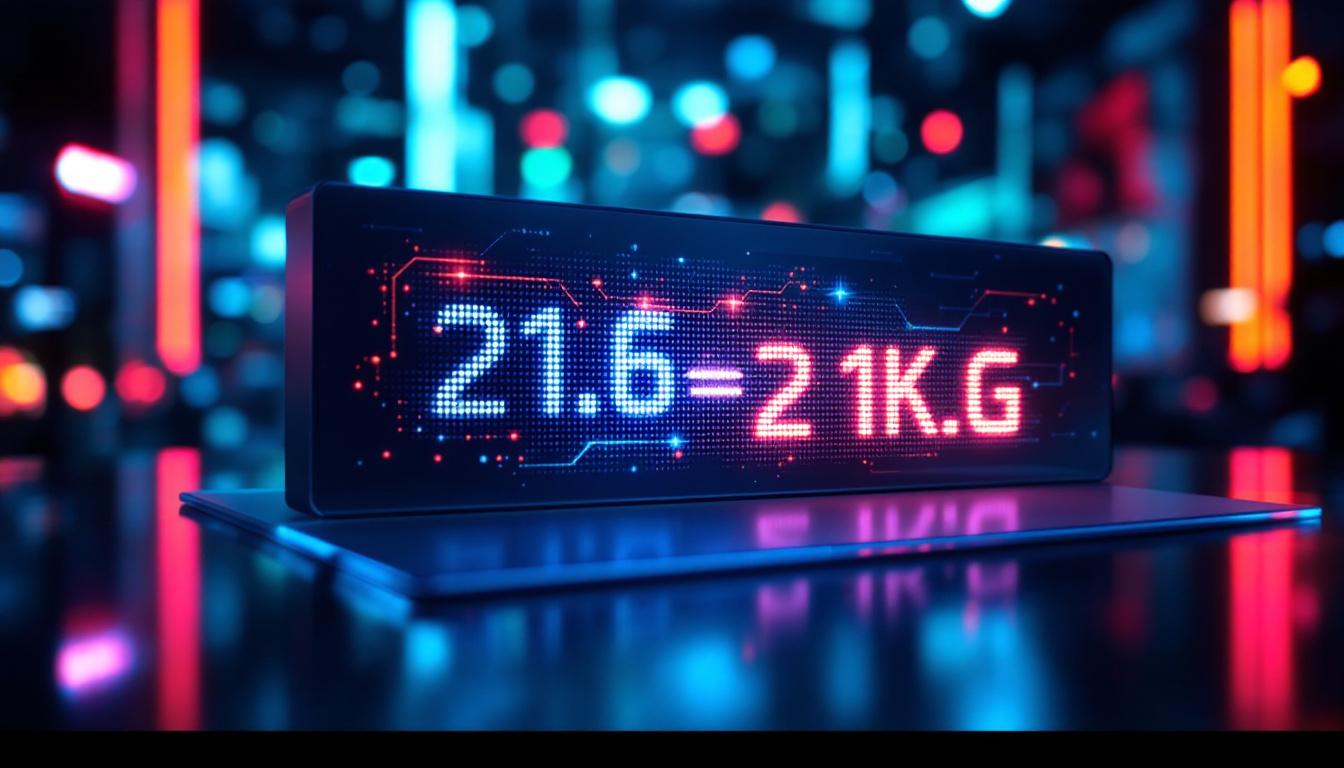
Understanding weight conversions is essential in numerous fields, from science and engineering to everyday shopping and fitness tracking. One common conversion is from kilograms (Kg) to pounds (lbs), especially in countries where both metric and imperial systems coexist. This article delves into the specific conversion of 21.6 kilograms to pounds and explains how LED displays show this information clearly and accurately.
The Basics of Kilograms and Pounds
Before diving into the conversion and LED display technology, it’s important to understand the units involved. The kilogram is the base unit of mass in the International System of Units (SI), widely used around the world. On the other hand, the pound is a unit of weight commonly used in the United States and a few other countries.
One kilogram is defined as exactly 1,000 grams, and it is used globally for scientific, medical, and commercial purposes. The pound, however, is part of the imperial system and is primarily used in the United States, Liberia, and Myanmar. One pound is legally defined as exactly 0.45359237 kilograms.
Why Convert Kilograms to Pounds?
Conversion between kilograms and pounds is necessary because different regions and industries use different measurement systems. For example, a person buying produce in Europe might see prices per kilogram, while a buyer in the United States might expect pounds. Similarly, fitness equipment, shipping labels, and medical dosages often require clear understanding of both units.
In practical terms, knowing how to convert 21.6 kilograms to pounds can help when interpreting weight data on devices such as digital scales, shipping labels, or fitness trackers that use LED displays. This knowledge is especially crucial in contexts like international shipping, where accurate weight measurements can affect shipping costs and delivery times. Moreover, in the realm of fitness, individuals tracking their progress may find themselves needing to convert their weight from kilograms to pounds to align with the metrics used by their trainers or workout programs.
Additionally, the historical context of these units adds another layer of interest. The kilogram was originally defined in 1795, based on the mass of a cubic decimeter of water, while the pound has roots dating back to ancient Rome, where it was based on the weight of a specific number of grains of wheat. Understanding these origins not only enriches our appreciation of these units but also highlights the cultural differences that influence how we measure weight today. As globalization continues to bridge gaps between regions, the ability to seamlessly convert between kilograms and pounds becomes increasingly valuable in our interconnected world.
Converting 21.6 Kilograms to Pounds
The conversion from kilograms to pounds is straightforward mathematically but requires precision to avoid errors. The exact conversion factor is:
1 kilogram = 2.20462262185 pounds
Using this factor, the conversion for 21.6 kilograms is:
21.6 kg × 2.20462262185 lbs/kg = 47.619 lbs (approximately)
Rounded to two decimal places, 21.6 kilograms equals 47.62 pounds.
Practical Applications of This Conversion
This conversion is particularly useful in contexts where weight limits or specifications are given in pounds but the original measurement is in kilograms. For example, shipping companies often specify maximum package weights in pounds, while the sender might have the weight in kilograms. Knowing that 21.6 kg corresponds to approximately 47.62 lbs helps avoid exceeding limits and incurring extra fees.
In fitness, athletes and gym-goers might see their body weight or lifting weights displayed in kilograms but need to understand the equivalent in pounds, especially when following training programs or nutrition plans originating from regions using imperial units.
Moreover, in the culinary world, many recipes and nutritional guidelines are provided in pounds, particularly in the United States. For instance, if a chef encounters a recipe that calls for a certain weight of ingredients in pounds, understanding the conversion allows them to accurately measure out 21.6 kilograms of flour or sugar, ensuring the dish turns out as intended. This is especially crucial in baking, where precise measurements can significantly affect the final product.
Additionally, in the context of international travel, understanding weight conversions can be essential for travelers who need to adhere to airline baggage policies. Many airlines have weight limits for checked luggage expressed in pounds, while travelers may pack their bags based on kilograms. Knowing that their 21.6 kg suitcase is approximately 47.62 lbs can help them avoid unexpected fees at the airport and ensure a smoother travel experience.
How LED Displays Show Weight Conversions
LED (Light Emitting Diode) displays are ubiquitous in digital scales, fitness equipment, and shipping devices. Their clarity, energy efficiency, and durability make them ideal for showing weight measurements and conversions.
Technology Behind LED Displays
LED displays consist of small light-emitting diodes arranged to form numbers and symbols. When a device measures weight, it processes the data through an internal microcontroller and converts it into a readable format on the LED screen.
Modern digital scales and devices often allow users to switch between kilograms and pounds with a simple button press. The microcontroller recalculates the weight using the conversion factor and updates the LED display instantly.
Displaying 21.6 Kg as Pounds on an LED Screen
When a scale measures 21.6 kilograms and the user switches the unit to pounds, the device performs the conversion internally:
- Reads the weight sensor data as 21.6 kg
- Multiplies 21.6 by 2.20462262185
- Calculates the result as approximately 47.62 lbs
- Displays “47.62” followed by the “lbs” unit on the LED screen
This process happens in milliseconds, providing a seamless user experience. The LED display uses seven-segment or dot-matrix configurations to clearly show numbers and units.
Accuracy and Calibration in LED Weight Displays
Accuracy is vital when displaying weight, especially in professional or medical contexts. LED displays rely on sensors and internal software to ensure correct readings and conversions.
Sensor Precision
The weight sensor, often a strain gauge load cell, measures the force exerted by the object or person on the scale. These sensors must be calibrated regularly to maintain accuracy. Calibration involves comparing the sensor output with known standard weights and adjusting the system accordingly.
Software and Firmware Considerations
The microcontroller firmware handles the conversion calculations and controls the LED display. Manufacturers implement algorithms to minimize rounding errors and ensure the displayed value matches the actual weight as closely as possible.
For example, when converting 21.6 kg to pounds, the device may round the result to two decimal places (47.62 lbs) or display more digits depending on the device’s precision capabilities.
The Importance of Clear Unit Indicators on LED Displays
One common source of confusion is misreading the units on a digital scale. An LED display that shows only numbers without unit indicators can lead to mistakes, such as assuming the weight is in pounds when it is actually in kilograms.
Manufacturers address this by including clear unit symbols (“kg” or “lbs”) next to the numbers on the LED screen. Some devices also use color coding or backlighting to differentiate units visually.
Examples of LED Display Unit Indicators
- Static Unit Label: The unit (“kg” or “lbs”) is permanently displayed next to the number.
- Toggle Indicator: When switching units, the unit label changes accordingly, sometimes accompanied by a brief flashing effect to alert the user.
- Dual Display: Some advanced scales show both kilograms and pounds simultaneously on separate parts of the LED screen.
These features help users interpret the weight correctly and avoid errors in measurement or communication.
Common Uses for the 21.6 Kg to Lbs Conversion
While 21.6 kilograms is a specific weight, understanding its pound equivalent is relevant in many real-world scenarios.
Shipping and Logistics
Packages weighing around 21.6 kg are common in international shipping. Shipping companies often list weight limits in pounds, so converting 21.6 kg to approximately 47.62 lbs helps ensure compliance with carrier restrictions and avoids surcharges.
Fitness and Health Monitoring
In fitness centers and medical facilities, body weight and equipment weights might be recorded in kilograms but need to be understood in pounds for clients or patients accustomed to imperial units. For example, a dumbbell labeled as 21.6 kg is roughly 47.6 lbs, helping users select appropriate weights for their workouts.
Industrial and Commercial Applications
Manufacturing processes and product specifications often require precise weight measurements. Converting 21.6 kg to pounds ensures compatibility with documentation, quality control standards, and international trade requirements.
Tips for Accurate Weight Conversion and Display
To ensure accurate conversions and clear displays, consider the following best practices:
- Use Reliable Conversion Factors: Always use the precise conversion factor (1 kg = 2.20462262185 lbs) for calculations, especially in professional contexts.
- Calibrate Devices Regularly: Regular calibration of scales and sensors maintains accuracy in weight measurement and display.
- Check Unit Indicators: Always verify the unit displayed on the LED screen to avoid misinterpretation.
- Choose Devices with Clear Displays: Select scales and equipment with high-contrast, easy-to-read LED displays and clear unit labels.
- Understand Rounding Practices: Be aware of how your device rounds numbers and how that might affect precision.
Conclusion
Converting 21.6 kilograms to pounds results in approximately 47.62 lbs, a conversion that is essential in many practical situations. LED displays play a crucial role in presenting this information clearly, enabling users to switch between units quickly and accurately. Understanding the technology behind LED displays, the importance of calibration, and the need for clear unit indicators helps users interpret weight data confidently.
Whether in shipping, fitness, or industrial applications, accurate weight conversion and display are fundamental. By appreciating the nuances of kilograms to pounds conversion and the role of LED technology, users can ensure precision and avoid costly errors.
Discover LumenMatrix LED Display Solutions
Ready to experience the pinnacle of weight display precision and clarity? LumenMatrix is at the forefront of LED display innovation, offering a wide range of solutions tailored to meet your needs. From Indoor and Outdoor LED Wall Displays to specialized options like Vehicle, Sports, and Floor LED Displays, our products are designed to enhance engagement and ensure your message is seen with unparalleled impact. Elevate your visual communication with our Custom, All-in-One, and Transparent LED Displays. Check out LumenMatrix LED Display Solutions today and transform how you share your message with the world.