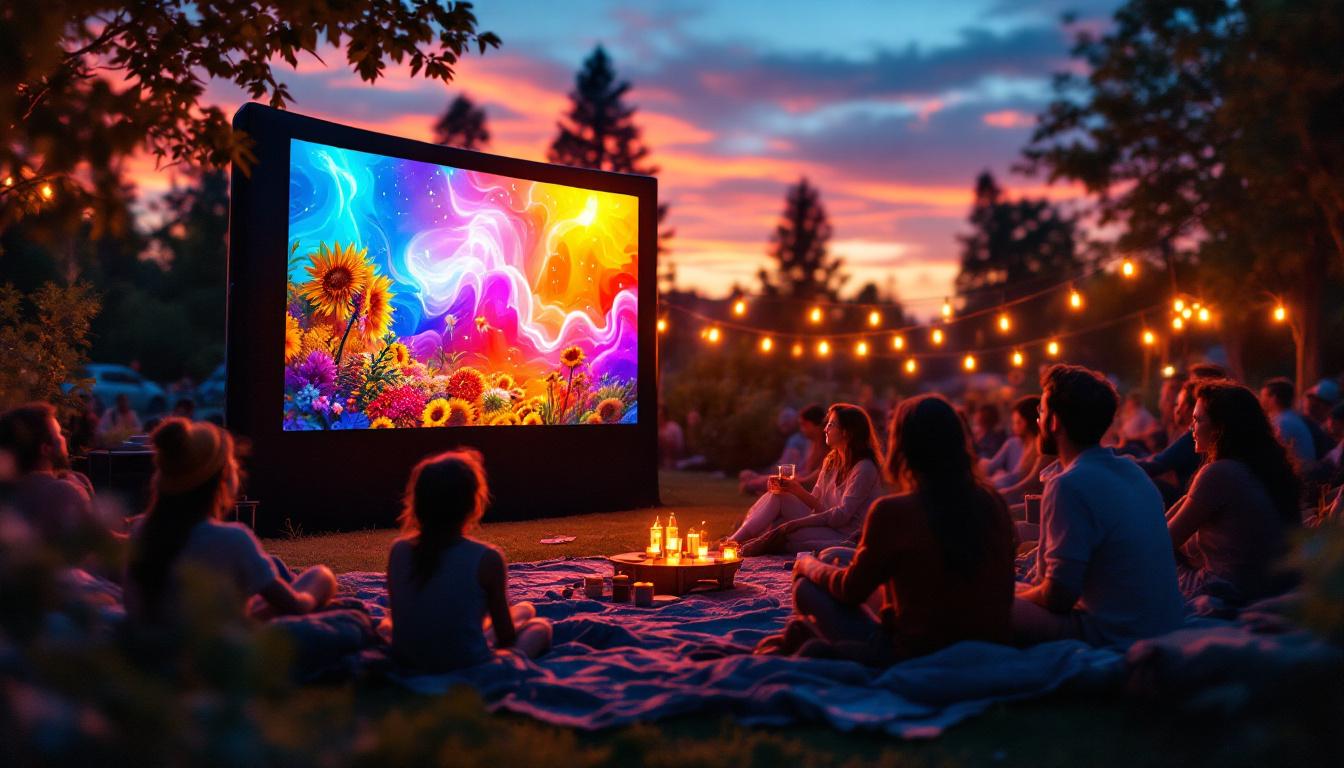
As outdoor entertainment continues to grow in popularity, the demand for high-quality visual experiences outside the traditional living room has surged. Whether it’s backyard movie nights, sports viewing parties, or professional outdoor presentations, the technology behind outdoor projectors has evolved significantly. Among the most exciting advancements is the integration of 4K resolution and LED display technology, delivering stunning visuals with remarkable brightness and durability.
This article explores the intricacies of outdoor 4K projectors with LED displays, explaining how they work, their benefits, and what to consider when choosing one. By understanding these elements, consumers and professionals alike can make informed decisions to enhance their outdoor viewing experiences.
Understanding 4K Resolution in Outdoor Projectors
What Does 4K Mean?
4K resolution refers to a display resolution of approximately 3840 x 2160 pixels, which is four times the pixel count of Full HD (1920 x 1080). This higher pixel density results in sharper, more detailed images, making it especially beneficial for large screen sizes where clarity can otherwise degrade.
For outdoor projectors, 4K resolution means viewers can enjoy crisp visuals even from a distance, enhancing immersion during movies, sports events, or gaming sessions. The increased detail also allows for better color gradation and texture representation, which is crucial when projecting on larger surfaces such as walls or outdoor screens.
Why 4K Matters for Outdoor Use
Outdoor environments present unique challenges for image quality. Ambient light from street lamps, the moon, or nearby buildings can wash out images projected with lower resolutions or brightness. A 4K projector compensates in part by providing more pixels, which improves the perceived sharpness and detail, helping the image stand out even in less-than-ideal lighting conditions.
Additionally, outdoor screens or walls often lack the uniformity and reflectivity of indoor projection screens. The higher resolution helps maintain image integrity across uneven surfaces, ensuring that viewers receive a consistent and enjoyable picture quality.
LED Display Technology in Outdoor Projectors
How LED Displays Work
LED (Light Emitting Diode) technology in projectors differs from traditional lamp-based systems. Instead of a single high-intensity bulb, LED projectors use arrays of tiny LEDs to produce light. These LEDs can be red, green, and blue, which combine to create a full spectrum of colors.
This method offers several advantages, including longer lifespan, lower power consumption, and more stable color output. Unlike traditional lamps that degrade over time and require replacements, LEDs can last up to 30,000 to 50,000 hours, significantly reducing maintenance costs and downtime.
Benefits of LED Displays for Outdoor Use
One of the biggest challenges for outdoor projectors is maintaining brightness and color accuracy in ambient light conditions. LED projectors excel in this regard because they can produce vivid colors with higher color saturation and better contrast ratios compared to lamp-based projectors.
Moreover, LEDs reach full brightness almost instantly, unlike lamps that need warm-up time. This feature is particularly useful for outdoor events where setup time may be limited or where intermittent use is common.
Another important benefit is durability. LED projectors are generally more resistant to shocks and vibrations, which is advantageous when transporting equipment to different outdoor locations or setting up in less stable environments.
Comparing LED vs. Traditional Lamp Projectors for Outdoor 4K Use
Brightness and Image Quality
Traditional lamp projectors often boast higher peak brightness levels, sometimes exceeding 3,000 lumens, which is beneficial for combating strong ambient light outdoors. However, LED projectors have made significant strides, with many models now delivering between 1,000 and 2,500 lumens, sufficient for many outdoor scenarios, especially in the evening or shaded areas.
In terms of image quality, LED projectors typically offer superior color accuracy and a wider color gamut. This means colors appear more vibrant and true to life, enhancing the viewing experience. Lamp projectors may produce higher brightness but sometimes at the expense of color fidelity.
Longevity and Maintenance
LED projectors have a clear advantage in longevity. The average LED light source can last up to 30,000 to 50,000 hours, compared to 2,000 to 5,000 hours for traditional lamps. This extended lifespan translates to fewer replacements and lower maintenance costs over time.
Additionally, LED projectors generate less heat, reducing the need for complex cooling systems. This not only improves reliability but also allows for quieter operation, which is beneficial during outdoor movie nights or presentations where ambient noise should be minimized.
Cost Considerations
Initially, LED 4K projectors tend to be more expensive than their lamp-based counterparts. However, when factoring in the total cost of ownership—including lamp replacements, energy consumption, and maintenance—the gap narrows considerably.
For users who prioritize long-term use and consistent performance, investing in an LED projector can be more cost-effective. Conversely, if the projector is intended for occasional use or in environments where maximum brightness is essential, a lamp-based projector may still be a viable option.
Key Features to Look for in an Outdoor 4K LED Projector
Brightness and Contrast Ratio
Brightness is measured in lumens, and for outdoor use, a projector with at least 2,000 lumens is recommended to ensure clear images after sunset or in shaded areas. However, if the projector will be used during twilight or in areas with significant ambient light, opting for 3,000 lumens or more is advisable.
Contrast ratio—the difference between the darkest and brightest parts of an image—is equally important. Higher contrast ratios enhance image depth and detail, making scenes more lifelike. LED projectors often provide excellent contrast ratios, sometimes exceeding 100,000:1, which is ideal for outdoor movie screenings.
Portability and Durability
Outdoor projectors should be easy to transport and set up. Compact and lightweight designs facilitate mobility, especially for users who frequently change locations. Additionally, weather-resistant or ruggedized housings protect the projector from dust, moisture, and accidental bumps.
Some models come with built-in protective features such as water-resistant coatings or shock-absorbing materials. These attributes extend the projector’s lifespan and reliability in outdoor environments.
Connectivity Options
Modern outdoor projectors should offer versatile connectivity, including HDMI, USB, and wireless options like Wi-Fi and Bluetooth. Wireless connectivity simplifies setup by allowing content to be streamed directly from smartphones, tablets, or laptops without cumbersome cables.
Also, consider projectors with support for multiple input sources and compatibility with streaming devices or gaming consoles, enhancing the projector’s versatility for various entertainment needs.
Screen Size and Throw Distance
The projector’s throw distance—the distance between the projector and the screen—determines the size of the projected image. Outdoor spaces vary widely, so selecting a projector with adjustable throw ratios or zoom lenses allows for flexible placement.
For large gatherings, a projector capable of producing images over 100 inches diagonally is ideal. Many outdoor 4K LED projectors support screen sizes ranging from 50 to 200 inches, accommodating different venue sizes and audience numbers.
Practical Tips for Using 4K LED Projectors Outdoors
Optimizing Ambient Light Conditions
Even the best projector can struggle against strong ambient light. To improve image visibility, choose locations shielded from direct light sources such as street lamps or porch lights. Using blackout curtains or portable screens with high gain surfaces can also enhance image brightness and contrast.
Scheduling viewing sessions after sunset or during dusk can maximize the projector’s effectiveness, as lower ambient light levels allow for richer colors and deeper blacks.
Screen Selection and Setup
While projecting onto a flat wall is possible, using a dedicated outdoor projection screen significantly improves image quality. Screens designed for outdoor use typically have reflective coatings that enhance brightness and color accuracy.
Ensure the screen is taut and free from wrinkles, as surface imperfections can distort the image. Portable screens with sturdy frames and weather-resistant materials are excellent choices for flexible setups.
Sound Considerations
Visual quality is only part of the outdoor entertainment equation. Many projectors have built-in speakers, but these often lack the power and clarity needed for open-air environments.
Pairing the projector with external speakers—either wired or wireless—can dramatically improve the overall experience. Portable Bluetooth speakers or outdoor sound systems designed for open spaces provide better sound coverage and fidelity.
Future Trends in Outdoor 4K LED Projection
Advancements in MicroLED and Laser Technologies
While LED projectors currently dominate the outdoor 4K market, emerging technologies like MicroLED and laser projection promise even greater brightness, color accuracy, and energy efficiency. MicroLED, in particular, offers the potential for ultra-high brightness and contrast ratios in compact form factors.
Laser projectors, which use laser diodes as light sources, already provide exceptional brightness and color performance, often surpassing LED projectors. Hybrid models combining LED and laser technologies are also under development, aiming to deliver the best of both worlds.
Integration with Smart Home and IoT Devices
As smart home ecosystems become more prevalent, outdoor projectors are increasingly integrating with voice assistants and IoT platforms. This allows users to control projector settings, stream content, and manage schedules remotely, enhancing convenience and user experience.
Future models are expected to feature enhanced AI-driven image optimization and adaptive brightness controls that respond dynamically to changing outdoor lighting conditions.
Conclusion
Outdoor 4K LED projectors represent a significant leap forward in delivering high-quality, immersive visual experiences outside the confines of traditional indoor spaces. Their combination of ultra-high resolution, vibrant LED-based illumination, and rugged design makes them ideal for a wide range of outdoor applications—from casual movie nights to professional presentations.
When selecting an outdoor 4K LED projector, it is essential to consider factors such as brightness, contrast ratio, portability, connectivity, and environmental resilience. Understanding these elements ensures that users can maximize the projector’s performance and longevity in outdoor settings.
As technology continues to advance, outdoor projection will become even more accessible and impressive, transforming how people enjoy media and communicate in open-air environments.
Discover LumenMatrix’s Advanced Outdoor 4K LED Projectors
Ready to elevate your outdoor entertainment and professional presentations to new heights? Explore LumenMatrix’s innovative LED display solutions, where cutting-edge technology meets unparalleled performance. Our outdoor 4K LED projectors are designed to bring your content to life with exceptional brightness, contrast, and durability. Whether for a backyard cinema or a high-impact corporate event, LumenMatrix has the perfect LED display to fit your needs. Check out LumenMatrix LED Display Solutions today and transform your outdoor visual experiences.