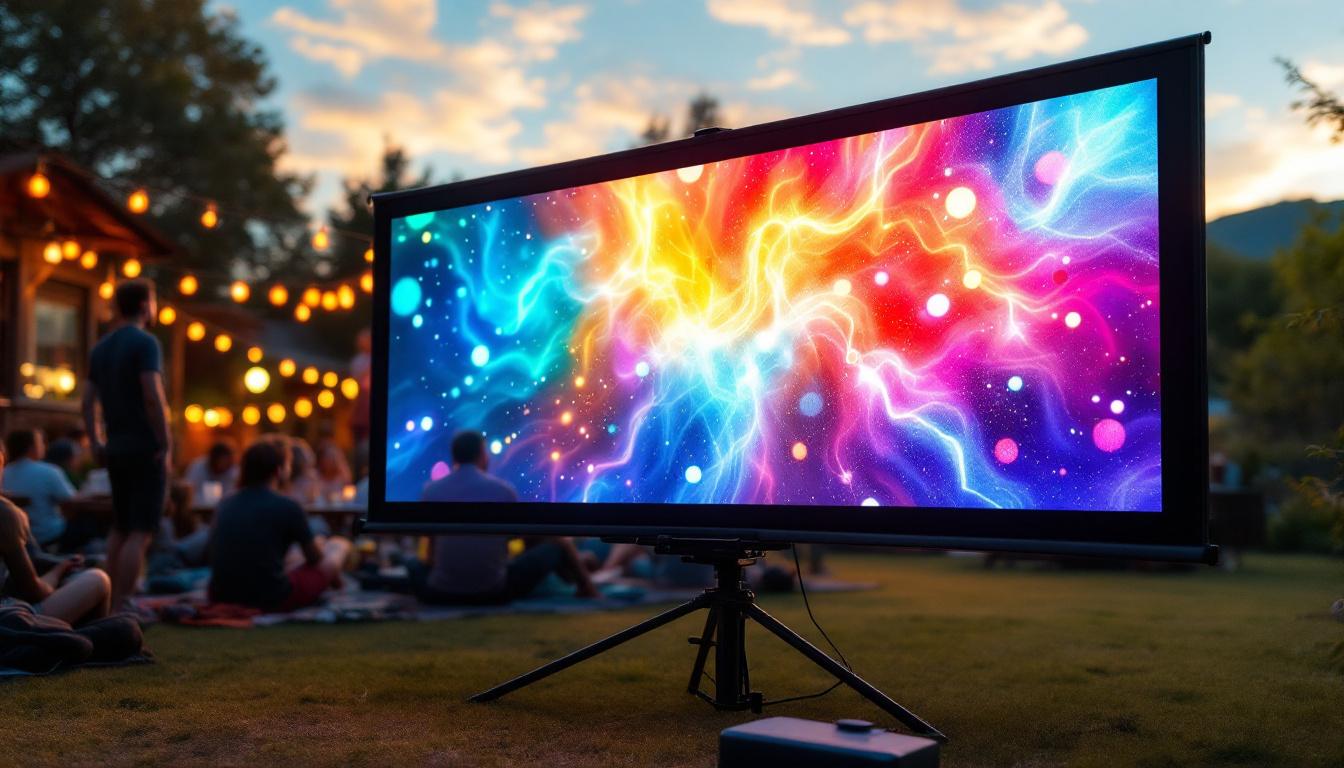
Outdoor entertainment has evolved significantly in recent years, with technology driving new ways to enjoy movies, sports, and presentations under the open sky. One of the most popular setups for outdoor viewing involves a projector screen with a stand, but increasingly, LED displays are becoming a compelling alternative. This article explores the benefits, challenges, and practical considerations of using projector screens outdoors, especially those with stands, and how LED displays compare and complement this experience.
Understanding Outdoor Projector Screens with Stands
Outdoor projector screens with stands provide a portable and flexible solution for creating an open-air cinema experience. Unlike fixed screens, these setups can be assembled and disassembled with relative ease, making them ideal for backyard movie nights, community events, or even professional presentations in outdoor venues.
Typically, these screens come in inflatable, tripod, or frame-supported varieties. Each type offers different advantages depending on the environment and usage. Inflatable screens, for example, are large and visually impressive but require a power source for the blower. Tripod screens are lightweight and easy to transport but may be smaller in size. Frame-supported screens offer a sturdy and taut surface for projection but can be bulkier to carry.
When paired with a projector, these screens can deliver high-quality images, but they also come with challenges such as ambient light interference, weather conditions, and the need for a suitable projector with enough brightness (measured in lumens) to overcome outdoor lighting.
Key Features of Outdoor Projector Screens with Stands
One of the most important features is portability. Many screens fold down into manageable sizes and come with carrying cases. The stand or frame must be stable enough to withstand wind and uneven ground. Materials used for the screen surface are designed to be durable and weather-resistant, often with a matte white finish to enhance image quality.
Another crucial factor is screen size. Outdoor screens typically range from 100 inches to over 200 inches diagonally. The choice depends on the number of viewers and the viewing distance. Larger screens require more powerful projectors to maintain image brightness and clarity.
In addition to size and portability, many outdoor projector screens come equipped with features that enhance the viewing experience. Some models include built-in speakers or compatibility with external audio systems, allowing for a more immersive sound experience that complements the visual display. Furthermore, certain screens are designed with anti-glare technology, which minimizes reflections from ambient light sources, making them suitable for various times of day. This versatility means you can enjoy a movie under the stars or host a daytime presentation without compromising on image quality.
Moreover, the setup process for these screens has been simplified in recent years. Many screens now feature quick-release mechanisms or color-coded poles that make assembly intuitive, even for those who may not be particularly handy. Some manufacturers have also introduced screens that can be set up in just a few minutes, allowing you to spend less time on logistics and more time enjoying your event. This ease of use is particularly beneficial for spontaneous gatherings or events where time is of the essence.
The Rise of LED Displays in Outdoor Settings
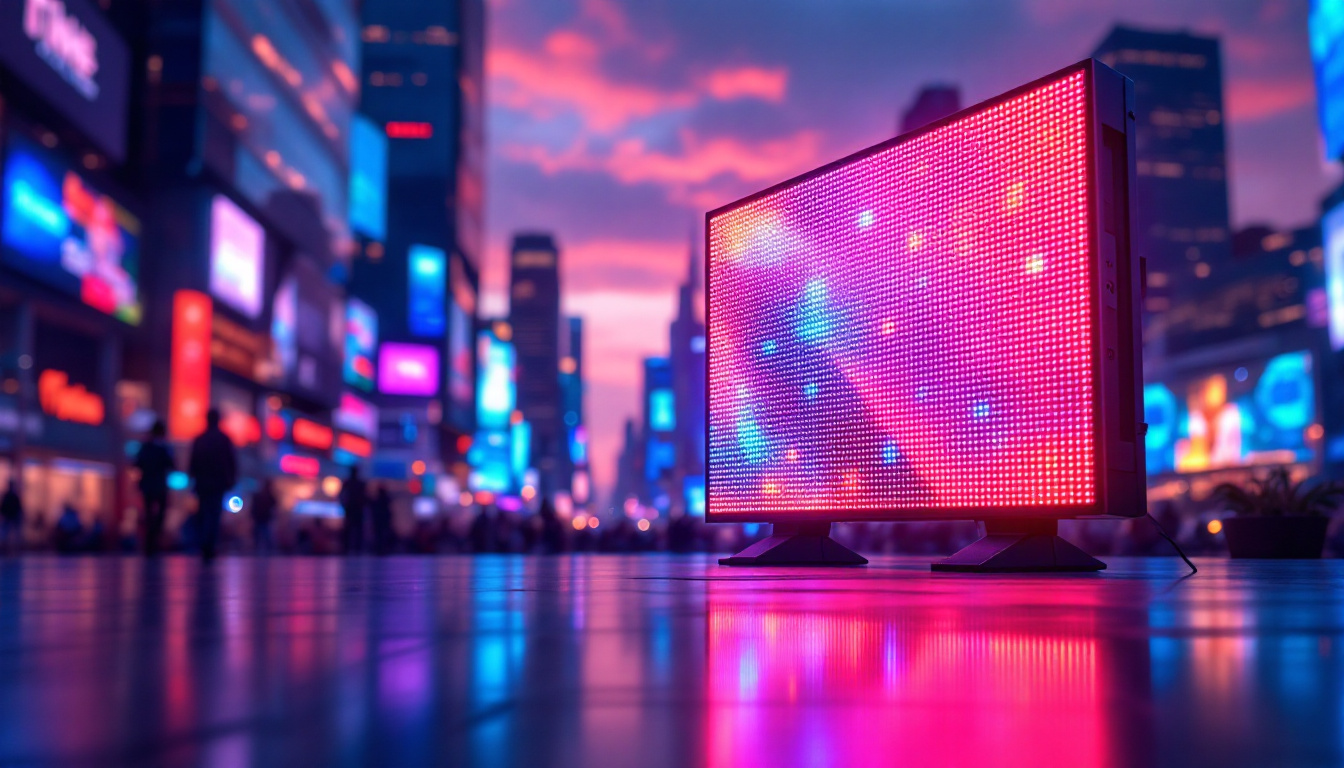
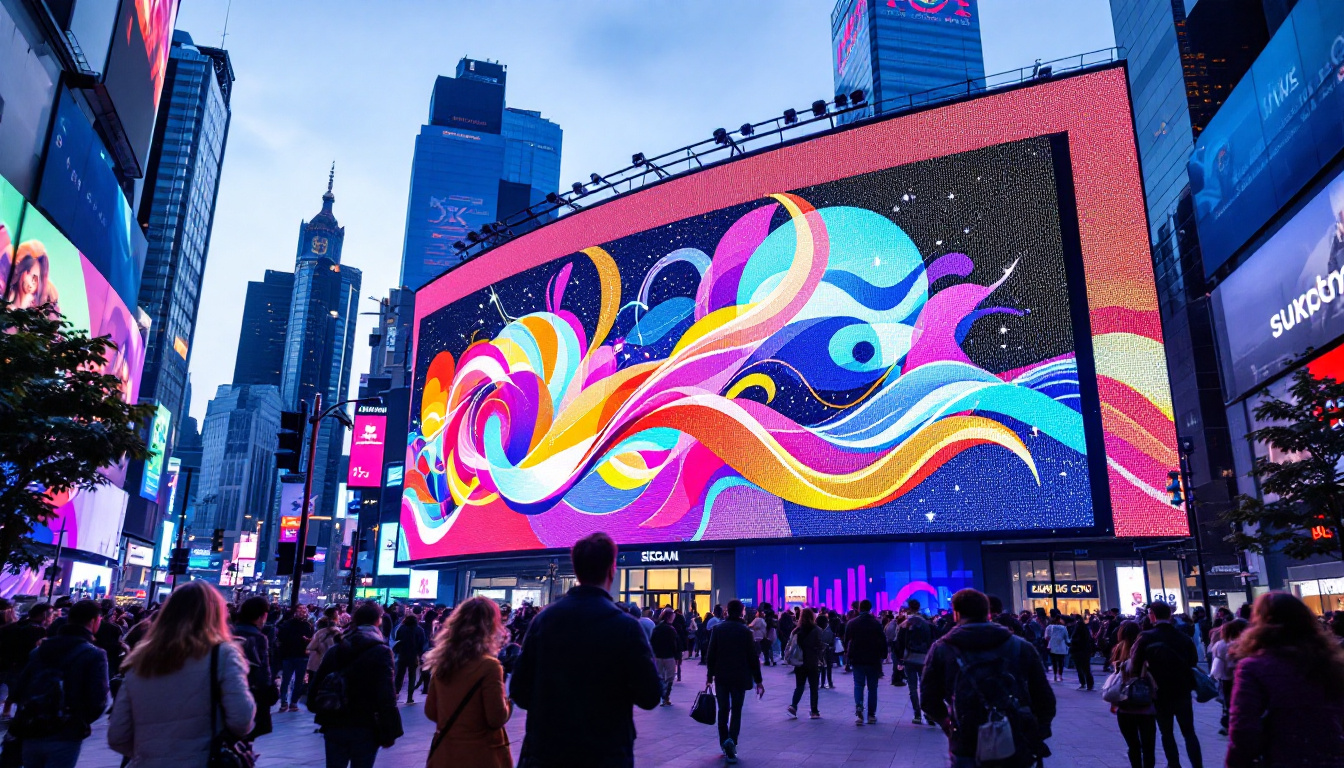
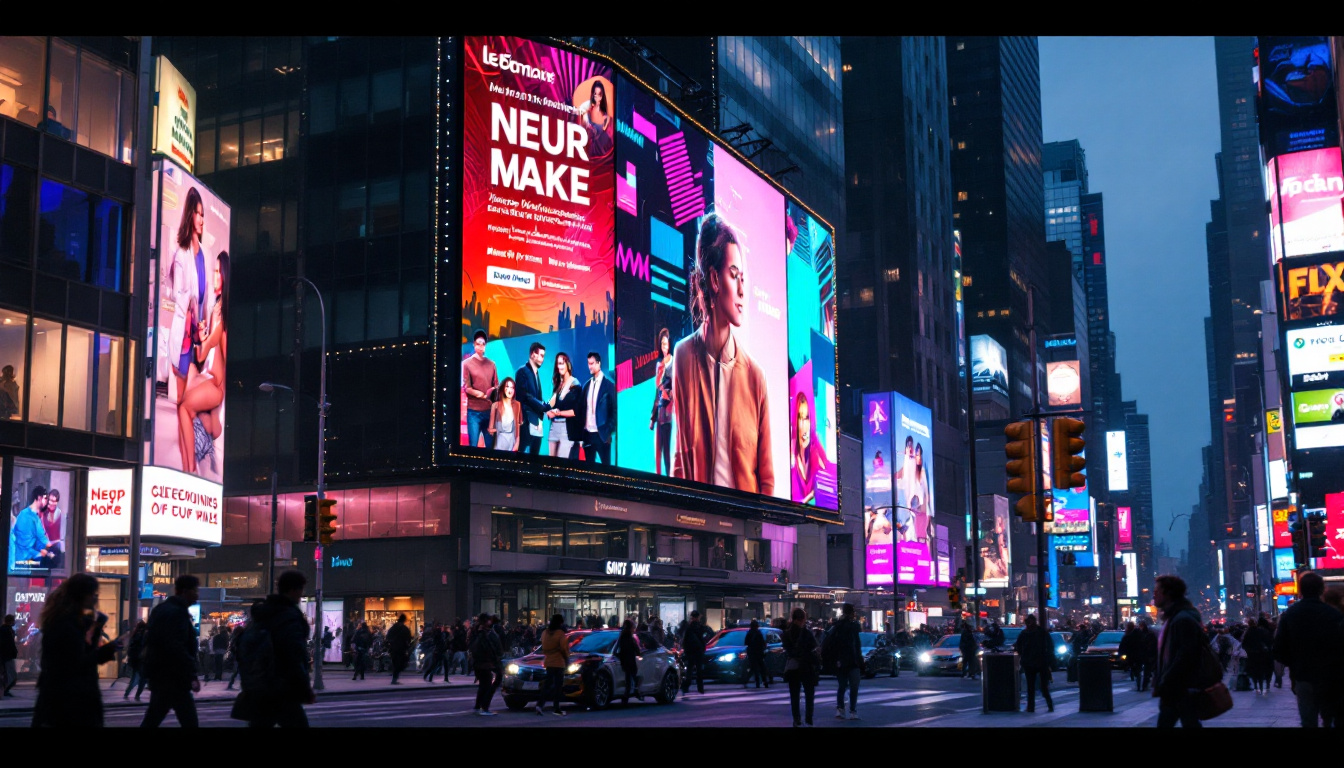
While projector screens have long been the go-to for outdoor viewing, LED display technology has surged in popularity due to its brightness, durability, and image quality. LED displays consist of an array of light-emitting diodes that create vibrant images visible even in daylight, a significant advantage over traditional projection.
Modern outdoor LED displays are designed to be weatherproof, with high ingress protection (IP) ratings that ensure resistance to dust and water. This makes them suitable for permanent installations as well as temporary setups for events and advertising.
Advantages of LED Displays Over Projector Screens
Brightness is the most notable advantage. Outdoor LED displays can reach brightness levels of 5,000 to 10,000 nits or more, allowing clear visibility even in direct sunlight. In contrast, most projectors struggle to compete with ambient light, requiring dusk or nighttime conditions for optimal viewing.
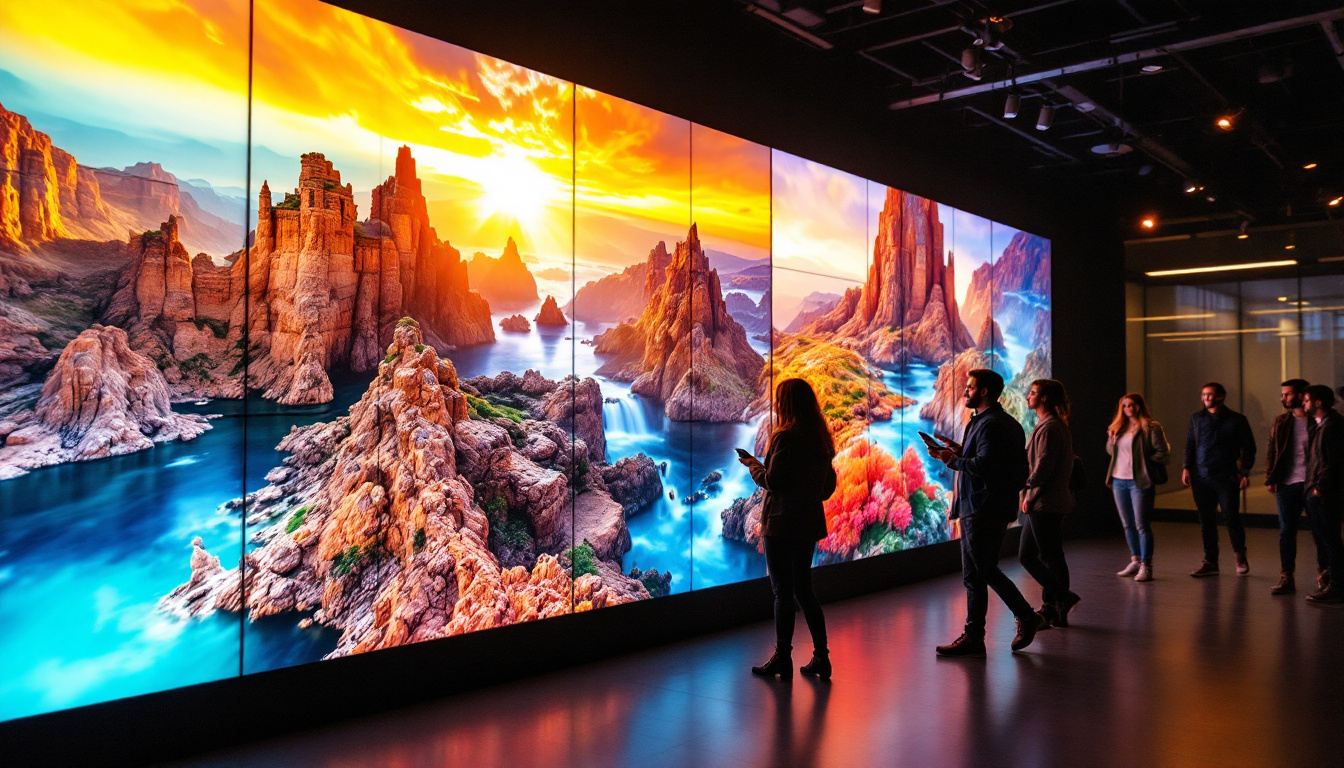
LED displays also offer superior color accuracy and contrast ratios, providing a more vivid and immersive viewing experience. Their modular design allows for customizable screen sizes and shapes, accommodating unique venue requirements.
Additionally, LED displays do not require external light sources, eliminating issues related to projector lamp life, bulb replacements, and alignment. This translates to lower maintenance and operational costs over time.
Choosing Between an Outdoor Projector Screen with Stand and an LED Display
Deciding whether to invest in an outdoor projector screen with a stand or an LED display depends on several factors, including budget, intended use, environment, and desired image quality.
Budget Considerations
Projector screen setups are generally more affordable upfront. A quality outdoor projector screen with a stand can cost between $200 and $1,000, while a suitable projector might range from $500 to $2,000 depending on brightness and resolution. This makes it accessible for casual users and small events.
In contrast, LED displays are a significant investment. Even small modular LED panels can cost several thousand dollars, with larger configurations reaching tens of thousands. However, the long-term durability and low maintenance can justify the expense for commercial or frequent use.
Environmental and Usage Factors
Projector screens require controlled lighting conditions for the best experience. They work well in the evening or in shaded areas but can be challenging to use during the day. Weather protection is also a concern; screens and projectors must be shielded from rain and wind.
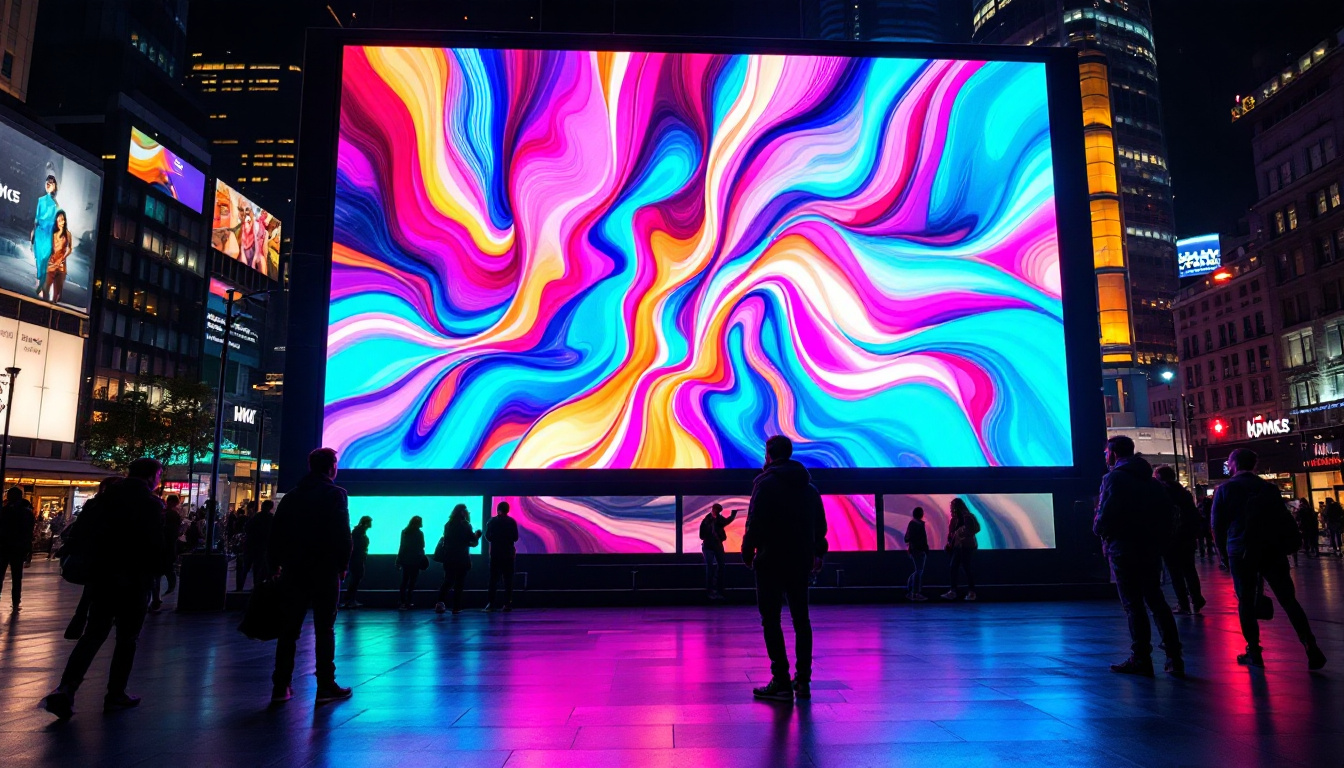
LED displays excel in diverse lighting conditions, including bright daylight, and are built to withstand harsh weather. This makes them ideal for outdoor festivals, sporting events, and permanent installations in public spaces.
Portability and Setup
For users who need to move their setup frequently, projector screens with stands offer greater portability. They can be packed into vehicles and set up by a small team within minutes. LED displays, while increasingly modular, often require more time and technical skill to assemble and calibrate.
Technical Insights: Brightness, Resolution, and Viewing Experience
Understanding the technical aspects of both projector screens and LED displays is crucial for making an informed choice.
Brightness and Ambient Light Handling
Brightness is measured in lumens for projectors and nits for LED displays. Outdoor projectors typically need at least 3,000 lumens to produce a visible image after sunset, with higher lumens required for brighter environments. LED displays, with brightness often exceeding 5,000 nits, can maintain image clarity in full daylight.
Resolution and Image Quality
Resolution impacts the sharpness and detail of the image. Projectors commonly offer Full HD (1920×1080) or 4K resolutions, depending on the model. LED displays can achieve similar or higher resolutions, with the added benefit of consistent brightness across the entire screen.
Color accuracy and contrast are also superior in LED displays, thanks to their direct light emission and advanced calibration capabilities.
Viewing Angles and Distance
Projector screens generally provide wide viewing angles, but image quality can degrade at extreme angles. LED displays maintain consistent brightness and color from almost any angle, enhancing the viewing experience for large audiences.
Viewing distance is another consideration. Larger screens and higher resolutions allow viewers to sit farther away without losing image quality. Outdoor projector screens often require viewers to be within a certain range to avoid pixelation or blurriness, whereas LED displays are more forgiving.
Practical Tips for Setting Up Outdoor Projector Screens with Stands
For those opting for a projector screen setup, proper preparation is key to a successful outdoor viewing experience.
Choosing the Right Location
Select a flat, stable surface free from obstructions. Consider the direction of the sun and ambient light sources to minimize glare. Position the screen so that the projector can be placed at the optimal distance and angle for the best image size and focus.
Ensuring Stability and Safety
Secure the stand firmly using stakes, sandbags, or weights to prevent tipping in windy conditions. Check the screen for any tears or damage before use, and ensure the projector is protected from moisture and overheating.
Optimizing Image Quality
Use a projector with sufficient lumens for your environment. Calibrate the projector’s focus, keystone correction, and color settings. Consider using external speakers or a sound system to enhance audio quality, as built-in projector speakers are often insufficient for outdoor spaces.
The Future of Outdoor Viewing: Integrating Projector Screens and LED Displays
As technology advances, hybrid solutions are emerging that combine the portability of projector screens with the brightness and durability of LED displays. For example, some companies are developing lightweight LED panels that can be quickly assembled on portable frames, merging the best of both worlds.
Moreover, innovations in projector technology, such as laser projectors with higher brightness and longer lifespan, are narrowing the gap between traditional projection and LED displays. This evolution promises more versatile and accessible outdoor viewing options for consumers and professionals alike.
Conclusion
Choosing between an outdoor projector screen with a stand and an LED display depends largely on the specific needs and circumstances of the user. Projector screens offer affordability, portability, and a classic cinematic feel, making them ideal for casual and occasional outdoor use. LED displays, while more costly, provide unmatched brightness, durability, and image quality, suited for commercial use and environments with challenging lighting conditions.
Understanding the technical differences, environmental factors, and practical considerations can help users make informed decisions that enhance their outdoor entertainment experiences. Whether watching a movie under the stars or hosting a large-scale event, the right display technology can transform any outdoor space into a captivating visual venue.
Discover the Future of Outdoor Visuals with LumenMatrix
Ready to elevate your outdoor viewing experience with unparalleled brightness and image quality? LumenMatrix is at the forefront of LED display innovation, offering a diverse range of solutions tailored to your needs. From breathtaking Outdoor LED Wall Displays to dynamic LED Sports Displays and beyond, our mission is to transform your visual communication and engagement. Don’t settle for less; check out LumenMatrix LED Display Solutions today and see the difference cutting-edge technology can make.