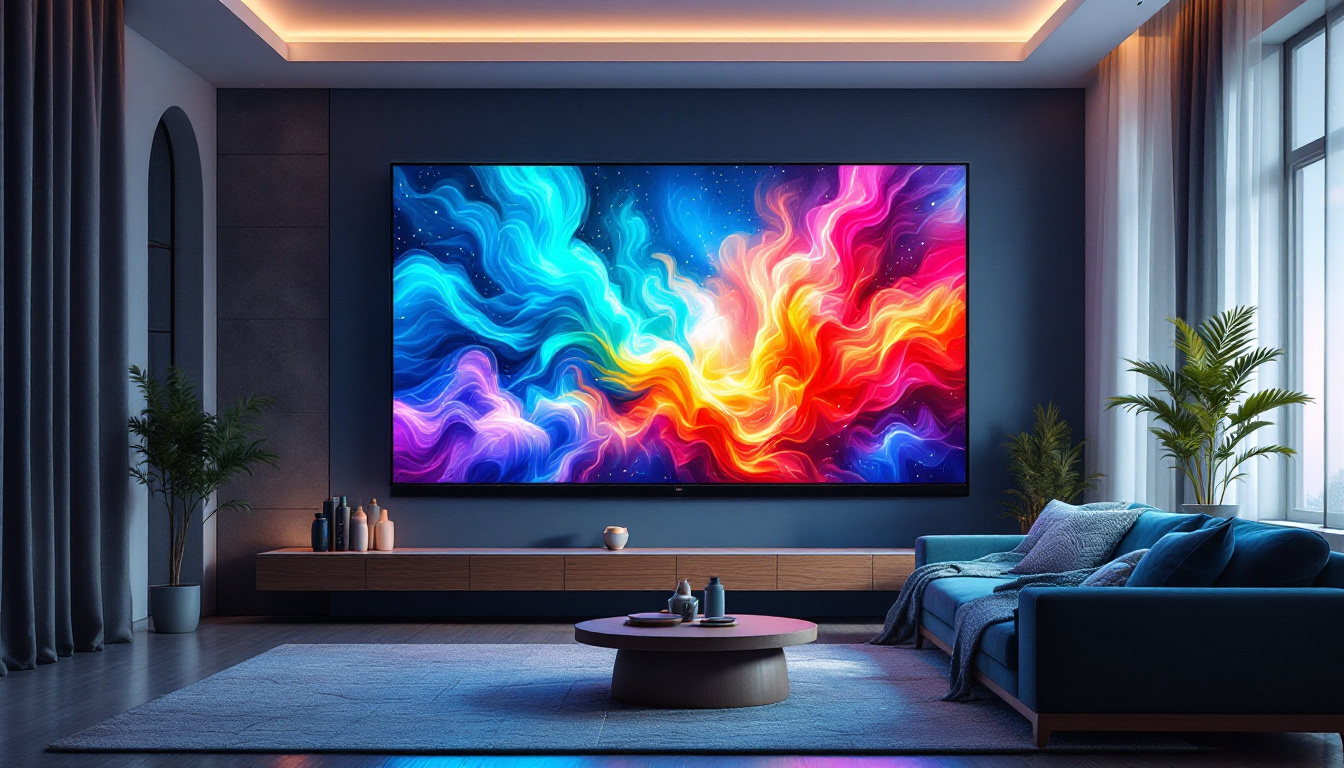
In the ever-evolving world of display technology, understanding the differences between various screen types is essential for making informed purchasing decisions. Plasma and LED displays have long been prominent players in the monitor and television markets, each offering unique advantages and challenges. This article delves into the intricacies of plasma and LED displays, explaining their underlying technologies, performance characteristics, and practical applications, helping consumers and professionals alike choose the right display for their needs.
Understanding Plasma Display Technology
How Plasma Displays Work
Plasma displays operate by utilizing small cells containing electrically charged ionized gases, or plasma. Each cell acts as a tiny fluorescent lamp that emits ultraviolet light when excited by an electric current. This ultraviolet light then excites phosphor coatings inside the cells, producing visible light in red, green, or blue. By controlling the intensity of these cells, plasma displays create images with rich colors and deep blacks.
Unlike LCDs, which rely on backlighting, plasma screens generate their own light at the pixel level, resulting in superior contrast ratios and more vibrant color reproduction. This self-emissive nature allows plasma displays to produce true blacks, as the pixels can be completely turned off, a feature that enhances the viewing experience especially in dark scenes. Moreover, the fast response times of plasma displays minimize motion blur, making them ideal for fast-paced content such as sports and action movies. The technology also supports a wider color gamut, allowing for more accurate and lifelike images that appeal to both casual viewers and professionals alike.
Historical Context and Market Presence
Introduced commercially in the late 1990s, plasma displays quickly gained popularity for large-format televisions and monitors, especially in sizes above 40 inches. Their ability to deliver excellent color accuracy and wide viewing angles made them a favorite among home theater enthusiasts and professionals in graphic design and video production. The technology was particularly celebrated for its performance in dimly lit environments, where the deep blacks and vibrant colors could truly shine, creating an immersive viewing experience that captivated audiences.
However, plasma technology faced challenges in terms of power consumption and screen brightness compared to emerging LED technologies. By the mid-2010s, many manufacturers phased out plasma production, shifting focus to LED and OLED displays. Despite this, plasma remains a significant milestone in display history and is still used in some specialized applications. For instance, certain scientific and medical fields continue to utilize plasma displays for their superior color accuracy and reliability. Additionally, collectors and enthusiasts often seek out older plasma models for their unique characteristics, ensuring that this technology, while no longer mainstream, retains a dedicated following. The legacy of plasma display technology continues to influence the development of modern displays, as manufacturers strive to replicate its strengths in newer formats.
LED Display Technology Explained
What is an LED Display?
LED, or Light Emitting Diode, displays are a type of LCD (Liquid Crystal Display) that use LEDs as a backlight source instead of the traditional cold cathode fluorescent lamps (CCFL). This shift to LED backlighting has revolutionized LCD technology, enabling thinner, more energy-efficient, and brighter screens.
LED displays come in two main backlighting configurations: edge-lit and full-array. Edge-lit LED displays position LEDs along the edges of the screen, allowing for slimmer designs but sometimes uneven brightness. Full-array LED displays distribute LEDs evenly behind the screen, often with local dimming capabilities that improve contrast by dimming specific screen zones.
Types of LED Displays: Direct LED, Edge-lit, and OLED
It is important to distinguish between traditional LED-backlit LCDs and true LED displays such as OLED (Organic Light Emitting Diode). OLED panels are self-emissive like plasma, meaning each pixel emits its own light, providing excellent contrast and color accuracy. However, OLED technology is distinct from standard LED-backlit LCDs and is often marketed separately.
Direct LED (full-array) displays offer better contrast and uniformity than edge-lit variants but are generally thicker and more expensive. Edge-lit LEDs dominate the consumer market due to their slim profiles and lower costs, though they may sacrifice some picture quality.
Comparing Plasma and LED Displays
Picture Quality and Color Accuracy
Plasma displays are renowned for their deep blacks and wide color gamut, delivering images with natural and vibrant colors. Their ability to turn off individual pixels completely results in superior contrast ratios, often exceeding 1,000,000:1 in some models. This makes plasma ideal for dark room viewing and cinematic content.
LED displays, especially those with local dimming, have made significant strides in contrast and color accuracy. High-end LED monitors can achieve excellent HDR (High Dynamic Range) performance, enhancing brightness and color depth. However, edge-lit LED screens may struggle with blooming effects, where bright areas bleed into darker regions.
Viewing Angles and Motion Handling
One of plasma’s standout features is its wide viewing angle, with minimal color shift or brightness loss when viewed off-center. This characteristic makes plasma displays suitable for group viewing environments like living rooms or conference rooms.
LED displays, particularly those using IPS (In-Plane Switching) panels, also offer wide viewing angles but may not match plasma’s uniformity. In terms of motion handling, plasma displays excel due to their fast pixel response times, reducing motion blur in fast-paced content such as sports or gaming. LED displays have improved considerably with technologies like variable refresh rates and motion interpolation but can still exhibit some blur or ghosting.
Energy Consumption and Lifespan
Energy efficiency is a critical consideration in modern electronics. Plasma displays generally consume more power than LED displays, especially when displaying bright images. This higher consumption can lead to increased electricity costs and heat generation.
LED displays are more energy-efficient, benefiting from the low power requirements of LEDs and advanced power management. Additionally, LED panels tend to have longer lifespans, with many rated for 50,000 hours or more, while plasma displays typically offer around 30,000 to 60,000 hours before noticeable degradation.
Burn-in and Image Retention
One of the most significant drawbacks of plasma technology is susceptibility to burn-in, where static images can leave permanent marks on the screen if displayed for extended periods. Although modern plasma displays incorporated various mitigation techniques, burn-in remains a concern for users who display static content frequently.
LED displays, particularly LCD-based ones, are less prone to burn-in, making them more suitable for computer monitors and environments where static images are common. OLED displays, while offering excellent picture quality, face similar burn-in risks as plasma but have improved with newer materials and software solutions.
Practical Applications and Use Cases
When to Choose Plasma Displays
Despite their decline in the consumer market, plasma displays still hold value in specific scenarios. Their superior contrast, color accuracy, and motion handling make them ideal for home theaters, professional video editing, and environments where image quality is paramount.
For users who prioritize cinematic experience and watch content in dimly lit rooms, plasma remains an excellent choice. Additionally, plasma’s wide viewing angles benefit collaborative settings where multiple viewers need consistent picture quality from different positions.
Why LED Displays Dominate the Market
LED displays have become the standard for most consumer electronics due to their versatility, energy efficiency, and affordability. Their slim designs and bright screens suit a wide range of environments, from brightly lit offices to living rooms.
LED monitors are favored for general computing, gaming, and professional work due to their longevity and reduced risk of burn-in. Furthermore, advancements in LED technology, including HDR support and quantum dot enhancements, continue to push the boundaries of image quality.
Emerging Technologies and the Future of Displays
While plasma technology has largely been phased out, the display industry continues to innovate rapidly. OLED and MicroLED technologies are gaining traction, offering the best of both worlds: self-emissive pixels like plasma with improved energy efficiency and lifespan.
MicroLED, in particular, promises exceptional brightness, color accuracy, and durability without the burn-in issues associated with OLED and plasma. As these technologies mature, they are expected to redefine the standards for monitors and televisions in the coming years.
Choosing the Right Display: Key Considerations
Assessing Your Needs and Environment
Choosing between plasma and LED displays—or their modern successors—depends heavily on individual requirements and usage contexts. For users focused on cinematic quality and deep blacks in controlled lighting, plasma or OLED may be preferable. Conversely, for office use, gaming, or bright environments, LED displays offer practical advantages.
Budget and Longevity
Cost considerations also play a significant role. Plasma displays, being less common and out of production, may be more expensive or harder to find. LED displays offer a wide range of price points, from budget models to premium professional-grade monitors.
Longevity and maintenance costs should also be factored in. LED displays generally require less maintenance and have longer lifespans, reducing total cost of ownership over time.
Technical Specifications to Evaluate
When selecting a display, pay attention to key specifications such as resolution, refresh rate, contrast ratio, color gamut coverage (e.g., sRGB, Adobe RGB), and HDR capabilities. These metrics provide insight into the display’s performance and suitability for specific tasks.
Additionally, consider connectivity options, ergonomic features, and compatibility with your existing hardware to ensure seamless integration.
Conclusion
Understanding the differences between plasma and LED display technologies is crucial for making informed decisions in a market flooded with options. Plasma displays, with their rich colors and deep blacks, set a high bar for picture quality but come with trade-offs in energy consumption and burn-in risk. LED displays, meanwhile, offer versatility, efficiency, and a broad range of features that cater to diverse user needs.
As display technology advances, emerging innovations like OLED and MicroLED continue to blur the lines between traditional categories, promising even better performance and durability. By carefully evaluating your specific requirements, environment, and budget, you can select a display that delivers the best experience for your viewing or professional needs.
Discover Cutting-Edge LED Displays with LumenMatrix
Ready to elevate your visual experience with the latest in LED display technology? Look no further than LumenMatrix, a pioneer in crafting LED display modules that transform any space into a dynamic environment. Whether you’re in need of an Indoor LED Wall Display for your business, an Outdoor LED Wall Display for events, or even specialized solutions like Vehicle LED Displays and LED Sports Displays, LumenMatrix has you covered. Embrace the future of visual communication with our innovative LED Poster Displays, Floor LED Displays, and Custom LED solutions. Experience the difference in clarity and engagement with our All-in-One LED and LED Transparent Displays. Check out LumenMatrix LED Display Solutions today and start creating unforgettable visual narratives for your audience.