Touch screens have become an integral part of everyday life, from smartphones and tablets to ATMs and interactive kiosks. Their seamless integration of display and input technology offers users an intuitive way to interact with digital devices. Among the various display technologies, LED displays stand out for their brightness, energy efficiency, and versatility. This article delves into how touch screens work, with a particular focus on LED display technology, exploring the underlying principles, types of touch sensing methods, and the future trends shaping this dynamic field.
The Basics of Touch Screen Technology
At its core, a touch screen combines two fundamental components: a display that shows visual information and a touch-sensitive layer that detects user input. The display can be based on various technologies such as LCD, OLED, or LED, while the touch-sensitive layer can utilize different sensing methods to detect the location and nature of a touch.
Understanding how these components work together is essential to appreciating the sophistication behind the seemingly simple act of tapping, swiping, or pinching on a screen. The touch-sensitive layer must accurately detect touch points without interfering with the display’s clarity or brightness, a balance that has driven innovation in both hardware and software design.
Key Components of a Touch Screen
Every touch screen consists of three main layers:
- Display Panel: The visual output device, which in LED screens, uses light-emitting diodes to produce images.
- Touch Sensor Layer: A transparent layer that detects touch input, often made from materials like indium tin oxide (ITO).
- Controller: The processing unit that interprets signals from the touch sensor and translates them into commands the device can execute.
The integration of these layers must ensure minimal thickness and high durability, especially for mobile devices that undergo frequent handling. In addition to these core components, touch screens often incorporate advanced features such as multi-touch capabilities, which allow users to perform complex gestures like pinch-to-zoom or rotate images. This functionality relies on sophisticated algorithms that can differentiate between multiple simultaneous touches, enhancing user interaction and experience.
Moreover, the evolution of touch screen technology has led to the development of various types of touch sensing methods, including resistive, capacitive, and infrared. Capacitive touch screens, for instance, are widely used in smartphones and tablets due to their responsiveness and ability to detect light touches, while resistive screens are often found in industrial applications where durability and cost-effectiveness are paramount. Each type has its own advantages and disadvantages, influencing the choice of technology based on the intended use and environment.
Understanding LED Displays
LED (Light Emitting Diode) displays have revolutionized the way images are rendered on screens. Unlike traditional LCDs that rely on backlighting, LED displays use tiny diodes that emit their own light, resulting in higher contrast ratios, better color accuracy, and improved energy efficiency.
Types of LED Displays
LED display technology can be broadly categorized into two types:
- Direct LED Displays: These use individual LEDs as pixels or subpixels. This category includes microLED and miniLED displays, which are gaining popularity for their superior brightness and color performance.
- LED-Backlit LCD Displays: In these displays, LEDs serve as the backlight source behind an LCD panel. This approach combines the color filtering capabilities of LCDs with the brightness and efficiency of LEDs.
Each type offers distinct advantages depending on the application, cost considerations, and desired display characteristics.
How LEDs Produce Light
LEDs operate on the principle of electroluminescence, where a semiconductor material emits light when an electric current passes through it. The color of the light depends on the semiconductor’s composition. This direct light emission allows for thinner displays and eliminates the need for bulky backlighting systems.
In microLED displays, millions of microscopic LEDs function as individual pixels, enabling unprecedented brightness levels and energy savings. This technology is poised to compete with OLED displays in the near future, especially in high-end smartphones and televisions.
How Touch Sensing Works on LED Displays
Integrating touch sensing with LED displays requires precise engineering to ensure that the touch layer does not degrade image quality or responsiveness. There are several touch sensing technologies commonly used in conjunction with LED displays, each with unique mechanisms and advantages.
Resistive Touch Technology
Resistive touch screens consist of two flexible layers coated with a resistive material, separated by a thin gap. When pressure is applied, the layers make contact, changing the electrical resistance at that point. The controller measures this change to determine the touch location.
While resistive screens are cost-effective and work well with any input device (finger, stylus, glove), they tend to have lower clarity and are less durable compared to capacitive screens. They are less common in modern LED display devices but still find use in industrial and rugged environments.
Capacitive Touch Technology
Capacitive touch screens are the most prevalent in consumer electronics today. They rely on the electrical properties of the human body to detect touch. A capacitive layer stores an electrical charge, and when a finger touches the screen, it disturbs the electrostatic field, causing a measurable change in capacitance.
There are two main types of capacitive touch sensing:
- Surface Capacitive: A uniform conductive coating detects changes in capacitance when touched.
- Projected Capacitive (P-Cap): Uses a grid of conductive electrodes to detect touch with high precision and supports multi-touch gestures.
Projected capacitive technology is widely used with LED displays due to its high transparency and responsiveness, making it ideal for smartphones, tablets, and interactive displays.
Infrared and Optical Touch Technologies
Infrared (IR) and optical touch systems use light beams or cameras to detect touch points. Infrared touch screens have a grid of IR LEDs and photodetectors around the edges of the display. When a finger interrupts the IR beams, the touch location is calculated.
These technologies offer excellent durability and can detect any input type, but they are generally bulkier and less common in compact LED display devices.
Challenges and Innovations in Touch-Enabled LED Displays
While the combination of touch sensing and LED displays has enabled remarkable user experiences, it also presents several technical challenges. Manufacturers continuously innovate to overcome these hurdles and enhance performance.
Improving Transparency and Sensitivity
The touch sensor layer must be highly transparent to avoid diminishing the brightness and color accuracy of the LED display beneath. Advances in materials science have led to the development of ultra-thin, transparent conductive films that maintain display clarity while providing accurate touch detection.
Moreover, enhancing the sensitivity of touch sensors allows devices to recognize lighter touches and support multi-finger gestures, which are essential for modern user interfaces.
Durability and Environmental Resistance
Touch screens are subject to constant physical interaction, making durability a critical factor. Innovations in protective coatings, such as chemically strengthened glass and oleophobic layers, help resist scratches, smudges, and environmental damage.
Additionally, touch-enabled LED displays designed for outdoor use must withstand varying temperatures, humidity, and exposure to sunlight without performance degradation.
Reducing Power Consumption
Energy efficiency remains a priority, especially for battery-powered devices. LED displays are inherently more efficient than traditional backlit LCDs, but integrating touch sensors can increase power draw. Manufacturers optimize controller algorithms and sensor designs to minimize energy consumption while maintaining responsiveness.
Applications of Touch-Enabled LED Displays
The versatility of touch-enabled LED displays has led to their adoption across a wide range of industries and use cases.
Consumer Electronics
Smartphones, tablets, laptops, and wearable devices predominantly use projected capacitive touch screens combined with LED or OLED displays. The demand for high-resolution, vibrant displays with responsive touch has driven rapid advancements in this sector.
Automotive and Industrial Interfaces
Modern vehicles increasingly feature touch-enabled LED displays for infotainment systems, navigation, and climate control. These displays must be robust, glare-resistant, and operable under various lighting conditions.
Similarly, industrial machinery and control panels benefit from touch screens that can withstand harsh environments while providing intuitive user interfaces.
Public Information and Retail
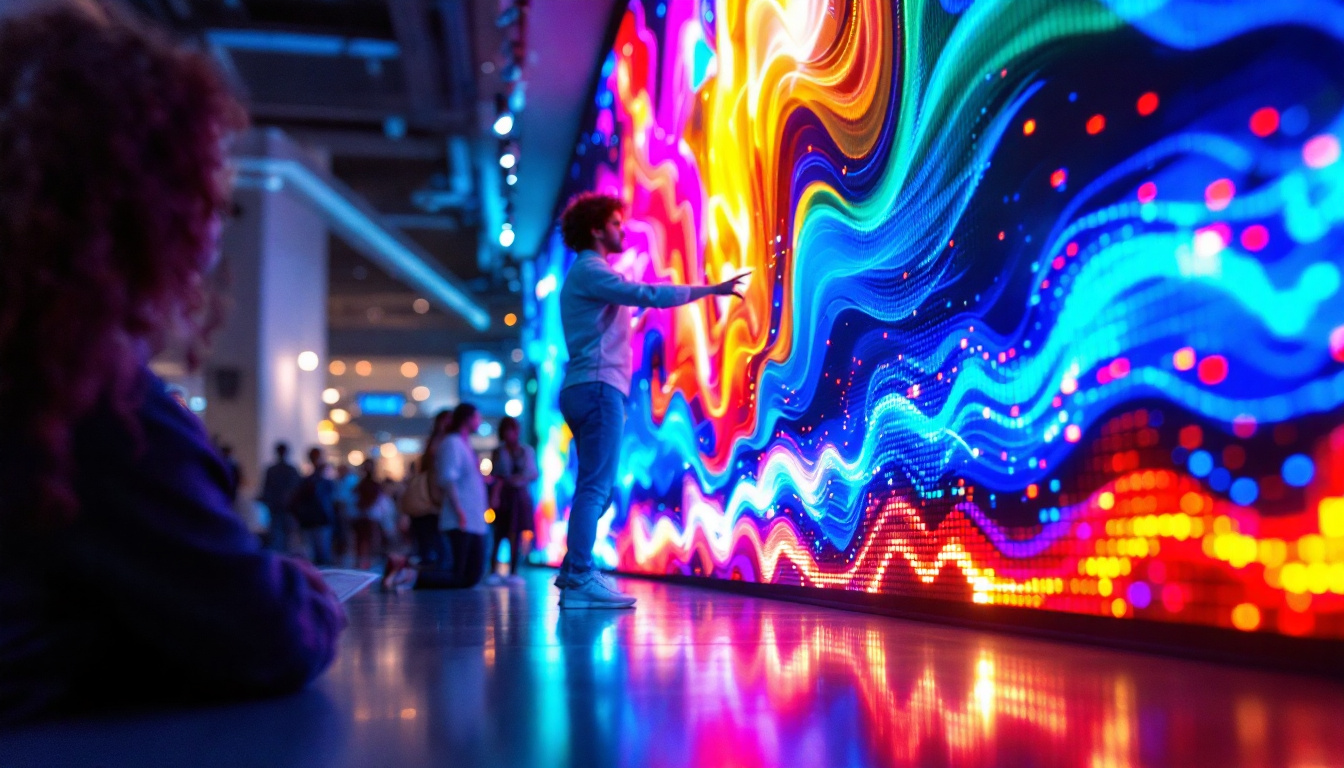
Interactive kiosks, digital signage, and point-of-sale terminals utilize large-format touch-enabled LED displays to engage customers and streamline transactions. The combination of bright, vivid displays with responsive touch input enhances user experience and accessibility.
The Future of Touch Screens and LED Displays
As technology evolves, the integration of touch sensing with LED displays is poised for exciting developments that will further transform how users interact with digital content.
MicroLED and Foldable Displays
MicroLED technology promises displays with exceptional brightness, color accuracy, and energy efficiency, all while enabling thinner and more flexible form factors. When combined with advanced touch sensing, these displays could lead to foldable or rollable devices with seamless touch experiences.
Haptic Feedback and Beyond
Future touch screens may incorporate sophisticated haptic feedback mechanisms that simulate textures and physical sensations, enhancing user interaction. Coupled with LED displays, this could create immersive interfaces for gaming, education, and virtual reality applications.
AI-Driven Touch Interfaces
Artificial intelligence and machine learning are beginning to play a role in interpreting touch inputs more intelligently, distinguishing between intentional gestures and accidental touches, and adapting interfaces dynamically to user behavior.
Conclusion
Touch screens powered by LED display technology have reshaped the way humans interact with digital devices, offering intuitive, vibrant, and responsive interfaces. Understanding the interplay between LED displays and various touch sensing technologies reveals the complexity and innovation behind everyday devices.
As advancements continue in materials, sensor design, and display technology, touch-enabled LED screens will become even more capable, durable, and energy-efficient, opening new possibilities across consumer electronics, automotive, industrial, and public domains. Staying informed about these technologies is essential for professionals, enthusiasts, and consumers who rely on touch screens in their daily lives.
Explore Cutting-Edge LED Display Solutions
Ready to experience the future of touch screens and LED display technology? Discover how LumenMatrix is pioneering advancements that redefine visual engagement. From captivating Indoor LED Walls to dynamic Outdoor LED Displays, and from versatile Vehicle LED Displays to innovative LED Posters, our solutions are designed to make your brand stand out. Embrace the power of LED Sports Displays, interactive Floor LEDs, and the transparency of Custom LED Displays. With LumenMatrix, your message is not just seen—it’s felt. Check out LumenMatrix LED Display Solutions today and transform your visual communication.