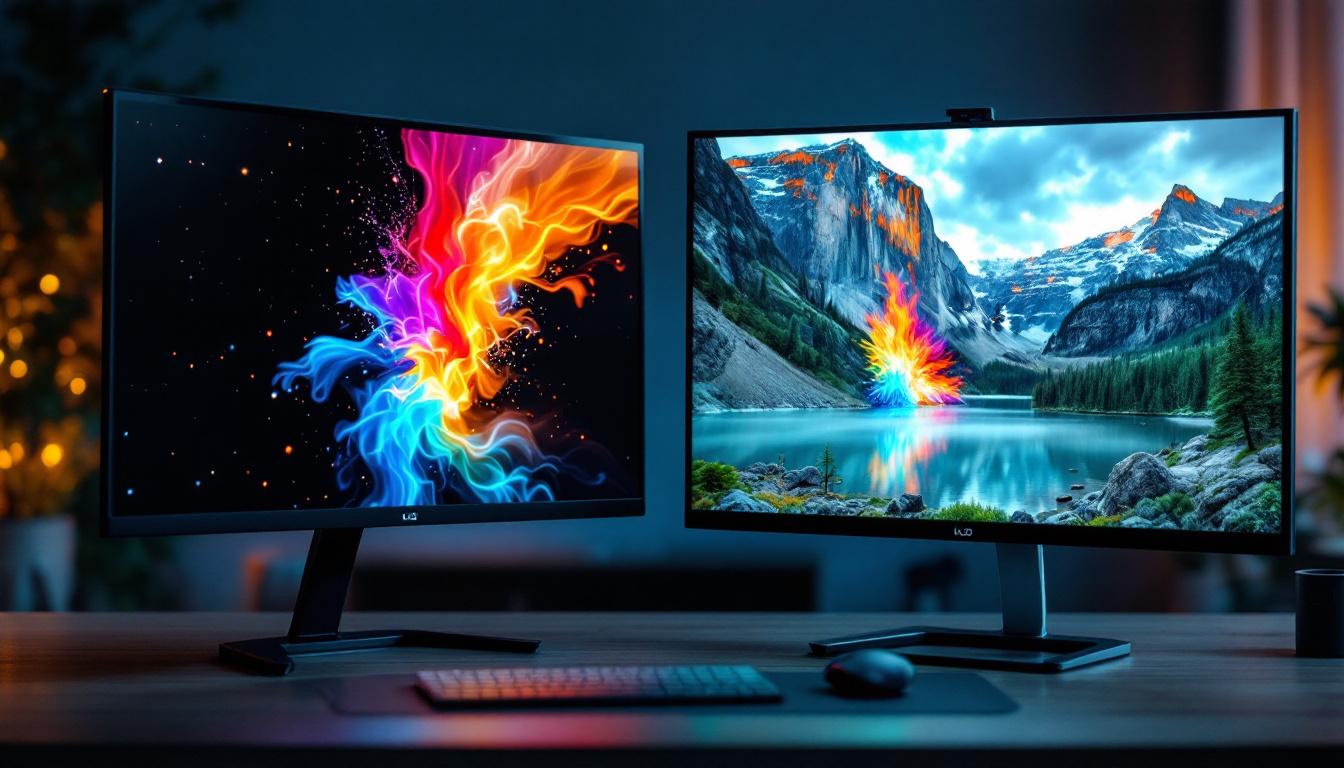
High Dynamic Range (HDR) video technology has revolutionized the way visual content is presented, offering viewers richer colors, deeper contrasts, and an overall more immersive experience. At the heart of many HDR video presentations lies the LED display, a technology that has evolved significantly over recent years to meet the demanding requirements of HDR content. This article delves into the intricacies of HDR video and LED displays, explaining how they work together to deliver stunning visuals and what makes LED displays particularly suited for HDR content.
Understanding HDR Video: What Sets It Apart?
HDR video is fundamentally about enhancing the range of luminance and color that a display can reproduce. Unlike Standard Dynamic Range (SDR) video, which is limited in its brightness and color gamut, HDR expands these limits to provide a more lifelike and vivid picture.
In practical terms, HDR video can display brighter whites, darker blacks, and a wider spectrum of colors. This means scenes with bright sunlight, neon lights, or shadowy environments appear more realistic and detailed. HDR standards such as HDR10, Dolby Vision, and HLG (Hybrid Log-Gamma) define the technical specifications for mastering and displaying HDR content.
The importance of HDR video is underscored by its growing adoption across streaming platforms, broadcast television, and gaming. According to a 2023 report from the Consumer Technology Association, over 70% of new televisions sold worldwide support HDR, reflecting the increasing demand for enhanced visual quality.
One of the most significant advancements in HDR technology is its ability to adapt to various viewing environments. For instance, Dolby Vision employs dynamic metadata, which allows the brightness and color settings to adjust scene by scene, ensuring optimal viewing regardless of the lighting conditions in the room. This adaptability makes HDR not just a technical upgrade, but a transformative experience for viewers, allowing them to immerse themselves in the content like never before.
Moreover, the impact of HDR extends beyond just the home viewing experience. In the realm of professional filmmaking, HDR has become a crucial tool for cinematographers who wish to convey their artistic vision with precision. The ability to capture and display a broader range of colors and luminance allows filmmakers to create more nuanced and emotionally resonant scenes. As a result, many blockbuster films and high-end television series are now being produced with HDR in mind, pushing the boundaries of storytelling through visual artistry.
The Role of LED Displays in HDR Video
What Is an LED Display?
LED displays use light-emitting diodes (LEDs) as the source of illumination for the pixels on the screen. Unlike traditional LCDs that rely on fluorescent backlights, LED displays employ arrays of LEDs, which can be arranged in various configurations such as edge-lit or direct-lit (full-array). This fundamental difference allows for better control over brightness and contrast.
In the context of HDR, LED displays are often paired with LCD panels to create LED-backlit LCD screens. However, advancements have led to the development of MicroLED and OLED technologies, which push the boundaries of HDR performance even further. Still, conventional LED-backlit LCDs remain the most widespread and cost-effective option for HDR video.
Brightness and Contrast: Key HDR Metrics
One of the most critical aspects of HDR video is the display’s ability to achieve high brightness levels and deep contrast ratios. LED displays excel in this area due to their efficient light emission and precise dimming capabilities.
For HDR content, peak brightness levels of 600 to 1,000 nits or more are desirable to accurately reproduce highlights such as sunlight reflections or explosions in movies. Many LED displays today can reach these brightness levels, making them well-suited for HDR playback. Additionally, local dimming technology allows LED displays to selectively dim parts of the screen, enhancing contrast by making blacks appear deeper without sacrificing bright areas.
Color Gamut and Accuracy
HDR video requires displays to cover a wide color gamut, often the DCI-P3 or Rec. 2020 color spaces, which are significantly broader than the traditional sRGB gamut. LED displays, especially those with quantum dot enhancement (QLED), can achieve impressive color accuracy and wide color gamuts.
Quantum dot technology involves a layer of semiconductor nanocrystals that emit precise wavelengths of light when illuminated by LEDs. This results in purer colors and higher color volume, which are essential for faithfully reproducing HDR content. Many premium LED TVs and monitors now incorporate quantum dots to meet HDR standards.
Types of LED Displays for HDR Video
Edge-Lit LED Displays
Edge-lit LED displays position LEDs along the edges of the screen, using light guides to distribute illumination evenly across the panel. This design allows for thinner screens and lower production costs but can limit the effectiveness of local dimming, which is crucial for HDR contrast.
While edge-lit displays can support HDR, their contrast performance is generally inferior to full-array LED displays, especially in scenes with mixed bright and dark areas.
Full-Array Local Dimming (FALD) LED Displays
Full-array LED displays feature a grid of LEDs directly behind the LCD panel, enabling precise local dimming zones. This technology significantly improves contrast by dimming dark areas without affecting bright regions, which is vital for HDR video.
FALD displays can achieve higher peak brightness and deeper blacks, resulting in a more impactful HDR experience. Many mid-range to high-end HDR TVs use this technology to balance cost and performance effectively.
Quantum Dot LED (QLED) Displays
QLED displays enhance traditional LED-backlit LCDs with a quantum dot layer, improving brightness, color gamut, and energy efficiency. Samsung popularized this technology, branding it as QLED, which has become a benchmark for HDR-capable LED displays.
QLED displays can reach peak brightness levels exceeding 1,500 nits and cover over 90% of the DCI-P3 color space, making them ideal for HDR video playback. Their vibrant colors and strong contrast make them a popular choice among consumers seeking premium HDR performance.
MicroLED Displays
MicroLED technology represents the next frontier in LED displays for HDR video. Unlike traditional LED-backlit LCDs, MicroLEDs consist of millions of microscopic LEDs that act as individual pixels, emitting their own light without the need for a backlight.
This self-emissive property allows MicroLED displays to achieve perfect blacks, infinite contrast ratios, and extremely high brightness levels, all crucial for the most demanding HDR content. Although currently expensive and limited in availability, MicroLED is poised to compete directly with OLED in the premium HDR display market.
Challenges and Considerations for HDR on LED Displays
Managing Blooming and Halo Effects
One common challenge with LED displays, especially those using local dimming, is the “blooming” or halo effect. This occurs when bright objects on a dark background cause light to bleed into surrounding dark areas, reducing the perceived contrast and sharpness.
While local dimming improves contrast, the size and number of dimming zones determine how well a display can control blooming. High-end LED displays with thousands of dimming zones minimize this effect, but budget models with fewer zones may struggle, impacting HDR quality.
HDR Metadata and Compatibility
HDR video relies on metadata to communicate brightness and color information from the content source to the display. Standards like HDR10 use static metadata, while Dolby Vision employs dynamic metadata that adjusts scene-by-scene or frame-by-frame.
LED displays must support these HDR formats and correctly interpret metadata to deliver the intended visual experience. Compatibility issues can lead to washed-out images or incorrect brightness levels, so consumers should verify HDR format support when purchasing HDR-capable LED displays.
Viewing Environment Impact
The ambient lighting conditions in the viewing environment play a significant role in the perceived quality of HDR video on LED displays. Bright rooms can diminish the impact of HDR highlights and reduce contrast perception.
LED displays with higher peak brightness and anti-reflective coatings perform better in well-lit environments. Conversely, OLED displays, while excellent in dark rooms, may not be as visible under strong ambient light. Understanding these factors helps consumers choose the right display technology for their needs.
The Future of HDR and LED Display Technology
The HDR ecosystem continues to evolve rapidly, with advancements in both content creation and display hardware. On the LED display front, innovations such as mini-LED backlighting, which uses thousands of tiny LEDs for more precise local dimming, are becoming mainstream. This technology bridges the gap between traditional LED and MicroLED displays, offering improved HDR performance at a more accessible price point.
Moreover, ongoing improvements in quantum dot materials and processing techniques promise even wider color gamuts and higher brightness levels. Combined with smarter HDR tone mapping algorithms and AI-driven image processing, these advances will further enhance the HDR viewing experience on LED displays.
As streaming services and content producers continue to prioritize HDR, the demand for capable LED displays will only grow. Consumers can expect more affordable, high-performance HDR LED displays that bring cinematic-quality visuals into homes worldwide.
Conclusion
HDR video has set a new standard for visual quality, demanding displays that can deliver exceptional brightness, contrast, and color accuracy. LED displays, particularly those with full-array local dimming and quantum dot enhancements, have proven to be highly effective platforms for HDR content. While challenges like blooming and format compatibility remain, ongoing technological innovations are steadily overcoming these hurdles.
For anyone looking to experience HDR video at its best, understanding the capabilities and limitations of LED displays is crucial. Whether for home entertainment, professional use, or digital signage, LED technology continues to play a pivotal role in bringing HDR’s vibrant and immersive visuals to life.
Discover the Future of HDR with LumenMatrix
Ready to elevate your visual experience with the latest in HDR LED display technology? Look no further than LumenMatrix, a pioneer in creating displays that bring your content to life with unparalleled brightness, contrast, and color accuracy. From engaging Indoor LED Wall Displays to dynamic Outdoor LED Wall solutions and beyond, LumenMatrix offers a comprehensive range of products designed to transform your visual communication. Embrace the future of HDR and check out LumenMatrix LED Display Solutions today to see how we can enhance your brand visibility and captivate your audience.