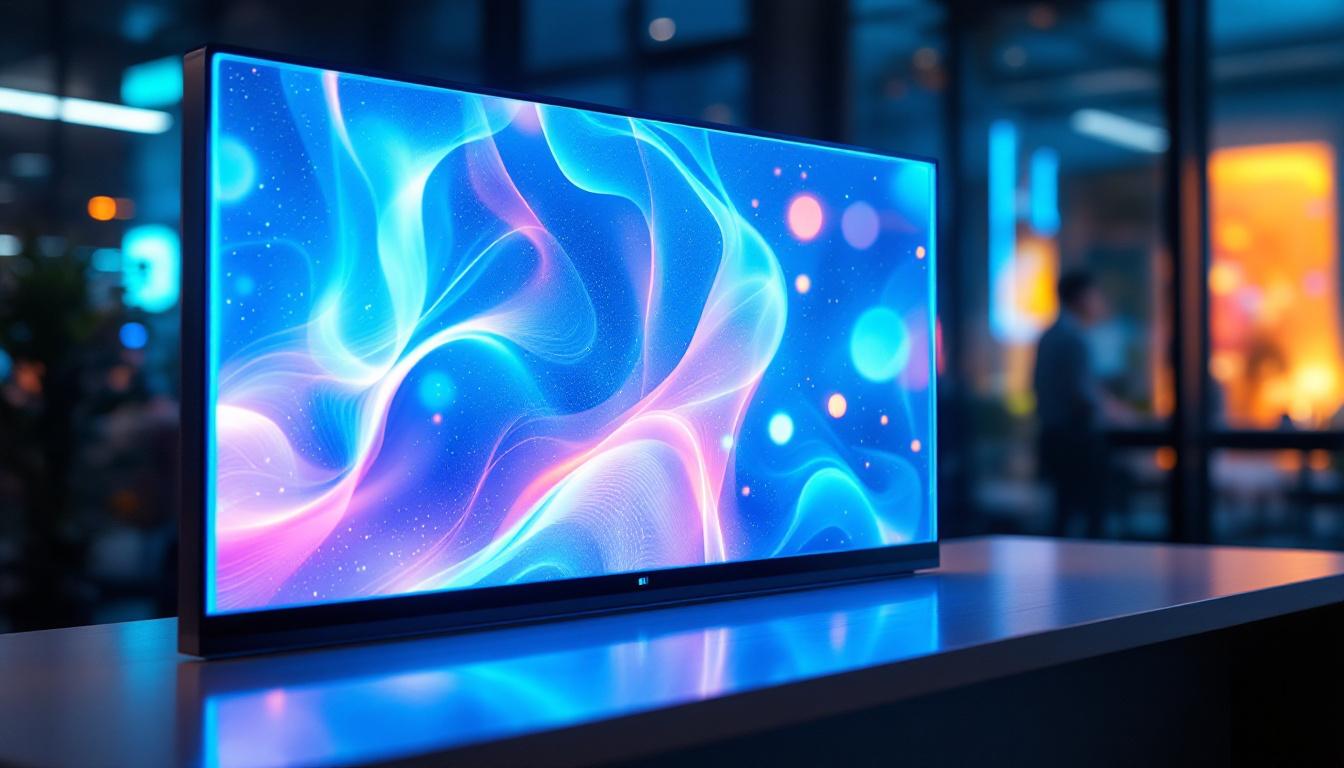
Transparent OLED Displays: LED Display Explained
In recent years, display technology has undergone remarkable advancements, reshaping how we interact with digital content in everyday life. Among these innovations, transparent OLED displays have emerged as a fascinating development, blending cutting-edge technology with sleek design to create new possibilities across industries. This article explores what transparent OLED displays are, how they work, their advantages and challenges, and their potential applications in the near future.
Understanding Transparent OLED Technology
What is an OLED Display?
OLED stands for Organic Light Emitting Diode, a display technology that uses organic compounds to emit light when an electric current passes through them. Unlike traditional LCDs, OLEDs do not require a backlight, allowing for thinner, more flexible displays with superior contrast and color accuracy. Each pixel in an OLED display is self-illuminating, which means black levels are truly black, enhancing the overall viewing experience.
OLED technology has been widely adopted in smartphones, televisions, and wearable devices due to its vibrant colors, energy efficiency, and fast response times. However, the transparent variant of OLED takes these benefits a step further by enabling see-through displays that can overlay digital content onto real-world environments. This capability opens up exciting possibilities for augmented reality applications, where users can interact with digital elements while still being aware of their physical surroundings. Imagine walking through a museum where information about exhibits is displayed directly on the glass case, or navigating through a smart city where traffic information is projected onto the windshield of your car.
How Do Transparent OLED Displays Work?
Transparent OLED displays operate by integrating transparent electrodes and organic layers that emit light while allowing light to pass through the display. This means that when the display is off, it appears almost like a clear glass panel, and when it is on, images and videos can be viewed without obstructing the background.
The key components include a transparent cathode and anode, organic emissive layers, and a transparent substrate usually made from glass or plastic. The organic layers emit light in response to electrical signals, and because the electrodes are transparent, the display maintains a high level of transparency. This unique design not only enhances aesthetic appeal but also contributes to energy efficiency, as the display can adjust its brightness based on ambient light conditions. As a result, transparent OLED displays can be utilized in various settings, from retail environments showcasing products with interactive advertisements to architectural applications where windows can double as digital canvases, displaying art or information without compromising natural light.
Current transparent OLED displays typically achieve transparency levels between 40% and 60%, balancing brightness and clarity. This transparency allows for innovative applications where digital content is seamlessly integrated into physical spaces. For instance, in automotive design, transparent OLED screens can be incorporated into vehicle dashboards, providing drivers with essential information while maintaining visibility of the road ahead. Furthermore, as the technology continues to evolve, researchers are exploring ways to improve the transparency and efficiency of these displays, potentially leading to even more groundbreaking uses in everyday life.
Advantages of Transparent OLED Displays
Design Flexibility and Aesthetic Appeal
One of the most significant advantages of transparent OLED displays is their ability to combine functionality with sleek design. Because these displays are thin and transparent, they can be incorporated into windows, glass partitions, and other surfaces without compromising aesthetics.
This design flexibility opens up new possibilities for architects, interior designers, and advertisers who want to integrate digital content into environments without bulky hardware or opaque screens. For example, retail stores can use transparent OLEDs on storefront windows to showcase promotions while still allowing customers to see inside.
Enhanced User Interaction and Immersive Experiences
Transparent OLED displays enable unique interactive experiences by overlaying digital information onto real-world objects. This capability is particularly valuable in augmented reality (AR) applications, where digital content enhances the physical environment rather than replacing it.
For instance, museums and exhibitions can use transparent OLED panels to provide contextual information about artifacts without obstructing the view. Similarly, automotive manufacturers are exploring transparent OLEDs for heads-up displays (HUDs) that project navigation and safety information directly onto the windshield.
Energy Efficiency and Image Quality
Because OLED pixels emit light individually, transparent OLED displays consume less power than traditional LCDs with backlights, especially when displaying darker images. This energy efficiency is critical for battery-powered devices and large-scale installations where power consumption is a concern.
Additionally, OLED technology offers superior contrast ratios and faster refresh rates compared to LCDs, resulting in crisp images and smooth motion. These qualities make transparent OLEDs well-suited for dynamic content such as videos and animations.
Challenges and Limitations of Transparent OLED Displays
Brightness and Transparency Trade-offs
One of the primary technical challenges in transparent OLED displays is balancing brightness with transparency. Increasing brightness often reduces transparency, and vice versa. This trade-off limits the display’s visibility in brightly lit environments, such as outdoor settings or areas with strong ambient light.
Manufacturers are actively researching materials and design improvements to enhance brightness without sacrificing transparency. However, current transparent OLEDs are generally better suited for indoor or controlled lighting conditions.
Durability and Lifespan Concerns
OLED materials are organic and can degrade over time when exposed to oxygen and moisture. Transparent OLED displays, with their thin and delicate layers, are particularly sensitive to environmental factors, which can affect their lifespan and reliability.
Encapsulation techniques and improved manufacturing processes have extended OLED lifespan significantly, but transparent OLEDs still tend to have shorter operational lives compared to conventional LCDs or non-transparent OLEDs. This factor is important for commercial applications where long-term durability is essential.
Cost and Production Complexity
Transparent OLED displays are more complex to manufacture than traditional displays due to the need for transparent electrodes and substrates, as well as precise layering of organic materials. This complexity results in higher production costs, which currently limits widespread adoption.
As production techniques mature and economies of scale improve, prices are expected to decrease. Still, the cost remains a significant consideration for businesses evaluating transparent OLED solutions.
Applications of Transparent OLED Displays
Retail and Advertising
Transparent OLED displays are revolutionizing retail environments by enabling captivating window displays and interactive product showcases. Retailers can display dynamic advertisements, product information, or promotional content directly on glass surfaces without blocking the view inside the store.
For example, luxury brands have employed transparent OLEDs in flagship stores to create futuristic shopping experiences that attract and engage customers. This technology also allows for real-time updates and targeted messaging, enhancing marketing effectiveness.
Automotive Industry
The automotive sector is leveraging transparent OLED technology to develop advanced heads-up displays (HUDs) and smart windows. Transparent OLED HUDs project critical driving information such as speed, navigation, and hazard alerts onto the windshield, allowing drivers to keep their eyes on the road.
Moreover, smart windows equipped with transparent OLEDs can adjust transparency or display entertainment and information content, improving passenger experience. These innovations contribute to safer and more connected vehicles.
Architecture and Interior Design
In architecture, transparent OLED displays offer new ways to integrate technology into building design. Glass walls and partitions can become dynamic information panels or artistic displays without sacrificing natural light or openness.
Office environments benefit from transparent OLEDs by creating privacy screens that can switch between transparent and opaque modes, or by displaying meeting information and schedules on conference room glass walls. This multifunctionality enhances space utilization and aesthetics.
Healthcare and Medical Devices
Transparent OLED displays are also finding applications in healthcare, where they can be integrated into medical equipment and wearable devices. For example, transparent displays can overlay vital signs and diagnostic information on surgical instruments or patient monitors, improving workflow and situational awareness.
Wearable health devices with transparent OLEDs offer unobtrusive displays that blend seamlessly with clothing or skin, enhancing comfort and user experience.
The Future of Transparent OLED Displays
Technological Innovations on the Horizon
Research and development efforts continue to push the boundaries of transparent OLED technology. Advances in materials science, such as the development of more robust organic compounds and improved transparent electrodes, promise to enhance brightness, durability, and transparency.
Additionally, hybrid technologies combining OLED with micro-LED or quantum dots are being explored to overcome current limitations. These innovations could lead to displays with higher efficiency, better color accuracy, and greater scalability.
Integration with Augmented Reality and Smart Environments
As augmented reality (AR) gains traction, transparent OLED displays are poised to play a crucial role in creating immersive and interactive environments. Transparent displays embedded in glasses, windows, and public spaces will enable seamless blending of digital and physical worlds.
Smart cities and connected buildings may incorporate transparent OLEDs to provide real-time information, navigation assistance, and interactive advertising, transforming how people experience urban spaces.
Market Growth and Adoption Trends
The global transparent OLED market is expected to grow significantly over the next decade. According to market research reports, the compound annual growth rate (CAGR) is projected to exceed 20% between 2024 and 2030, driven by increasing demand in automotive, retail, and consumer electronics sectors.
As production costs decrease and technology matures, transparent OLED displays are likely to become more accessible, enabling broader adoption across various industries and consumer applications.
Conclusion
Transparent OLED displays represent a transformative advancement in display technology, offering unique advantages in design, interactivity, and image quality. While challenges related to brightness, durability, and cost remain, ongoing innovations are steadily addressing these issues.
The versatility of transparent OLEDs opens exciting opportunities across retail, automotive, architecture, healthcare, and beyond. As these displays become more prevalent, they will redefine how digital content integrates with the physical world, enhancing experiences and enabling new forms of communication.
For businesses and consumers alike, understanding transparent OLED technology is essential to appreciating its potential impact and preparing for a future where digital and transparent displays become ubiquitous.
Discover the Future of Display Technology with LumenMatrix
Ready to embrace the future of digital displays and enhance your brand’s visibility? LumenMatrix is at the forefront of LED display innovation, offering a wide array of solutions that cater to your unique needs. From transparent OLED displays that merge the digital with the physical, to dynamic indoor and outdoor LED walls that captivate any audience, our technology is designed to make a lasting impression. Experience the revolution in visual communication with our LED Poster Displays, Vehicle LED Displays, and more. Check out LumenMatrix LED Display Solutions today and step into a world where your message shines with unmatched clarity and impact.