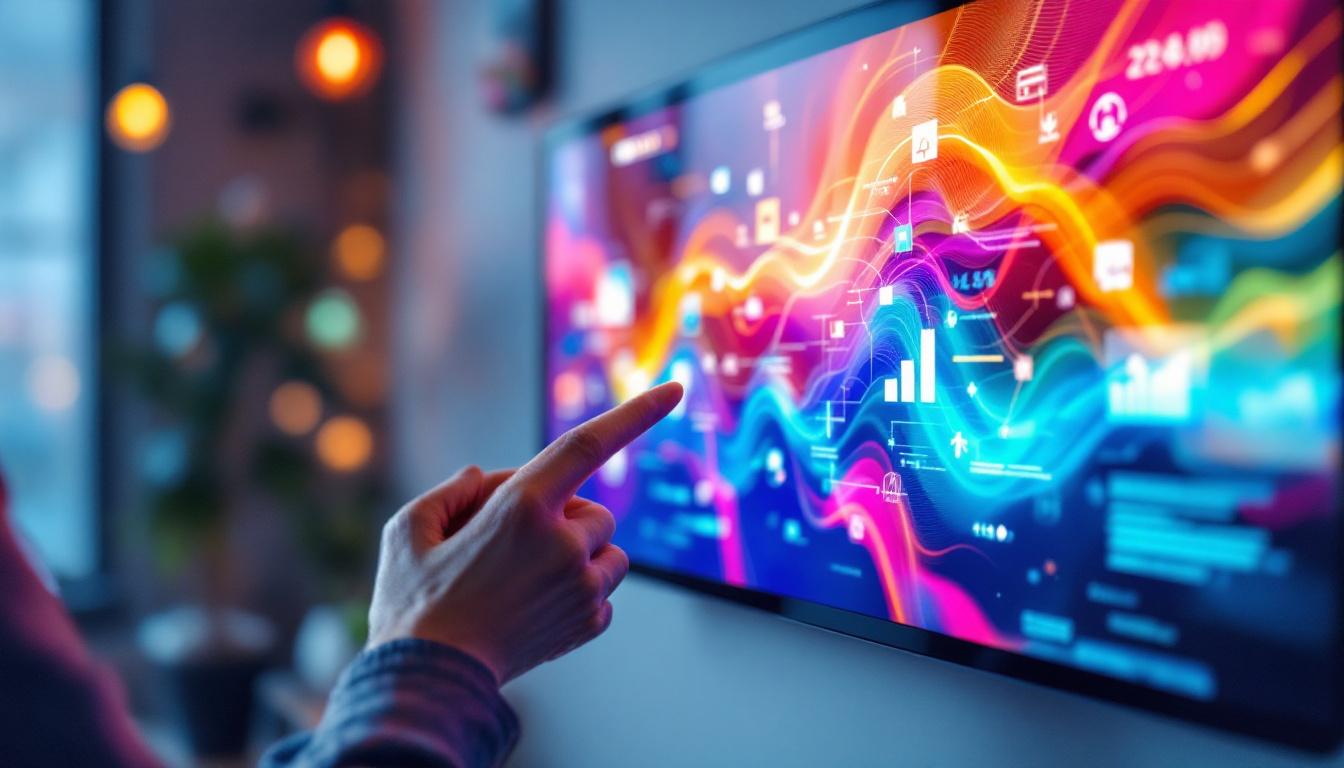
In today’s rapidly evolving digital landscape, display technology plays a pivotal role in how we interact with devices, consume content, and perform professional tasks. Among the many advancements, 4K touch screen LED displays stand out for their exceptional clarity, responsiveness, and versatility. This article delves into the intricacies of 4K touch screen displays, explaining the underlying LED technology, their benefits, and practical applications across various industries.
Understanding 4K Resolution and Its Impact on Display Quality
What Does 4K Mean?
4K resolution, often referred to as Ultra High Definition (UHD), typically denotes a display resolution of 3840 x 2160 pixels. This is four times the pixel count of Full HD (1920 x 1080), resulting in significantly sharper images and finer details. The term “4K” originates from the approximate horizontal pixel count of 4000 pixels, which is a substantial leap over previous standards.
The increased pixel density allows for crisper visuals, making 4K displays ideal for applications where image clarity is paramount. For instance, graphic designers, video editors, and medical professionals benefit immensely from the enhanced detail, as it enables precise work and better visualization. This level of detail is not just a luxury; it can be crucial in fields such as architecture and engineering, where the ability to view intricate designs and schematics in high resolution can lead to better decision-making and fewer errors in the final product.
Why Resolution Matters for Touch Screen Displays
In touch screen displays, resolution influences not only the visual experience but also the accuracy and responsiveness of touch inputs. Higher resolution means more pixels per inch (PPI), which translates to smoother graphics and more precise touch detection. This is especially important in devices used for detailed tasks such as digital drawing, interactive kiosks, or point-of-sale systems.
Moreover, a 4K touch screen display can show more content simultaneously without sacrificing clarity, which enhances productivity by reducing the need for excessive scrolling or zooming. This makes it a favored choice in professional environments where multitasking and detailed data visualization are common. In educational settings, for example, 4K displays can facilitate immersive learning experiences, allowing students to engage with high-definition images and videos that bring complex subjects to life. The ability to interact with such rich content can significantly enhance comprehension and retention, making 4K touch screens a valuable asset in modern classrooms.
The Role of LED Technology in Modern Displays
What Is an LED Display?
LED stands for Light Emitting Diode, a semiconductor device that emits light when an electric current passes through it. In the context of displays, LED technology is used to illuminate the screen, either as a backlight in LCD panels or as individual pixels in true LED displays.
Most 4K touch screen displays utilize LED-backlit LCD technology, where an array of LEDs provides consistent and bright backlighting behind a liquid crystal display panel. This combination offers excellent color accuracy, brightness, and energy efficiency compared to older CCFL (cold cathode fluorescent lamp) backlighting methods.
Advantages of LED Displays
LED displays bring several benefits that contribute to their widespread adoption:
- Energy Efficiency: LEDs consume less power than traditional lighting, reducing energy costs and environmental impact.
- Brightness and Contrast: LED backlighting enables higher brightness levels and better contrast ratios, enhancing image quality even in brightly lit environments.
- Thin and Lightweight Design: LEDs allow for slimmer display profiles, making devices more portable and aesthetically pleasing.
- Longevity: LEDs have a longer lifespan compared to older lighting technologies, ensuring durability and reliability over time.
These advantages make LED technology a natural fit for 4K touch screen displays, where clarity, responsiveness, and durability are critical.
How Touch Screen Technology Integrates with 4K LED Displays
Types of Touch Screen Technologies
There are several types of touch screen technologies commonly integrated with 4K LED displays, each with unique characteristics:
- Capacitive Touch: This technology uses the electrical properties of the human body to detect touch. It is highly responsive and supports multi-touch gestures, making it ideal for smartphones, tablets, and interactive kiosks.
- Resistive Touch: Consisting of multiple layers, resistive touch screens detect pressure applied to the surface. While less sensitive than capacitive screens, they work with any input device, including styluses and gloves.
- Infrared Touch: Infrared touch screens use an array of IR LEDs and photodetectors around the screen edges to detect touch without requiring a physical overlay, preserving image clarity.
Among these, capacitive touch technology is most commonly paired with 4K LED displays due to its precision and ability to handle complex gestures, enhancing user interaction.
Challenges and Solutions in Combining 4K Resolution with Touch Sensitivity
Integrating touch functionality into a 4K LED display presents unique challenges. Higher resolution means more pixels and a thinner display panel, which can complicate touch sensor integration without affecting display quality or touch responsiveness.
Manufacturers address these challenges through innovations such as:
- Advanced Sensor Materials: Using ultra-thin, transparent conductive materials like indium tin oxide (ITO) ensures touch sensors do not degrade image quality.
- Optimized Controller Chips: High-performance touch controllers process input signals rapidly, maintaining low latency and high accuracy.
- Calibration Techniques: Precise calibration aligns touch input with the high-resolution display, ensuring that touch points correspond exactly to the displayed content.
These advancements ensure that 4K touch screen LED displays provide a seamless and intuitive user experience.
Applications and Benefits of 4K Touch Screen LED Displays
Professional and Creative Workspaces
In fields such as graphic design, video production, and architecture, the combination of 4K resolution and touch interactivity revolutionizes workflows. Designers can work directly on the screen with styluses or fingers, manipulating high-resolution images and 3D models with precision.
For example, digital artists benefit from the ability to zoom into ultra-fine details without losing clarity, while architects can interact with detailed blueprints and renderings. The touch interface accelerates tasks that traditionally required a mouse or keyboard, fostering a more natural and efficient creative process.
Education and Training
Educational institutions increasingly adopt 4K touch screen LED displays in classrooms and training centers. These displays support interactive lessons, allowing students to engage directly with content through touch. High resolution ensures that detailed diagrams, videos, and text are clearly visible to all participants.
Furthermore, touch-enabled displays facilitate collaborative learning environments where multiple users can interact simultaneously, enhancing engagement and retention. In professional training scenarios, such as medical or technical fields, the ability to manipulate detailed simulations on a 4K touch screen is invaluable.
Retail and Public Spaces
Retailers and public venues leverage 4K touch screen LED displays for interactive kiosks, digital signage, and self-service terminals. The vibrant colors and sharp images attract attention, while touch functionality enables customers to browse products, access information, or complete transactions with ease.
For instance, in a retail setting, a 4K touch screen kiosk can display high-definition product images and videos, allowing customers to explore options in detail. This enhances the shopping experience and can drive sales by providing an engaging, informative interface.
Healthcare and Medical Imaging
Healthcare professionals rely on high-resolution displays for diagnostic imaging, surgical planning, and patient monitoring. 4K touch screen LED displays provide the clarity needed to interpret complex medical images such as MRIs, CT scans, and X-rays.
The touch interface allows doctors to zoom, annotate, and manipulate images directly on the screen, improving diagnostic accuracy and communication with patients and colleagues. The combination of resolution and interactivity supports better clinical outcomes and streamlined workflows.
Future Trends in 4K Touch Screen LED Display Technology
Integration with Artificial Intelligence and IoT
As artificial intelligence (AI) and the Internet of Things (IoT) continue to evolve, 4K touch screen LED displays are becoming smarter and more connected. AI-powered interfaces can anticipate user needs, provide personalized content, and enhance accessibility through voice and gesture recognition.
IoT integration allows these displays to serve as hubs for smart environments, controlling lighting, climate, and security systems through intuitive touch interfaces. This convergence of technologies is transforming displays from passive screens into active participants in daily life and work.
Advancements in Display Materials and Manufacturing
Emerging materials such as microLED and quantum dot technology promise to push the boundaries of brightness, color accuracy, and energy efficiency beyond current LED-backlit LCDs. MicroLED displays, for example, use microscopic LEDs as individual pixels, offering superior contrast ratios and faster response times.
Manufacturing innovations are also enabling larger, more flexible, and curved 4K touch screen displays, expanding possibilities for design and application. These advancements will continue to enhance user experience and open new markets for touch screen technology.
Enhanced Durability and Environmental Considerations
Future 4K touch screen LED displays are expected to incorporate more robust materials to withstand heavy use in public and industrial environments. Features such as anti-glare coatings, water resistance, and shatterproof glass will become standard, ensuring longevity and reliability.
Additionally, sustainability is becoming a priority, with manufacturers focusing on recyclable components, reduced hazardous substances, and energy-efficient designs to minimize environmental impact.
Conclusion
4K touch screen LED displays represent a significant leap forward in display technology, combining ultra-high resolution with responsive touch capabilities and the advantages of LED illumination. Their applications span a wide range of industries, from creative and professional workspaces to education, retail, and healthcare.
Understanding the technology behind these displays—such as the importance of 4K resolution, the role of LED backlighting, and the integration of touch sensors—provides valuable insight into why they have become essential tools in modern digital environments. As technology continues to advance, 4K touch screen LED displays will evolve, offering even greater performance, interactivity, and sustainability.
For businesses and individuals seeking cutting-edge display solutions, investing in 4K touch screen LED technology promises enhanced productivity, improved user experience, and a future-ready platform for innovation.
Discover LumenMatrix’s Advanced LED Display Solutions
Ready to elevate your visual experience with the latest in 4K touch screen LED technology? LumenMatrix, a pioneer in LED display innovation, offers a comprehensive range of solutions tailored to meet your needs. From captivating Indoor and Outdoor LED Wall Displays to dynamic Vehicle and Sports LED Displays, and even specialized options like Floor and Custom LED Displays, LumenMatrix is committed to transforming your visual communication. Embrace the future of digital signage with our All-in-One and Transparent LED Displays, designed to engage and captivate your audience. Check out LumenMatrix LED Display Solutions today and see how we can help you make a powerful impact with clarity and precision.