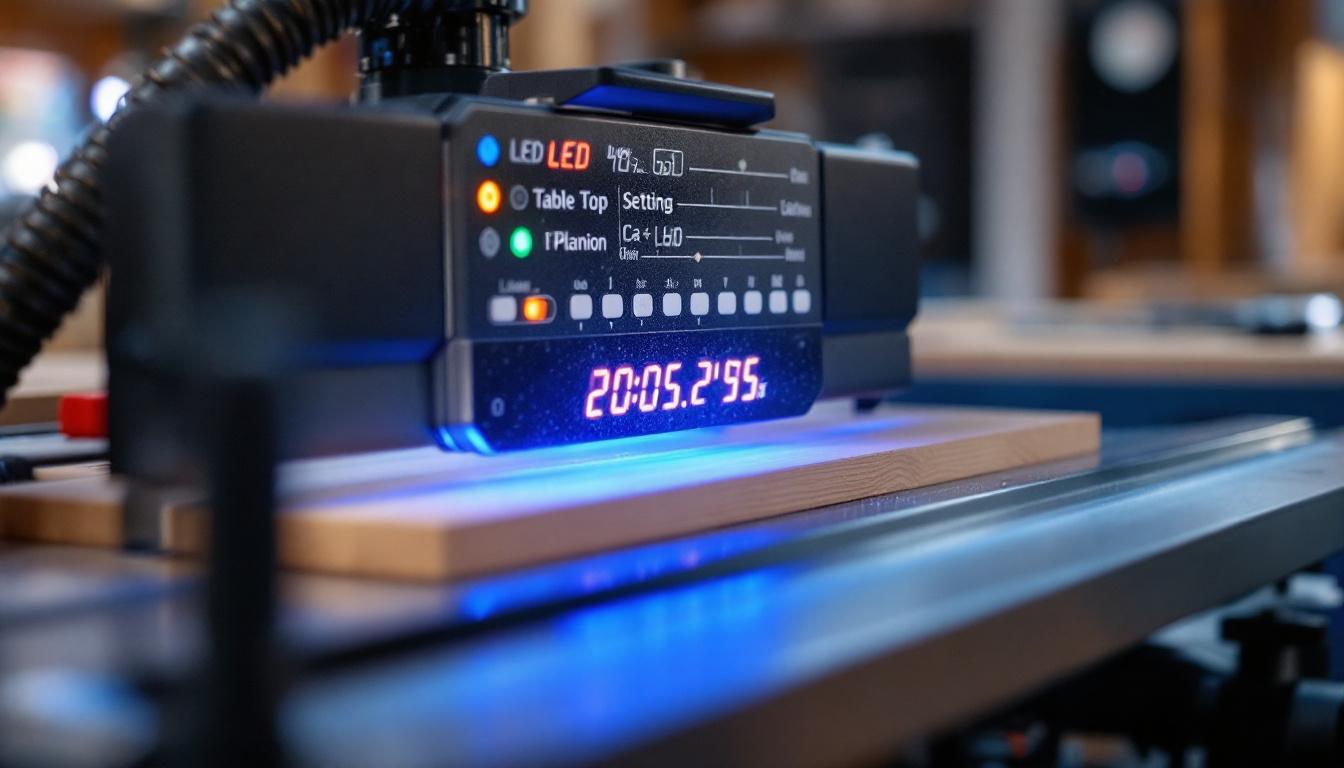
Table top planers have become an indispensable tool in woodworking, offering precision and efficiency in smoothing and resizing lumber. One of the most significant advancements in these machines is the integration of LED displays, which enhance usability and accuracy. This article delves into the role of LED displays on table top planers, explaining their functions, benefits, and how they contribute to better woodworking outcomes.
Understanding the Basics of Table Top Planers
Before exploring the LED display, it’s important to understand what a table top planer is and how it functions. A table top planer is a compact woodworking machine designed to trim boards to a consistent thickness and create flat surfaces. Unlike larger stationary planers, these portable units are ideal for hobbyists and professionals who need a balance of precision and mobility.
Typically, a table top planer consists of a cutting head with rotating blades, an adjustable table or bed where the wood passes through, and a motor that powers the blades. The operator adjusts the cutting depth to achieve the desired thickness, feeding the wood through the machine to shave off layers.
One of the key advantages of using a table top planer is its ability to produce smooth, even surfaces on rough lumber. This is especially beneficial for woodworkers who often work with reclaimed or rough-sawn wood, which can be unpredictable in thickness and texture. By running the wood through the planer, users can eliminate imperfections, knots, and inconsistencies, resulting in a more manageable and aesthetically pleasing material for their projects. Additionally, the portability of table top planers allows users to easily transport them to different job sites, making them a versatile tool in any woodworker’s arsenal.
Moreover, modern table top planers often come equipped with advanced features such as adjustable feed rates and dust collection systems. These enhancements not only improve the efficiency of the planing process but also contribute to a cleaner workspace. For instance, a built-in dust port can be connected to a shop vacuum, minimizing the mess created during operation. Furthermore, some models include digital displays that provide precise measurements and settings, allowing for greater control over the planing process. This level of precision is particularly important for projects that require exact dimensions, such as cabinetry or furniture making, where even the slightest deviation can lead to complications down the line.
The Evolution of Displays on Table Top Planers
Historically, table top planers relied on manual dials and analog gauges to set and monitor cutting depth. While functional, these methods were prone to human error and lacked precision, especially for fine woodworking projects requiring exact measurements. Craftsmen often had to rely on their experience and intuition, which, while valuable, could lead to inconsistencies in the final product. The limitations of these early systems highlighted the need for innovation in woodworking technology, prompting manufacturers to explore more advanced solutions that could enhance both accuracy and user experience.
With technological advancements, manufacturers began incorporating digital readouts, and more recently, LED displays. These displays provide real-time, clear, and precise information about the planer’s settings, making the operation more intuitive and accurate. The shift to digital interfaces not only improved the user experience but also allowed for more complex features, such as memory settings for frequently used depths and the ability to save custom profiles for different types of wood. Additionally, some modern planers now include integrated sensors that automatically adjust the cutting depth based on the material being processed, further streamlining the workflow and reducing the risk of errors.
Furthermore, the introduction of touchscreen interfaces has revolutionized how users interact with their planers. These advanced displays allow for easy navigation through settings and features, enabling woodworkers to make adjustments with a simple tap or swipe. Many of these touchscreens are designed to be user-friendly, featuring icons and graphics that are easy to understand, even for those who may not be technologically savvy. This evolution in display technology not only enhances precision but also encourages a new generation of woodworkers to embrace the craft, as the tools become more accessible and less intimidating.
What Does the LED Display Show?
The LED display on a table top planer typically provides several key pieces of information to the user. Understanding these readouts is crucial for maximizing the tool’s effectiveness.
Cutting Depth
The primary function of the LED display is to show the current cutting depth. This measurement indicates how much material will be removed from the wood in a single pass. The depth is usually displayed in millimeters or inches, depending on the region and model.
Having a digital readout of cutting depth allows for precise adjustments, reducing the likelihood of removing too much material or causing damage to the workpiece.
Thickness Measurement
Some advanced table top planers feature thickness measurement on the LED display. This shows the actual thickness of the board as it exits the planer. Real-time thickness feedback helps users ensure that the final product meets exact specifications without needing separate measuring tools.
Speed and Feed Rate Indicators
While less common on entry-level models, higher-end planers may include indicators for feed rate or cutter head speed. These parameters influence the quality of the finish and the efficiency of the operation. The LED display can help users optimize settings based on the type of wood and desired finish.
Error and Maintenance Alerts
Modern LED displays often incorporate alert systems to notify users of issues such as blade wear, motor overload, or safety interlock status. These alerts improve safety and maintenance by providing timely information, helping to prevent damage to the machine or injury to the operator.
Benefits of LED Displays on Table Top Planers
The integration of LED displays into table top planers offers numerous benefits that enhance both the user experience and the quality of work.
Improved Precision and Accuracy
Digital LED readouts eliminate guesswork associated with manual dials. Users can set exact cutting depths and monitor thickness with confidence, resulting in more consistent and professional results. This is particularly important in fine woodworking, cabinetry, and furniture making where tolerances are tight.
Enhanced User Convenience
LED displays are easy to read, even in low-light conditions, and provide immediate feedback. This reduces the need for additional measuring tools and speeds up the workflow. For beginners, the clear digital interface simplifies the learning curve, making the planer more accessible.
Increased Safety
By providing alerts and status updates, LED displays contribute to safer operation. Operators are informed promptly about potential issues, allowing them to take corrective actions before problems escalate. This proactive approach reduces downtime and extends the lifespan of the machine.
Time Efficiency
With precise digital controls, users can quickly adjust settings without trial and error. This efficiency is valuable in professional environments where time is money, and in hobbyist workshops where minimizing frustration enhances the enjoyment of the craft.
How to Use the LED Display Effectively
To fully benefit from the LED display on a table top planer, users should familiarize themselves with its functions and integrate it into their workflow.
Calibration and Setup
Many planers require initial calibration of the LED display to ensure accuracy. This may involve zeroing the depth gauge or confirming thickness measurements with a caliper. Following manufacturer instructions during setup guarantees reliable readings.
Monitoring During Operation
Operators should regularly check the LED display while planing to confirm that the cutting depth and thickness remain consistent. Adjustments can be made on the fly if the wood varies in density or if multiple passes are needed to reach the desired thickness.
Responding to Alerts
Pay attention to any warnings or error messages displayed. These indicators are designed to protect both the user and the machine. Addressing issues promptly can prevent accidents and costly repairs.
Choosing a Table Top Planer with the Right LED Display Features
When selecting a table top planer, considering the LED display features can influence satisfaction and productivity.
Display Clarity and Size
A clear, bright display with sufficient size ensures that information is easily readable from a comfortable working distance. Some models offer adjustable brightness or backlighting for better visibility.
Measurement Units and Precision
Check whether the display supports metric, imperial, or both units. Also, consider the precision level—some displays offer increments as fine as 0.1 mm or 0.01 inches, which is beneficial for detailed work.
Additional Functionalities
Features such as multiple parameter displays, programmable presets, or connectivity to digital devices can add value. For example, some planers can store preferred settings for different types of wood or projects, streamlining repetitive tasks.
Common Challenges and Troubleshooting
While LED displays improve usability, users may encounter issues that require troubleshooting.
Display Malfunctions
Problems such as flickering, dimming, or unresponsiveness may stem from power supply issues, loose connections, or internal faults. Regular maintenance and careful handling can reduce these occurrences.
Inaccurate Readings
If the display shows inconsistent measurements, recalibration is often necessary. Environmental factors like dust buildup or temperature fluctuations can also affect sensor accuracy.
Software or Firmware Updates
Some modern planers with advanced LED displays may require occasional software updates to fix bugs or add features. Keeping the device updated ensures optimal performance.
The Future of LED Displays in Woodworking Tools
As technology continues to evolve, LED displays on table top planers are expected to become even more sophisticated. Integration with smart devices, touchscreens, and voice control are emerging trends that promise to enhance user interaction.
Moreover, augmented reality (AR) and artificial intelligence (AI) could provide real-time guidance and automated adjustments, further reducing errors and improving efficiency. These innovations will likely make precision woodworking more accessible to a broader audience.
Conclusion
The LED display on a table top planer is more than just a modern convenience; it is a critical component that enhances precision, safety, and efficiency. By providing clear, real-time information about cutting depth, thickness, and machine status, these displays empower woodworkers to achieve superior results with greater confidence.
Whether for professional workshops or home hobbyists, understanding and utilizing the LED display effectively can transform the woodworking experience. As technology advances, these displays will continue to evolve, offering even greater capabilities and making the art of woodworking more precise and enjoyable.
Discover LumenMatrix’s Advanced LED Display Technology
Ready to elevate your woodworking projects with the latest in LED display technology? LumenMatrix is at the forefront of innovation, offering a wide array of LED display solutions that can transform your professional workshop or home hobby space. From Indoor and Outdoor LED Wall Displays to Custom and All-in-One LED solutions, LumenMatrix provides the tools you need to enhance precision and bring your woodworking to life. Check out LumenMatrix LED Display Solutions today and experience the difference cutting-edge technology can make.