3G SDI Resolution: LED Display Explained
In the rapidly evolving world of digital video technology, understanding the nuances of signal formats and display technologies is essential for professionals and enthusiasts alike. One such critical topic is the relationship between 3G SDI resolution and LED displays. This article delves into the technical aspects of 3G SDI, its impact on video resolution, and how it integrates with LED display systems to deliver stunning visual experiences.
Understanding 3G SDI: What It Is and Why It Matters
What Is 3G SDI?
3G SDI stands for 3 Gigabit Serial Digital Interface, a standard developed by the Society of Motion Picture and Television Engineers (SMPTE 424M). It is an evolution of the earlier SDI standards, designed to support higher data rates and resolutions. Specifically, 3G SDI transmits uncompressed, unencrypted digital video signals at a data rate of 2.97 Gbps, enabling support for 1080p video at 60 frames per second (fps).
This bandwidth increase is significant because it allows for higher resolution and frame rates compared to its predecessors, HD-SDI and SD-SDI. The ability to carry 1080p60 signals makes 3G SDI a preferred choice in professional broadcast environments, live event productions, and high-end video installations. Moreover, 3G SDI supports embedded audio, allowing for synchronized audio and video transmission, which is essential for maintaining the integrity of live broadcasts and recordings.
Why 3G SDI Is Important for Video Professionals
Video professionals demand high-quality, low-latency, and reliable signal transmission. 3G SDI meets these needs by offering:
- High Resolution and Frame Rate Support: Supports full HD 1080p at 60 fps, which is crucial for smooth motion and crisp image quality.
- Long Cable Runs: Unlike HDMI, which is limited in cable length, 3G SDI can transmit signals over coaxial cables up to 100 meters without significant degradation.
- Robustness and Reliability: Designed for professional environments, 3G SDI connectors and cables are rugged and secure, reducing the risk of signal loss during critical broadcasts.
These factors make 3G SDI a backbone technology in live sports, concerts, and broadcast studios where image quality and reliability are non-negotiable. Additionally, the standard is backward compatible with older SDI formats, allowing facilities to integrate new technology without discarding existing infrastructure. This compatibility ensures that video professionals can gradually upgrade their systems while still utilizing their current equipment, which is a significant advantage in an industry where budget constraints often play a crucial role.
Furthermore, the adoption of 3G SDI has paved the way for advancements in video production techniques, such as multi-camera setups and real-time video processing. With its ability to handle high data rates, 3G SDI facilitates complex workflows that require multiple video feeds to be transmitted simultaneously, enhancing the creative possibilities for directors and producers. As the demand for high-quality content continues to grow, understanding and utilizing 3G SDI becomes increasingly important for those looking to stay competitive in the ever-evolving landscape of video production.
3G SDI Resolution Explained: Technical Details and Capabilities
Resolution and Frame Rate Support
3G SDI is primarily designed to support 1080p video at up to 60 frames per second. This includes:
- 1920 x 1080 pixels resolution (Full HD)
- Progressive scan (p), which provides smoother motion compared to interlaced video
- Frame rates up to 60 fps, ideal for fast-moving content like sports and action scenes
By comparison, earlier HD-SDI standards supported 1080i (interlaced) or 720p at lower frame rates. The progressive 1080p60 format supported by 3G SDI offers superior image quality and motion clarity. This capability is particularly beneficial in professional broadcasting environments where the fidelity of fast-moving images is crucial. For instance, in live sports broadcasts, the ability to capture and transmit every detail of a player’s movement can significantly enhance the viewer’s experience, making them feel as though they are part of the action.
Color Sampling and Bit Depth
3G SDI supports various color sampling schemes, including 4:2:2 and 4:4:4, which describe how color information is sampled relative to luminance. The 4:4:4 format preserves full color detail, making it essential for color grading and high-end post-production. This is particularly important in film and television production, where color accuracy can dramatically affect the storytelling and visual impact of a project.
Additionally, 3G SDI can carry video signals with bit depths of 8, 10, or 12 bits per channel. Higher bit depths allow for more color gradations, reducing banding and enhancing overall image quality, especially in scenes with subtle color transitions. For example, in a sunset scene, the smooth transition from orange to deep purple can be captured with stunning accuracy, allowing for a more immersive viewing experience. This capability is vital for cinematographers and visual effects artists who rely on precise color representation to achieve their creative vision.
Signal Format Variants
3G SDI supports two main signal formats:
- Level A: Transmits a single 1080p60 video stream over one cable.
- Level B-DL (Dual Link): Uses two 1.5 Gbps SDI signals combined to carry higher bandwidth content, such as dual-link HD or 2K video.
Level A is the most common format for 1080p60 video, while Level B-DL is used in more specialized applications requiring higher data rates. The dual-link capability of Level B-DL allows for the transmission of higher resolution formats, which is particularly advantageous in high-end cinema production and broadcasting. This flexibility ensures that professionals can adapt to various project requirements, whether they are working on a feature film, a live event, or a high-resolution broadcast. Furthermore, the ability to switch between these formats without compromising quality makes 3G SDI a versatile choice for modern video production environments.
LED Displays and Their Relationship with 3G SDI
What Is an LED Display?
LED (Light Emitting Diode) displays are large-format screens composed of thousands to millions of tiny LEDs that emit light when electrically stimulated. These displays are widely used in outdoor advertising, stadiums, concerts, and control rooms due to their brightness, durability, and scalability.
Unlike LCDs, which rely on backlighting, LED displays are emissive, meaning each pixel produces its own light. This results in higher contrast ratios, better visibility in bright environments, and vibrant colors.
How 3G SDI Interfaces with LED Displays
LED displays require high-quality video signals to render images accurately. 3G SDI is often used as the input signal format for LED processors and controllers because of its ability to deliver uncompressed, high-resolution video over long distances.
The typical signal flow involves a 3G SDI source—such as a camera, switcher, or media server—sending video to an LED processor. The processor converts the 3G SDI signal into formats suitable for the LED panel’s pixel mapping and refresh rates.
Advantages of Using 3G SDI with LED Displays
- Signal Integrity Over Distance: Coaxial cables carrying 3G SDI can extend up to 100 meters without repeaters, making it ideal for large venues where the LED screen is far from the source.
- Low Latency: 3G SDI transmits uncompressed video, minimizing delay—a critical factor for live events and interactive displays.
- Compatibility with Professional Equipment: Most broadcast cameras, switchers, and routers support 3G SDI, ensuring seamless integration into existing workflows.
Practical Applications and Considerations for 3G SDI and LED Displays
Use Cases in Live Events and Broadcasting
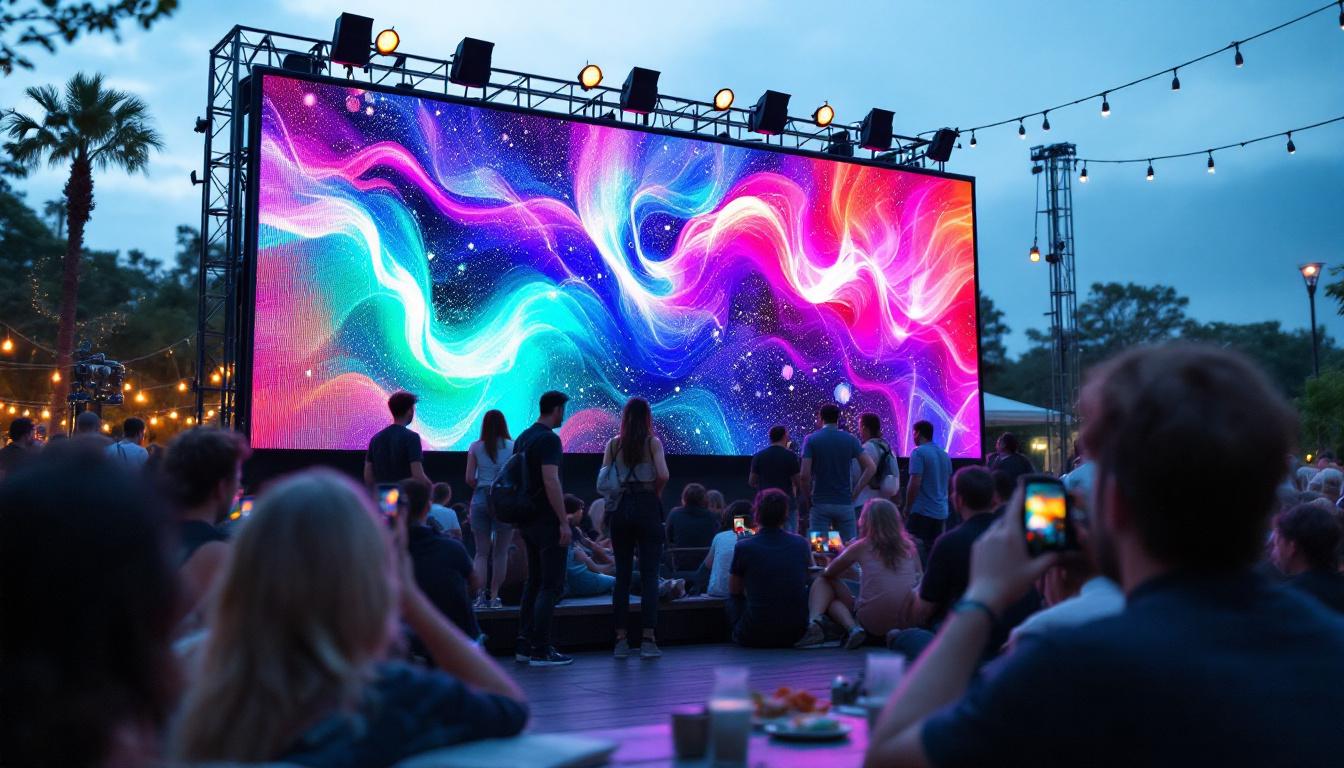
In live event production, 3G SDI is the standard for delivering high-quality video feeds to LED walls and screens. For example, at major sports arenas, multiple 3G SDI feeds from cameras and replay systems are routed through video switchers and processors before being displayed on massive LED scoreboards and video walls.
This setup ensures that fans experience crisp, real-time video content regardless of their seating location. Similarly, in broadcast studios, 3G SDI links connect cameras and monitors, some of which use LED panels for precise color calibration and previewing.
Technical Challenges and Solutions
While 3G SDI offers many benefits, there are challenges to consider:
- Signal Conversion: LED displays often require conversion from 3G SDI to other protocols like HDMI, DisplayPort, or proprietary LED control signals. High-quality converters and processors are essential to maintain signal integrity.
- Bandwidth Limitations: Although 3G SDI supports 1080p60, it does not natively handle 4K or higher resolutions. For ultra-high-definition LED displays, newer standards like 6G or 12G SDI or IP-based video transport are necessary.
- Cable Management: Long cable runs must be carefully planned to avoid signal degradation and electromagnetic interference.
Future Trends: Beyond 3G SDI
As LED display resolutions continue to climb, the industry is moving toward higher bandwidth standards. 6G SDI and 12G SDI support 4K video at 30 fps and 60 fps respectively, while IP-based video transport protocols like SMPTE ST 2110 enable flexible, scalable video distribution over Ethernet networks.
However, 3G SDI remains a reliable and widely used standard for Full HD LED displays, especially in environments where infrastructure and equipment are already established.
Choosing the Right Setup: Best Practices for Integrating 3G SDI with LED Displays
Assessing Resolution and Frame Rate Requirements
Before selecting equipment, it is crucial to determine the target resolution and frame rate for the LED display. For Full HD content at 60 fps, 3G SDI is sufficient. However, for 4K or higher resolutions, alternative interfaces should be considered.
Ensuring Compatibility and Signal Quality
Use professional-grade cables, connectors, and signal processors to maintain the integrity of the 3G SDI signal. It is also important to verify that the LED processor supports the specific 3G SDI format (Level A or Level B-DL) used in the setup.
Planning for Scalability and Future Upgrades
While 3G SDI is robust, planning for future upgrades to higher resolutions and IP-based workflows can save costs and reduce downtime. Modular video processors and hybrid systems that support multiple input formats offer flexibility as technology evolves.
Conclusion
3G SDI resolution and its integration with LED displays form a cornerstone of modern video production and display technology. By delivering uncompressed, high-quality Full HD video at 60 fps over long distances, 3G SDI ensures that LED displays can showcase vibrant, smooth, and reliable images in a variety of professional settings.
Understanding the capabilities and limitations of 3G SDI is essential for anyone involved in video production, live events, or digital signage. As display technologies continue to advance, knowledge of these foundational standards will help guide effective decisions and successful implementations.
Whether deploying an LED video wall in a stadium or setting up a broadcast studio monitor, leveraging the strengths of 3G SDI can lead to superior visual experiences that captivate audiences and enhance storytelling.
Discover Cutting-Edge LED Display Solutions with LumenMatrix
Ready to elevate your visual storytelling and captivate your audience with unparalleled clarity and vibrancy? Explore LumenMatrix’s innovative LED display technologies, from Indoor and Outdoor LED Walls to specialized solutions like Vehicle Displays, LED Posters, and Transparent Displays. Embrace the future of digital signage with LumenMatrix’s commitment to excellence and revolutionize your visual communication today. Check out LumenMatrix LED Display Solutions and see how we can transform your space into a dynamic visual experience.