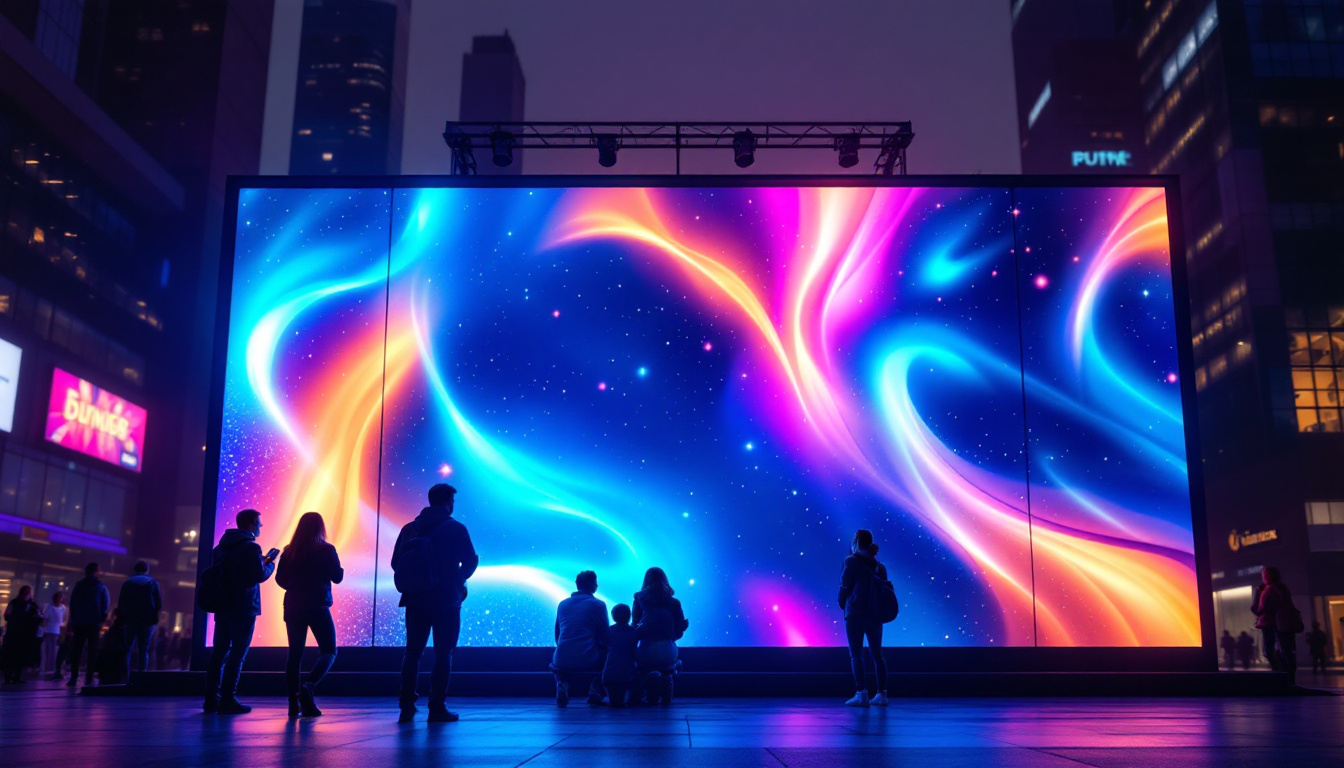
In the rapidly evolving world of digital signage and display technology, LED displays have emerged as a dominant force. Their versatility, brightness, and energy efficiency have transformed how businesses, advertisers, and event organizers communicate visually. Among the various innovations within LED technology, convex LED displays stand out for their unique design and application potential. This article delves into the concept of convex LED displays, exploring their technology, benefits, applications, and future trends.
Understanding LED Display Technology
What is an LED Display?
LED stands for Light Emitting Diode, a semiconductor device that emits light when an electric current passes through it. LED displays consist of numerous tiny LEDs arranged in a grid to form pixels, which collectively create images, videos, or text. These displays are widely used in billboards, stadium screens, indoor signage, and more due to their high brightness, long lifespan, and energy efficiency.
The pixel pitch, which is the distance between the centers of two adjacent LEDs, determines the display’s resolution and viewing distance. Smaller pixel pitches mean higher resolution and closer viewing distances, making LED displays highly customizable for different environments. Additionally, advancements in LED technology have led to the development of various types of LEDs, such as SMD (Surface Mount Device) and COB (Chip on Board), each offering unique benefits in terms of brightness, color accuracy, and heat dissipation.
Moreover, LED displays are becoming increasingly popular in the entertainment industry, where dynamic visuals are essential. From concerts to corporate events, these displays can create stunning backdrops and engaging experiences that captivate audiences. The ability to control the brightness and color of each individual pixel allows for remarkable creativity in visual presentations, making LED technology a favorite among designers and event planners alike.
Flat vs. Curved LED Displays
Traditional LED displays are flat panels, designed to be mounted on walls or structures. However, the demand for more immersive and eye-catching visuals has led to the development of curved and convex LED displays. Curved LED displays bend inward or outward, creating a wrap-around effect that enhances viewing angles and visual impact. This curvature allows for a more engaging experience, especially in environments like retail spaces and exhibitions, where capturing the attention of passersby is crucial.
Convex LED displays, in particular, curve outward, resembling a dome or bubble shape. This design allows for unique installation possibilities and can engage viewers in ways flat or concave displays cannot. Understanding the differences between these types is crucial for selecting the right display for specific applications. For instance, while flat displays are often preferred for straightforward advertising and information dissemination, curved displays can transform a space into an interactive environment, encouraging audience participation and enhancing brand experiences. Furthermore, as technology continues to evolve, we can expect even more innovative designs and functionalities that push the boundaries of what LED displays can achieve.
The Technology Behind Convex LED Displays
Design and Construction
Convex LED displays are engineered with flexible modules that can be bent and shaped without damaging the delicate LEDs. These modules are mounted on a curved frame or chassis, which maintains the convex shape. The curvature radius is carefully calculated to ensure uniform pixel spacing and consistent image quality across the entire surface. This innovative design allows for a variety of applications, from immersive advertising installations to dynamic art displays, where the curvature can enhance the viewer’s experience by drawing them into the visual narrative.
The construction requires precision manufacturing to avoid pixel distortion and color inconsistencies. Advanced calibration techniques are employed to maintain seamless image transitions between modules, ensuring the display appears as one continuous surface despite its curved form. Additionally, the materials used in the construction of these displays are often lightweight yet durable, allowing for easier installation and maintenance. The use of high-quality components not only enhances the longevity of the display but also ensures that it can withstand various environmental conditions, making it suitable for both indoor and outdoor settings.
Pixel Density and Resolution Considerations
One of the challenges with convex LED displays is maintaining high resolution on a curved surface. Because the display bends outward, the viewing distance varies slightly across the screen, which can affect perceived sharpness. Manufacturers address this by optimizing pixel density and using sophisticated image processing algorithms to adjust brightness and color dynamically. This ensures that regardless of the angle from which the display is viewed, the image remains vibrant and clear, providing an engaging experience for the audience.
Modern convex LED displays often feature pixel pitches ranging from 1.5mm to 10mm, depending on whether they are intended for indoor or outdoor use. Higher pixel density is preferred for indoor applications where viewers are closer, while larger pixel pitches suffice for outdoor installations viewed from greater distances. Furthermore, advancements in LED technology have led to the development of mini and micro LED options that offer even greater resolution and color accuracy. This evolution not only enhances the visual quality but also allows for more creative flexibility in design, enabling displays that can adapt to various artistic and functional requirements, from corporate branding to interactive installations that captivate audiences in unique ways.
Advantages of Convex LED Displays
Enhanced Viewing Experience
Convex LED displays provide a unique visual experience by wrapping images around a curved surface. This curvature increases the field of view, allowing viewers from multiple angles to see the content clearly without distortion. This is particularly advantageous in public spaces or arenas where audiences are spread out.
The immersive nature of convex displays can captivate attention more effectively than flat screens, making them ideal for advertising and entertainment purposes. The 3D-like effect created by the convex shape adds depth and realism to the displayed content.
Versatile Installation Options
The outward curve of convex LED displays enables creative installation possibilities that flat panels cannot achieve. They can be mounted on building facades, domed ceilings, or standalone structures, transforming architectural elements into dynamic digital canvases.
For example, convex LED displays have been used in shopping malls to create eye-catching centerpiece installations, in museums to enhance exhibit storytelling, and in sports arenas to display real-time statistics and replays with greater visibility.
Durability and Energy Efficiency
Like other LED displays, convex LED screens are built to withstand various environmental conditions. Many models are weatherproof and designed for outdoor use, with high brightness levels that remain visible even in direct sunlight.
Energy efficiency is another significant advantage. LEDs consume less power compared to traditional display technologies such as LCD or projection systems. This reduces operational costs and environmental impact, an important consideration for large-scale installations.
Applications of Convex LED Displays
Advertising and Marketing
Convex LED displays have revolutionized outdoor advertising by offering brands a novel way to capture attention. Their curved surfaces create striking visuals that stand out in crowded urban environments. For instance, several major cities have incorporated convex LED billboards on building corners or rounded structures, maximizing exposure from multiple vantage points.
Interactive advertising also benefits from convex displays, as the immersive shape encourages engagement and can be combined with sensors or augmented reality technologies to create memorable brand experiences.
Events and Entertainment
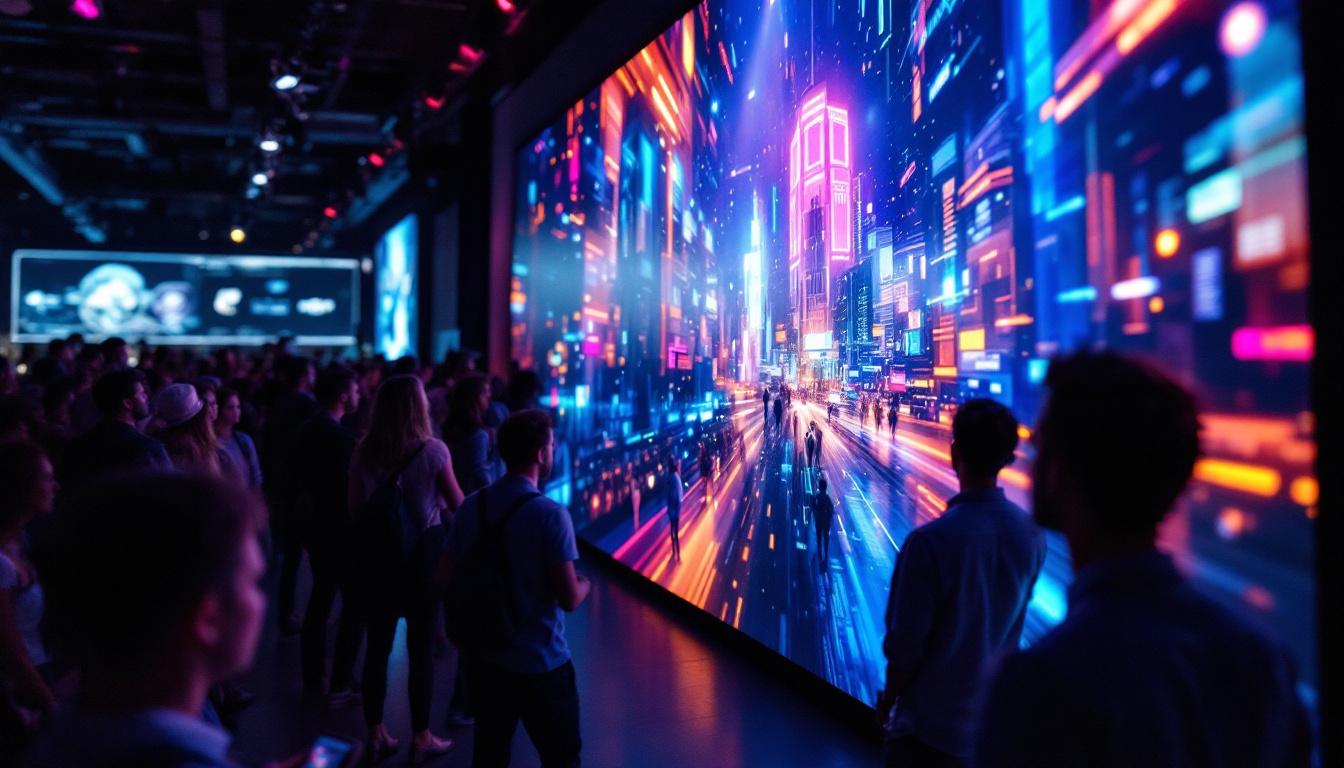
Concerts, festivals, and sporting events increasingly utilize convex LED displays to enhance audience engagement. These displays can be integrated into stage designs or arena architecture, providing panoramic visuals that complement live performances.
For example, the use of convex LED screens in stadiums allows spectators seated around the venue to have better visibility of replays, scores, and live feeds. This improves the overall spectator experience and creates opportunities for dynamic content presentation.
Architectural and Public Spaces
Architects and urban planners are incorporating convex LED displays into public spaces to create interactive art installations and informative signage. Museums, airports, and shopping centers use these displays to deliver wayfinding information, promotional content, and immersive storytelling.
One notable example is the integration of convex LED domes in science centers, where the curved screens simulate planetary environments or underwater scenes, providing educational and engaging experiences for visitors.
Challenges and Considerations
Cost and Complexity
Convex LED displays tend to be more expensive than flat panels due to their specialized design and manufacturing requirements. The need for flexible modules, custom frames, and precise calibration adds to production costs.
Additionally, installation and maintenance can be more complex. The curved structure requires skilled technicians for assembly, and repairs may involve replacing entire modules to maintain uniformity.
Content Creation and Adaptation
Creating content for convex LED displays requires careful planning. Traditional flat video or image content may not translate well onto a curved surface without distortion. Content creators must use specialized software to map visuals accurately onto the convex shape, ensuring that text and graphics remain legible and visually appealing.
Furthermore, the unique viewing angles mean that content needs to be designed with multiple perspectives in mind, which can increase production time and costs.
The Future of Convex LED Displays
Technological Innovations
Advancements in micro-LED and flexible OLED technologies promise to further enhance convex LED displays. Micro-LEDs offer even higher brightness and resolution with lower power consumption, while flexible OLEDs provide ultra-thin, bendable screens that could simplify convex display construction.
Artificial intelligence and machine learning are also being integrated to optimize content delivery based on viewer location and behavior, making convex LED displays smarter and more interactive.
Expanding Market Opportunities
As costs decrease and technology matures, convex LED displays are expected to become more accessible to a broader range of industries. Retail, transportation, education, and healthcare sectors are exploring innovative uses for these displays to improve communication and engagement.
For example, hospitals might use convex LED panels for wayfinding and patient education, while public transit hubs could deploy them for real-time updates and advertising, leveraging the displays’ high visibility and immersive qualities.
Conclusion
Convex LED displays represent a fascinating evolution in digital signage technology, combining the inherent advantages of LED with innovative curved designs that enhance visual impact and viewer engagement. While challenges such as cost and content adaptation exist, the benefits in terms of immersive experience, versatile installation, and energy efficiency make convex LED displays a compelling choice for many applications.
As technology advances and new materials and techniques emerge, convex LED displays are poised to become an integral part of the visual landscape in advertising, entertainment, architecture, and beyond. Understanding their capabilities and limitations is essential for businesses and organizations looking to leverage this technology to its fullest potential.
Illuminate Your Space with LumenMatrix
Ready to elevate your visual communication and create an unforgettable experience? LumenMatrix is at the forefront of LED display innovation, offering a diverse range of solutions tailored to your unique needs. From the immersive Indoor LED Wall Display to the dynamic Outdoor LED Wall Display, and from the versatile Vehicle LED Display to the sleek LED Transparent Display, our products are designed to captivate and engage. Discover how our cutting-edge technology can transform your space and bring your vision to life. Check out LumenMatrix LED Display Solutions today and step into the future of digital signage.