In recent years, home entertainment has seen a significant evolution, with technology rapidly advancing to offer cinema-quality experiences within the comfort of one’s living room. Among the most popular innovations are home projectors paired with LED display screens. These setups provide vibrant visuals, large viewing areas, and a cinematic feel that traditional TVs often struggle to match. This article delves into the world of home projectors and LED displays, explaining how they work, their benefits, and what to consider when choosing the right system for your home.
Understanding Home Projectors: Basics and Technology
What is a Home Projector?
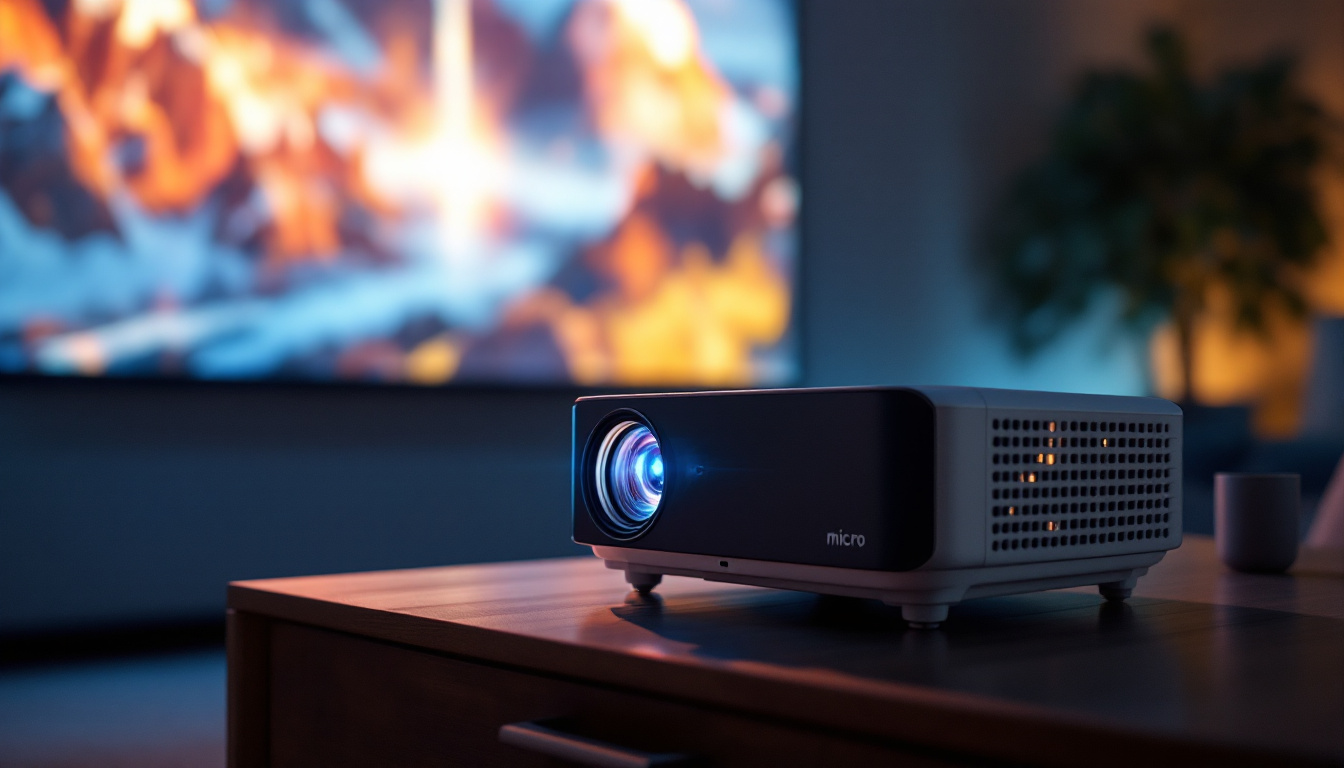
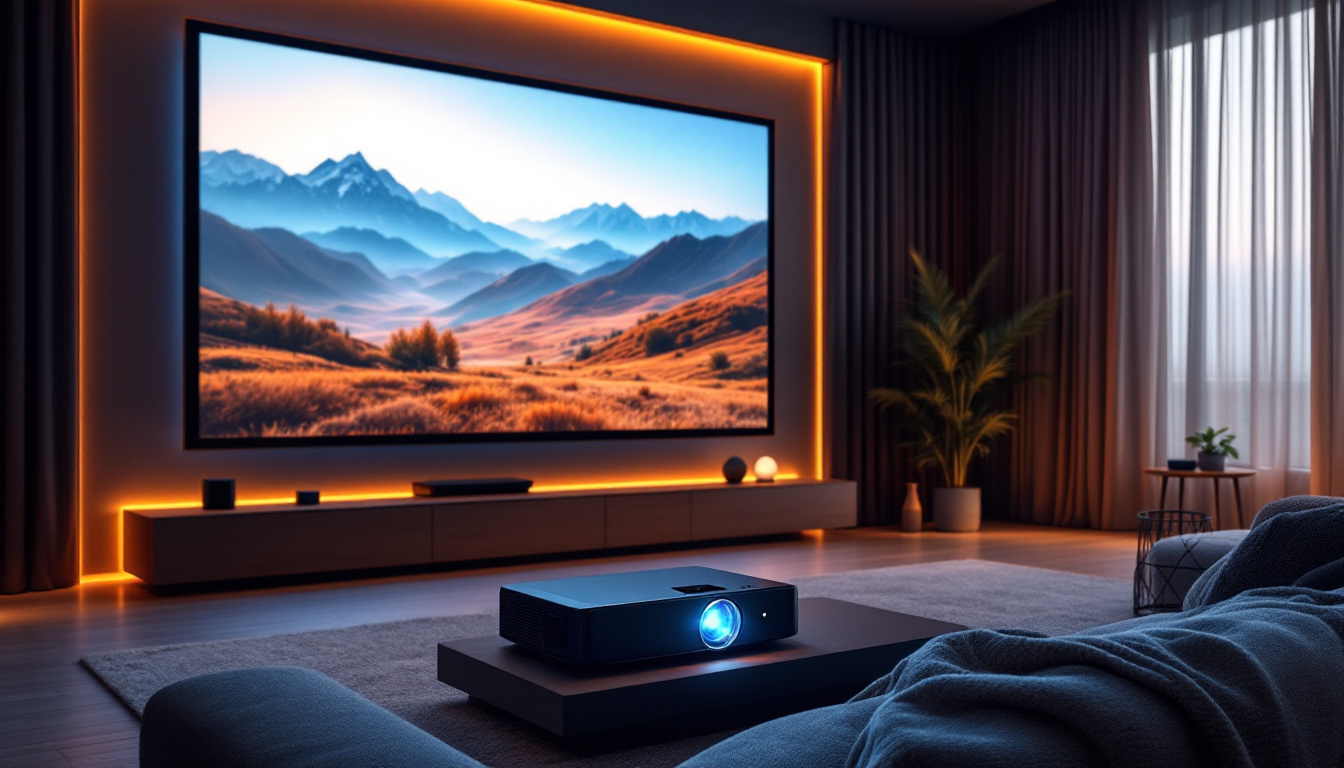
A home projector is an optical device that projects images or videos onto a flat surface, typically a screen or wall. Unlike traditional televisions, projectors use light to display images, allowing for much larger screen sizes without the bulk of a large TV. This makes projectors an ideal choice for home theaters, gaming setups, and even business presentations.
Modern home projectors come in various types, including LCD (Liquid Crystal Display), DLP (Digital Light Processing), and LED (Light Emitting Diode) projectors. Each technology has its own advantages and limitations, but LED projectors have gained popularity due to their efficiency and image quality. The versatility of projectors allows them to be used in a variety of settings, from cozy movie nights at home to professional environments where presentations and visual aids are essential. As technology continues to evolve, projectors are becoming more accessible and user-friendly, appealing to a broader audience.
How LED Projectors Work
LED projectors use light-emitting diodes as their light source instead of traditional lamps or lasers. This fundamental difference brings several benefits. LEDs consume less power, generate less heat, and have a much longer lifespan—often exceeding 20,000 hours compared to 2,000-5,000 hours for traditional lamps.
In an LED projector, red, green, and blue LEDs combine to create the full color spectrum needed for image projection. The light passes through microchips or LCD panels that modulate the image before it is projected onto the screen. This results in bright, vibrant colors and sharp images, even in moderately lit rooms. The technology behind LED projectors also allows for greater flexibility in installation, as they can project images from various angles and distances, making them suitable for both small and large spaces. Additionally, many LED projectors now come equipped with features like built-in speakers and wireless connectivity, enhancing the overall viewing experience.
Advantages of LED Projectors Over Traditional Models
LED projectors offer several advantages that make them particularly suitable for home use:
- Longevity: LED light sources last significantly longer, reducing maintenance and replacement costs.
- Energy Efficiency: LEDs consume less power, making them more environmentally friendly and cost-effective.
- Compact Size: LED projectors are often smaller and lighter, allowing for easier installation and portability.
- Instant On/Off: Unlike lamp-based projectors that require warm-up and cool-down periods, LED projectors turn on and off instantly.
- Improved Color Accuracy: The use of RGB LEDs enhances color reproduction, providing a more vivid and lifelike image.
Furthermore, LED projectors are generally quieter than their traditional counterparts, as they do not require large cooling fans to manage heat. This feature is particularly beneficial in home theater settings, where ambient noise can detract from the viewing experience. Many LED projectors also support high-definition resolutions, including 1080p and even 4K, allowing users to enjoy their favorite movies and games with stunning clarity. As the demand for home entertainment continues to rise, the advancements in LED projector technology are paving the way for a more immersive and enjoyable viewing experience, making it easier than ever for consumers to create their own cinematic environments at home.
Choosing the Right Screen for Your Home Projector
Why the Screen Matters
While the projector is crucial, the screen plays an equally important role in delivering a quality viewing experience. The screen’s material, size, and gain (reflectivity) affect brightness, contrast, and color accuracy. Using a high-quality screen optimized for LED projectors can significantly improve image clarity and overall enjoyment. Additionally, the right screen can enhance the immersive experience of watching movies, playing video games, or presenting slideshows, making it a vital component of your home entertainment setup.
Moreover, the screen’s aspect ratio can also influence your viewing experience. Standard formats like 16:9 are ideal for most movies and TV shows, while a 2.35:1 ratio can provide a cinematic feel for those who appreciate film. Understanding how the screen interacts with your projector’s capabilities ensures that you maximize the potential of both devices, allowing for a seamless integration that elevates your viewing pleasure.
Types of Projection Screens
There are several types of screens to consider for home use:
- Fixed Frame Screens: These are permanently mounted and provide a flat, tensioned surface for optimal image quality. Ideal for dedicated home theaters, they often come with a velvet border that enhances contrast and minimizes light spill.
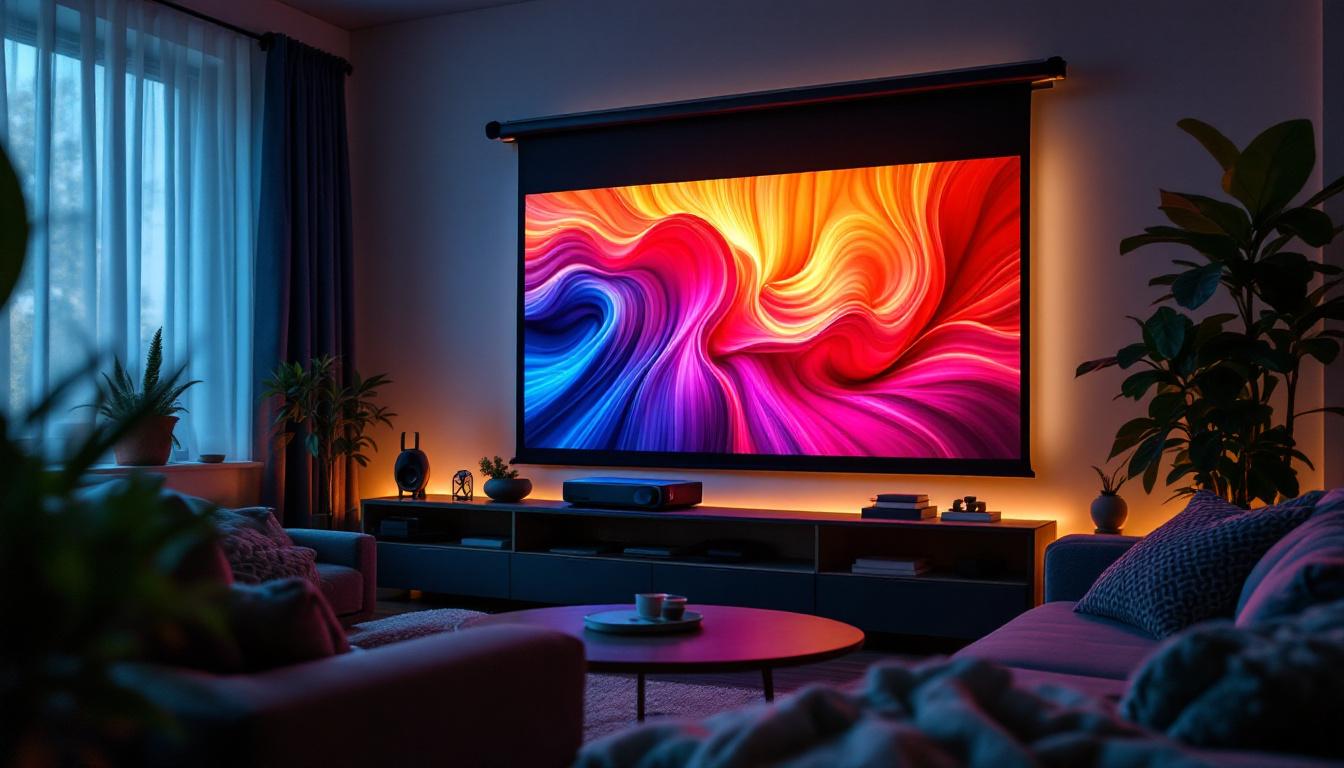
- Retractable Screens: These can be rolled up when not in use, saving space and maintaining room aesthetics. They are particularly useful in multi-purpose rooms where you might want to switch between different activities without a permanent screen taking up space.
- Ambient Light Rejecting (ALR) Screens: Designed to minimize the impact of ambient light, ALR screens enhance contrast and brightness in rooms that are not fully dark. This makes them perfect for family rooms or living spaces where light control is a challenge.
- Portable Screens: Lightweight and easy to set up, portable screens are suitable for flexible or temporary setups. They are a great choice for outdoor movie nights or presentations in different locations, allowing you to enjoy high-quality visuals wherever you go.
Screen Material and Gain
The choice of screen material affects how light is reflected. Matte white screens are common and provide uniform brightness and color accuracy, making them versatile for most environments. However, in rooms with ambient light, a screen with a higher gain (reflectivity) or ALR properties can help maintain image quality. The choice of material can also impact durability and maintenance; for instance, some screens are designed to be easily cleaned, which is beneficial in households with children or pets.
Gain values typically range from 0.8 to 2.5. A gain of 1.0 reflects light evenly, while higher gains focus light more directly, increasing brightness but potentially narrowing viewing angles. For LED projectors, which often have lower brightness compared to lamp-based models, selecting a screen with an appropriate gain is critical to achieving a vivid image. Additionally, some screens come with special coatings that enhance color reproduction or reduce glare, further optimizing the viewing experience. Understanding these nuances can help you make an informed decision that aligns with your specific viewing habits and room conditions.
LED Display Technology: Beyond Projectors
What is an LED Display?
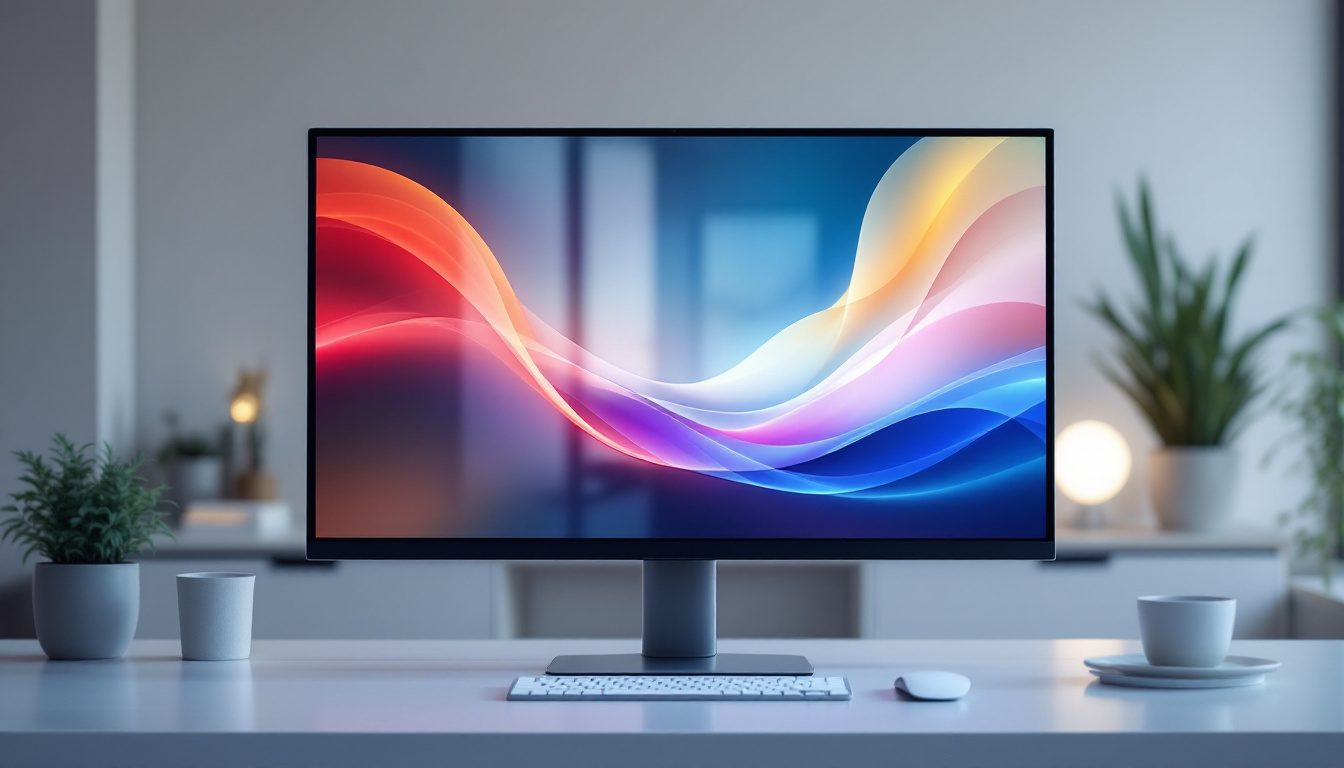
While LED projectors use LEDs as a light source, LED displays themselves are a different technology altogether. LED displays consist of numerous tiny light-emitting diodes arranged in a grid to form pixels. These displays are self-illuminating, meaning each pixel emits its own light, unlike LCDs that rely on backlighting.
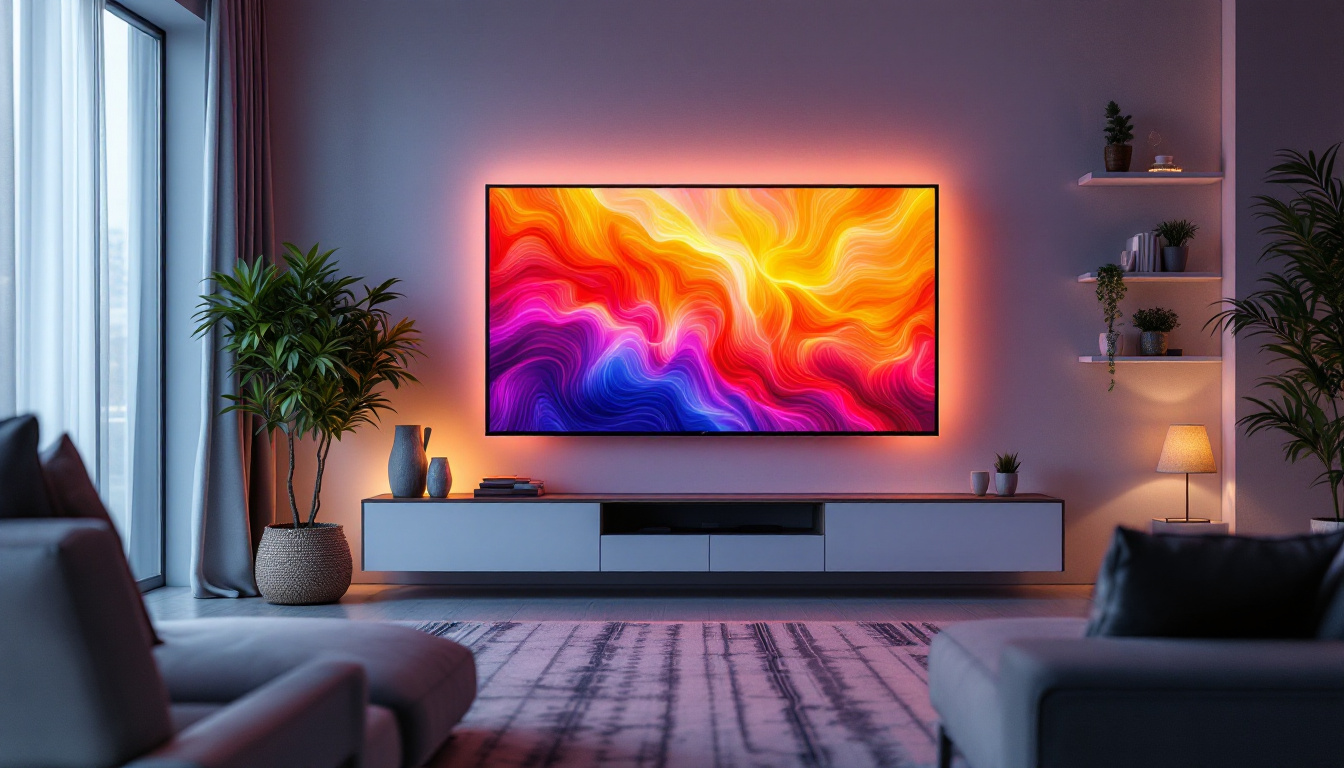
LED displays are commonly used in large-scale applications such as outdoor billboards, stadium screens, and increasingly, in home entertainment setups as direct-view LED TVs or video walls. They offer exceptional brightness, contrast, and color accuracy.
Direct-View LED vs. LED Projectors
Direct-view LED displays and LED projectors differ significantly. Direct-view LED displays do not require a separate screen or projection surface; the image is generated directly from the LED panel. This results in superior brightness and contrast, especially in well-lit environments.
However, direct-view LED displays are typically more expensive and less common for home use due to their size and cost. On the other hand, LED projectors provide a more affordable, flexible, and space-saving solution for large screen viewing.
Emerging Trends in LED Display Technology
Advancements in mini-LED and micro-LED technologies are bridging the gap between traditional LED displays and projectors. Mini-LEDs use thousands of tiny LEDs as backlighting for LCD panels, improving contrast and brightness. Micro-LEDs go further by creating displays with self-emissive pixels at a microscopic scale, promising unparalleled image quality and energy efficiency.
While these technologies are still emerging, they hint at a future where home entertainment systems combine the best of both worlds: the size and flexibility of projectors with the brightness and contrast of LED displays.
Setting Up Your Home Projector and Screen for Optimal Performance
Room Considerations
Lighting conditions, room size, and wall color all influence how well your projector and screen perform. For the best results, a darkened room is ideal, as ambient light can wash out the image. If complete darkness isn’t possible, consider ALR screens or projectors with higher brightness (measured in lumens).
Room size dictates the screen size and projector throw distance—the distance between the projector and the screen. Short-throw or ultra-short-throw projectors are popular for smaller rooms, as they can project large images from a short distance, reducing shadows and glare.
Positioning and Calibration
Proper positioning ensures the image is sharp and correctly aligned. Most projectors offer keystone correction and lens shift features to adjust image geometry. However, physical alignment—placing the projector perpendicular to the screen—is always preferable for the best image quality.
Calibration involves adjusting brightness, contrast, color temperature, and sharpness to suit your viewing environment. Many projectors come with preset modes such as Cinema, Game, or Dynamic, but fine-tuning these settings can significantly enhance the viewing experience.
Sound Considerations
While image quality is paramount, sound quality should not be overlooked. Many projectors have built-in speakers, but these often lack the depth and clarity needed for immersive viewing. Pairing your projector with a dedicated sound system or soundbar will elevate your home theater experience.
Conclusion: Is an LED Projector and Screen Right for Your Home?
LED projectors combined with the right screen offer a compelling option for home entertainment enthusiasts seeking large, vibrant images without the bulk and cost of large TVs. Their energy efficiency, longevity, and image quality make them particularly attractive for dedicated home theaters and multi-purpose rooms alike.
When choosing a system, consider your room’s lighting, size, and how you plan to use the projector. Pairing an LED projector with a high-quality screen tailored to your environment will maximize image quality and viewing pleasure. As LED display technologies continue to evolve, the options for home entertainment will only expand, offering more immersive and flexible experiences for years to come.
Discover the Future of Home Entertainment with LumenMatrix
Ready to elevate your home cinema experience with the latest in LED display technology? LumenMatrix is at the forefront of innovation, offering a wide array of LED display solutions that transform any space into a dynamic visual spectacle. From immersive Indoor LED Wall Displays to vibrant Outdoor LED Wall Displays, and even specialized options like Vehicle LED Displays and LED Sports Displays, LumenMatrix has the perfect solution to bring your entertainment and visual communication to life. Embrace the revolution in home entertainment and check out LumenMatrix LED Display Solutions today to create unforgettable viewing experiences.