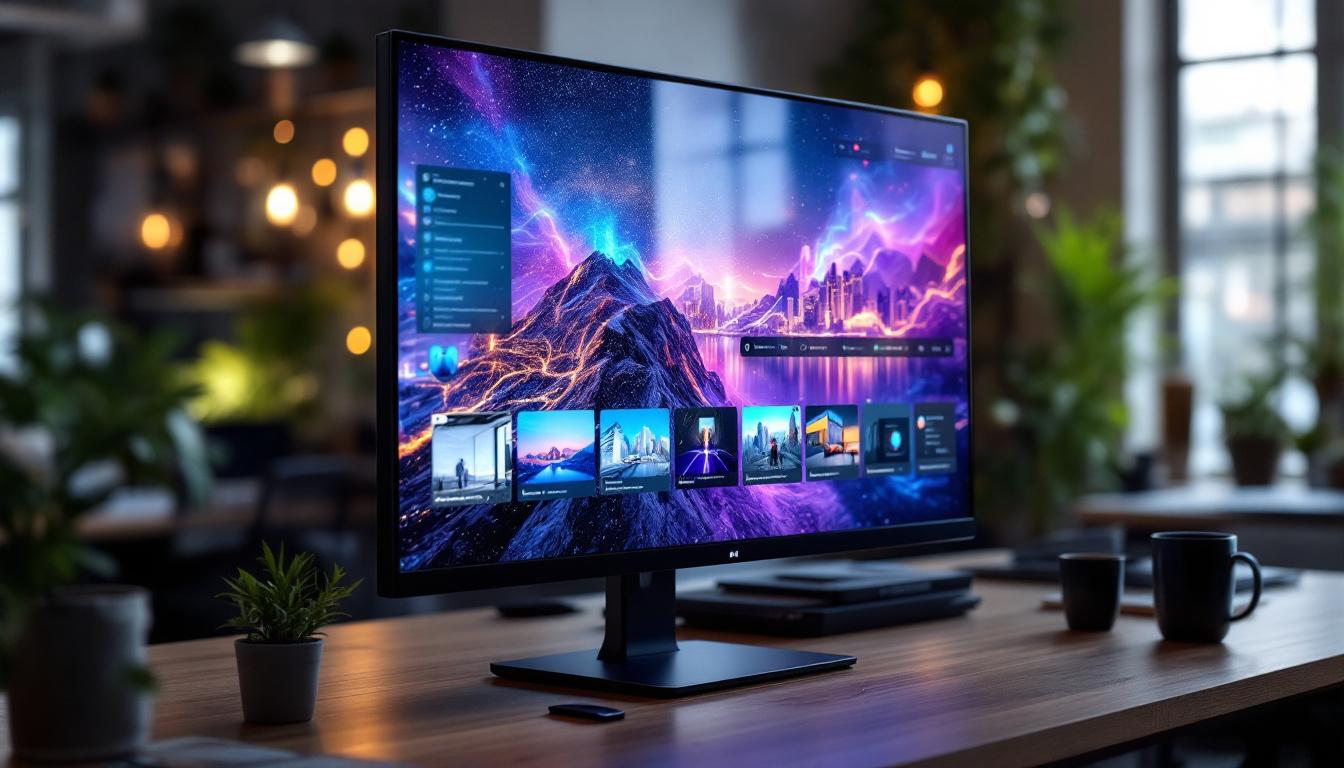
In an era where digital interaction is integral to both professional and personal environments, touch screen large monitors have become increasingly prevalent. These devices combine the expansive visual real estate of large displays with the intuitive interactivity of touch technology, powered by advanced LED display panels. This article delves into the technology behind LED touch screen monitors, their advantages, applications, and what to consider when selecting one for your needs.
Understanding LED Display Technology
LED, or Light Emitting Diode, technology has revolutionized the way displays are designed and used. Unlike traditional LCDs that rely on fluorescent backlighting, LED displays use arrays of light-emitting diodes to illuminate the screen. This fundamental difference brings several benefits, including improved brightness, energy efficiency, and color accuracy. The ability of LED displays to produce vibrant colors and deep blacks has made them a popular choice for everything from televisions to smartphones, enhancing the viewing experience significantly.
Modern LED displays come in various forms, including edge-lit and direct-lit configurations. Edge-lit LED monitors position LEDs along the edges of the screen, directing light across the panel, while direct-lit models place LEDs directly behind the screen for more uniform brightness. In large monitors, direct-lit LED panels are often preferred due to their superior illumination consistency, which is crucial for professional applications such as graphic design and video production. Additionally, advancements in technology have led to the development of full-array local dimming, which allows for even more precise control over brightness levels in specific areas of the screen, further enhancing image quality.
How LED Displays Work
At the core of an LED display is a matrix of tiny diodes that emit light when an electric current passes through them. These diodes can be controlled individually or in groups to produce images by modulating brightness and color. When combined with a liquid crystal display (LCD) layer, LEDs serve as the backlight source, enabling vivid visuals with deep contrasts and vibrant colors. The precision with which these diodes can be controlled allows for a wide range of applications, from high-definition television broadcasts to immersive gaming experiences, where every detail matters.
Recent advancements have introduced OLED (Organic LED) and mini-LED technologies, which offer even greater control over lighting and contrast. OLED displays, for instance, can turn off individual pixels completely, resulting in true blacks and an infinite contrast ratio. Mini-LED technology, on the other hand, utilizes smaller LEDs to create more local dimming zones, improving brightness and contrast in HDR (High Dynamic Range) content. However, traditional LED-backlit LCDs remain the most common and cost-effective solution for large touch screen monitors. Their versatility and reliability make them suitable for a wide range of environments, from corporate settings to educational institutions, where clarity and durability are paramount.
The Integration of Touch Technology in Large Monitors
Touch screen technology adds an interactive layer to large monitors, allowing users to engage directly with the display through finger touches or stylus input. This integration transforms passive viewing into an active experience, enhancing productivity, collaboration, and accessibility.
Types of Touch Technologies
Several touch sensing technologies are used in large monitors, each with distinct characteristics:
- Resistive Touch: Consists of two flexible layers separated by a gap; pressure causes the layers to contact, registering input. It is durable and cost-effective but less sensitive and offers lower clarity.
- Capacitive Touch: Uses the electrical properties of the human body to detect touch. It supports multi-touch gestures and provides high clarity and responsiveness, making it the preferred choice for most modern large touch screen monitors.
- Infrared Touch: Employs an array of IR sensors around the screen edges to detect touch. It works with any input device and offers excellent durability but can be affected by external light interference.
- Surface Acoustic Wave (SAW): Uses ultrasonic waves across the screen surface, detecting touch by wave disruption. It provides excellent image clarity but is susceptible to contaminants like dust and water.
For large-format touch screens, capacitive and infrared technologies are most common due to their balance of responsiveness, durability, and image quality.
Advantages of Touch Screen Large LED Monitors
Combining large LED displays with touch functionality offers numerous advantages across various sectors. These benefits extend beyond mere size and interactivity, impacting how users engage with digital content.
Enhanced User Interaction and Productivity
Touch screen large monitors enable direct manipulation of on-screen elements, making tasks like drawing, annotating, and navigating more intuitive. This is particularly useful in creative industries, education, and collaborative workspaces where multiple users interact with content simultaneously.
Studies have shown that interactive displays can improve engagement and retention in educational settings by up to 30%, highlighting their effectiveness as learning tools. In corporate environments, touch-enabled large monitors facilitate dynamic presentations and brainstorming sessions, fostering creativity and faster decision-making.
Improved Visual Experience
LED technology ensures that large monitors deliver bright, crisp images with accurate color reproduction. This is essential in fields such as graphic design, video editing, and medical imaging, where precise visuals are critical. The wide viewing angles and high contrast ratios typical of LED displays also enhance usability in conference rooms and public spaces.
Durability and Energy Efficiency
LED displays consume less power compared to older display technologies, making them more environmentally friendly and cost-effective over time. Additionally, LED panels tend to have longer lifespans and better resistance to screen burn-in, which is vital for devices used extensively in commercial settings.
Applications of Touch Screen Large LED Monitors
The versatility of touch screen large monitors powered by LED technology has led to their adoption across a wide range of industries and use cases.
Education and Training
Interactive whiteboards and large touch monitors are transforming classrooms by enabling teachers to present multimedia content interactively. Students can engage directly with lessons, participate in group activities, and access digital resources seamlessly. Training centers also benefit from these displays by simulating real-world scenarios and providing hands-on learning experiences.
Corporate and Collaborative Workspaces
In business environments, large touch screen monitors serve as collaborative hubs for meetings, video conferencing, and project management. They allow multiple participants to interact with documents, annotate presentations in real-time, and share ideas more effectively. This fosters a more inclusive and dynamic workplace culture.
Retail and Hospitality
Touch screen large monitors are increasingly used in retail stores and hospitality venues as interactive kiosks and digital signage. Customers can browse products, place orders, or access information effortlessly, enhancing the overall customer experience. LED displays ensure visibility even in brightly lit environments, which is crucial for attracting attention and conveying messages clearly.
Healthcare
Medical professionals utilize large touch screen monitors for diagnostic imaging, patient monitoring, and telemedicine. The combination of high-resolution LED displays and touch interactivity facilitates precise analysis and efficient data entry, improving patient outcomes and workflow efficiency.
Key Considerations When Choosing a Touch Screen Large LED Monitor
Selecting the right touch screen large monitor involves evaluating several factors to ensure it meets specific needs and delivers optimal performance.
Screen Size and Resolution
Large monitors typically range from 27 inches to over 85 inches diagonally. The intended use will dictate the ideal size; for instance, conference rooms may require 55-inch or larger displays, while individual workstations might benefit from 27 to 43 inches. Resolution is equally important—4K UHD (3840 x 2160 pixels) is becoming standard for large monitors, providing sharp images and ample workspace.
Touch Technology and Responsiveness
Choosing the appropriate touch technology depends on the environment and usage patterns. Capacitive touch is preferred for smooth, multi-touch gestures, while infrared may be better suited for rugged or glove-friendly applications. Responsiveness and accuracy are critical, especially for creative professionals and interactive presentations.
Connectivity and Compatibility
Ensure the monitor supports necessary input ports such as HDMI, DisplayPort, USB-C, and wireless connectivity options like Bluetooth or Wi-Fi. Compatibility with operating systems and software platforms used in your workflow is also essential to maximize functionality.
Durability and Maintenance
Large touch screen monitors in public or high-traffic areas should feature robust construction and protective glass to withstand frequent use. Anti-glare coatings and easy-to-clean surfaces contribute to longevity and usability. Additionally, consider warranty and support options from the manufacturer.
Future Trends in Touch Screen Large LED Monitors
The evolution of display and touch technologies continues to shape the capabilities of large monitors. Emerging trends promise to enhance user experience and expand applications further.
Mini-LED and Micro-LED Displays
Mini-LED technology uses thousands of tiny LEDs to provide more precise backlighting control, resulting in improved contrast ratios, deeper blacks, and higher brightness levels. Micro-LED displays, still in development, aim to offer self-emissive pixels like OLEDs but with greater durability and brightness, potentially redefining large screen quality.
Advanced Multi-Touch and Gesture Recognition
Future touch screens will likely incorporate more sophisticated gesture recognition, including air gestures and pressure sensitivity, enabling richer interaction modes. This will benefit creative professionals and enhance accessibility for users with diverse needs.
Integration with AI and IoT
Artificial intelligence and Internet of Things integration will allow large touch screen monitors to adapt dynamically to user preferences, automate routine tasks, and connect seamlessly with smart environments. This will make these devices even more central to modern workspaces and public installations.
Conclusion
Touch screen large monitors equipped with LED displays represent a powerful convergence of visual excellence and interactive capability. Their versatility, combined with ongoing technological advancements, ensures they remain indispensable tools across education, business, healthcare, retail, and beyond. Understanding the underlying LED technology, touch methods, and key selection criteria empowers users and organizations to make informed decisions that enhance productivity, engagement, and user satisfaction.
As the technology continues to evolve, the future holds exciting possibilities for even more immersive and efficient large-format touch screen experiences.
Discover LumenMatrix’s Advanced LED Display Solutions
Ready to elevate your space with the latest in LED display technology? LumenMatrix offers a comprehensive range of innovative solutions tailored to your unique needs. From captivating Indoor and Outdoor LED Wall Displays to dynamic Vehicle and Sports LED Displays, our products are designed to enhance engagement and ensure your message makes a lasting impact. Experience the future of visual communication with our All-in-One LED Displays, LED Transparent Displays, and more. Check out LumenMatrix LED Display Solutions today and transform your environment with unparalleled clarity and vibrancy.